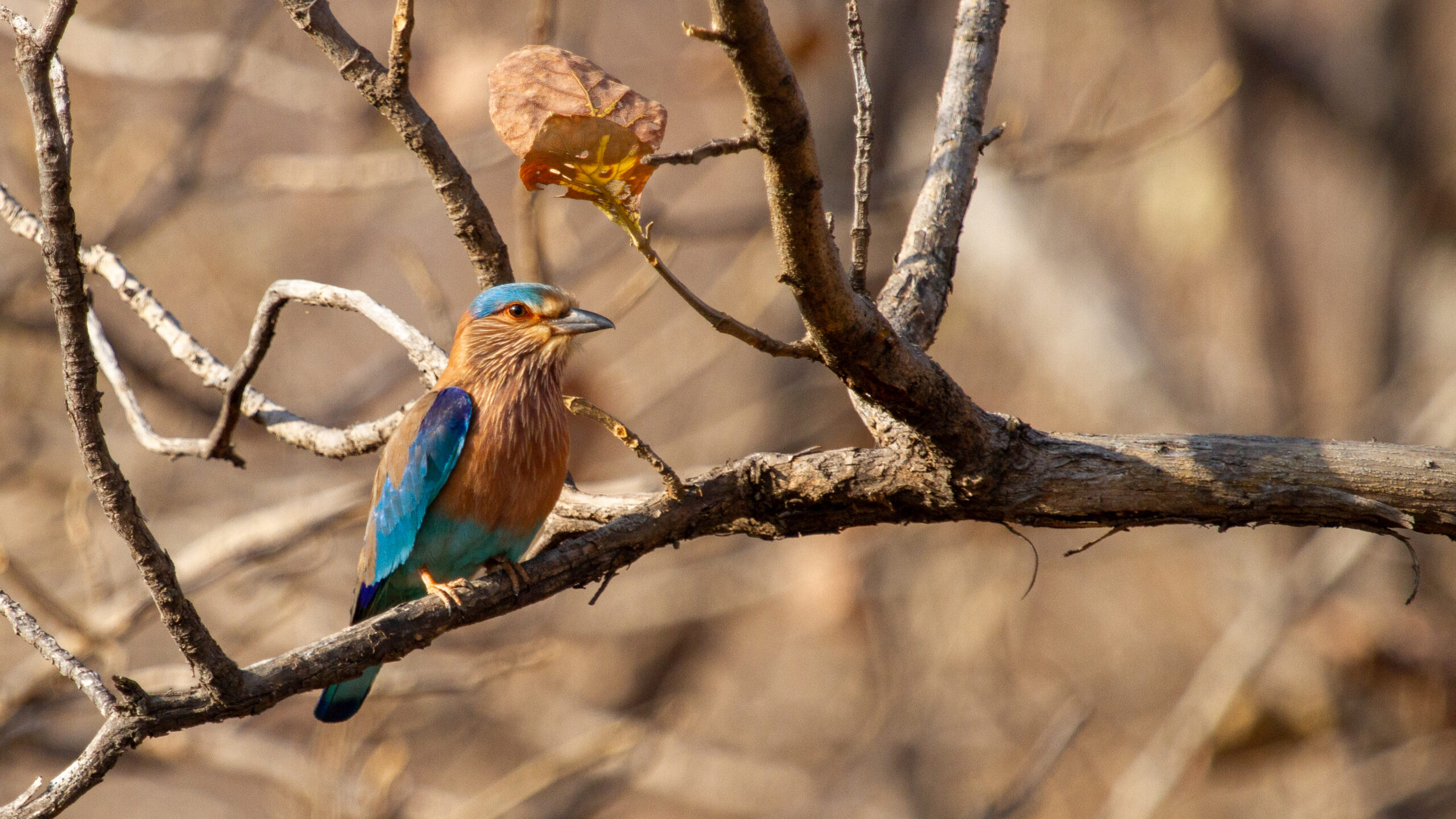
A broad field collection of Indian birds—from familiar garden visitors to birds of prey and the elusive owls of forests, wetlands and open country.
Bird portraits
“Wherever there are birds, there is hope.” – Mehmet Murat Ildan
Ranking amongst top 10 most biodiverse countries (yeah, be proud of it and protect it), India is home to about 1211 species of birds of splendid variety, shapes, colors and equally diverse habits and habitats.
A comprehensive, well structured list of Indian birds can be found on Wikipedia at
https://en.wikipedia.org/wiki/List_of_birds_of_India
Here are some observations without going too far or exclusive to find them, except a few. Bear with the poor quality of some pictures, I am basically a birder trying to learn photography both for its own charm and keeping records.
If you have any queries / suggestions / feedback – please leave them in the comments. Will revert.


Hope you liked the short exposure to our own natural heritage. I intend covering Indian Birds of Prey in a separate chapter – they definitely deserve a special post.
Happy birding !!
Birds of prey
“when they prey, others pray” – birdingjo
Fierce, powerful, and ruthless rulers of the skies, the raptors have long fascinated humans. History is replete of records displaying the reverence these birds of prey have attained over thousands of years in all parts and cultures of the world.
India too is home or a pit stop for many a raptors. Great variety and diversity is found all across the country. Here is a humble collection of a few that my friends and I have been lucky to observe and capture some memories.

Sitting pretty, in the falling Sun, a Black Shouldered Kite. Mhow, MP, 2016. 
A Brahminy Kite : generally found near water bodies. Found in Indian subcontinent, Southeast Asia and Australia. It is primarily a scavenger, feeding mainly on dead fish and crabs, especially in wetlands and marshland,[13] but occasionally hunts live prey such as hares and bats. In Hinduism, it is considered as the contemporary representation of Garuda, the sacred bird of Vishnu. 
A Common Kestrel (male). One of the best shots I have ever seen. Clicked by an ace birder and photographer Rohit Gupta. The story behind the shot in his words “One of my favourite bird images since I spend almost an hour taking this series of images, when I stumbled upon this Common Kestrel in Dec 2010, on the banks of the Chenab in Akhnoor. The bird was perched on this boulder and had finished a prey, it had been feeding on. I was in a military gypsy & stayed inside, the bird was also fairly bold & did not fly away. This firmed my belief that birds are most confiding if you approach them in a vehicle and till they aren’t exposed to the familiar human silhouette of a head on shoulders (A birding hat is worn to break that silhouette when on foot and approaching a bird)!” 
Crested Serpent Eagle. Saw it sitting on a branch. I was still fumbling with my camera when it swooped down on the ground – on I did not know what. On crawling closer, found it clobbering this snake. It started swallowing it head first, but on detecting my presence, flew off with its catch into the thickets. Clicked at Saugor, MP, 2014. 
A White Bellied Sea Eagle. The female is slightly larger than the male, and can measure up to 90 cm (35 in) long with a wingspan of up to 2.2 m (7.2 ft), and weigh 4.5 kg. Mainly feeds on fish, but also opportunistic, it does’nt mind carrion. Distributed along coastal areas from India to Australasia. Clicked in Andaman Islands, India, 2016. 

White Eyed Buzzard. The most common buzzard with distinctive white iris and dark mesial stripe. Widely distributed in South Asia, throughout India in the plains and extending up to 1000 m in the Himalayas. Resident in Iran, Pakistan, Nepal, Bangladesh, and Myanmar. Feed mainly on locusts, grasshoppers, crickets, and other large insects, as well as mice, lizards, and frogs. Occasionally, hunts larger prey as hare. Barmer, Rajasthan, 2013. 
An Oreintal Honey Buzzard. A slender raptor with a smaller head resembling a pigeon (though larger). Two species are found in India, One resident and another migratory. Specialist hunter, it primarily feeds on the larva of wasps and bees, honey and wax. Also feeds on other insects. Contribution by Gaurav Kamboj. Clicked in Faridkot, Punjab. Jan 2021. 
Bonelli’s Eagle – Eagles are among the largest birds of prey & the apex predator in the avian world. 60 different species occur in the Eagle family worldwide, of which12 are found In India. Large hooked beaks for tearing prey, strong muscular legs, powerful talons & sharp eyesight are characteristic of Eagles. In the image, the uncommon Bonelli’s Eagle can be seen perched at Middle Lake, College of Military Engineering, 24 Jan 21. In culture & religion, besides flight, eagles are symbolic of power, vision, freedom, grace & heraldry, and have also given rise to idioms such as eagle eyed, legal eagle, etc. The national bird of the US is an eagle – a Bald Eagle. Closer home, the Eagle adorns the formation signs of many a divisions in our Army. In fact, one of the largest and highest flying eagles – the magnificent Golden Eagle forms the crest of the Indian Air Force too! .
Image and write up – Rohit Gupta
Tawny Eagle, a large raptor from the family of booted eagles (see the covered legs). Distributed in African, Indian sub-continent and occasionally Southern Middle East. Avid Hunter, mostly takes down live prey but also scavenges. Prey is mostly ground based, including small reptiles, rodents, hare, small deer / young gazelles, sometimes birds in flight like flamingoes. Reported to be facing a population decline. Clicked outside Bikaner, Rajasthan, 2012. 
Another large raptor, Steppe Eagles also belong to the booted eagles. Widely distributed (see inset map, credits – Wikipedia), it migrates long distances during winters. Different hunting and dietary habits in breeding and non-breeding ranges. Actively hunts ground squirrels and mammals like marmot sin the former, while it is lazier in the latter and preys on insects, scavenges and occasionally hunts live prey. Credits : Gaurav Kamboj. Clicked in 2019, at Lansdowne, Uttarakhand, India. 
A Peregrine Falcon. One of the most widely distributed raptor, It can be found anywhere in the world except New Zealand (Islands). At top speeds of 325 kmph, it is the fastest bird and fastest member of the animal kingdom. A typical bird eating raptor, hunts by swooping down on its prey at high speeds. Sometimes hunts, small mammals, reptiles or insects. A favourite as a falconry bird, due to its skills & hunting prowess.
Picture contributed by Akash Chinche.
Shikra – The Shikra is a small hawk & the apex predator in the urban avian world. Derived from the urdu word Shikari meaning hunter, the name is an embodiment of the bird’s chief talent! In pre-independence era, this bird was a favourite amongst falconers, & used for hunting smaller birds. Though illegal now, falconry is still practised in Pakistan & the Arab world. A common resident of Indian subcontinent, in the picture above, it is seen perched silently on a leafy tree, in wait for prey or soaring overhead with its typical sequence of rapid wing flaps and glide. The bird in the image, with a yellow iris, is an adult female while the male is a tad smaller & has a red iris. Its prey comprises lizards, small birds & mammals, often taken by surprise from a concealed perch. I observed a pair closely, build a nest on a eucalyptus tree & raise two fledglings, and the female dive-attacked me. Well, that birding tale is for another day! Image taken at College of Military Engineering, Pune, Jan 2021 
A Shikra Juvenile. See the three different avatars of the same bird – a deadly hunter and a thriving bird. Commonly found living amongst the humans even in the din of busy metro-cities like Delhi and Bengaluru. This one was clicked in Saugor, MP, 2014. 
Amur Falcons make special appearance in India – we must be conscious, lest they too become a part of history like the Siberian Cranes (Amur is hunted for food in Nagaland). See the migration route inset. It breeds in Northern China / South-Eastern Siberia, migrates over Indian Subcontinent, Arabian Sea to spend winters in Southern Africa. Migrates on a broad front and wanders about, have been observed in UK, Italy and other parts of Europe. It primarily feeds on insects, takes other birds and small mammals sometimes. Contribution by Akash Chinche. 
Shaheen, a sub-species of Peregrine Falcon. Medium sized raptor, distributed from South Eastern Iran, Afghanistan, Indian Subcontinent to Myanmar. Earlier a common bird, like many other falcons, their numbers have declined too, due to heavy use of pesticides and hunting. Credits – Akash Chinche. 
A Lammergeier or Ossifrage – a bearded vulture, as unique as its name. It is an old world vulture. It is the only vertebrate whose diet (70 to 90%) consists of bone. Wide spread, from Europe, Caucasus, Africa, India and Tibet, it lives and breeds on crags in remote high mountains. The picture above was clicked by a friend and keen birder, Akash Chinche, 04 Feb 2020, Eastern Ladakh (above 15000 feet), India. 
An anecdote from Akash deserve a mention. Once, while in remote Ladakh region, after a futile attempt of finding any birds / wildlife and walking for more than an hour, he sat and then lied down to catch a breath. (those who have walked the heavenly plateaus above 15000 feet will know). Within 10 minutes he had this Lammergeier and an Eurasian Griffon emerge high above him and start to move in circles. Akash learnt a new skill in attracting raptors (scavengers) that very moment – playing dead. Clicked by Akash Chinche, Eastern Ladakh, March 2020. 
This is just a humble account of some fabulous raptors which can be found and observed in India. The list is far from complete, but that was never the idea – the idea was to just share what we have been fortunate to witness in diverse landscapes and corners of our vast country. As raptors, Indian owls are equally unique, intriguing and fascinating – they deserve a dedicated post (coming soon).
You would agree that we are blessed on many accounts in terms of diversity of landscapes / habitats and their occupants. I hope that my friends and I have managed to ignite some curiosity and sense of association with our natural heritage.
Happy hunting (only with eyes or cameras) !!
Owls of India
“Then nightly sings the staring owl, Tu-whit, Tu-who, a merry note.” – William Shakespeare
Owls are fascinating in more than many ways. Equally revered and feared as they were obscure from the observation of common people compared to other diurnal birds, owls have a strange spookiness and strings of myths attached with them across continents and cultures. Following scientific studies since the eighteenth century, the owls have found some relief from the perception of belonging to the evil camp.
Personally, I am intrigued by these birds. Differently equipped and skilled, they are masters of their craft – highly efficient in hunting in low light. Some of them are active during the day as well. Finding them is always a pleasure, especially the not so common ones. Many a times, one can hear them around for months, yet never be able to see them, leave aside taking a picture.
Here is a modest collection of some owls found in India, put together by a group of friends who share a common passion for wildlife.


Photo Credit – Vinit Bajpai.
PS – Please ignore the hazy picture, it was almost dark, when we found this innocent fellow.


In the frame is another Jungle Owlet. Picture Credit – Vinit Bajpai. Lansdowne, Uttrakhand. Feb 2021


Did you know that a group of owls is called a ‘Parliament of Owls’.
I am sure you know that Owls deliver postal mail only in ‘Harry Potter’ movies.
If you think that you are interested in spotting your own owls – feel free to reach out and see how best can we assist you to find the wise ones around your home. Believe me, they are out there.
Happy hunting (only with eyes or cameras) !!