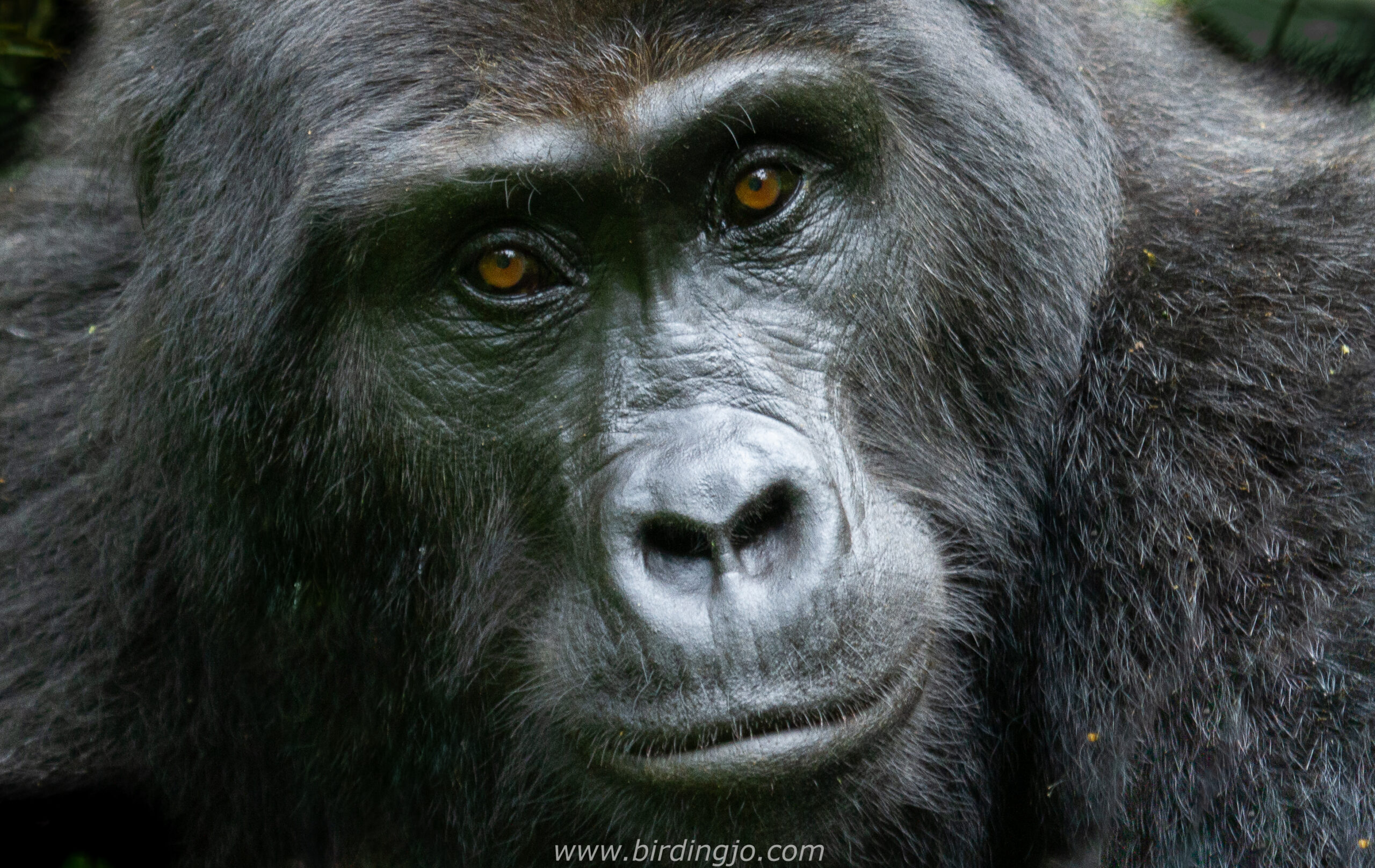
For years, mountain gorillas belonged to documentaries and distant imagination. Then a forest trail in south-western Uganda led us into the quiet presence of Bweza and his family.
“The clearest way into the Universe is through a forest wilderness.” — John Muir
Into Bwindi
Bwindi Impenetrable National Park lies in south-western Uganda, where lowland and montane forests meet along the Albertine Rift. Its 32,000 hectares hold extraordinary biological richness and almost half of the world’s mountain gorillas.
Reaching a habituated family is part of the encounter. Rangers lead visitors along steep elephant trails through mud, roots, stinging nettles and dense undergrowth. The trek may take several hours; the reward is one carefully managed hour with the gorillas in their natural home.
The journey to the forest
Bwindi is approximately 425 kilometres by road from Entebbe. The distance alone does not describe the journey: the drive carries you steadily towards Uganda’s south-western highlands, where cultivated slopes give way to the dark, folded edge of the Impenetrable Forest. By the time we arrived, the gorilla encounter already felt like the culmination of a much longer passage.
The trek began with rangers leading us onto elephant trails through thick rainforest. Mud, slush, slippery stones and tangled roots made progress deliberate; mosquitoes, flies and stinging nettles were part of the bargain. Slipping once or twice was almost inevitable. The armed rangers were not there because habituated gorillas are naturally aggressive, but to protect both visitors and wildlife in a remote forest where human threats remain the greater concern.
A gorilla visit requires an advance permit and an organised ranger-led trek. Habituated families are gradually accustomed to limited human presence, visitor groups are kept small, and the encounter itself is restricted to one hour. These controls are essential: they protect the gorillas from disturbance and reduce the risk of transmitting human disease.
Meeting Bweza
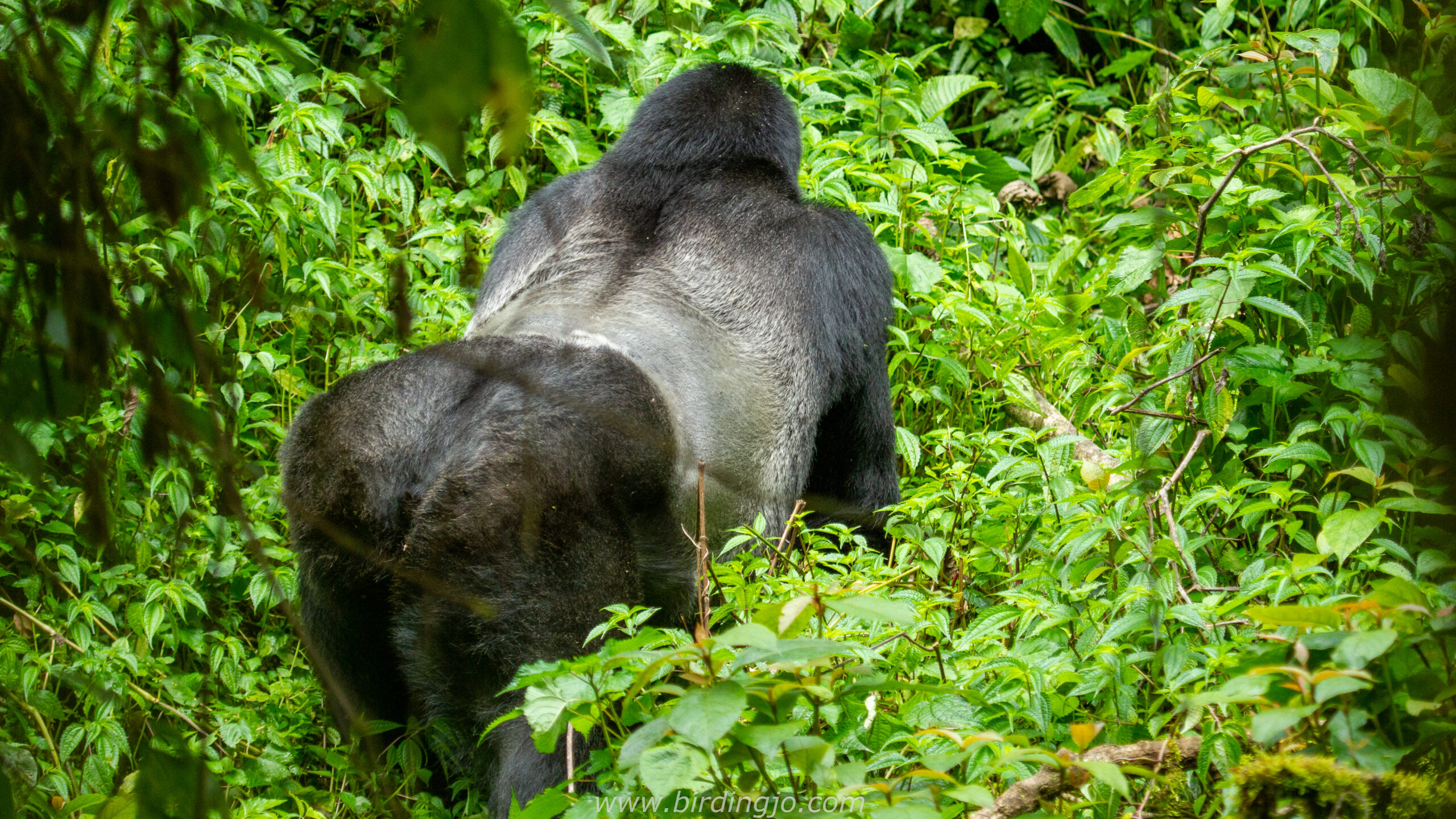
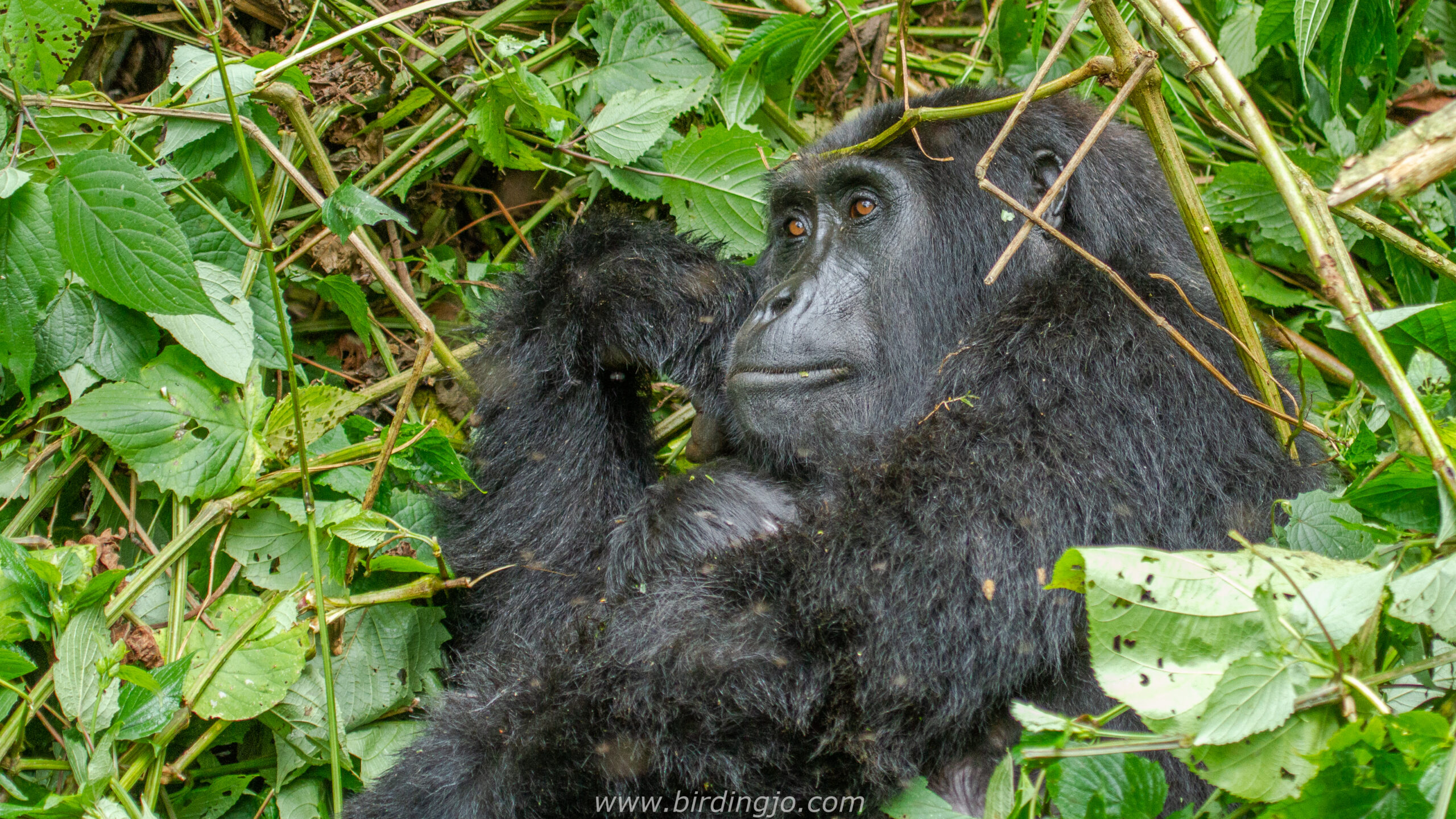
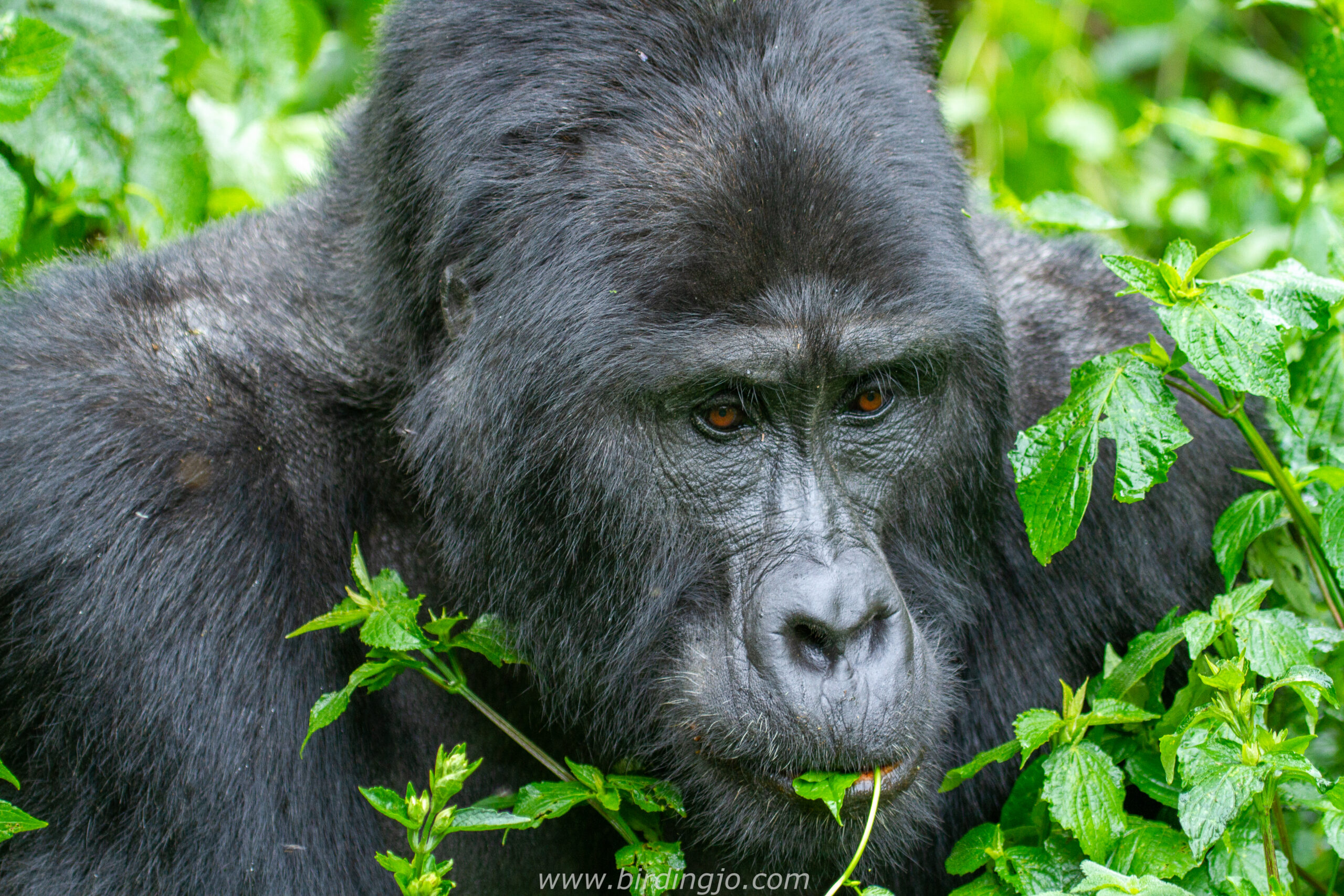
Bweza, on the left, was about thirteen years old when we met. His name means “the handsome one” in the local language. A mature male’s back begins to silver at around twelve years, marking the powerful presence that gives the silverback his familiar name.
What stayed with me was not power on display, but composure. Bweza and the others were absorbed in feeding, largely indifferent to our presence. One measured glance in my direction was enough to collapse the distance between documentary and reality.
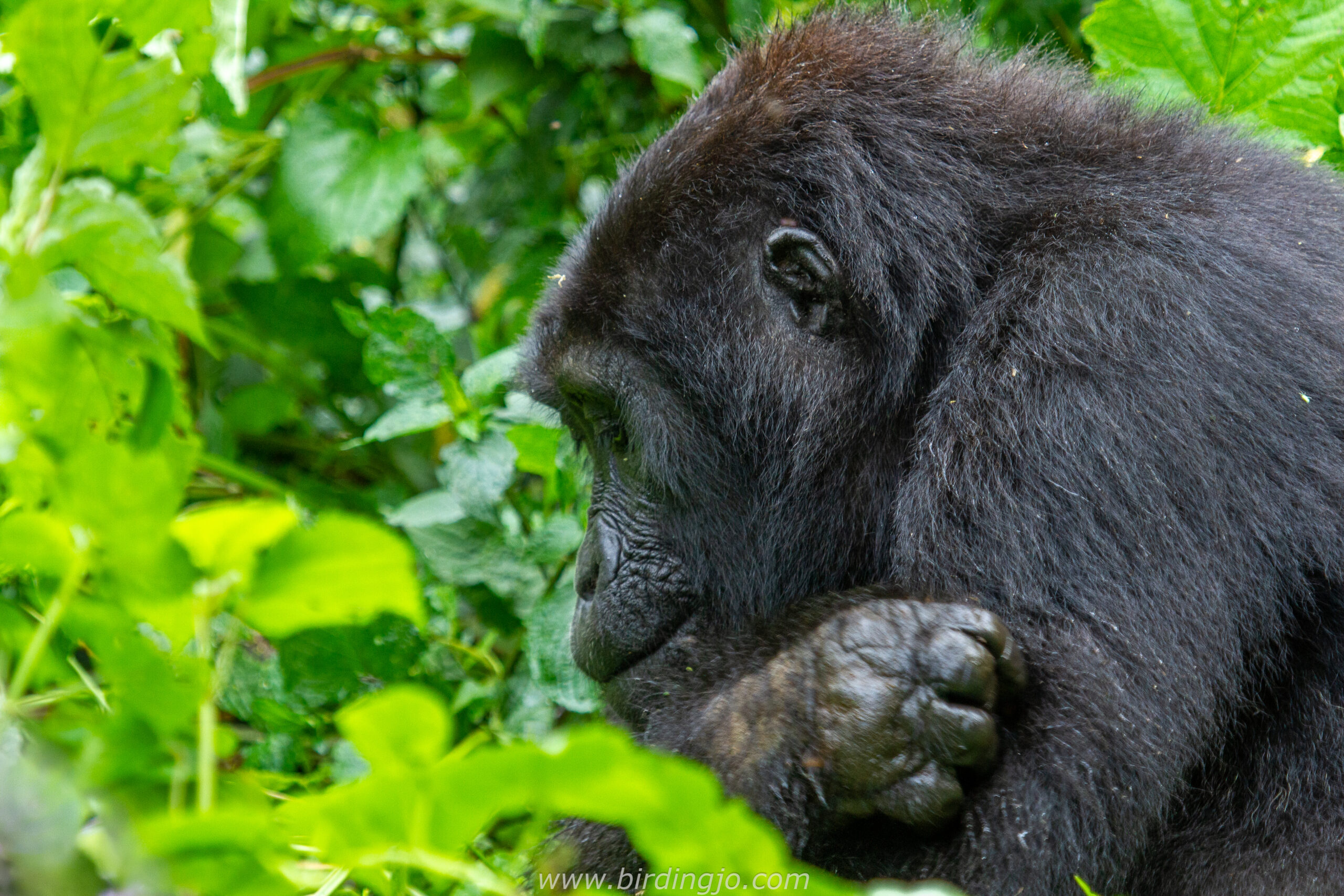
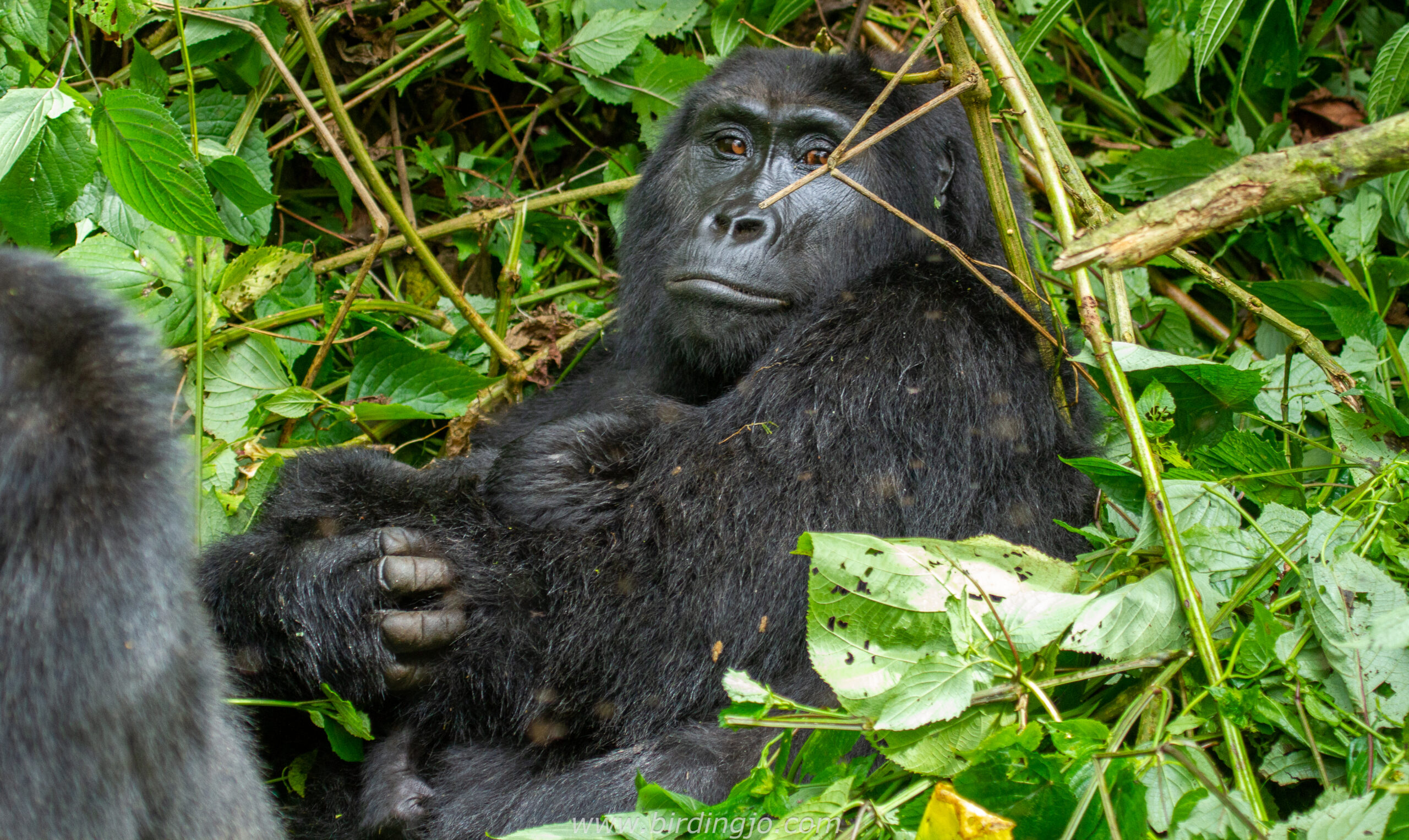
A younger male, on the right, rests in the forest. The stillness felt thoughtful, although that is our human interpretation. Mountain gorillas share gestures and social bonds that appear immediately familiar, yet they remain wholly themselves—wild animals shaped by this cool, wet forest.
Habituation is gradual and carefully controlled. It allows designated gorilla families to tolerate limited human presence while remaining free-ranging. Visitor numbers, observation time and behaviour are regulated to reduce disturbance and disease risk.
Family life
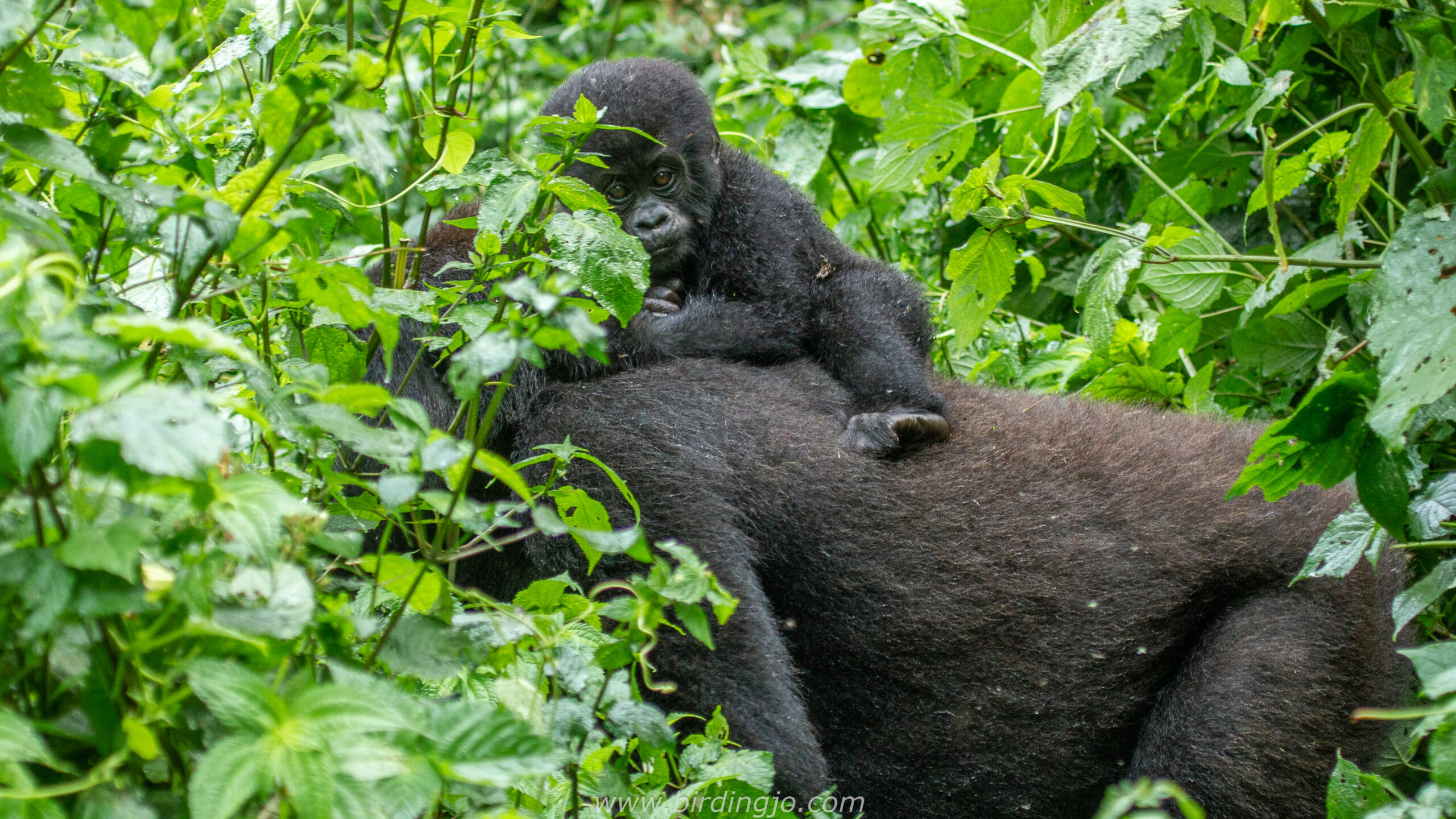
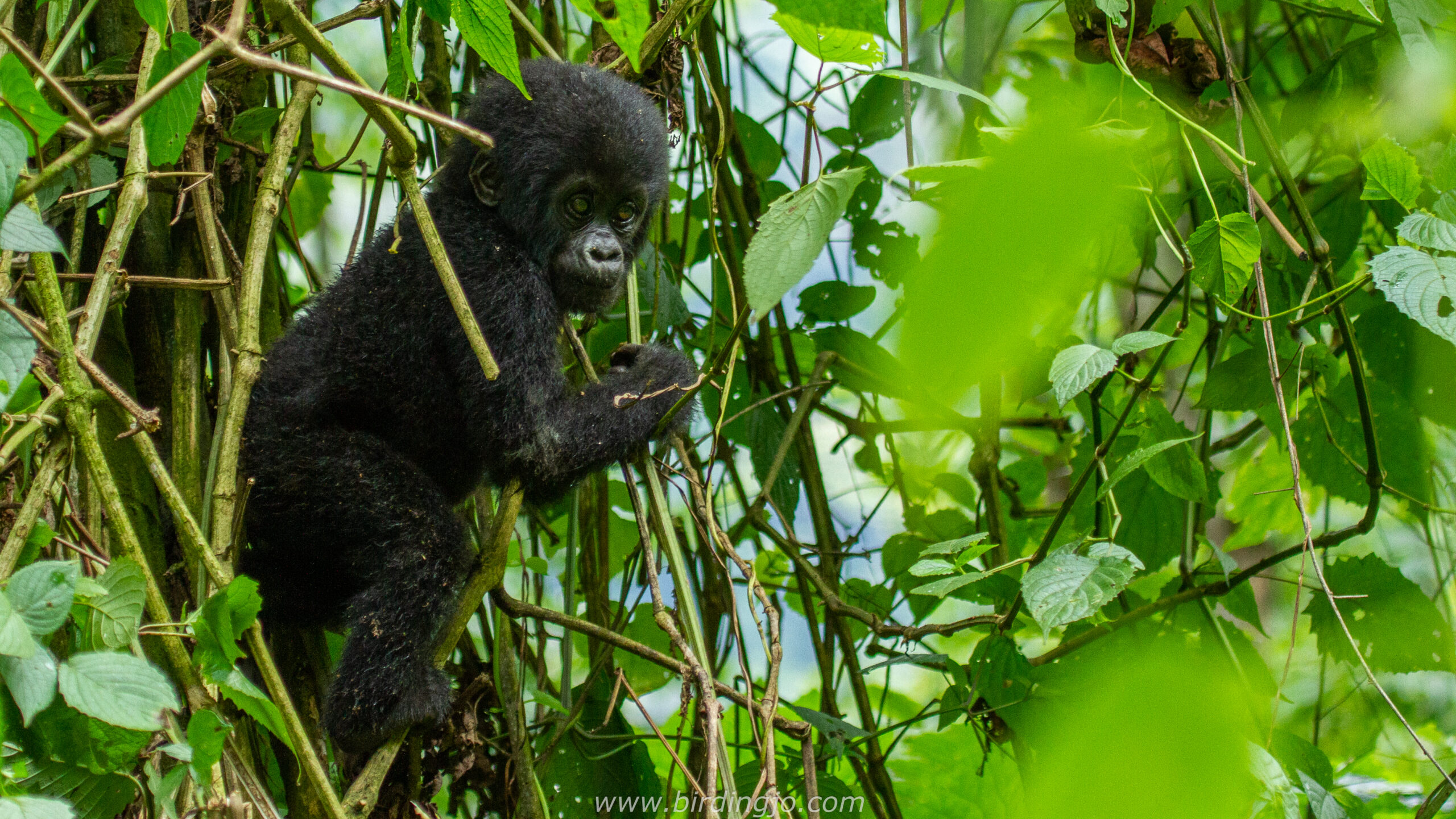
Bweza’s family numbered ten: adult females, younger males and several infants. The youngest clung close to its mother; another explored with the uncertain confidence of a child discovering the world. Their intimacy produced the most memorable photographs of the day.
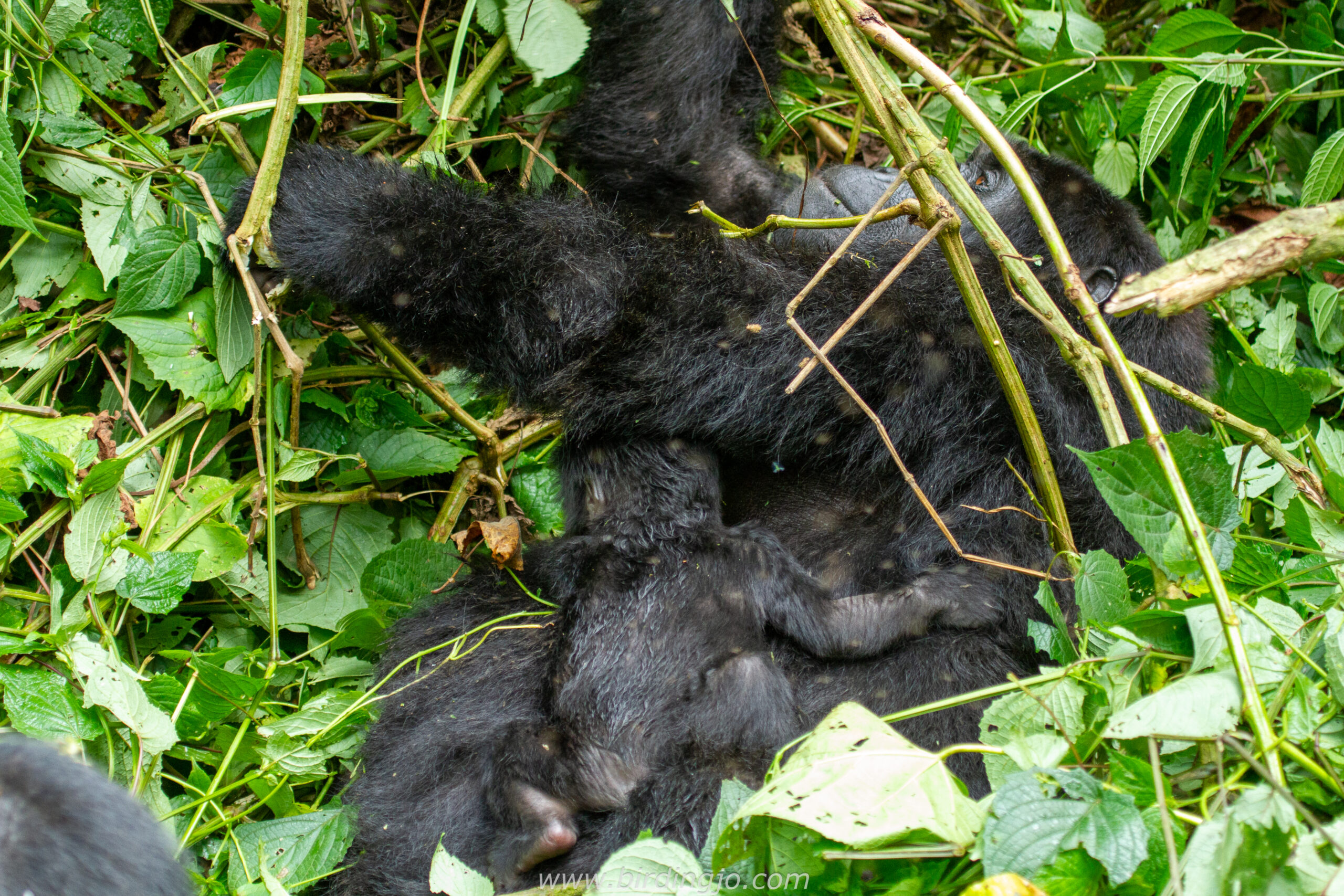
Each animal can be recognised by its nose print, which is unique to the individual. But recognition is about more than a field mark. Posture, relationships and small gestures gradually reveal distinct personalities within the family.
A forest home
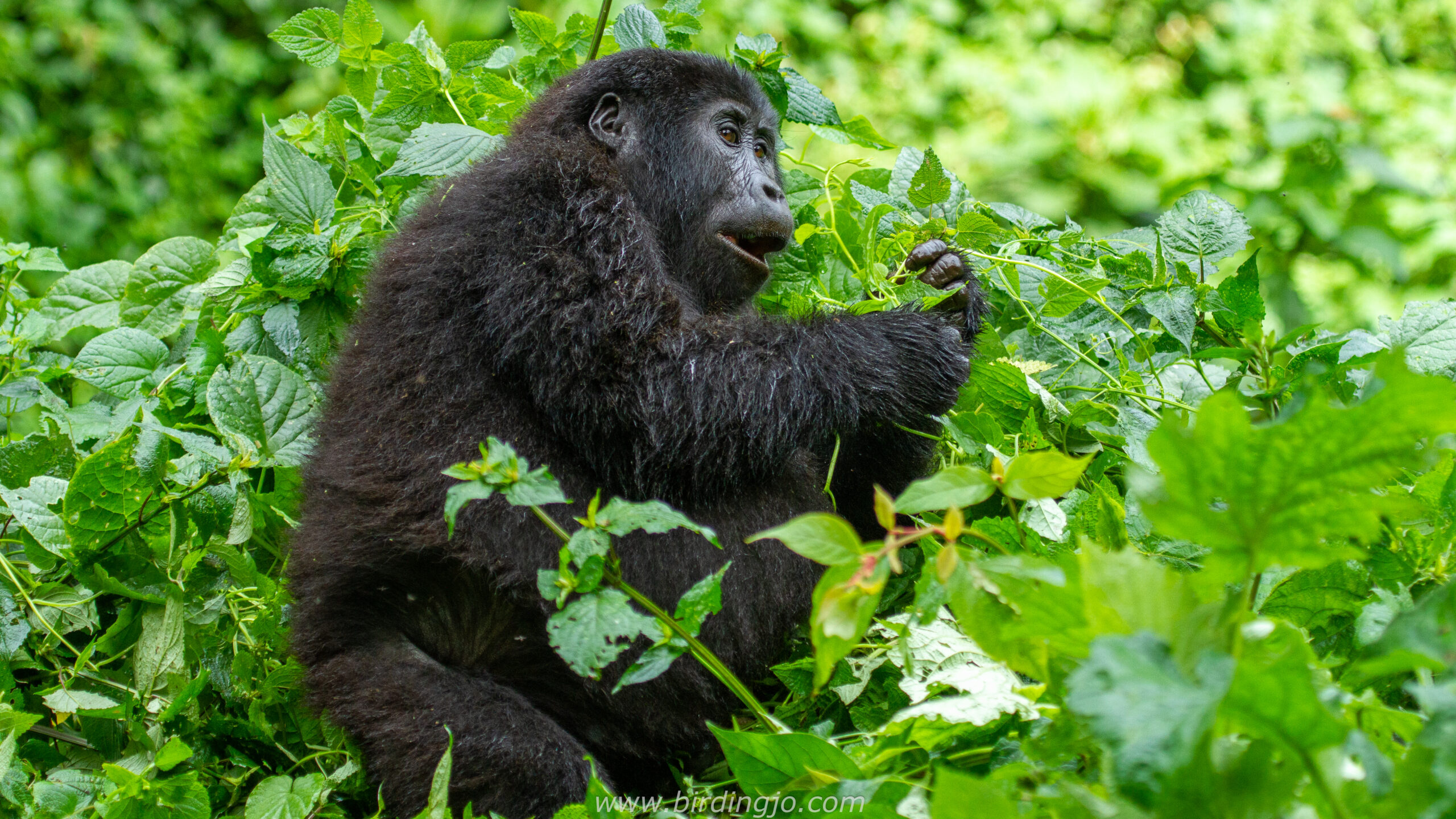
A young male, on the left, gathers food with remarkable dexterity. Mountain gorillas feed mainly on leaves, stems, shoots and other plant material. Their thick coats suit the altitude, rain and cooler temperatures of Bwindi and the Virunga mountains.
Every evening, the family builds fresh nests from leaves and branches. At dawn, they leave them behind and follow a new foraging route, moving through a forest that is both shelter and larder.
Protection through presence
Mountain gorillas survive only in Bwindi and the neighbouring Virunga landscape across Uganda, Rwanda and the Democratic Republic of the Congo. Their recovery is one of conservation’s encouraging stories, but their restricted habitat leaves them vulnerable to disease, encroachment and conflict. Responsible, tightly regulated tourism supports protection and neighbouring communities; it also carries an obligation to follow every ranger instruction and keep the animals’ welfare first.
What remains
The hour passed quickly. What remained was not the idea of “King Kong”, but a family encountered on its own terms—feeding, resting, caring for infants and moving through an ancient forest. The resemblance between us may invite wonder; respecting the difference is what makes the encounter meaningful.
Practical note: Current permit arrangements, trekking sectors and visitor rules should always be confirmed directly with the Uganda Wildlife Authority before travelling.