Category: Uncategorized

  • Birds of East Africa: Wetlands, Forests and Open Skies

    Secretarybird standing in East African grassland
    Secretarybird in the open grasslands of East Africa.

    East Africa rewards anyone who takes time to look beyond the familiar safari silhouettes. Across Uganda, Kenya and Tanzania, birds animate papyrus swamps, crater lakes, forest canopies, gardens and open savannas—from cranes and bustards to bee-eaters, eagles, hornbills and intricately coloured weavers.

    This is not a complete regional guide. It is a personal field collection built from encounters made over several years, particularly in Uganda: portraits, behaviour and small moments that reveal how closely every bird is tied to its habitat.

    Open country and savannas

    “In order to see birds, it is necessary to become a part of the silence.”
    — Robert Lynd
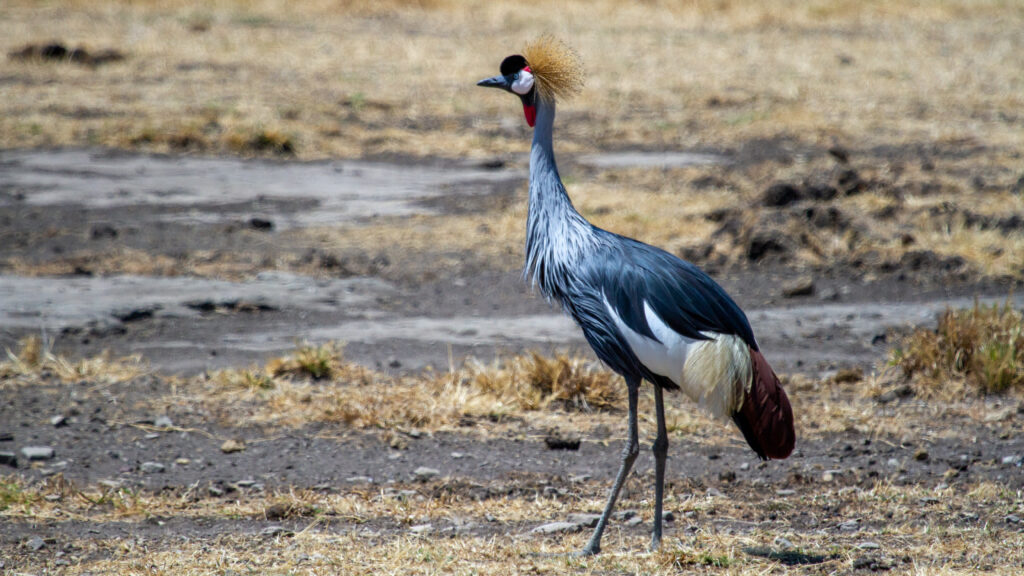
    Grey Crowned Crane in Uganda

    Grey / Golden-Crowned Crane – The National Bird of Uganda. QENP, Uganda. The open landscapes of East Africa belong to birds built for visibility and distance. Grey Crowned Cranes move through grasslands and wetlands with improbable elegance; ostriches and Kori Bustards carry their size lightly across the plains; sandgrouse, spurfowl, swallows and bee-eaters add movement at every level.
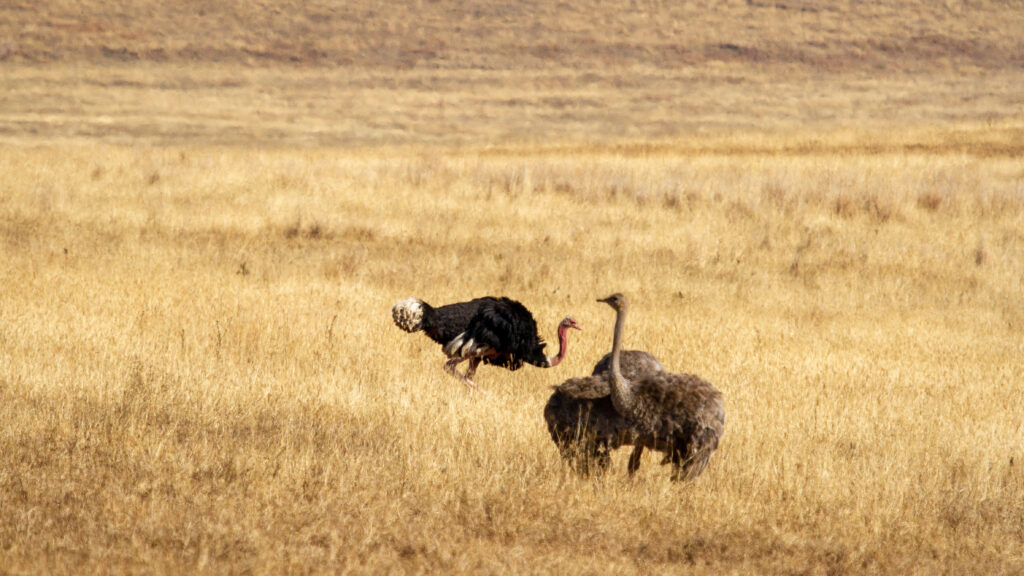
    Pair of Common Ostriches in Ngorongoro
    A pair of Common Ostrich. Ngorongoro Crater, Tanzania
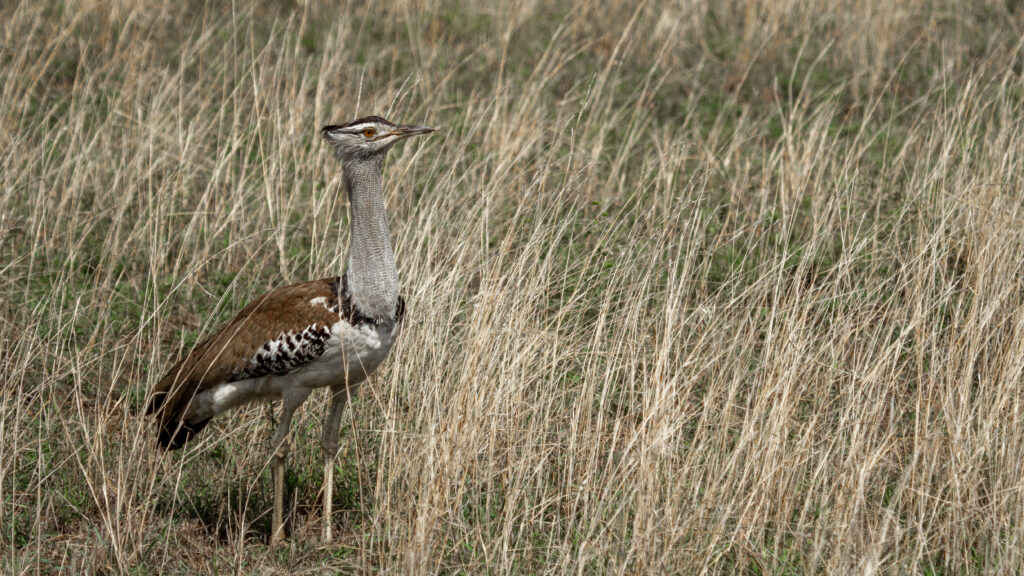
    Kori Bustard in Tarangire
    Kori Bustard. The heaviest bird of Africa which can fly – adult males weigh up to 18 to 20 Kgs. Tarangire, Tanzania
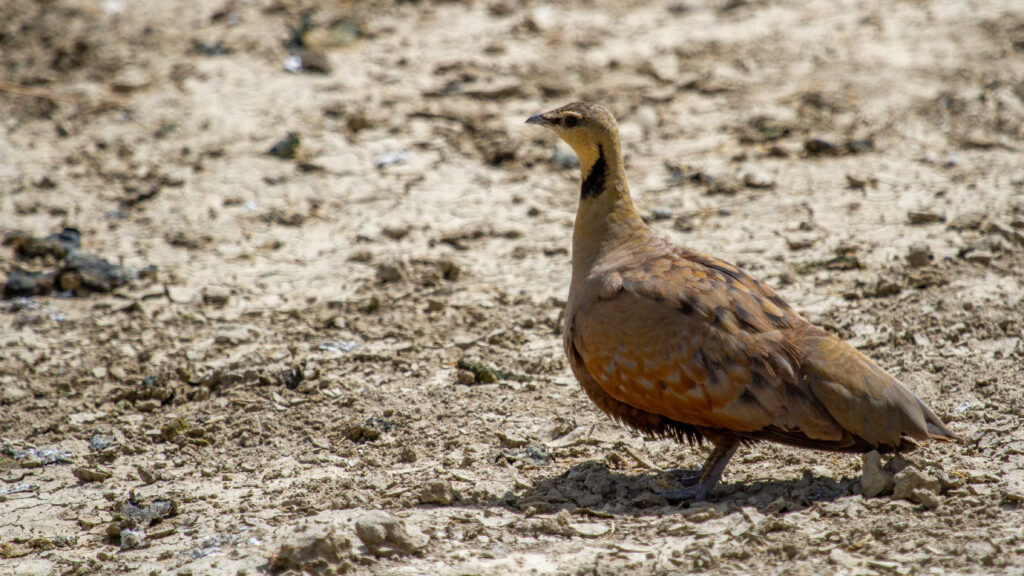
    Yellow-throated Sandgrouse in Ngorongoro
    Yellow Throated Sandgrouse. Ngorongoro Crater, Tanzania
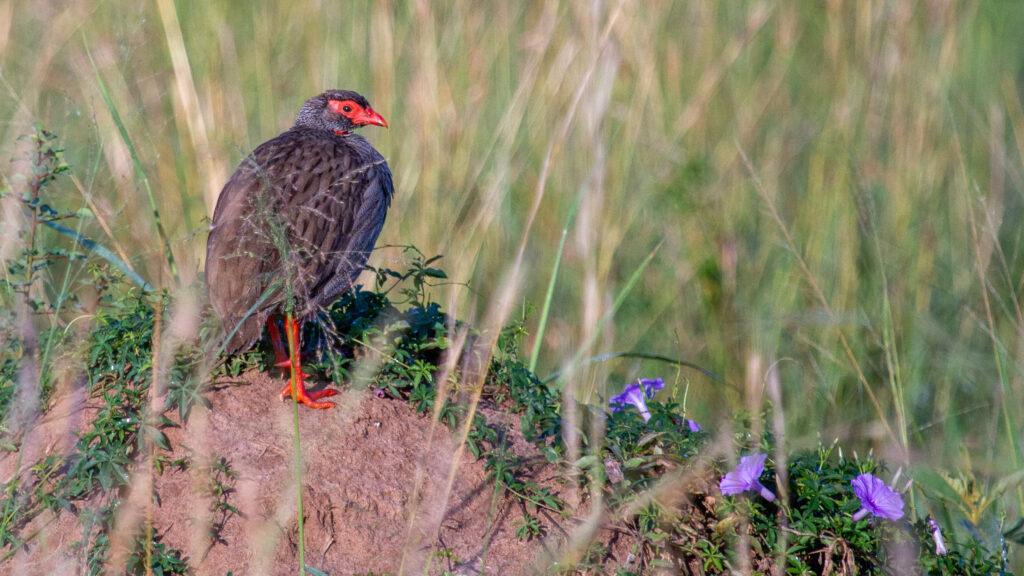
    Red-throated Spurfowl
    Red -Throated Spurfowl. Generally found perched on a mound, specially in the morning. QENP, Uganda.
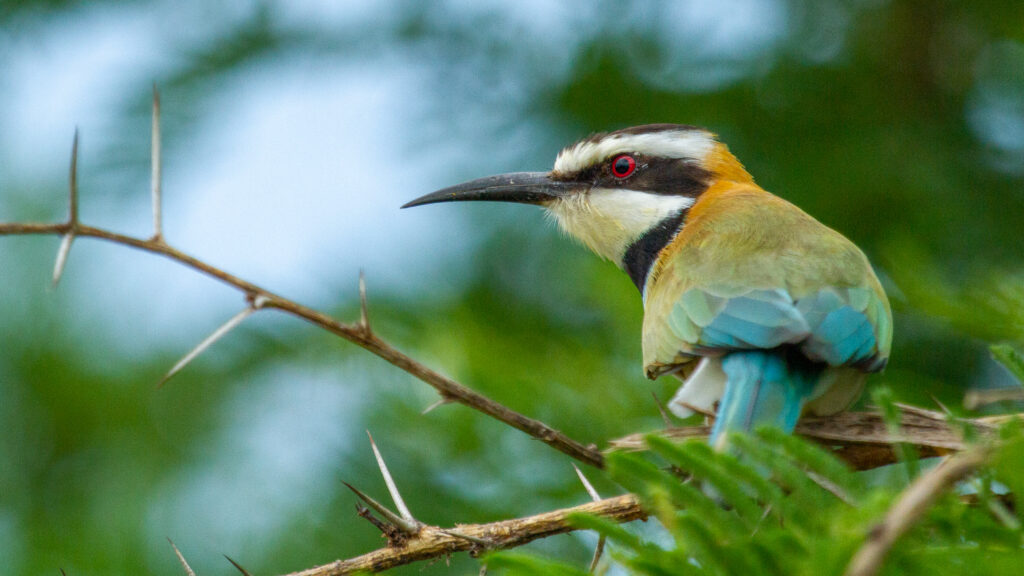
    White-throated Bee-eater
    White-Throated Bee-Eater. QENP, Uganda. These birds build their nests in the soil like the Pied Kingfisher.
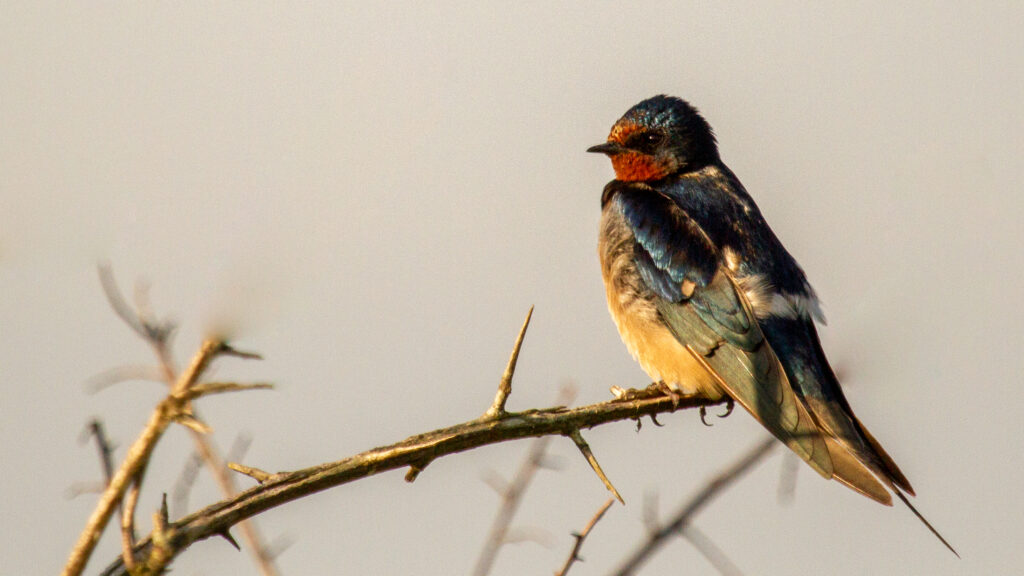
    Angola Swallow
    Angola Swallow. QENP, Uganda.
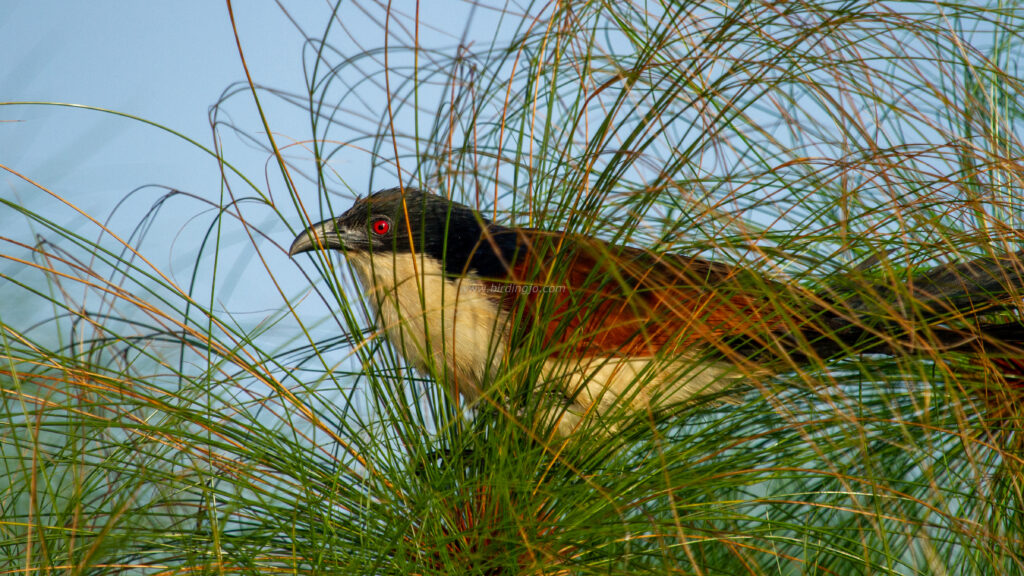
    Blue-headed Coucal
    Blue-capped Coucal. Mabamba, Entebbe, Dec 2020.
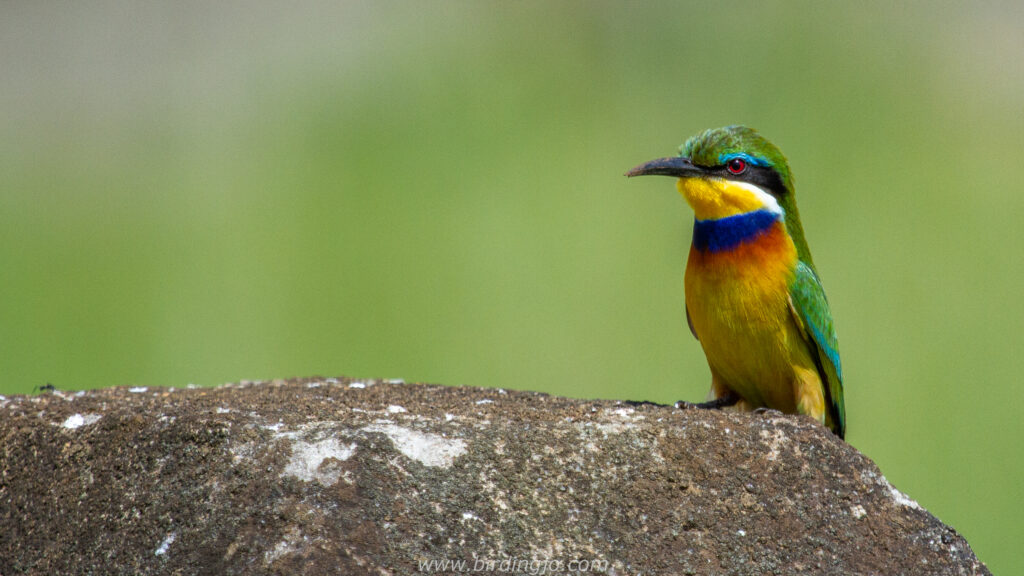
    Blue-breasted Bee-eater
    Blue-Breasted Bee-Eater. Beautiful bee-eater with a green back, yellow throat, and buffy underparts. Similar to Little B

    Wetlands and waterways

    Mabamba, Lutembe, the Kazinga Channel and the lakes of western Uganda have produced some of my most memorable encounters. Papyrus margins and floating vegetation support birds with remarkable specialisations: jacanas spread their long toes across lily leaves, kingfishers watch and dive from exposed perches, and waders read the mud and shallows with constant attention.
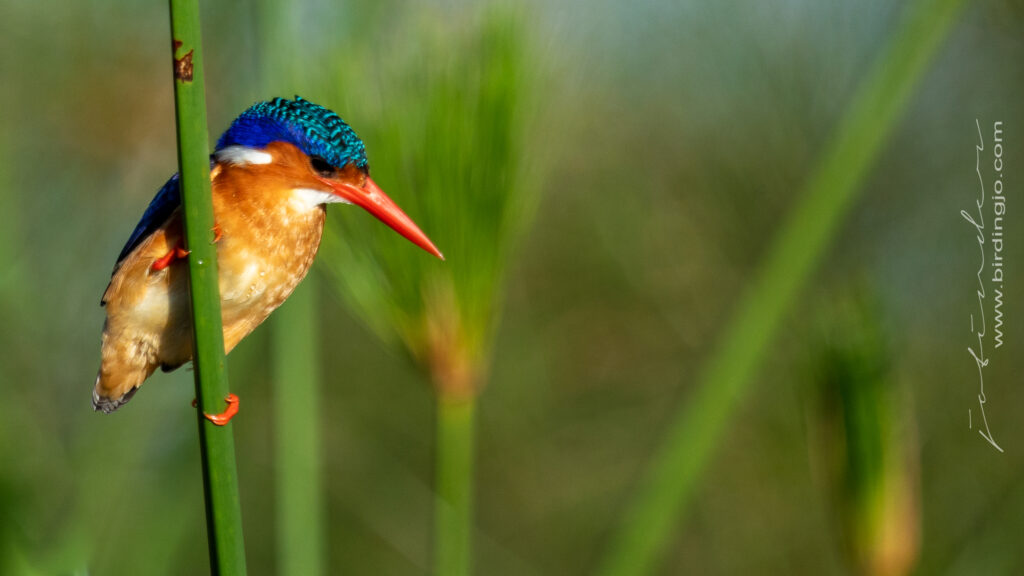
    Malachite Kingfisher

    Malachite Kingfisher. Mabamba Swamps, Entebbe, May 2021. The Malachite Kingfisher is tiny, brilliant and perfectly adapted to life beside water. Its concentrated patience reflects the character of wetland birding: wait quietly, watch closely, and the colour suddenly appears.
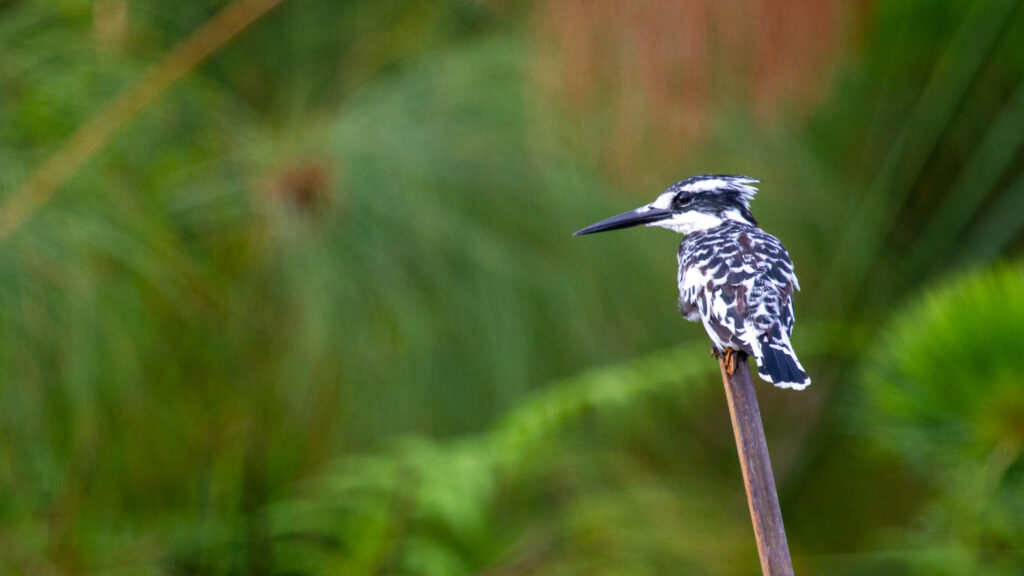
    Pied Kingfisher beside the Kazinga Channel
    Pied Kingfisher. Kazinga Channel, QENP, Uganda.
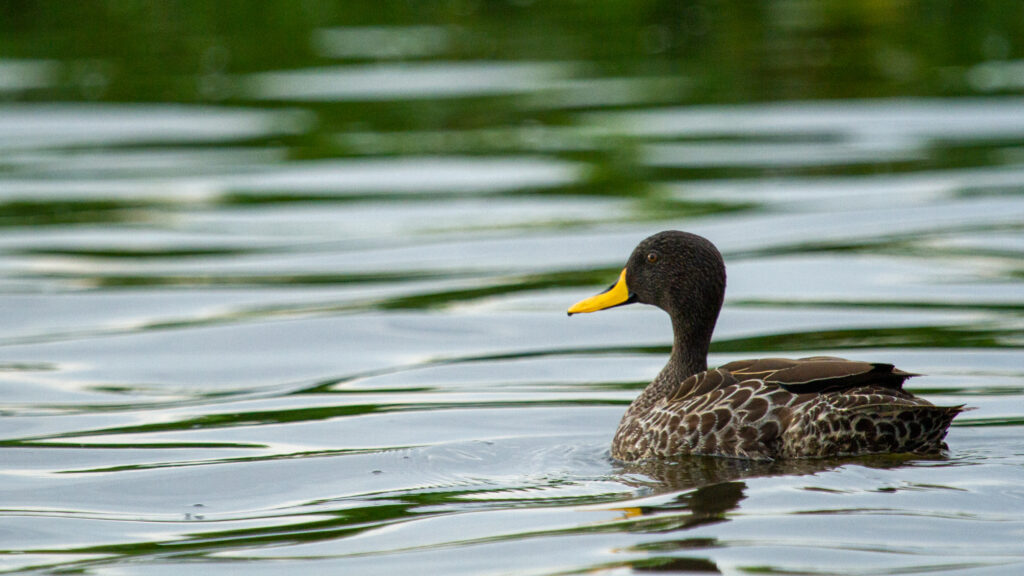
    Yellow-billed Duck in Mabamba Swamp
    Yellow Billed Duck. Mabamba Swamps, Lake Victoria, Uganda
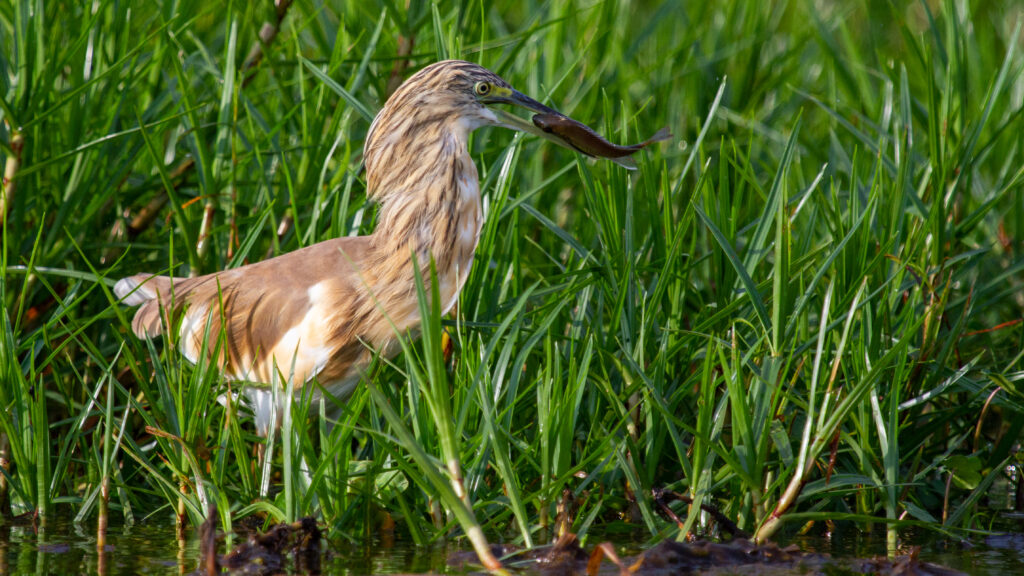
    Squacco Heron in Mabamba Swamp
    A Common Squacco Heron. Mabamba Swamps, Lake Victoria, Uganda
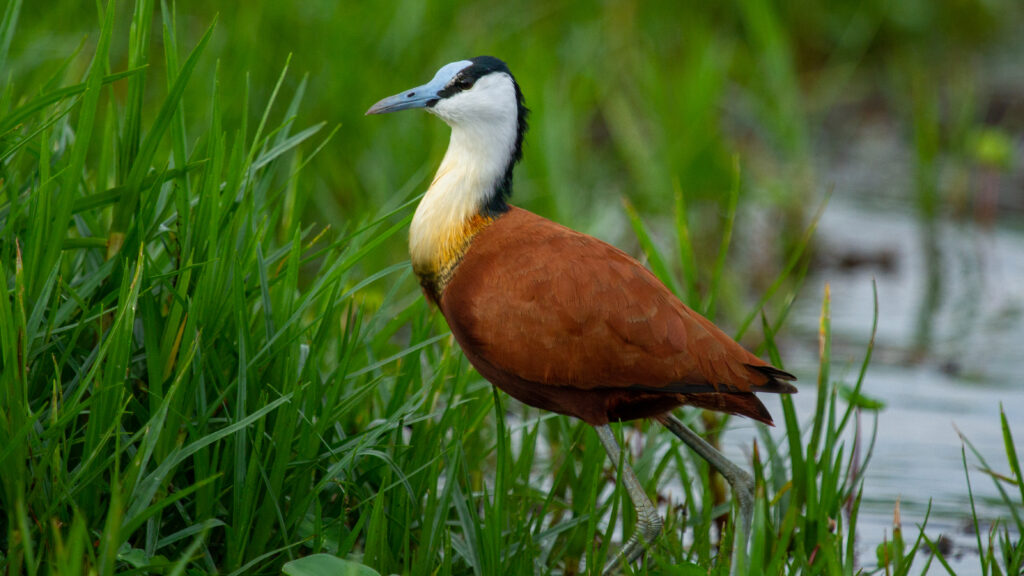
    African Jacana on floating vegetation
    African Jacana: Their long feet give them special abilities ! Mabamba Swamps, Lake Victoria, Uganda
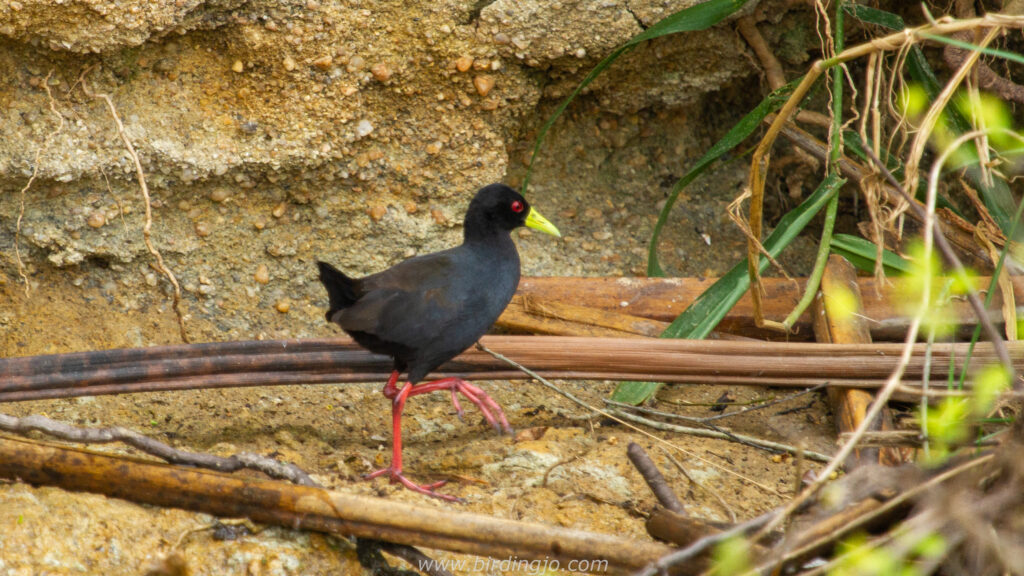
    Black Crake in wetland vegetation
    Black Drake. A very shy and runaway bride of the swamps – just won’t let you get a shot, leave aside go near. Anyway, so
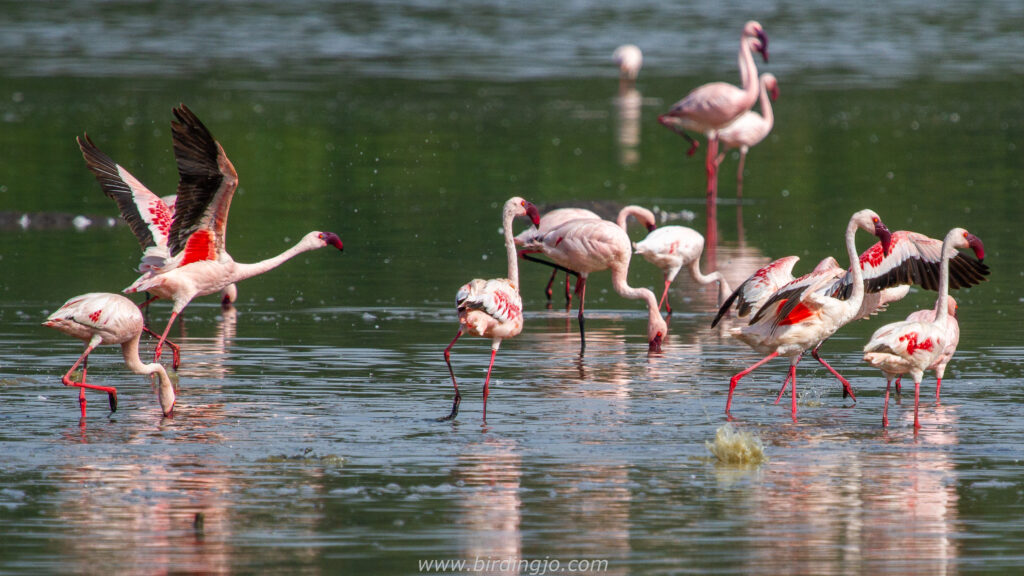
    Lesser Flamingos at Lake Munyanyange
    Lesser Flamingoes. Photographed at Lake Munyanyange, a crater lake in QENP, Uganda, March 2021
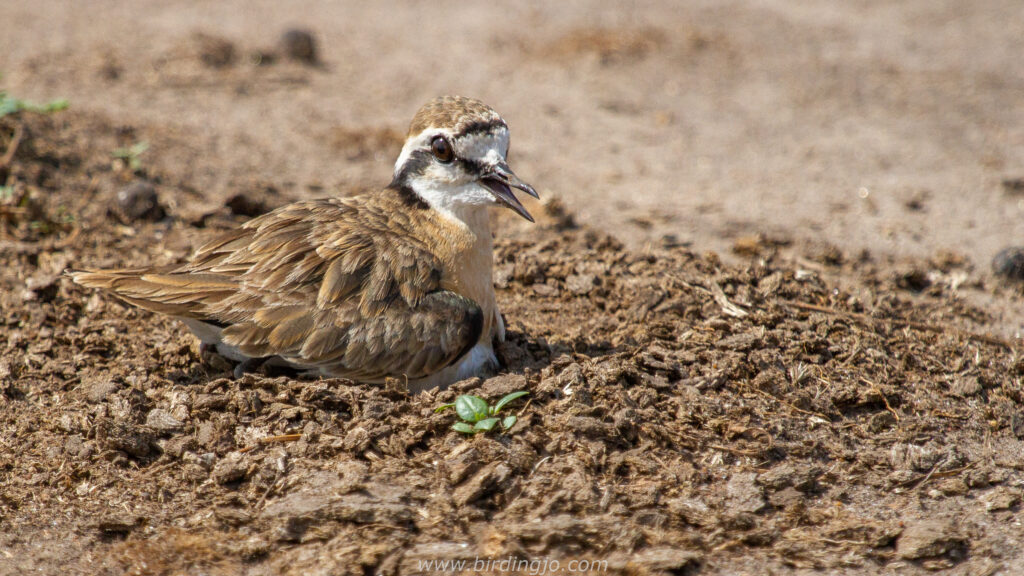
    Kittlitz’s Plover
    Kittlitz’s Plove r. Small plover with a brown back and pale underparts. Distinctive head pattern, with one black stripe
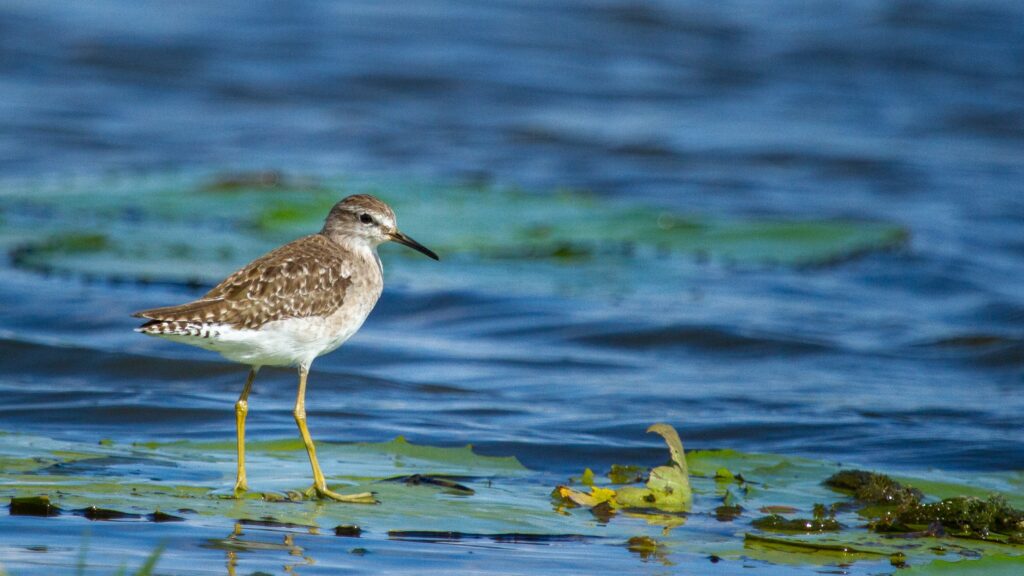
    Wood Sandpiper on a lily leaf
    Wood Sandpiper: Medium-sized brownish wader with a white belly, varied pale spotting and spangling on the back. Standin
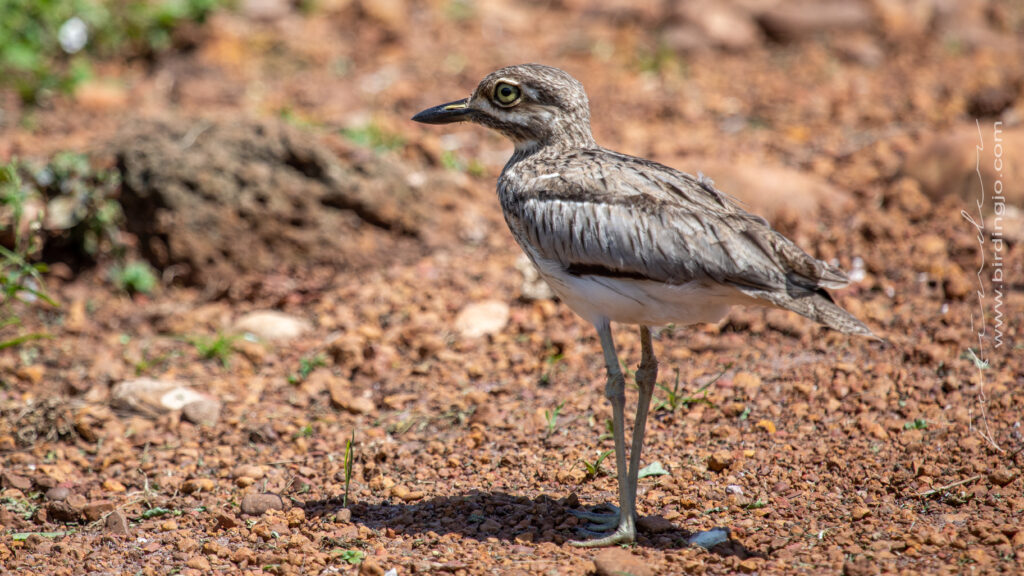
    Water Thick-knee
    Water Thick Knee. A plover-like bird with large, yellow eyes. Crepuscular and nocturnal, always stays closer to the per
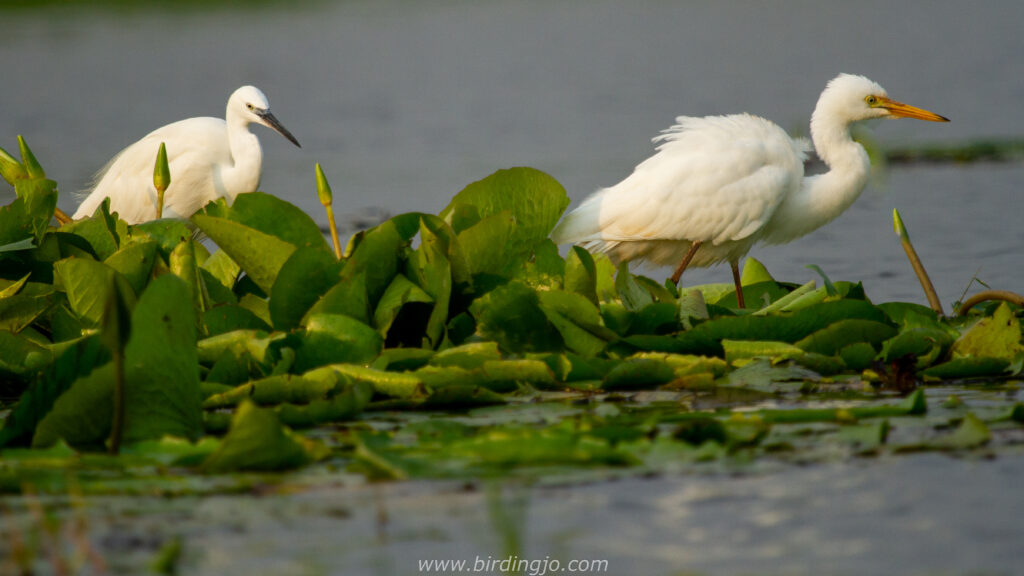
    Intermediate Egret and Little Egret together
    An Intermediate (yellow beak) and a Little Egret.
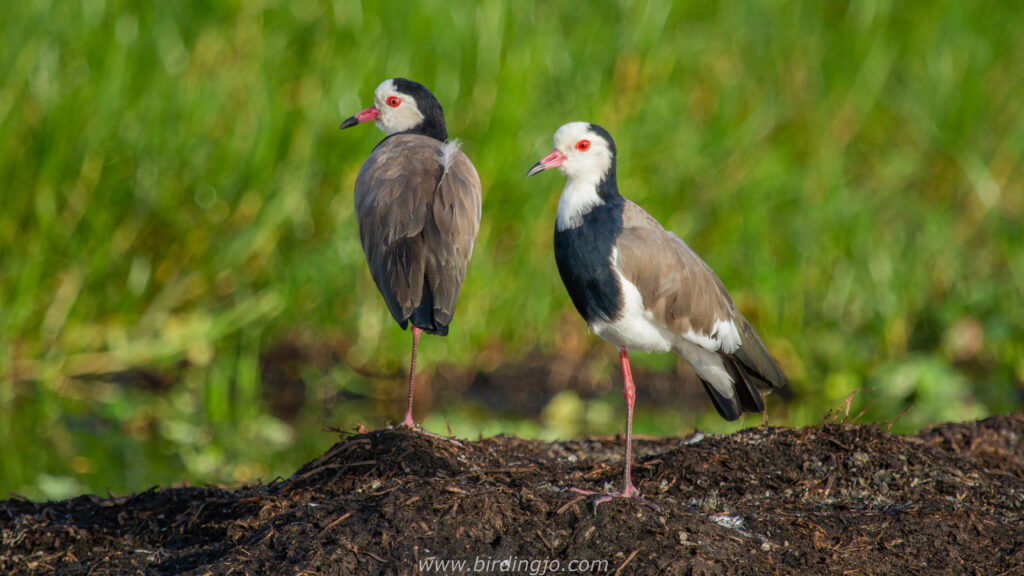
    Long-toed Lapwings on floating vegetation
    Long Toed Lapwing: Boldly marked with a white face and throat framed by a black nape and breast band. Wetlands and floa
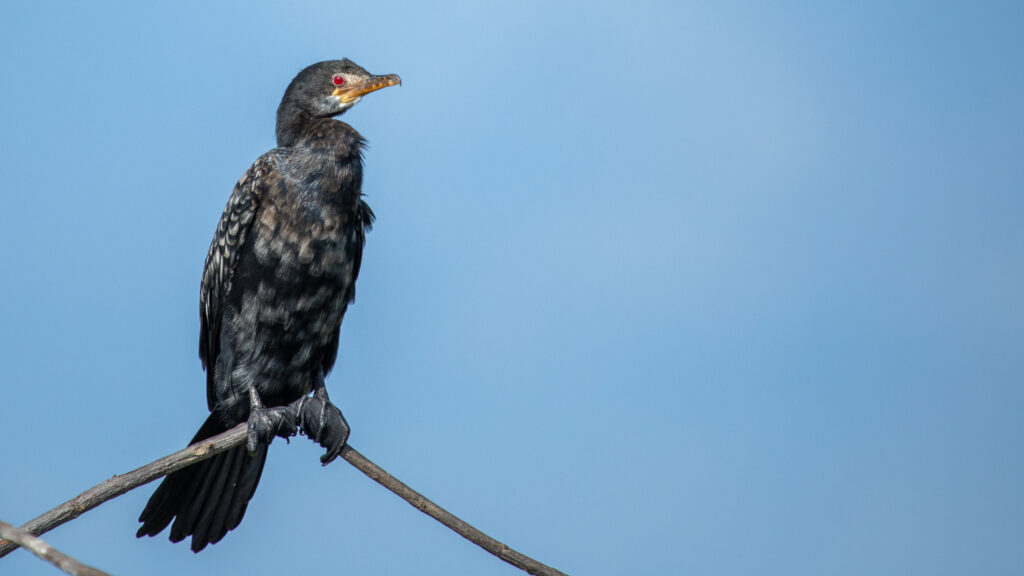
    Long-tailed Cormorant
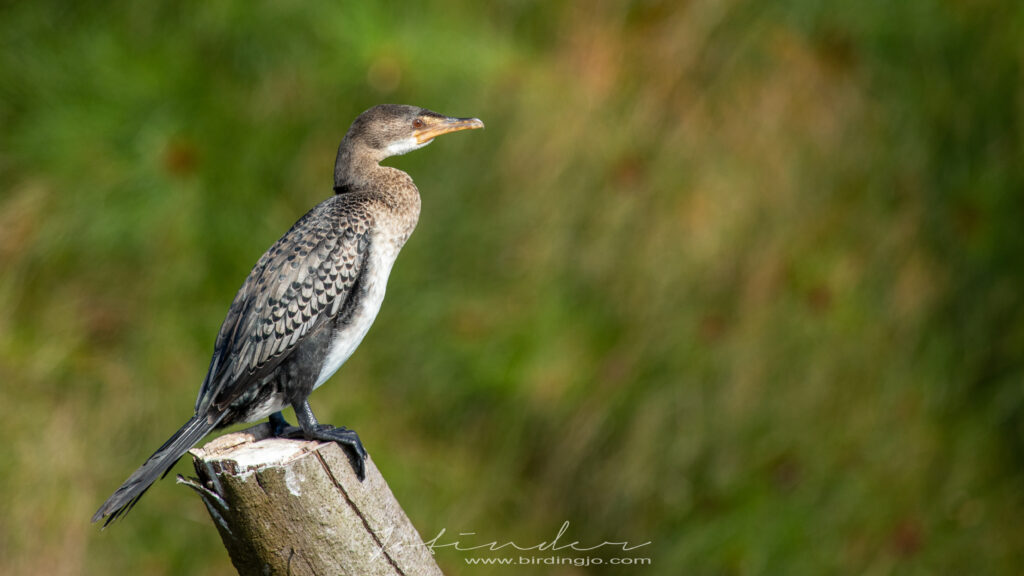
    Long Tailed Cormorant. Mabamba Swamps, May 2021.
    Great Cormorant
    Large Cormorant. Mabamba Swamps, May 2021.
    White-faced Whistling Duck
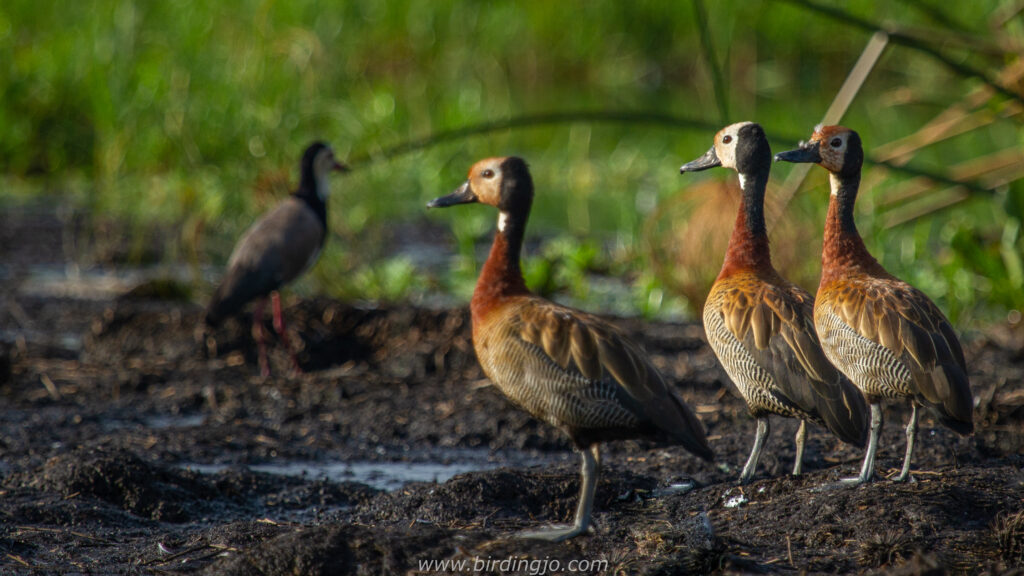
    White Faced Whistling Duck. Distinct duck with black-and-white head, rufous breast, and barred flanks. As all whistling-
    Hadada Ibis in Entebbe
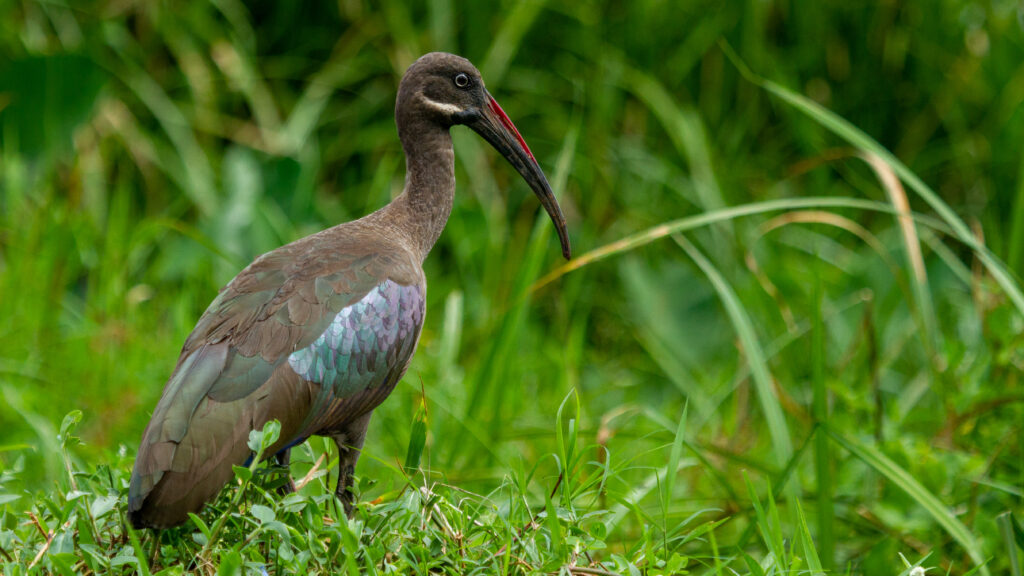
    Hadada Ibis. Noisy and not shy, live amongst human habitat. Entebbe, Uganda.
    Marabou Stork
    Marabou Stork: A large, grisly looking stork, who is not shy of moving about amongst the humans in towns – practically,

    Raptors and other hunters

    From eagle-owls and goshawks to Bateleurs, snake-eagles and vultures, East Africa’s hunters reveal how many strategies can evolve around the same necessity. Some search from exposed perches, some quarter the ground and others patrol enormous distances on rising air.
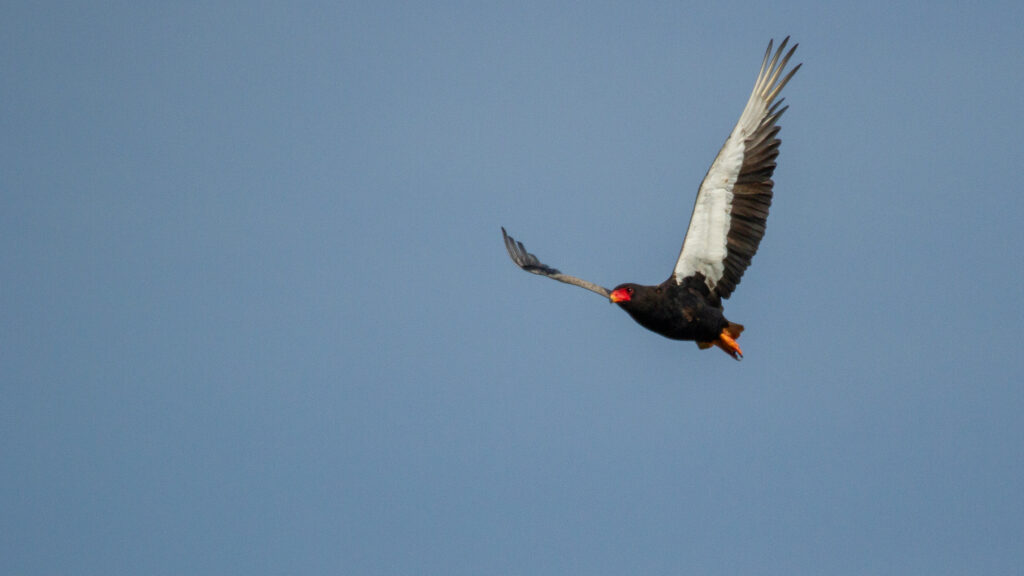
    Bateleur Eagle

    Bateleur: A Very Unique Eagle with a Short Tail and Fabulous Flight Patterns. Kihihi Area, QENP, Uganda. The Bateleur is among the most distinctive silhouettes over the savanna. Its rocking flight and bold pattern make it unmistakable even at a distance—a bird that seems to belong as much to the sky as to the landscape below.
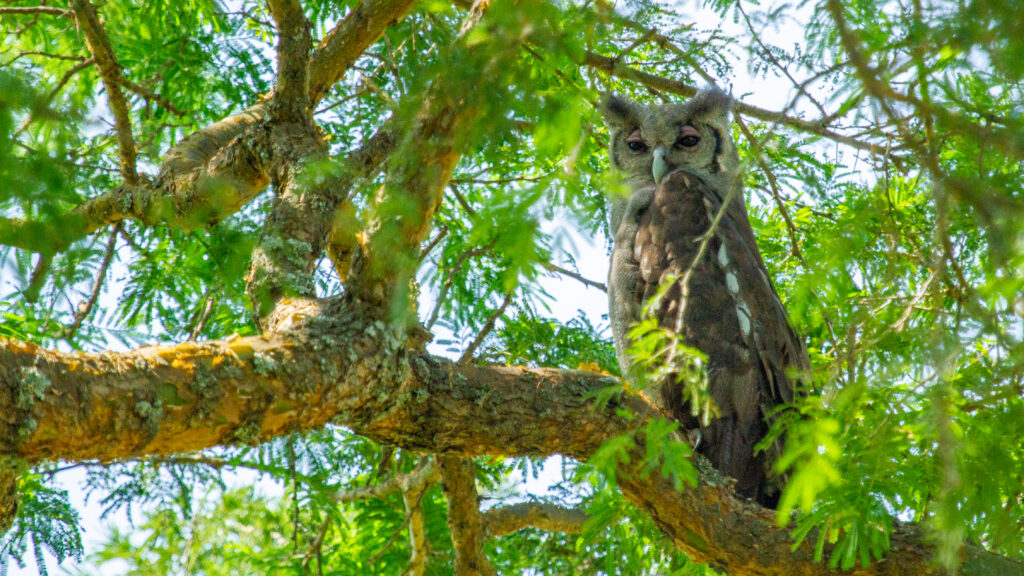
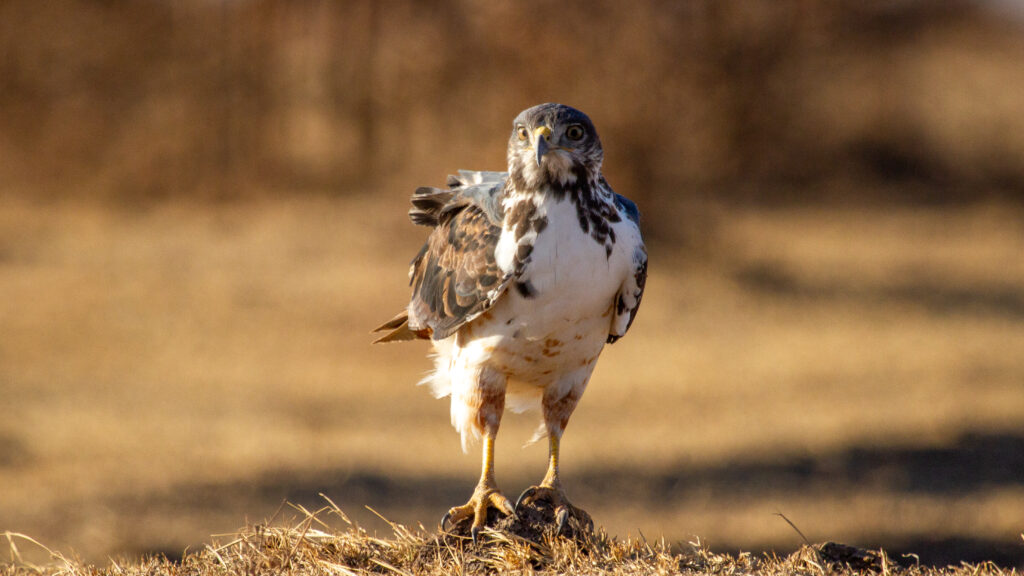
    Verreaux’s Eagle-Owl
    Verreaux’s Eagle Owl. Kihihi Area, QENP, Uganda. Feel absolutely lucky to have found this wise one. Please note that Owl
    African Goshawk in the Maasai Mara
    African Goshawk. Maasai Mara, Kenya.
    Short-toed Snake-Eagle
    Short-Toed Snake Eagle. Kihihi Area, QENP, Uganda.
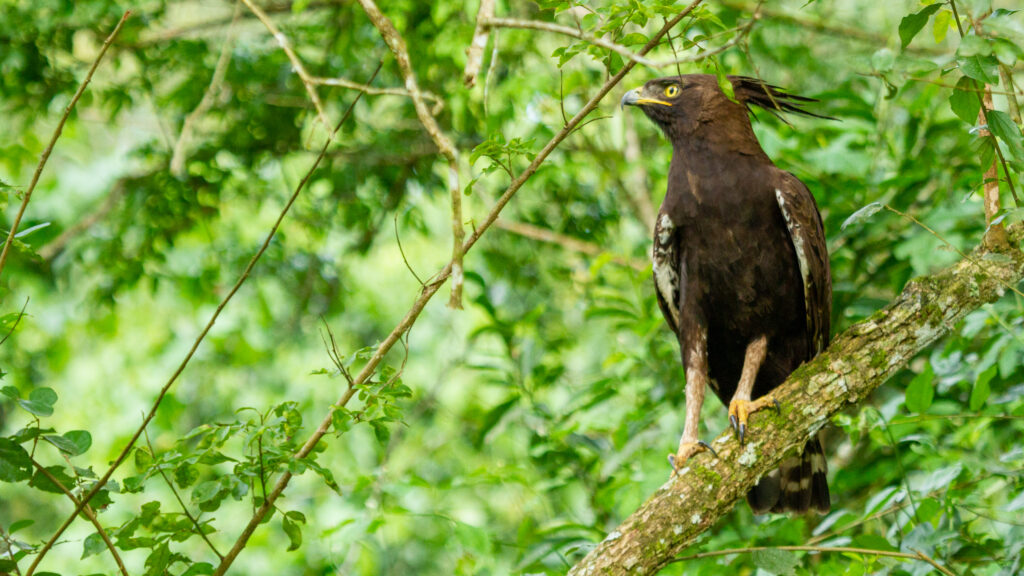
    Long-crested Eagle
    Long Crested Eagle. QENP, Uganda.
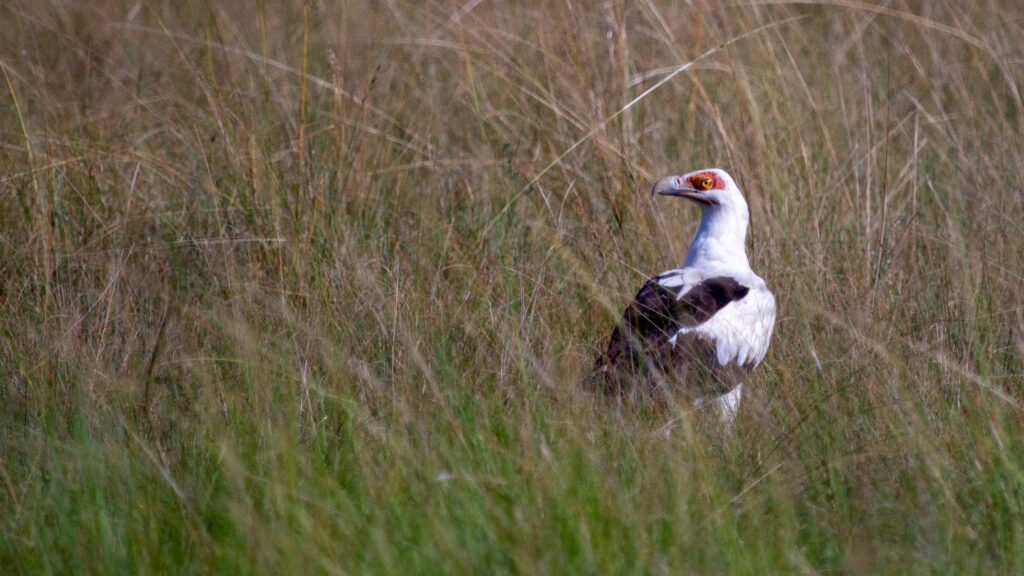
    Palm-nut Vulture
    Palm Nut Vulture. Quite Similar to African Fish Eagle (below) Kihihi Area, QENP, Uganda.
    African Fish Eagle perched
    African Fish Eagle: A Magnificent Raptor to observe either on a perch…
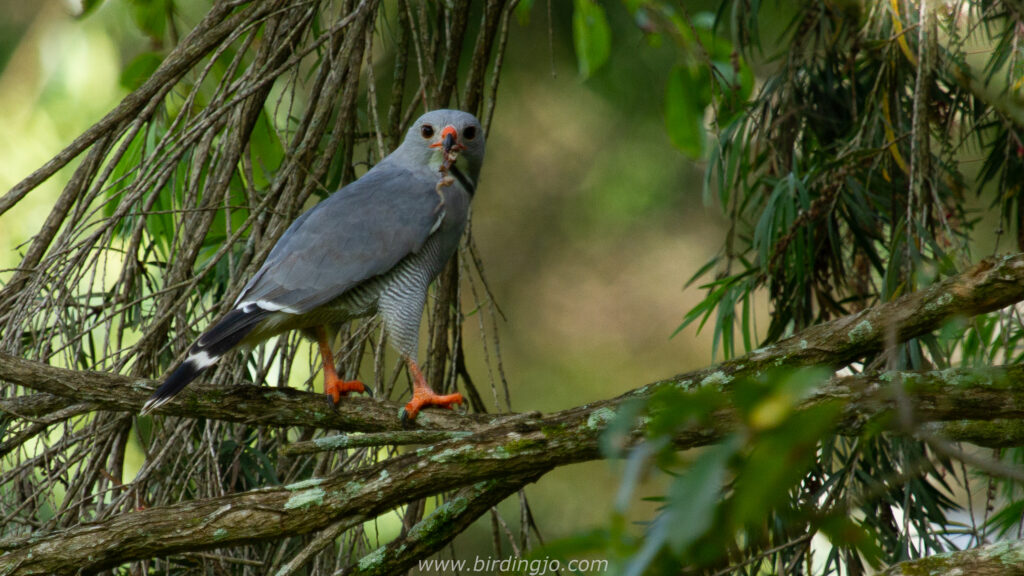
    Lizard Buzzard in Entebbe Botanical Garden
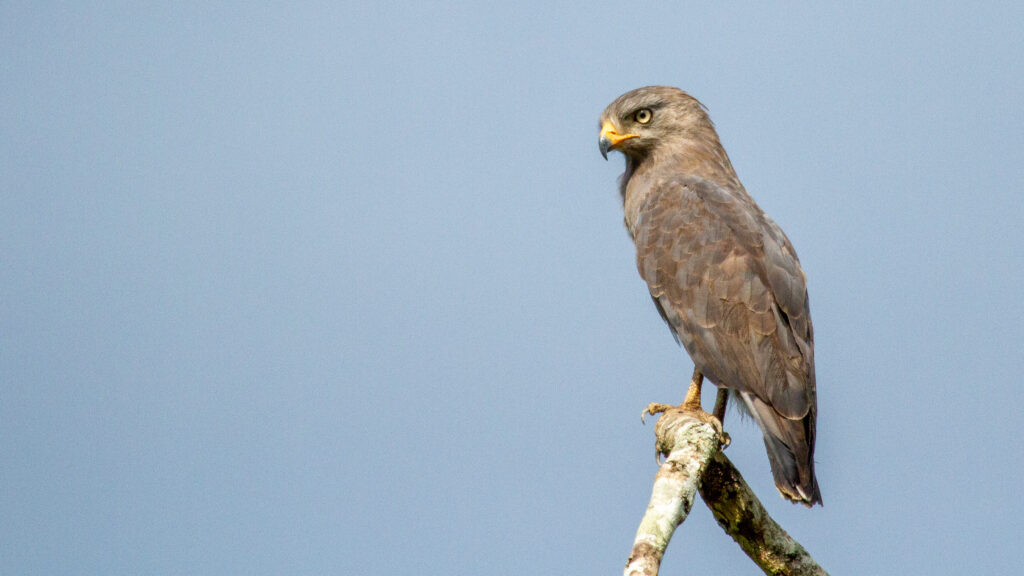
    Lizard Buzzard: A small, gray buzzard, vertical black stripe on the throat is distinctive. Observed in singles or pairs
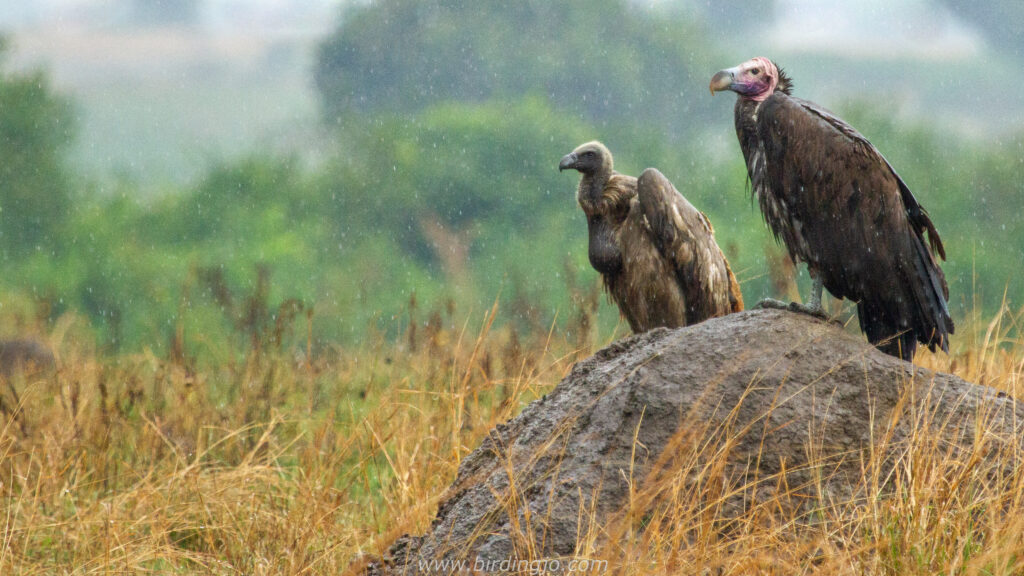
    Lappet-faced and Rüppell’s Griffon Vultures
    Lappet-Faced and Ruppell’s Griffon Vultures sharing a mound and some quiet time in the downpour. Lappet-Faced are larger

    Forests, gardens and woodland edges

    Forest and garden birding rewards attention to movement, voice and brief flashes of colour. Gonoleks, parrots, robin-chats, hornbills and turacos often reveal themselves first by sound, then by a sudden opening in the foliage.
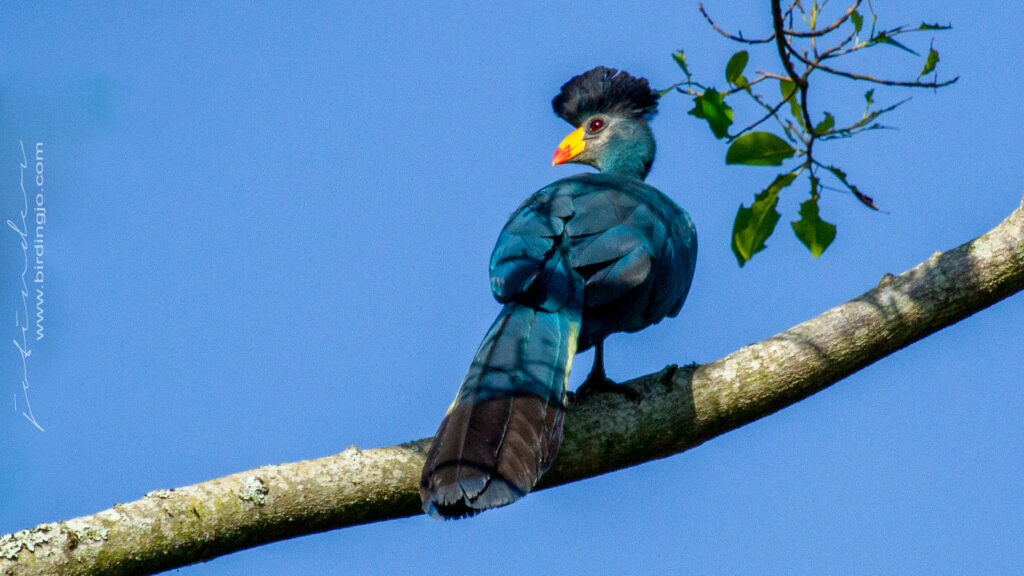
    Great Blue Turaco

    Great Blue Turaco. All birds are beautiful, some are just beyond comparison. Turacos are such species. Photographed at Botanical All birds are beautiful, but the Great Blue Turaco is beyond comparison. Its scale, colour and deliberate movement give every encounter the quality of an event.
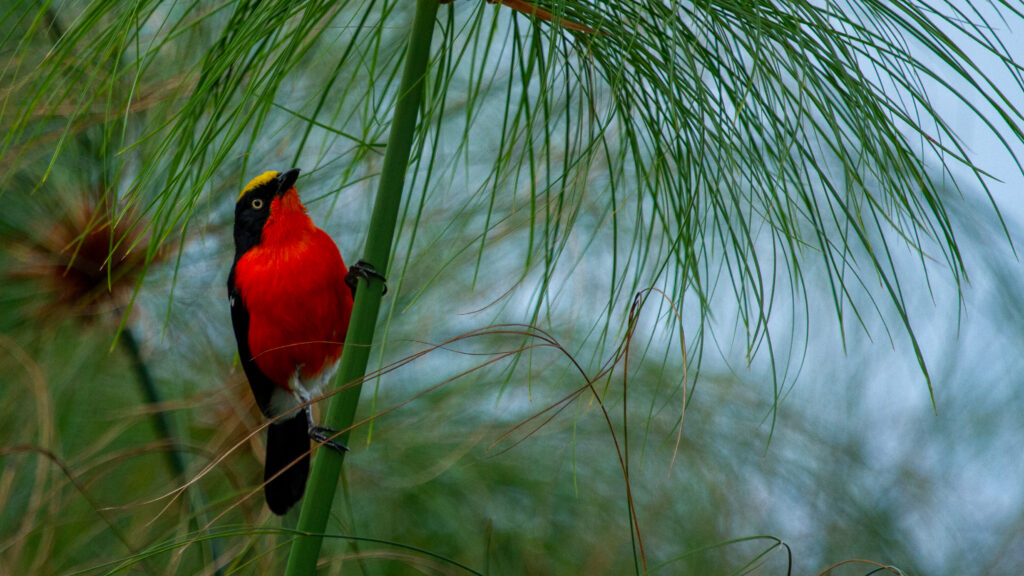
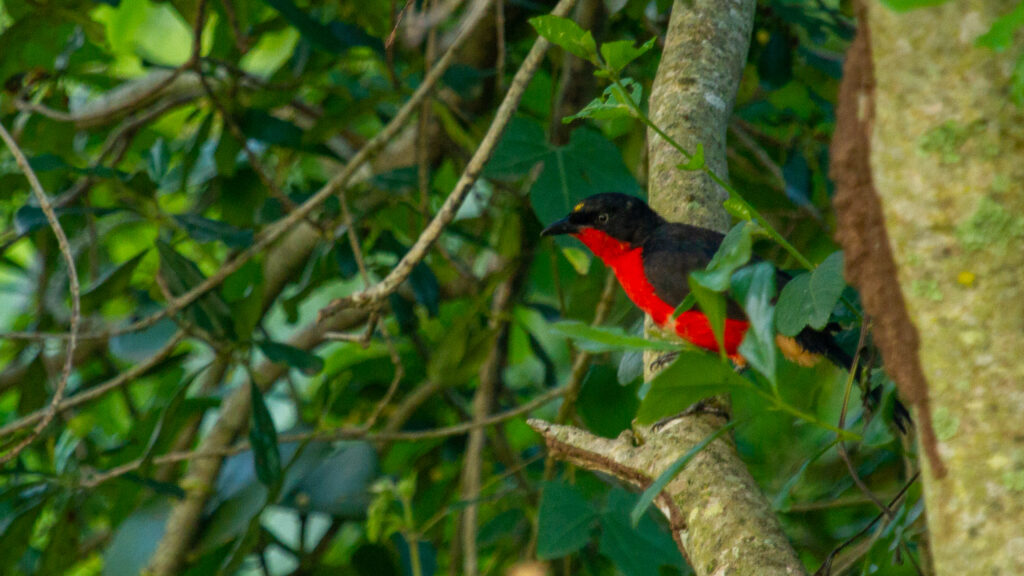
    Papyrus Gonolek in papyrus habitat
    Papyrus Gonolek. Habitat restricted to papyrus swamps. Mabamba Swamps, Near Entebbe, Uganda.
    Black-headed Gonolek in woodland
    Black Headed Gonolek. The other species of Gonolek can be found in bush, woodland, thickets, cultivated areas.Both spec
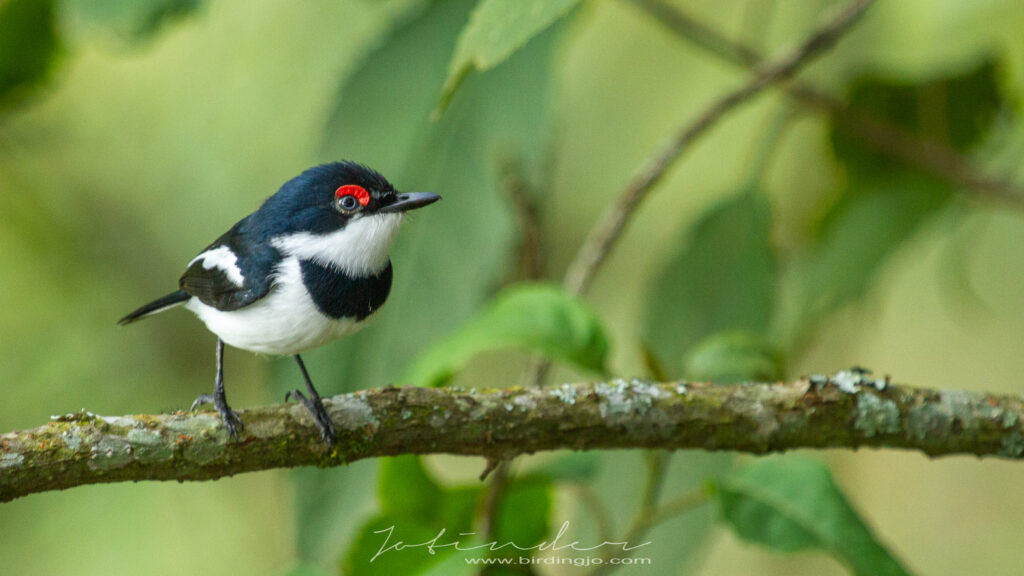
    Male Brown-throated Wattle-eye
    Brown-Throated Wattle-Eye, Male. The female has the brown throat patch. What a songster – one of the most melodious song
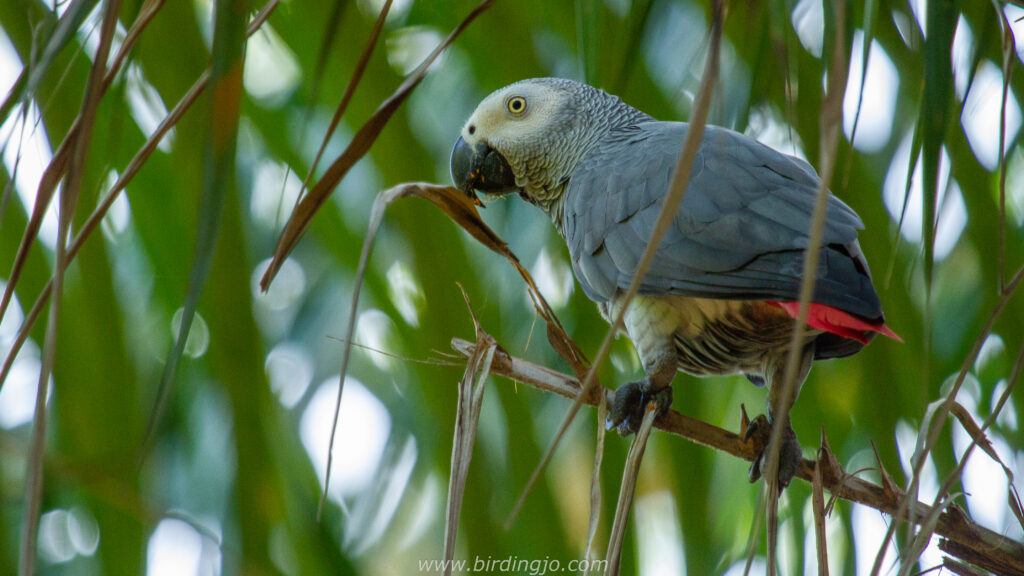
    African Grey Parrot
    Gray Parrot. Large gray parrot with a white face and red tail. Possess an impressive vocal repertoire including whistles
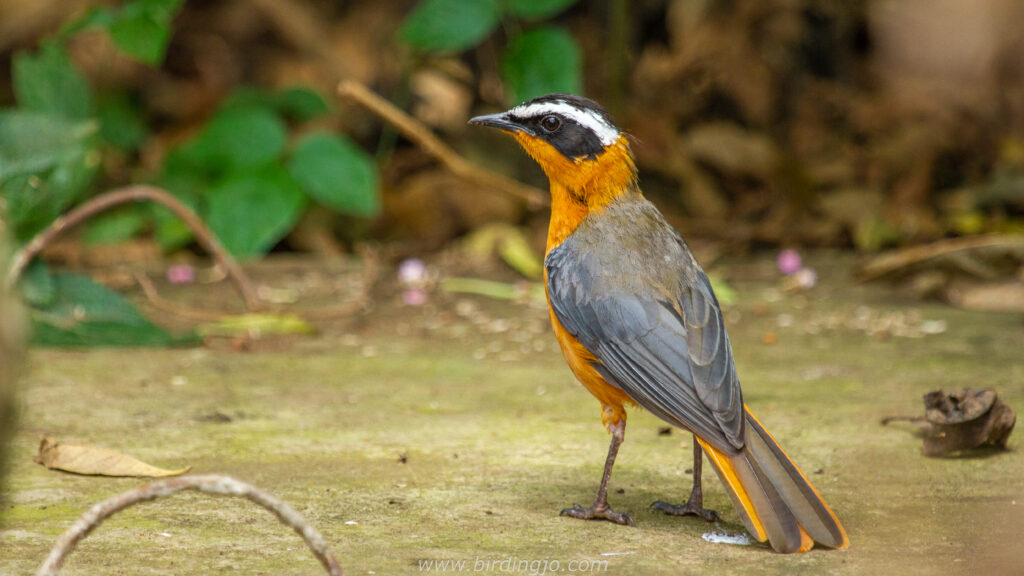
    White-browed Robin-Chat
    White-Browed Robin-Chat. Pairs prefer forest thickets in well developed woodland, where they forage on the ground and si
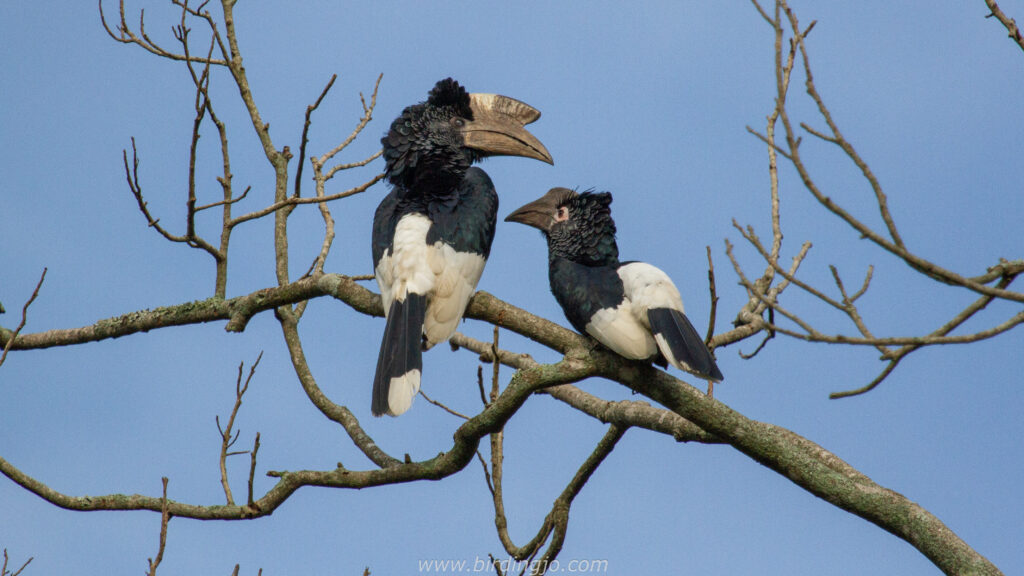
    Pair of Black-and-white-casqued Hornbills
    A pair of Black and White Casqued Hornbills. No prizes for guessing the larger male on the left and female on the right.
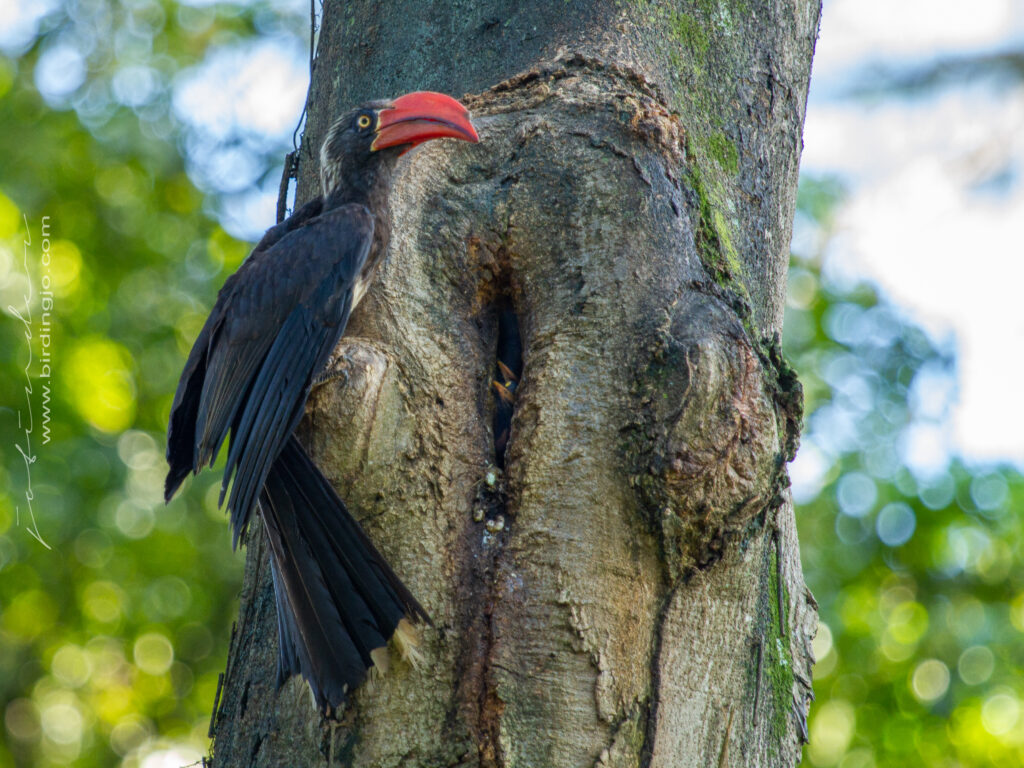
    Crowned Hornbill at a nesting cavity
    Crowned Hornbil l.

    Weavers, finches and display birds

    Weavers turn everyday materials into architecture. Bishops, firefinches, whydahs, widowbirds, sunbirds and starlings add another layer of display—colour, song and movement shaped by season and courtship.
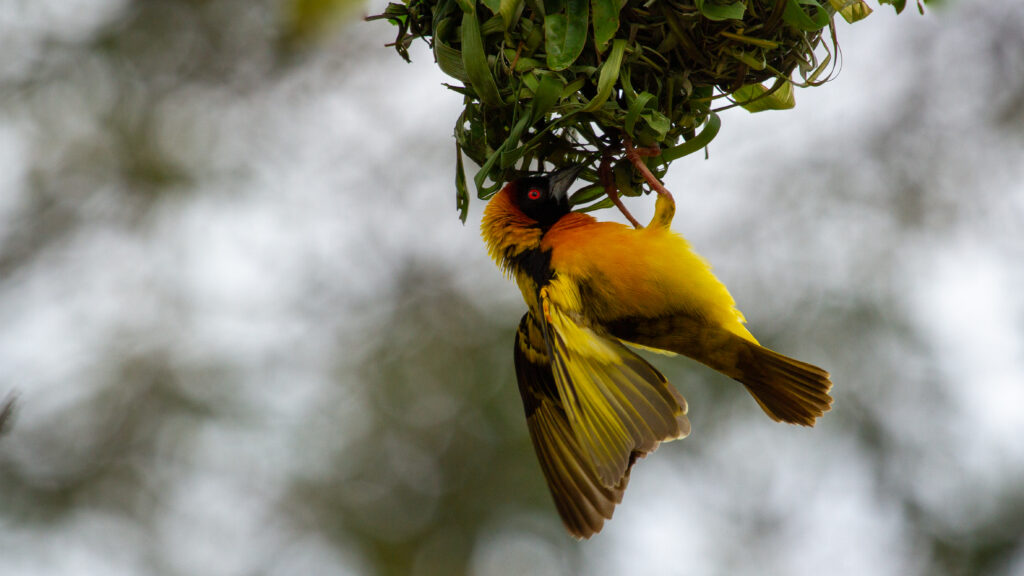
    Village Weaver beside its nest

    A male Black Headed Weaver (aka Village Weaver), Itanda Falls, Jinja, Uganda. Male builds the nest, females inspect and Male Village Weavers build suspended nests with remarkable speed and persistence, then wait while females inspect the work. The woven structure is both courtship and engineering.
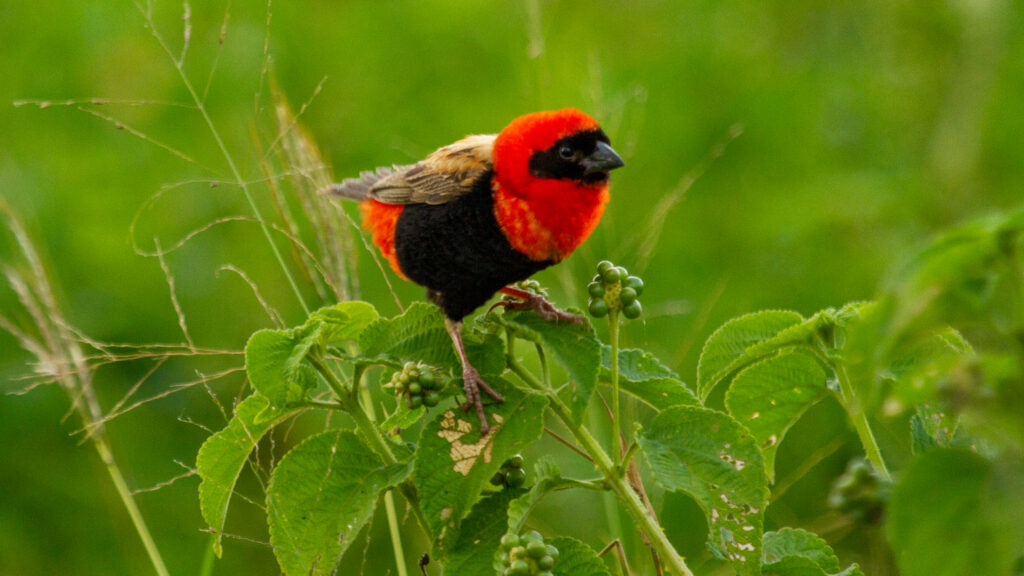
    Southern Red Bishop on lantana
    Southern Red Bishop on the invasive Lantana. QENP, Uganda.
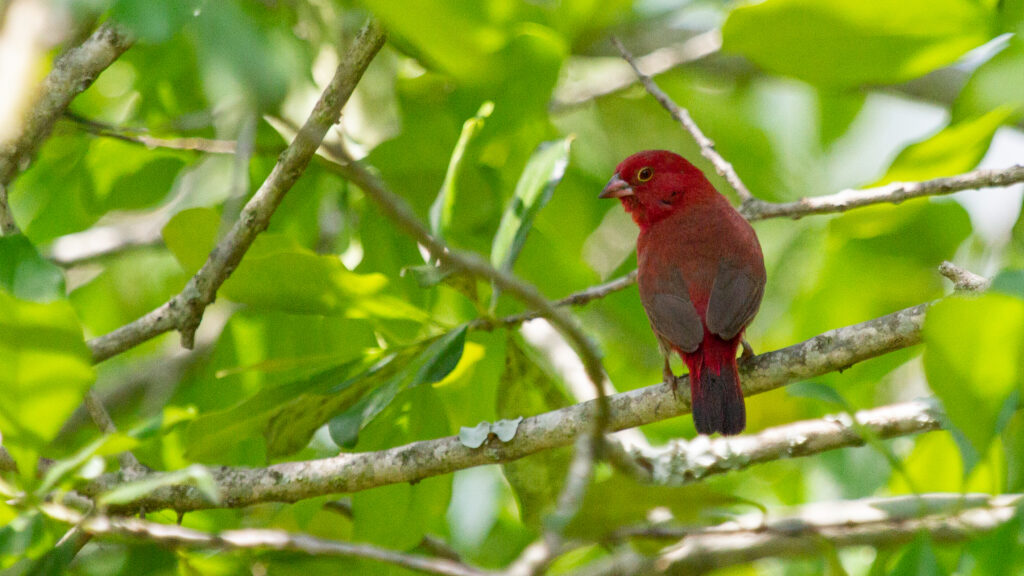
    Red-billed Firefinch
    Red-billed Firefinch. QENP, Uganda.
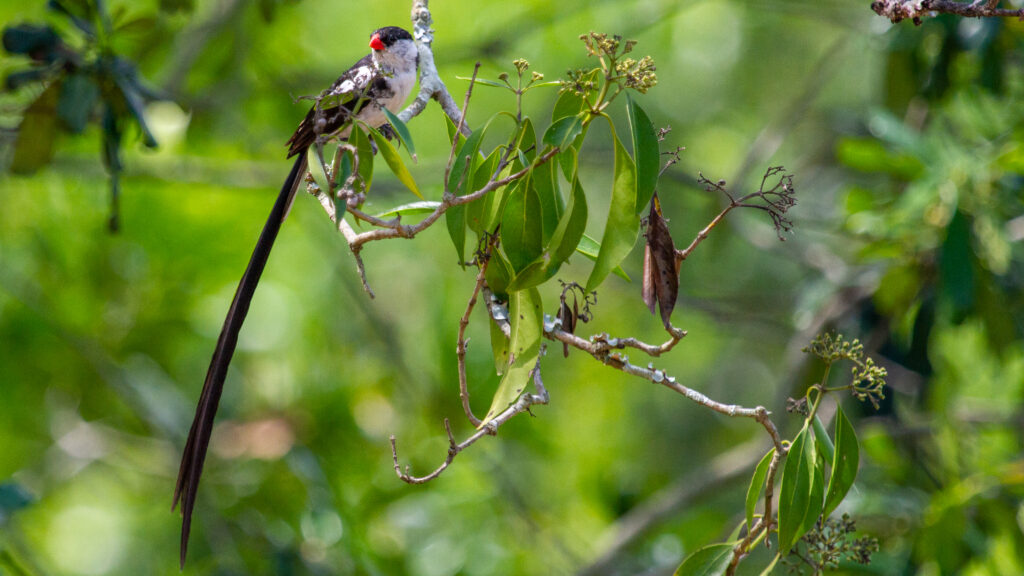
    Male Pin-tailed Whydah in breeding plumage
    Pin-Tailed Whydah. A Male in Breeding Plumage. Exquisite aerial dance to attract females (dull brown, no tail). Kazinga
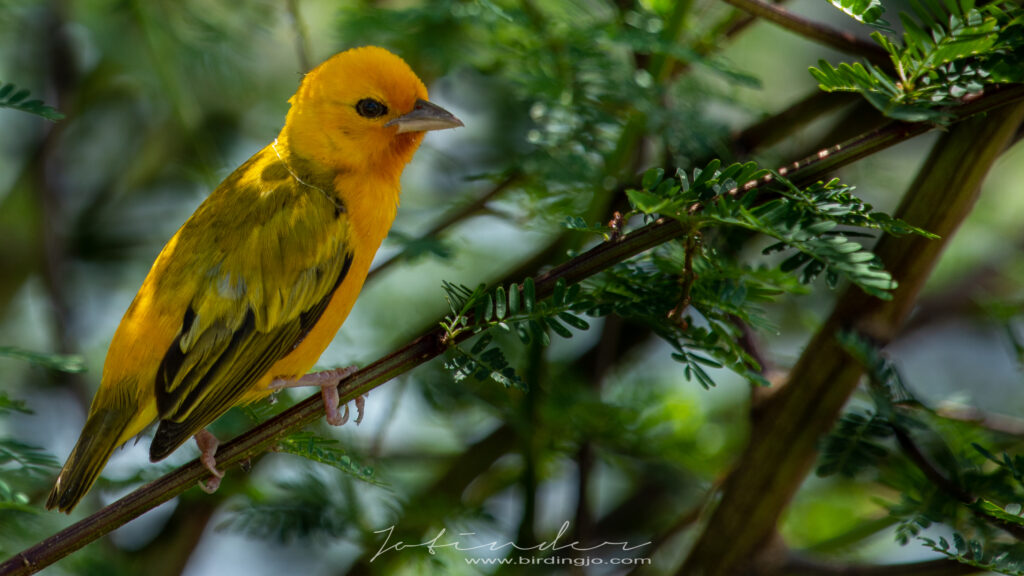
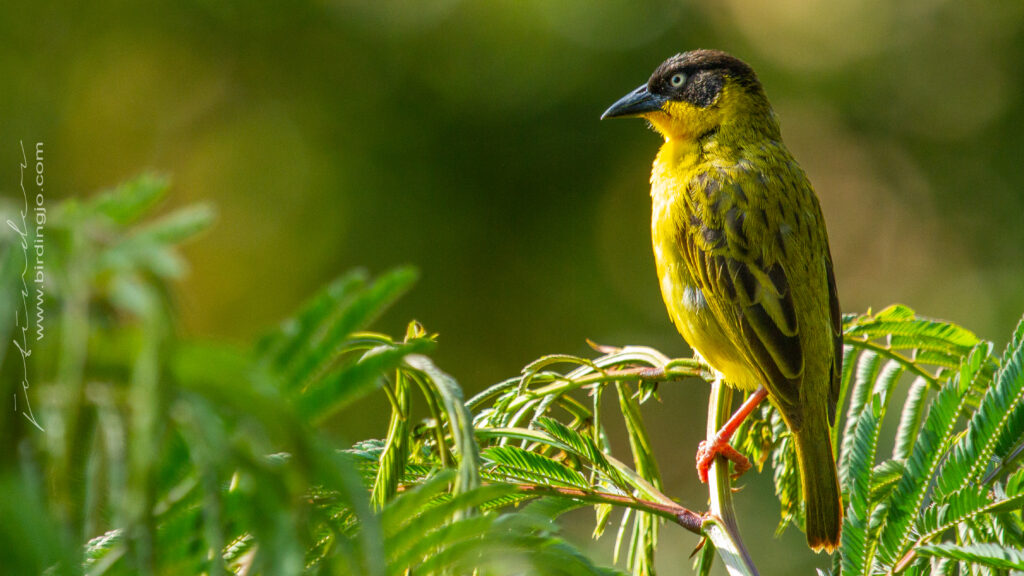
    Male Orange Weaver
    Orange Weaver, Male. Not so common as the Village / Black Headed weavers. Photographed at Ngamba Island (aka Chimpanzee Islan
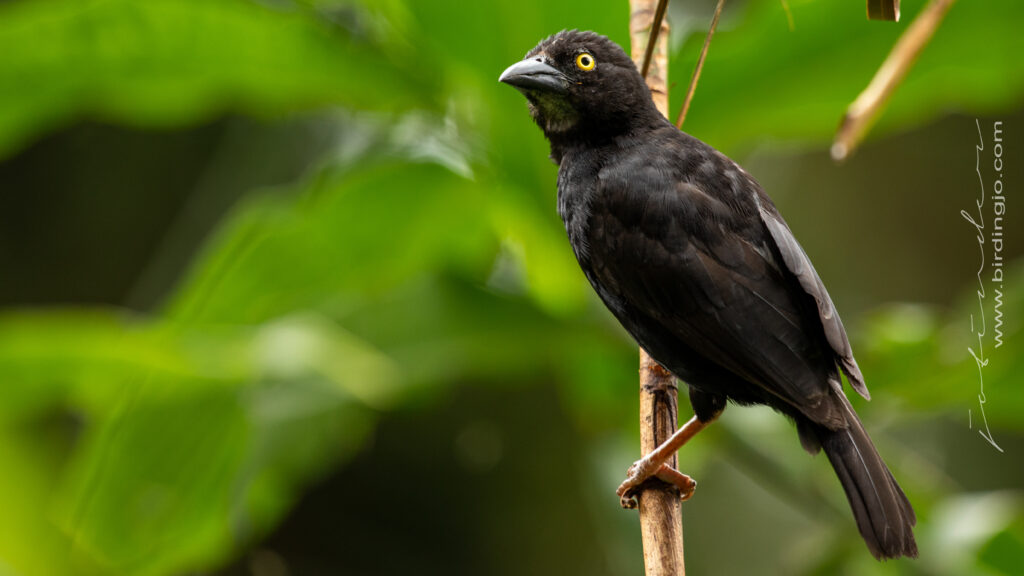
    Male Vieillot’s Black Weaver
    Vieillot’s Black Weaver. Male. Unusual dark weaver, males show variation in colouration going westwards in Africa, howe
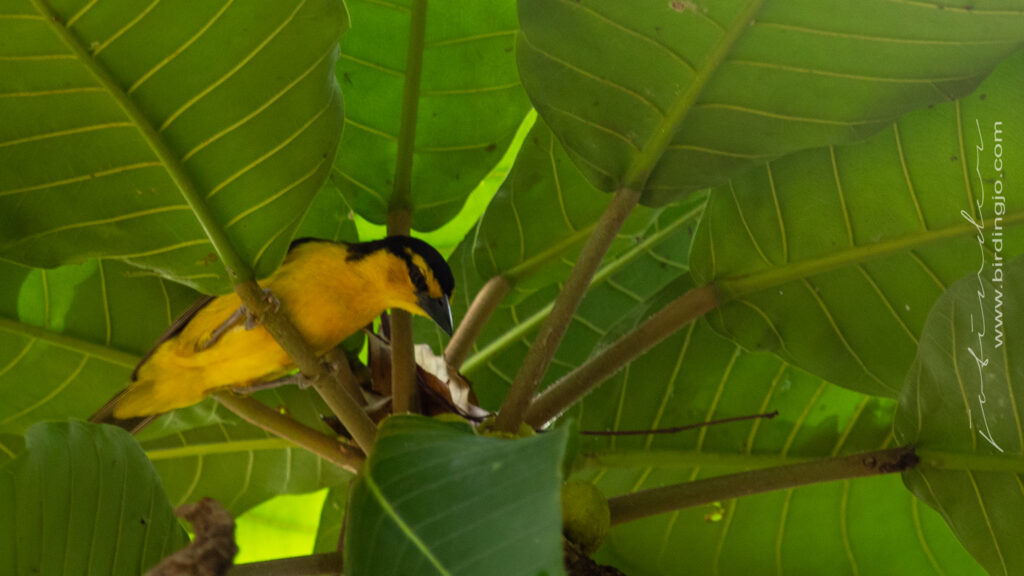
    Female Baglafecht Weaver
    Baglafecht Weaver, Female. Lake Buniyoni, South Western Uganda. March 2021
    Female Black-necked Weaver
    Black Necked Weaver, Female.
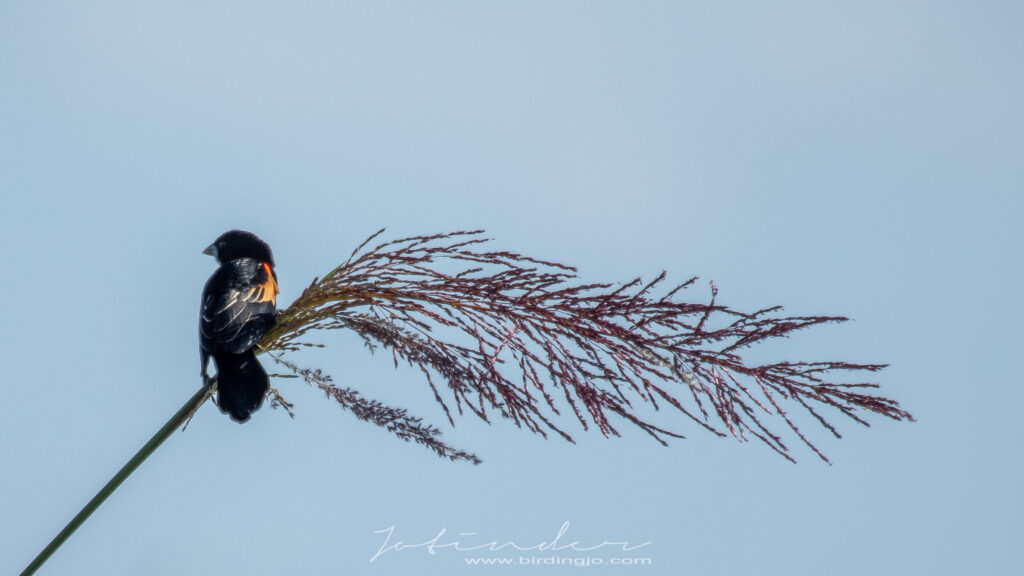
    Male Fan-tailed Widowbird
    Fan-Tailed Widowbird. Male. Mabamba Swamps, Entebbe. May 2021.
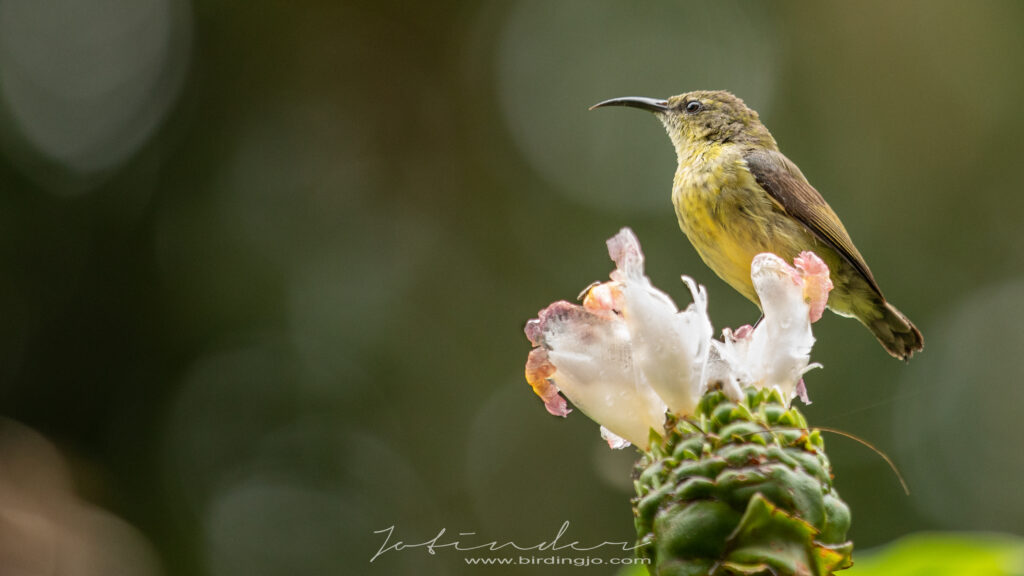
    Female Olive-bellied Sunbird
    Olive Bellied Sunbird, Female. Botanical Garden, Entebbe. June 2021.
    Rüppell’s Starling
    Ruppe l l’s Starlin g. QENP, Dec 2020.

    Wild birds, lasting memories

    “Tame birds sing of freedom. Wild birds fly.”
    — John Lennon

    These photographs are records rather than trophies. Some were made in perfect light; others through foliage, rain or the movement of a boat. Together they preserve the character of the places and the privilege of meeting birds on their own terms.

    East Africa may be celebrated for the Big Five, but its birdlife rewards a slower kind of safari. Every papyrus stem, woodland edge and roadside perch offers another reason to stop, listen and look again.

    Happy birding—and happy exploring.

  • Eastern Lowland Gorillas of Kahuzi-Biega

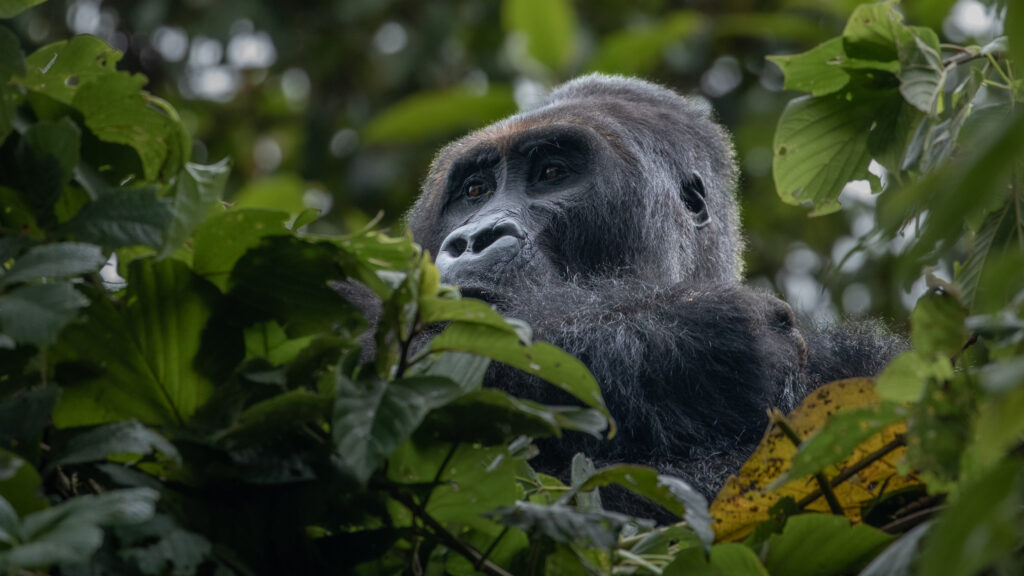
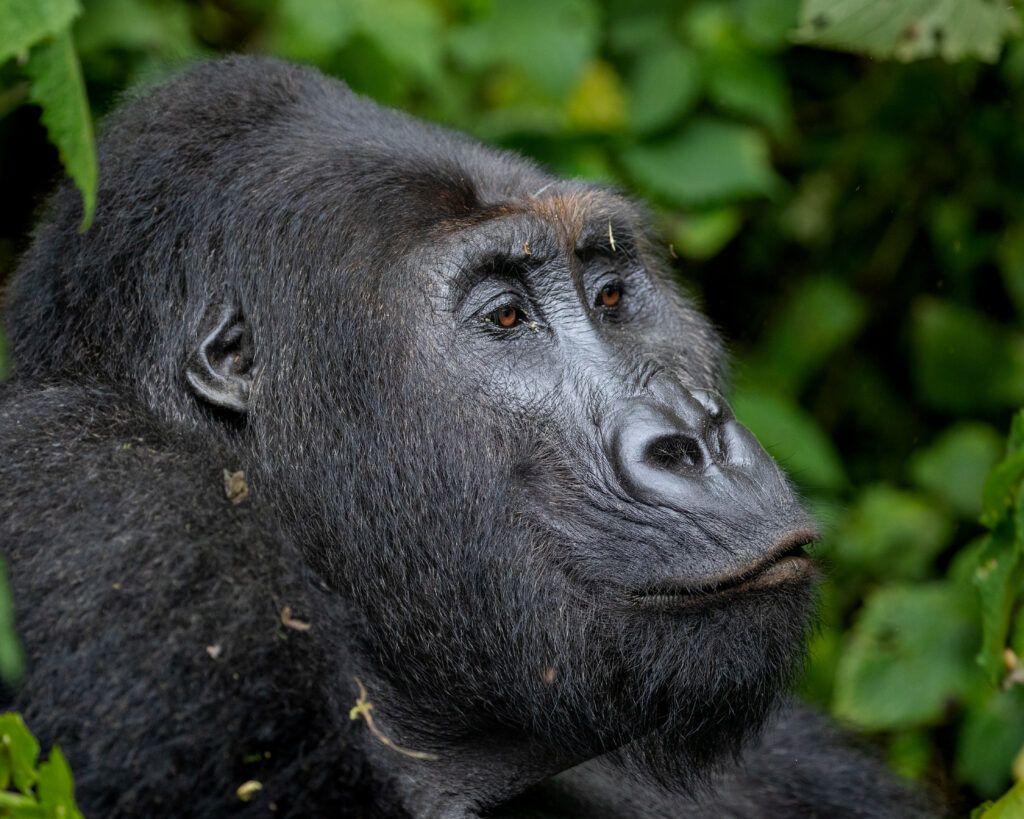
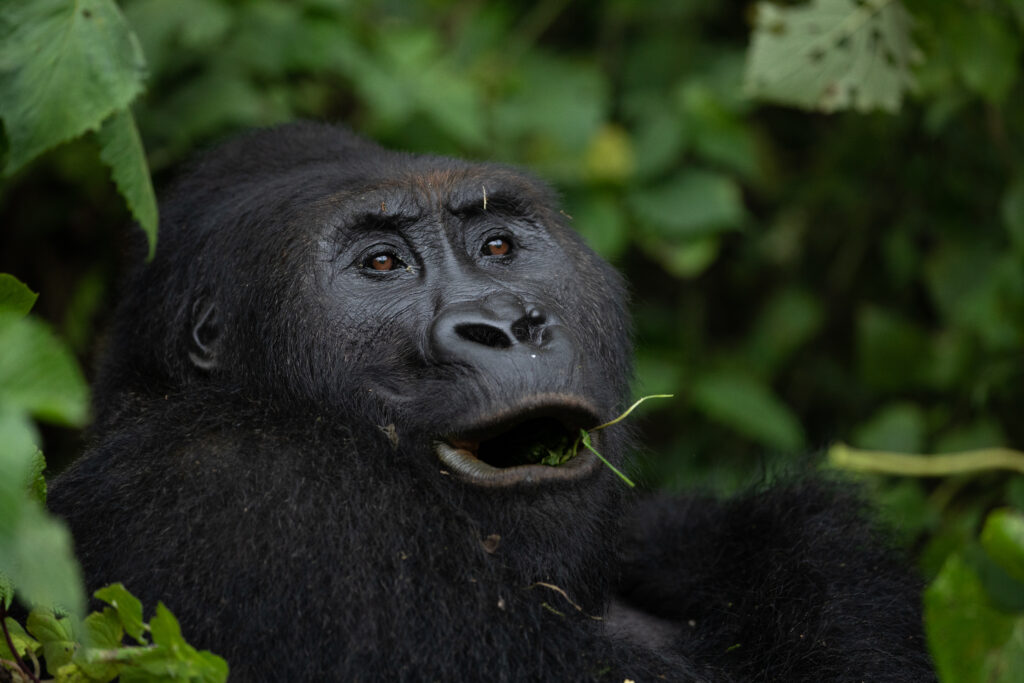
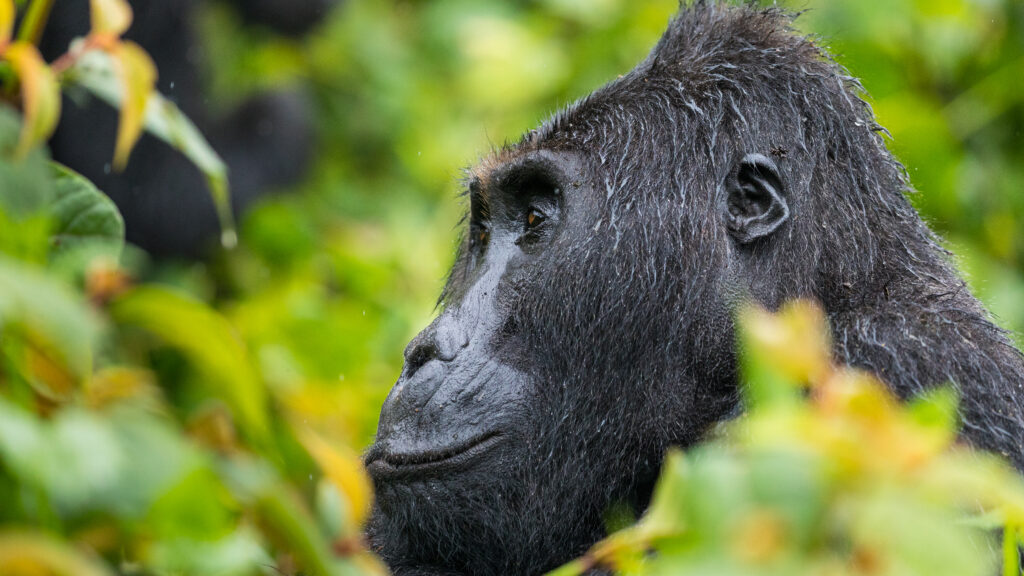
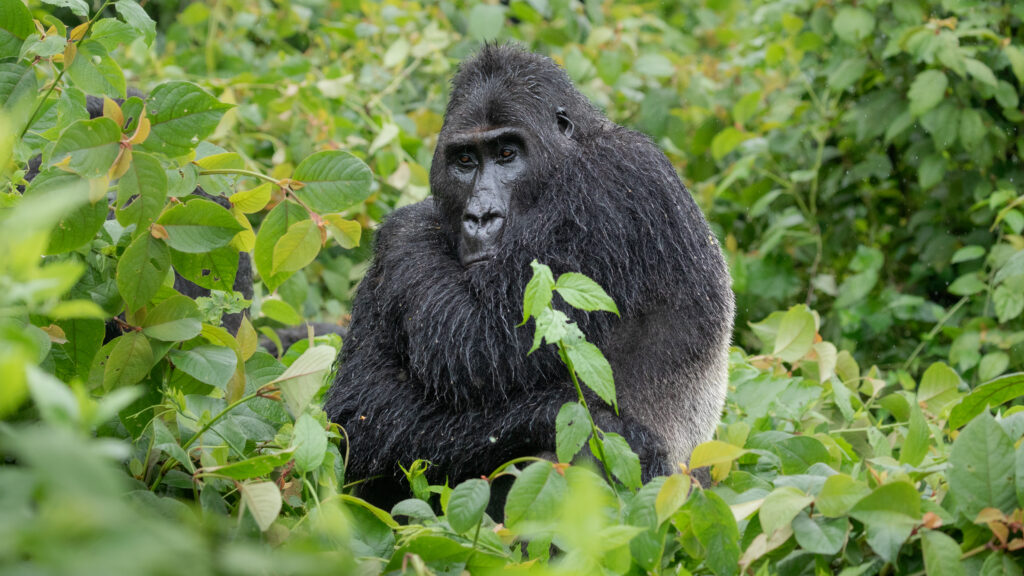
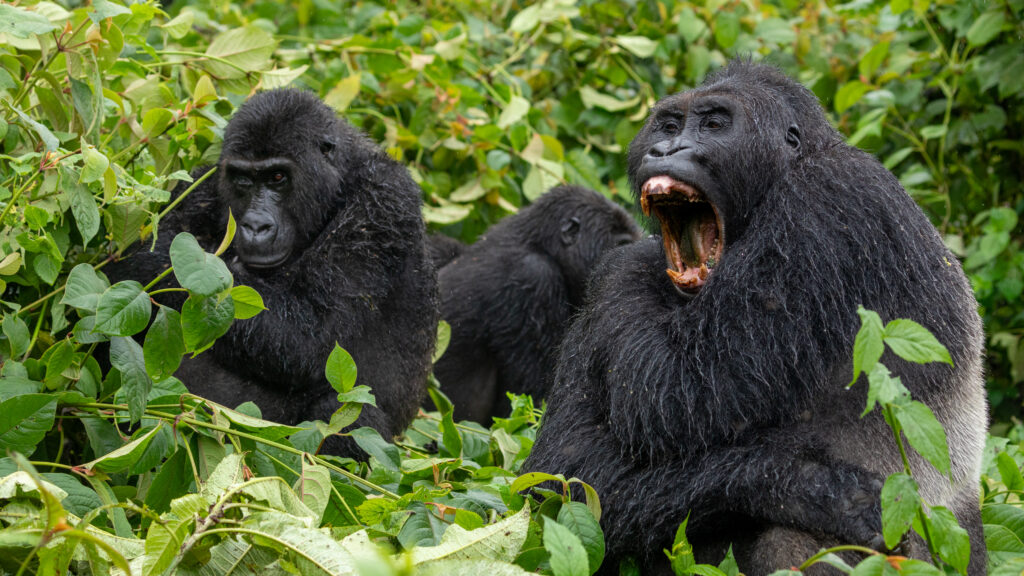
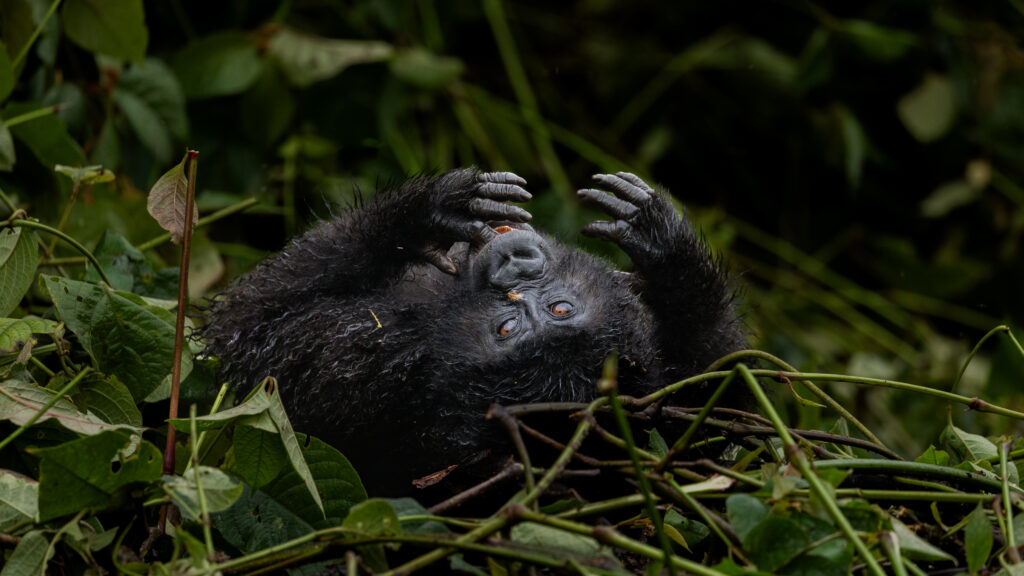
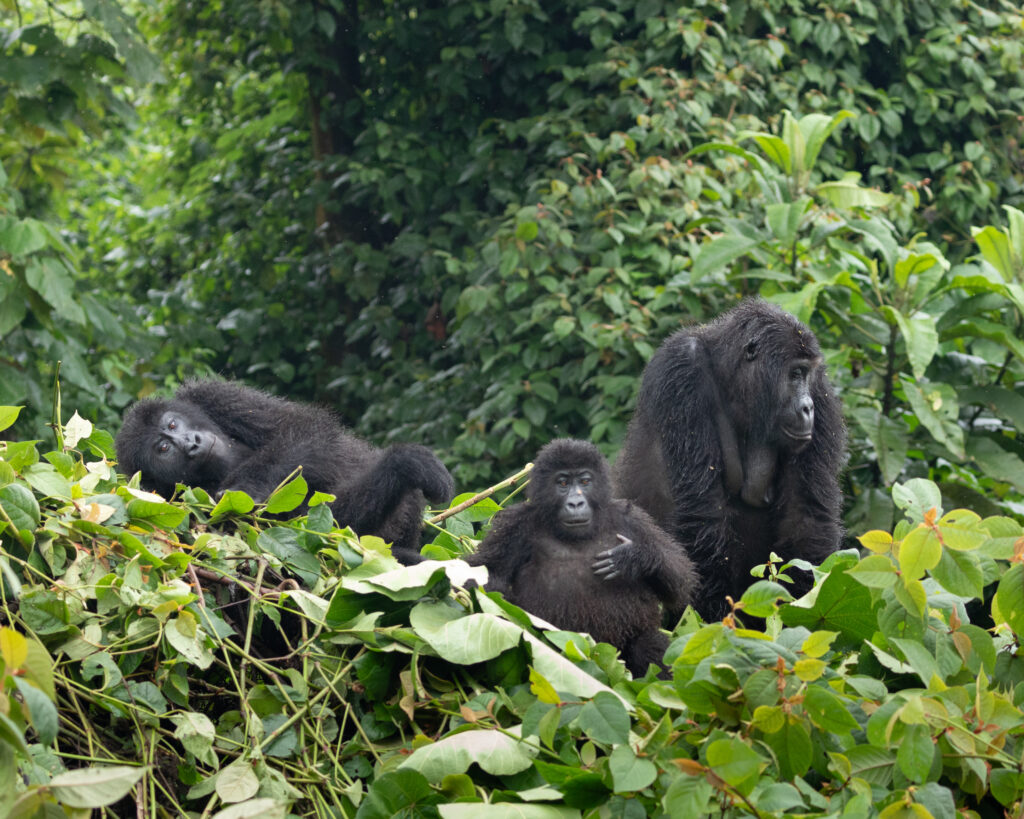
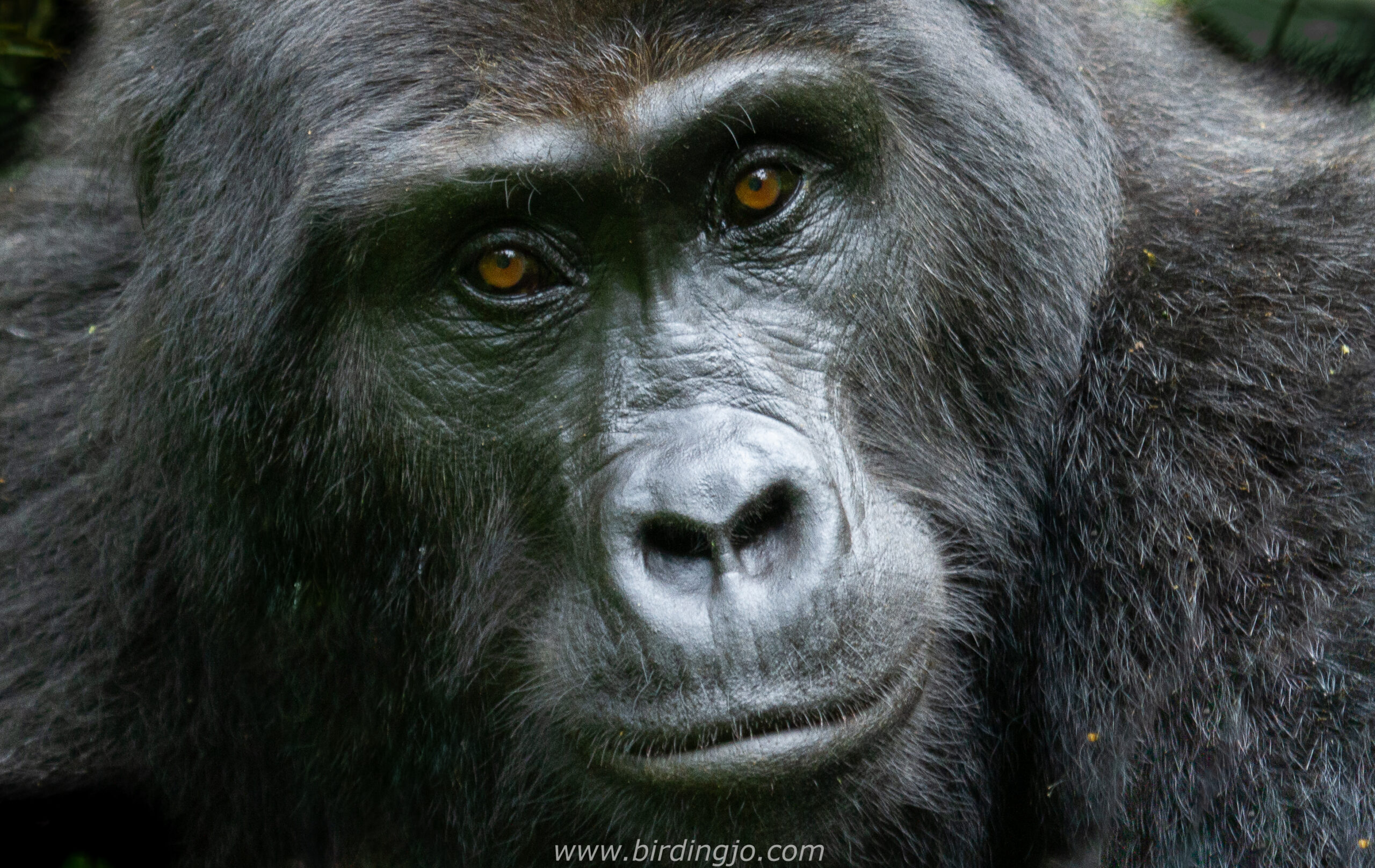
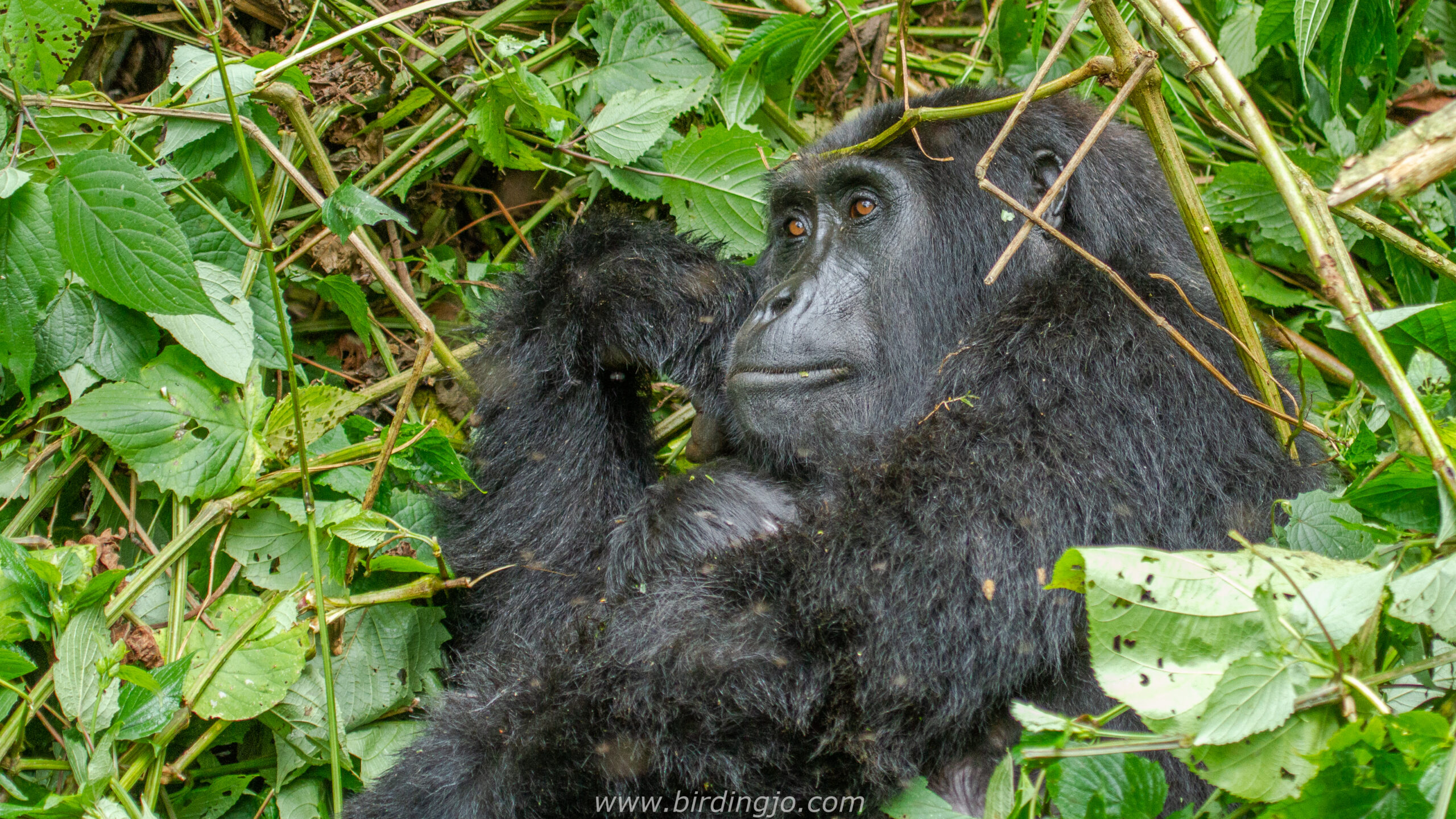
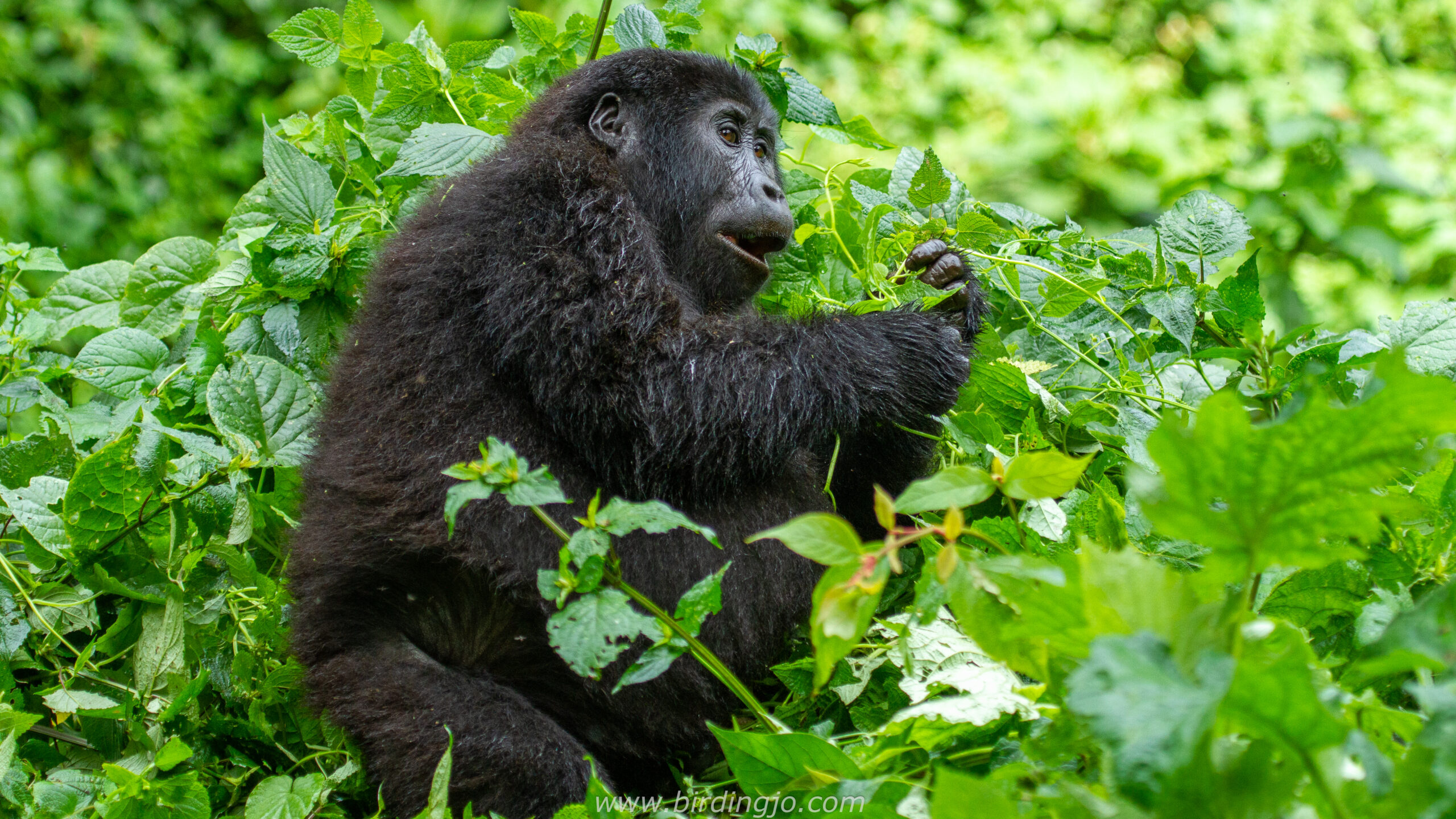
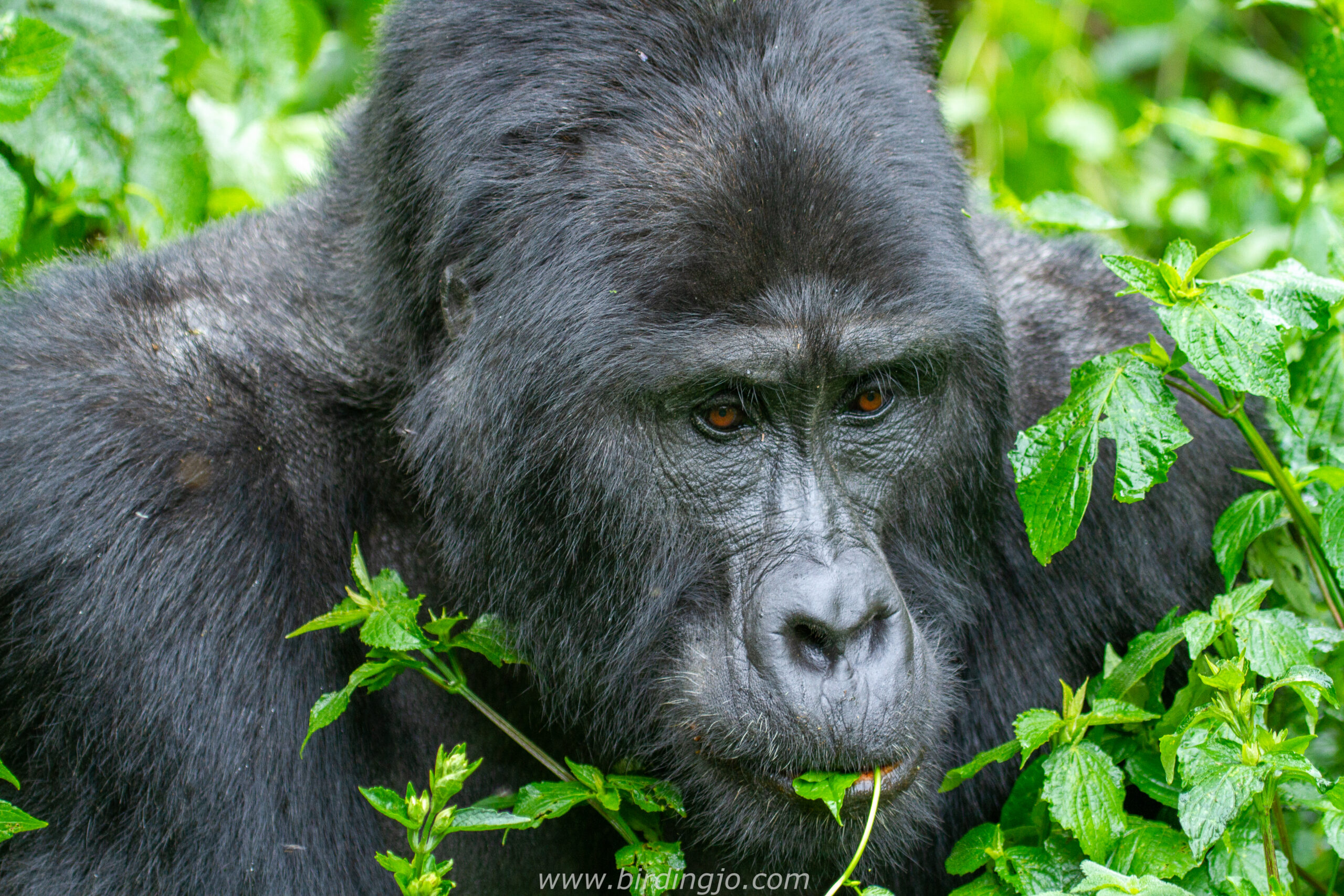
    Eastern Lowland Gorilla in Kahuzi-Biega National Park
    An Eastern Lowland Gorilla in Kahuzi-Biega National Park, Democratic Republic of the Congo.

    Encounters with eastern lowland gorillas in Kahuzi-Biega National Park come together here as one story of forest, family life and conservation.

    Also known as Grauer’s gorillas, eastern lowland gorillas are the largest gorilla subspecies. Their remaining range lies in the lowland and Albertine Rift montane forests of eastern Democratic Republic of the Congo. Critically endangered, they survive in only a fraction of their former range.

    “Nature is not a place to visit. It is home.”
    — Gary Snyder

    Into Kahuzi-Biega

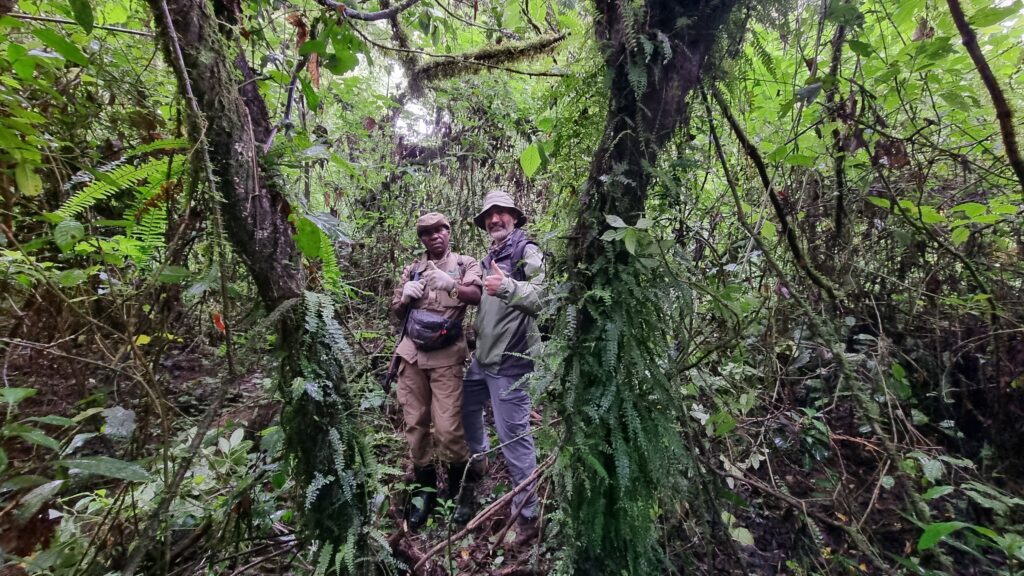
    Steep slopes and thick bush made the exercise challenging and interesting

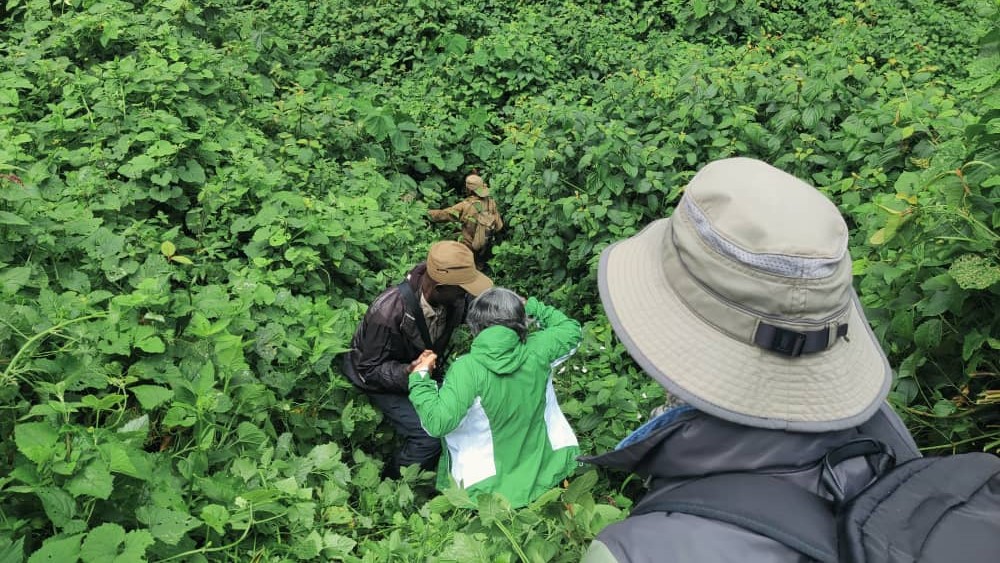
    Steep slopes and thick bush made the exercise challenging and interesting. Reaching the gorillas is part of the encounter. Steep slopes, dense vegetation, rain and slippery ground make progress demanding, but they also reveal the scale and character of the forest that protects these families.
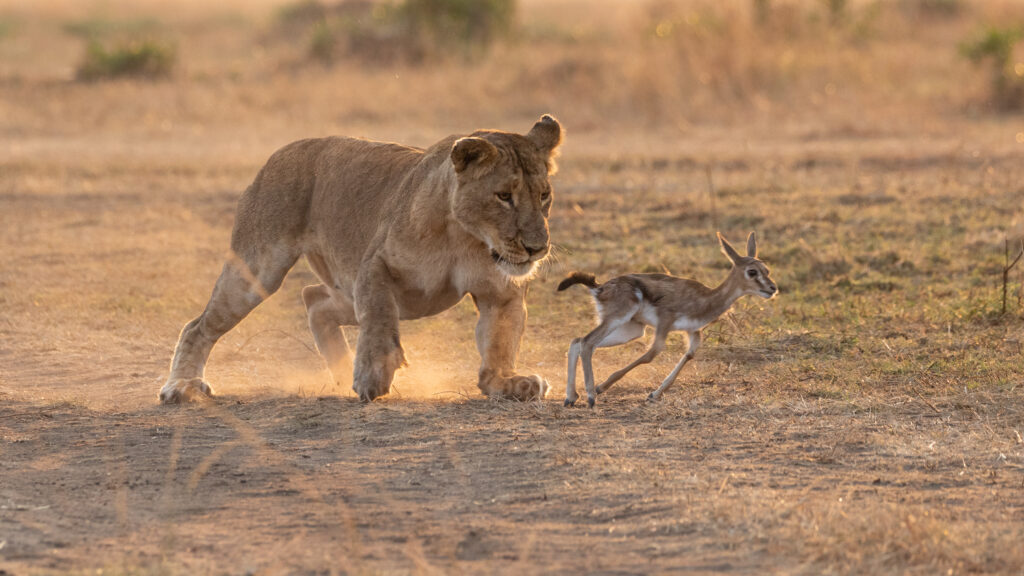
    This is how the tropical rainforest looks like on a rainy morning
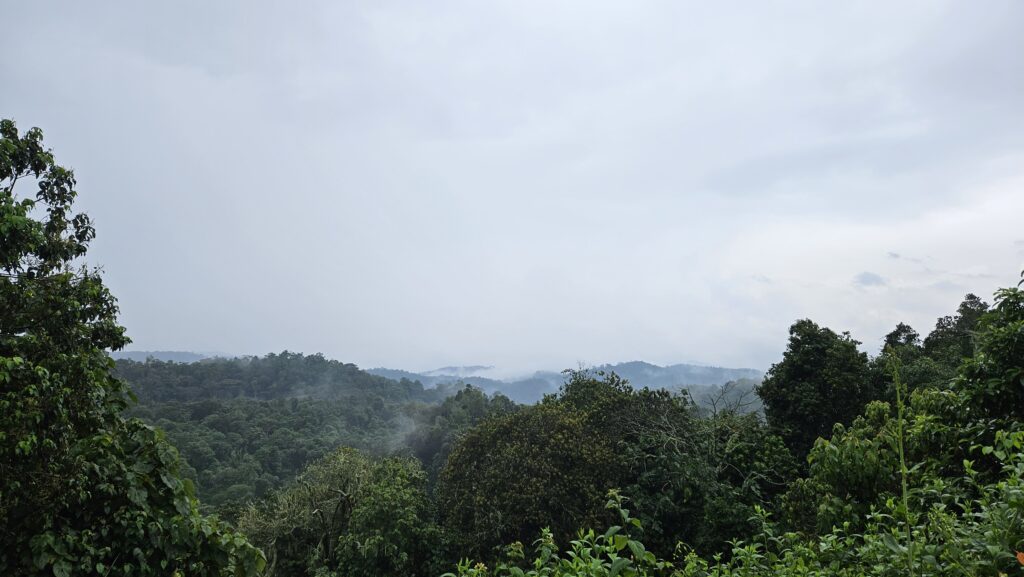
    This is how the tropical rainforest looks like on a rainy morning.
    One of the rangers at an outpost of the Park Rangers spread across the area
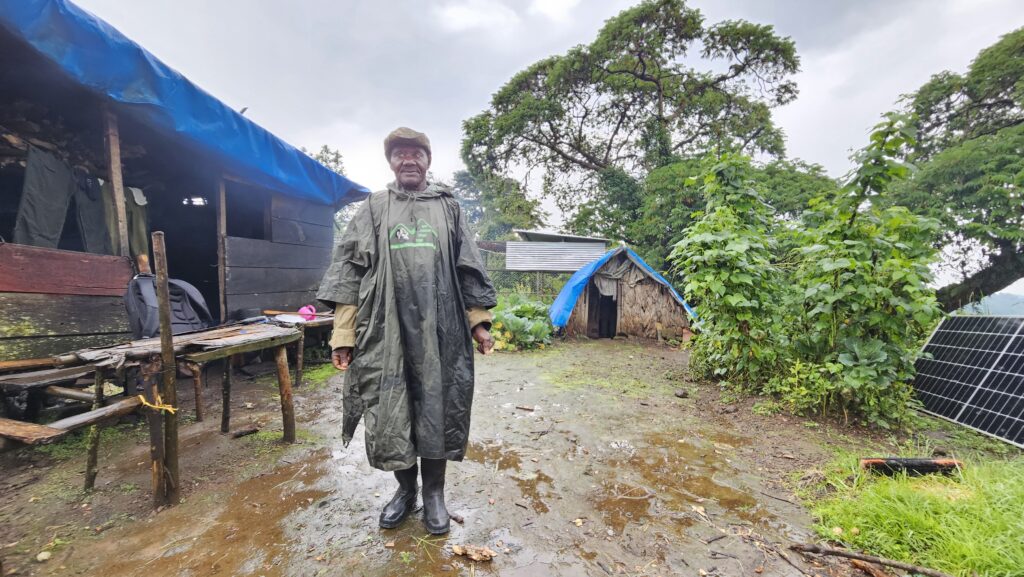
    One of the rangers at an outpost of the Park Rangers spread across the area.
    With one of the rangers who walked behind the entire group
    With one of the rangers who walked behind the entire group. Incidentally, he is from one of the local Pygmy tribes whose ancestors called these forests their home (and land) for centuries. People like him are a vital link between the genuine care and conservation of these remaining fragile eco-systems

    The park rangers are central to every visit. Their knowledge makes the encounter possible, and their long commitment has helped sustain conservation through extraordinarily difficult circumstances. To me, these rangers are heroes.

    The first encounter

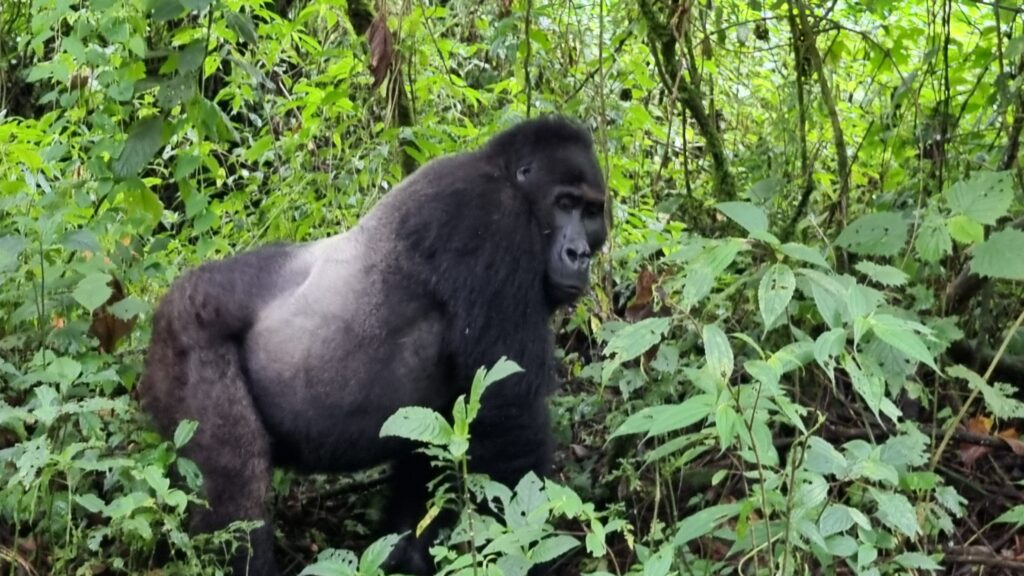
    Bonne Anne dining atop a tree - thanks to the persevering rangers, they found a spot from where we could catch the first glimpse of this gen

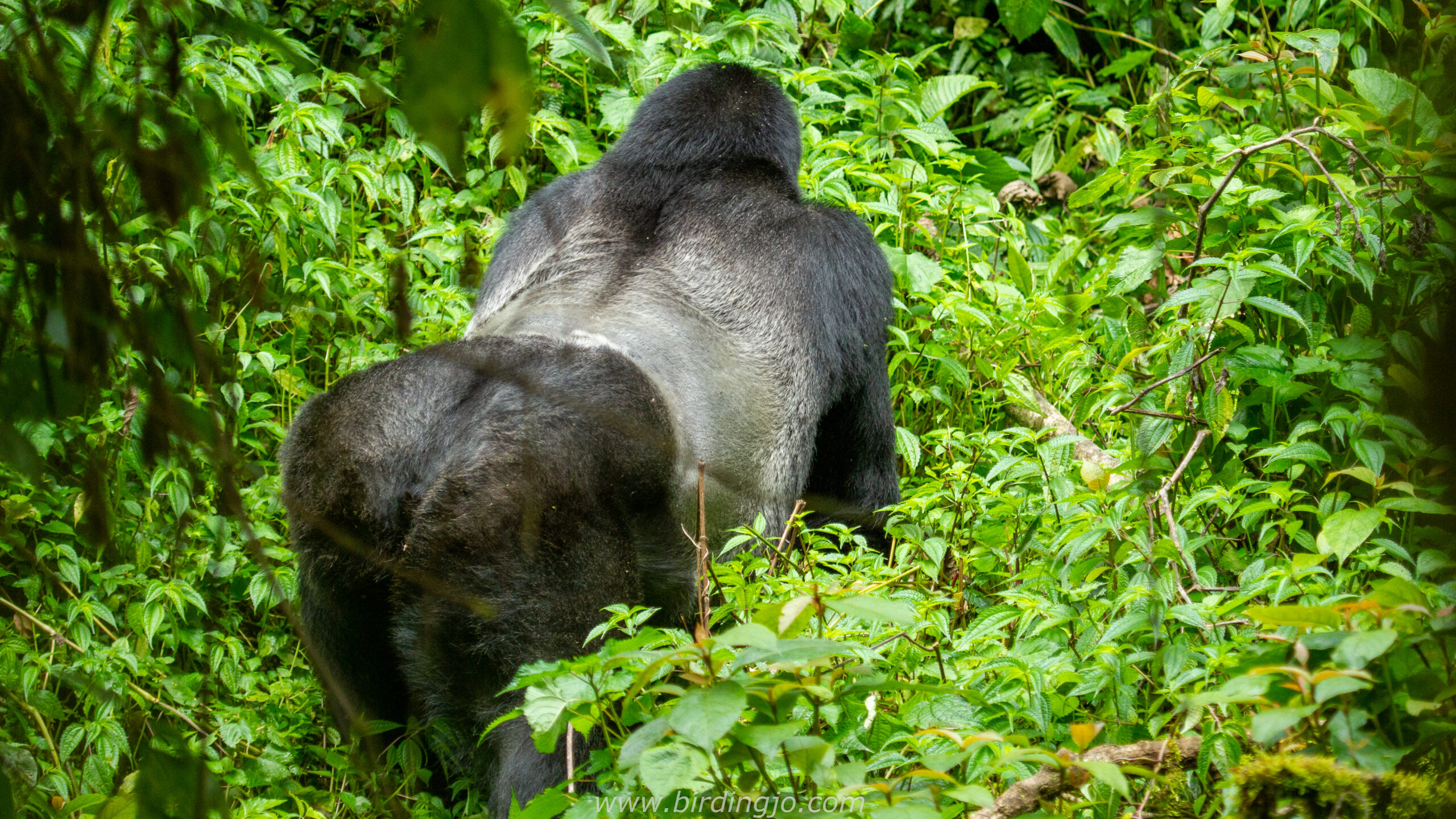
    Bonne Anne dining atop a tree – thanks to the persevering rangers, they found a spot from where we could catch the first glimpse of this gentle silverback. After about an hour of moving through the forest, we caught our first glimpse of the family. A silverback feeding high in a tree descended with an ease that made his immense strength seem effortless.

    Bonne Anne (a low-land gorilla, silverback) from Kahuzi Beiga National Park, Bukavu, DR Congo
    Bonne Anne (a low-land gorilla, silverback) from Kahuzi Beiga National Park, Bukavu, DR Congo
    Bonne Anne - the Alpha Male, silverback
    Bonne Anne – the Alpha Male, silverback.
    Monene - continuously searched for tender / fresh leaves and shoots for himself and the family
    Monene – continuously searched for tender / fresh leaves and shoots for himself and the family.

    Watching a gorilla family changes the pace of observation. The silverback’s authority is quiet; feeding, resting and watchfulness unfold without hurry. Small gestures reveal relationships that a rapid sequence of photographs can easily miss.

    Returning in the rain

    The handsome and gentle King Kong

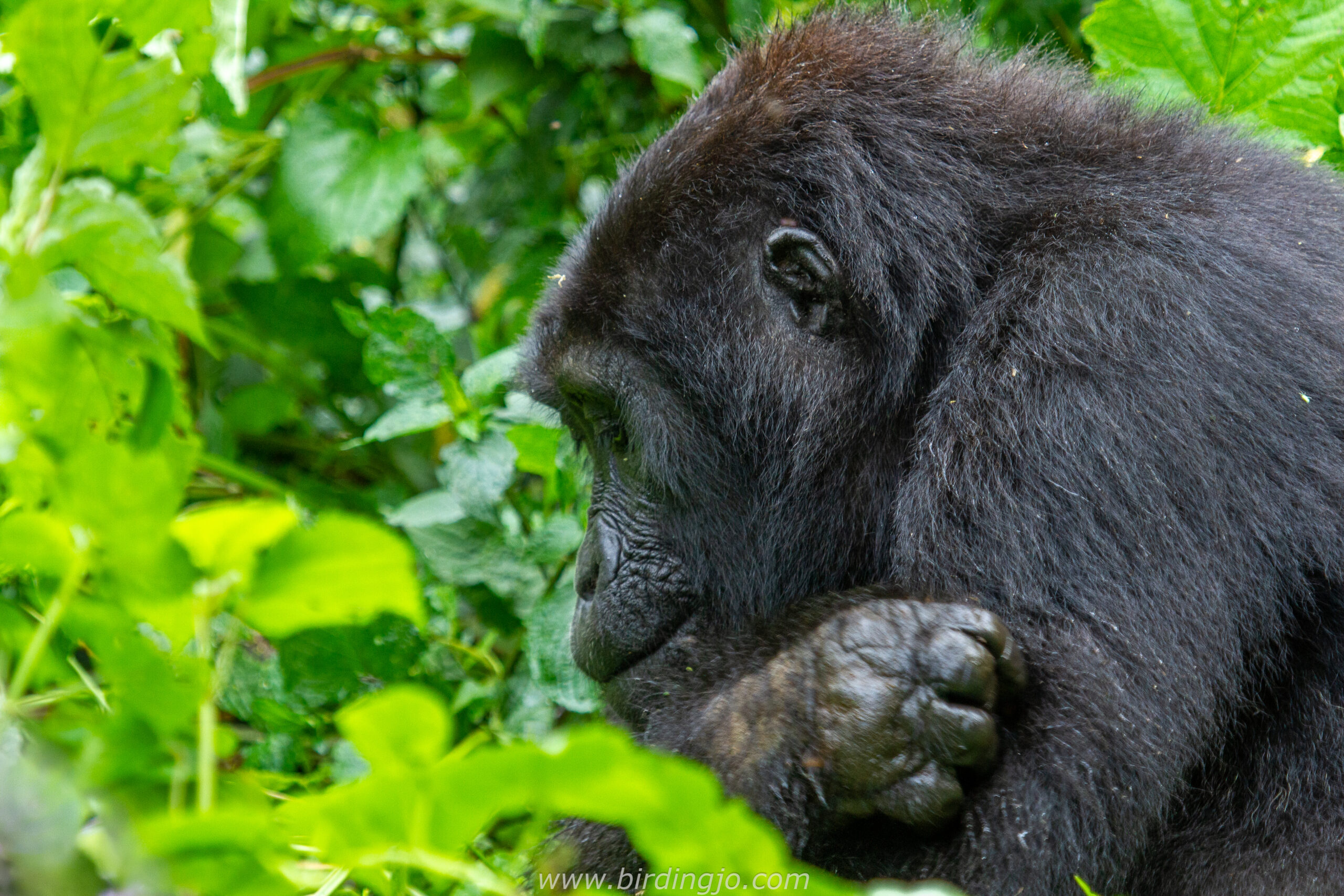
    The handsome and gentle King Kong ! On a later visit, rain transformed the forest. The silverback huddled and waited whenever it strengthened, then returned to feeding as the shower eased. Behaviour that seemed simple became a lesson in patience and adaptation.

    I learnt one thing that whenever the rain became stronger, Bonna Annee huddled-up and sat quietly
    I learnt one thing that whenever the rain became stronger, Bonna Annee huddled-up and sat quietly.
    Gorillas, unlike other primates are purely vegetarian
    Gorillas, unlike other primates are purely vegetarian. They feed on about 60 varieties of different plants depending upon the seasons and availability – A great reasons for this precious habitat to be preserved.
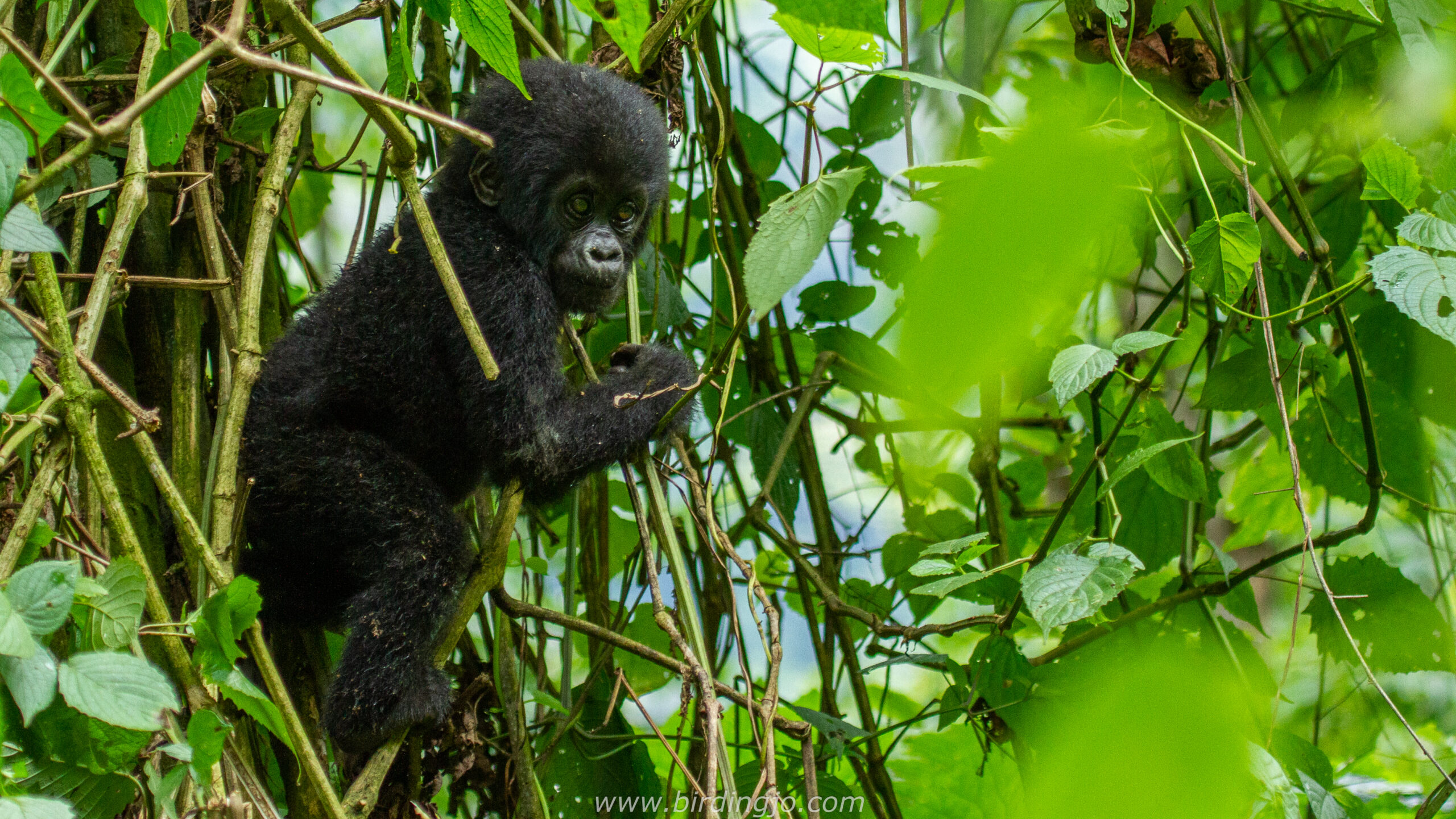
    The young ones are playful and curious
    The young ones are playful and curious.

    Family life at close quarters

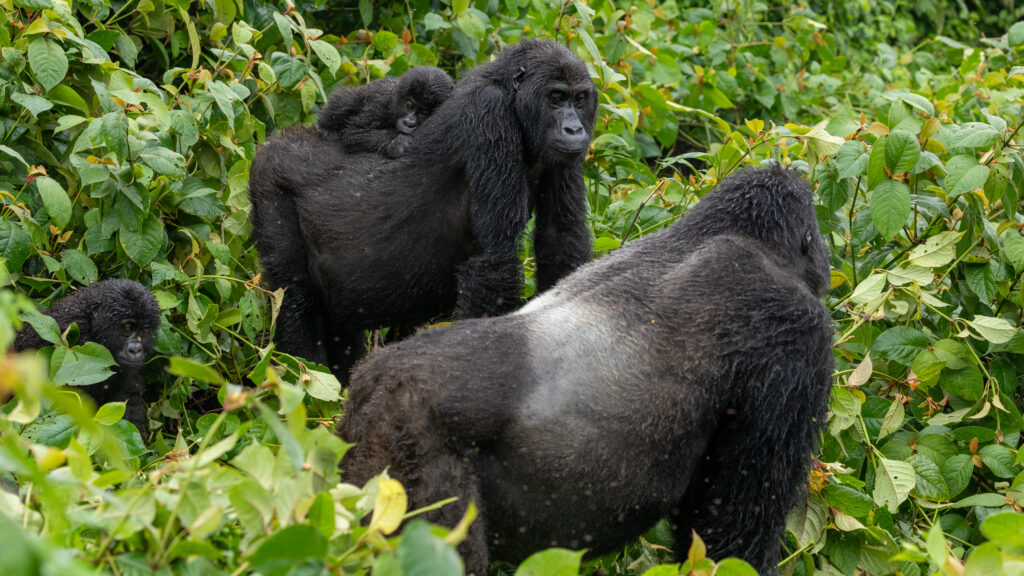
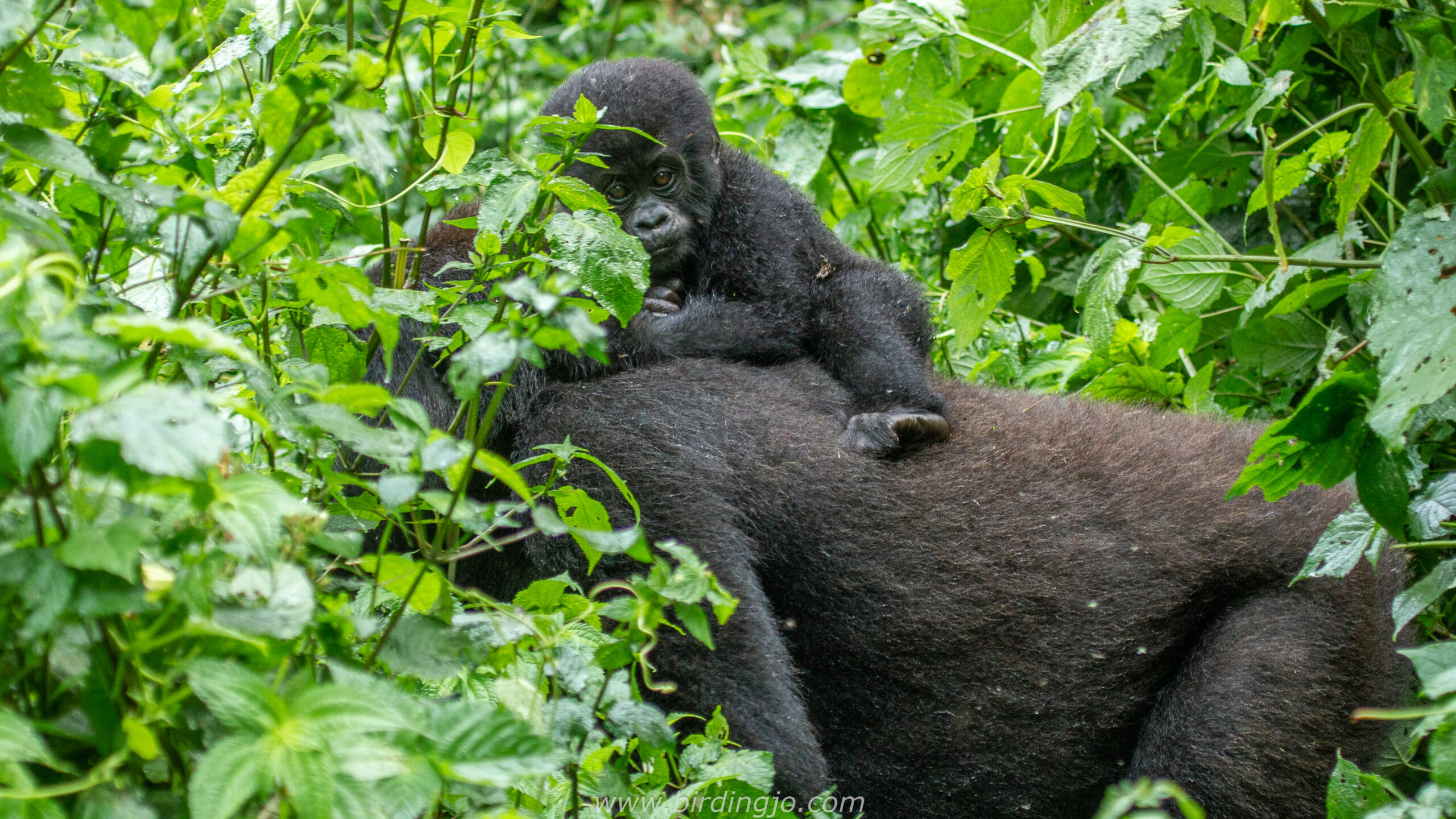
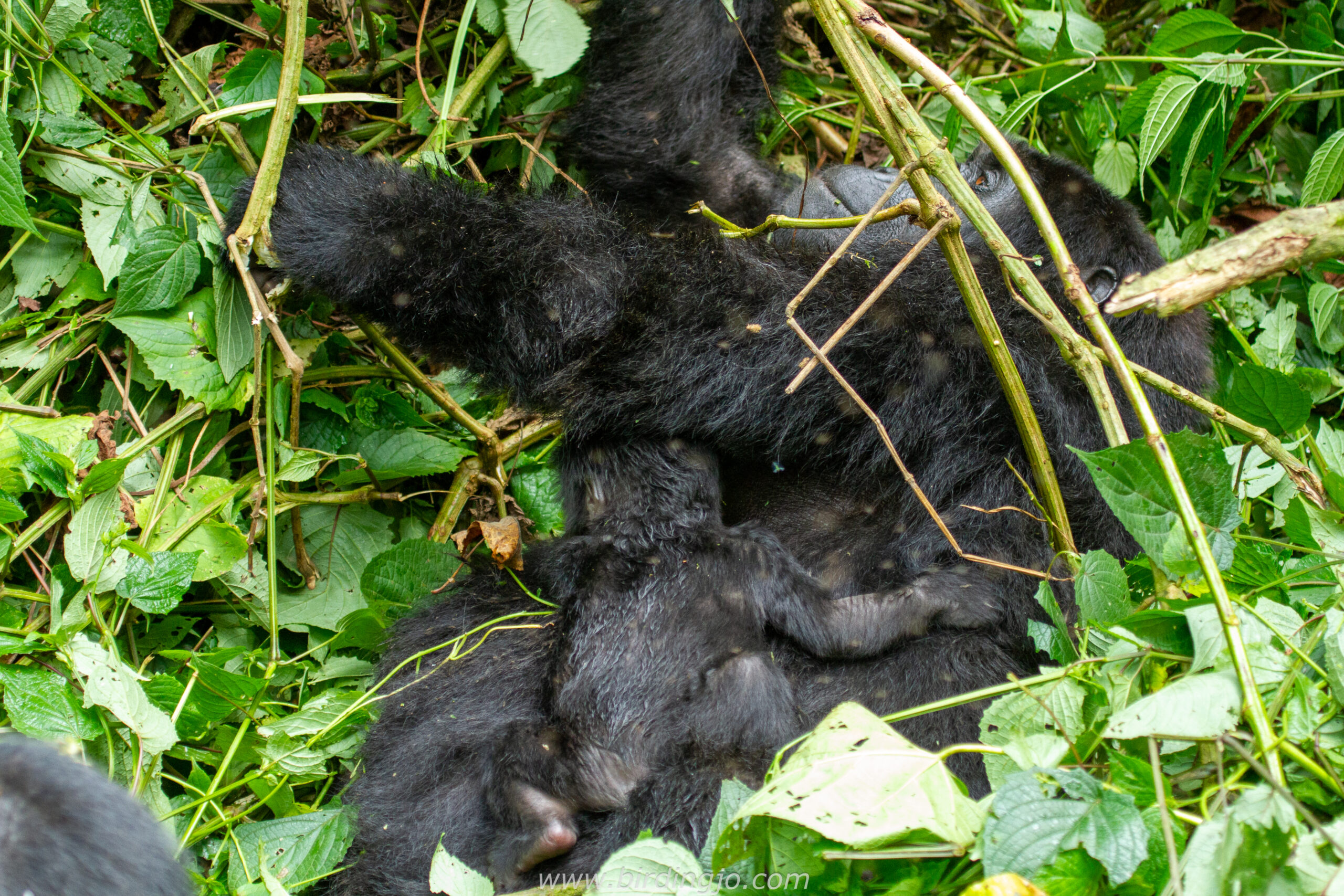
    Mom, Dad, my brother and me (on the piggy back ride)

    Mom, Dad, my brother and me (on the piggy back ride) The young bring playfulness and curiosity to the family. A piggy-back ride, a reunion or a moment shared among relatives makes the group feel immediately recognisable—while always reminding us that we are visitors in their home.

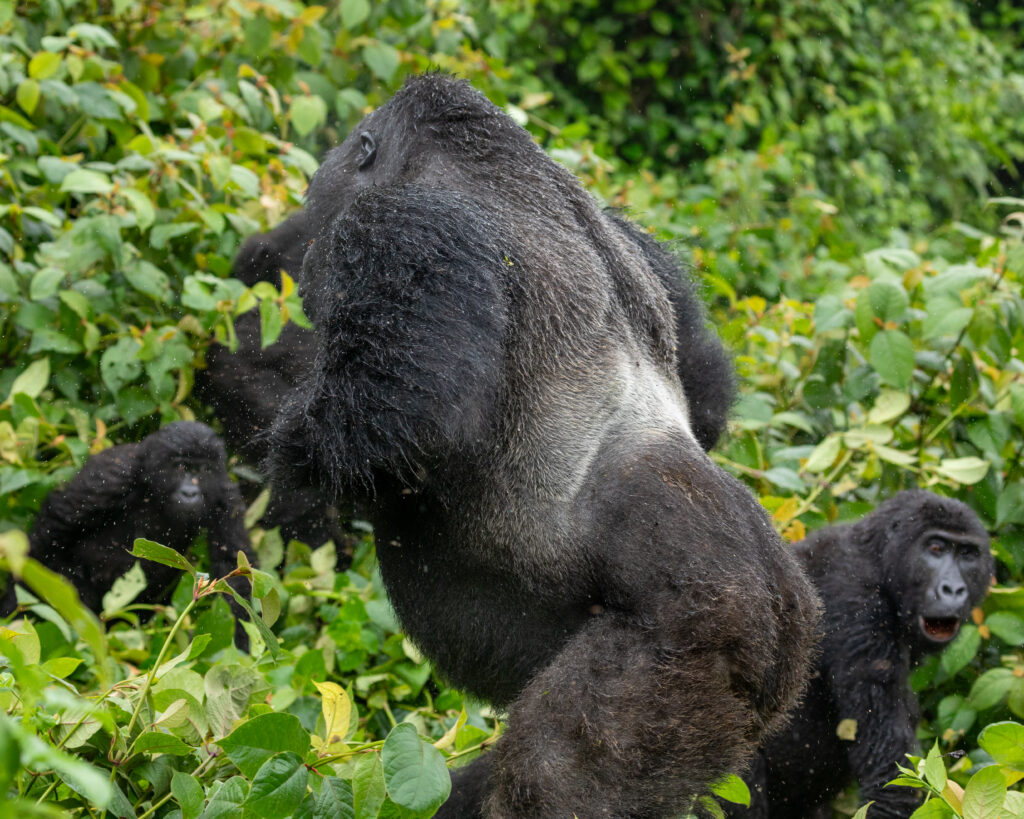
    That is about 200 Kgs on the move
    That is about 200 Kgs on the move …
    Sometimes, even Moms need to chillout
    Sometimes, even Moms need to chillout !!
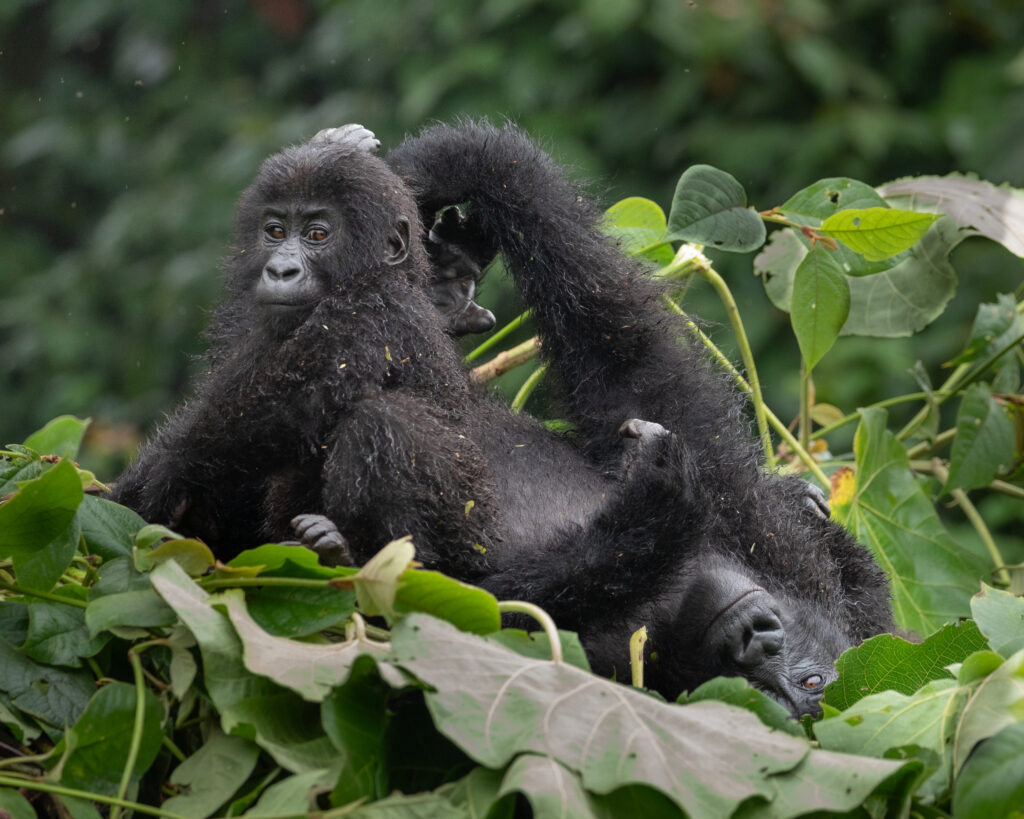
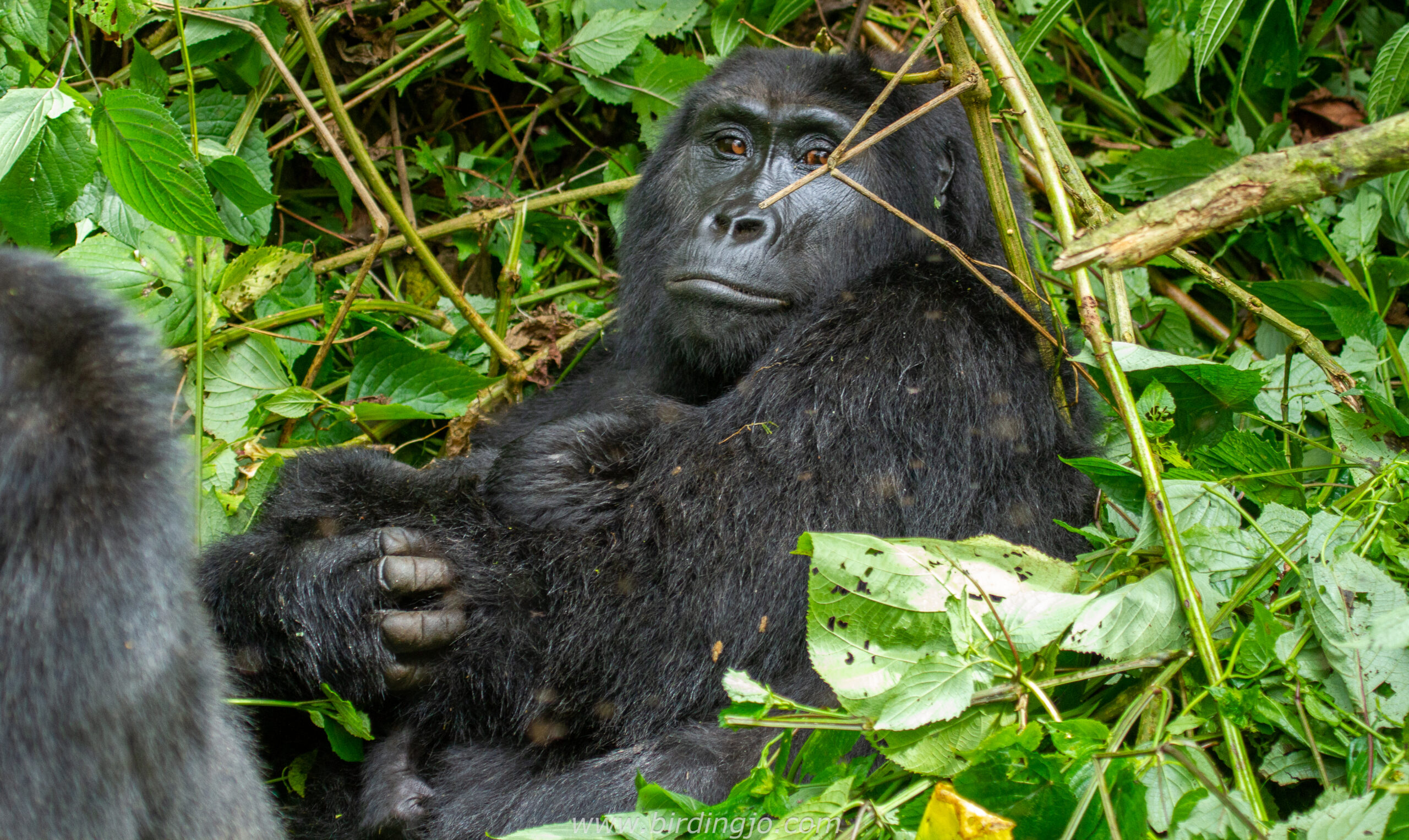
    Family: An aunt and cousin brothers
    Family: An aunt and cousin brothers. – that’s us in our living room !!
    I always wonder - what did they think

    I always wonder – what did they think ? I often wonder what the gorillas make of us. The privilege lies not in getting close for its own sake, but in being allowed a brief, respectful look into a complex family life that continues after we leave.


    A forest worth protecting

    These encounters depend on an intact forest, skilled local teams and communities able to benefit from conservation. Responsible visits support that work, but the gorillas’ future ultimately rests on the continued protection of their habitat.

    “The most beautiful gift of nature is that it gives one pleasure to look around and try to comprehend what we see.”
    — Albert Einstein
  • The Mesmerising Mara: Encounters Across the Years

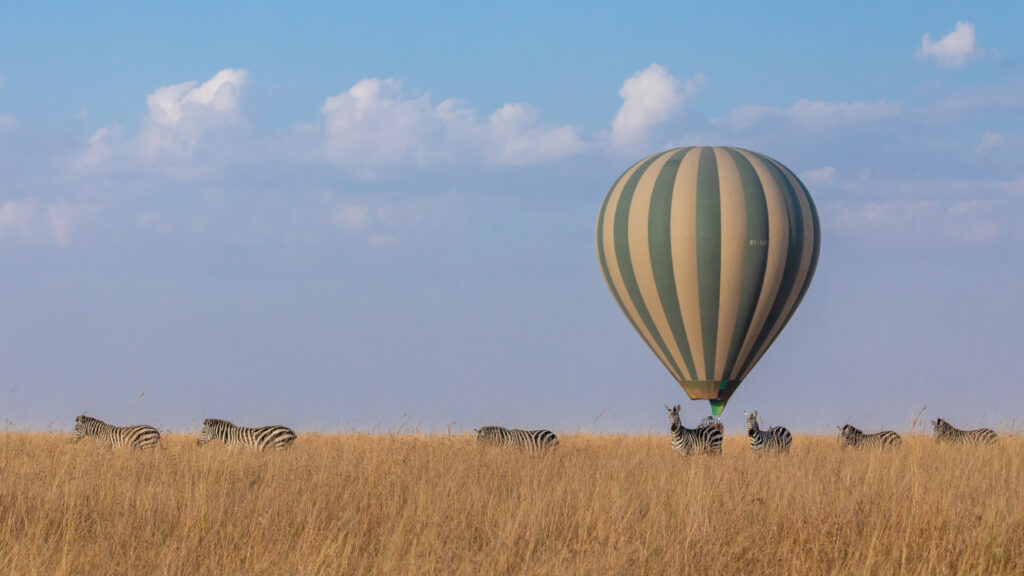
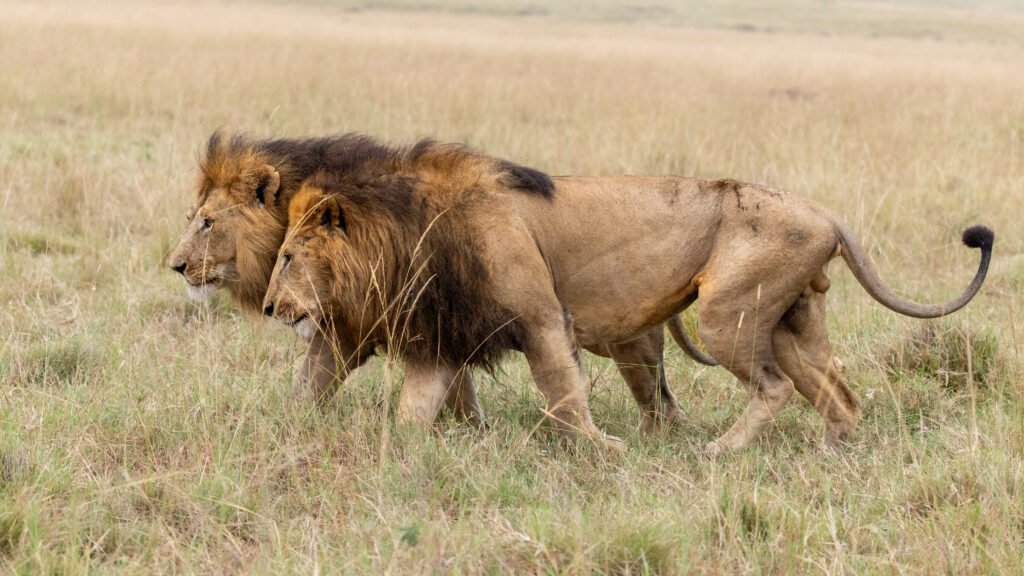
    Wildlife in the grasslands of the Maasai Mara
    Wildlife and open grasslands in the Maasai Mara, Kenya.

    The Maasai Mara rewards return visits. Light changes, seasons shift and familiar tracks lead to entirely new encounters. This is a continuing portrait of the reserve through selected moments across several journeys.

    “Only when the last of the animal horns, tusks, skin and bones have been sold will mankind realise that money can never buy back our wildlife.”
    — Paul Oxton

    A remarkable beginning

    Driving from Nairobi with a diversion to Lake Nakuru proved worthwhile. Within three hours we had seen a leopard, a white rhino, a lioness with cubs and Rothschild’s giraffes. The bar had been set before we even reached the Mara.

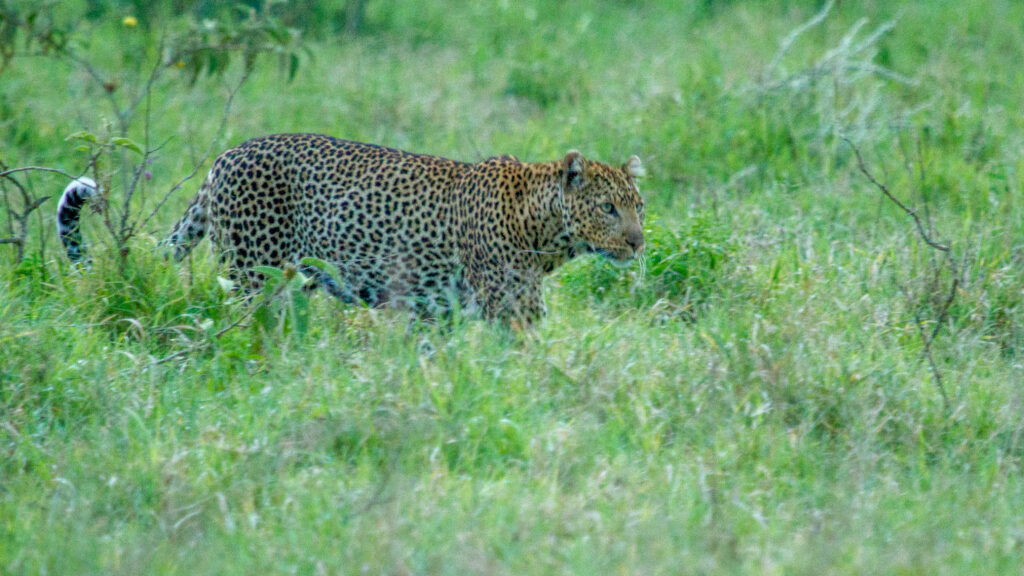
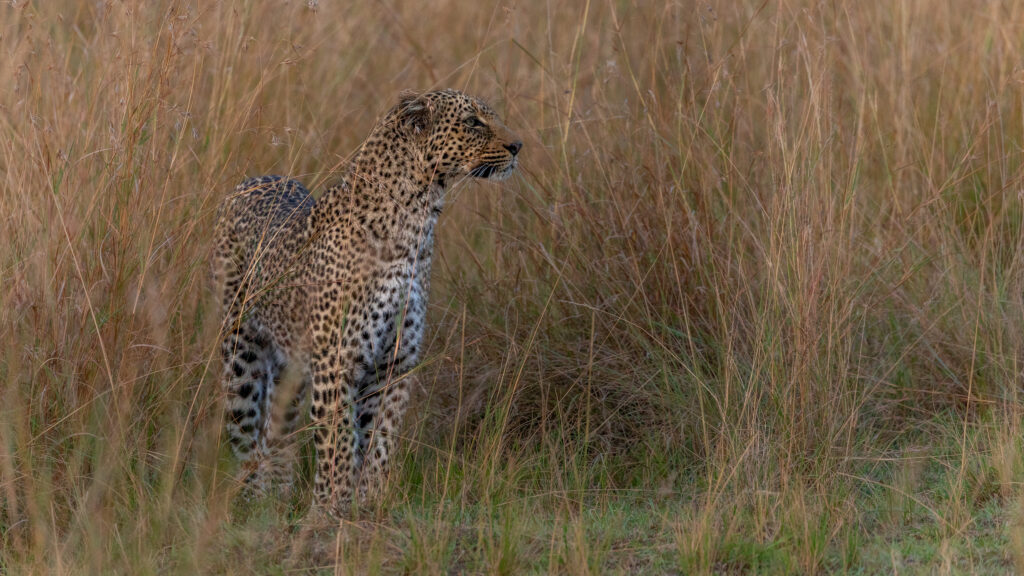
    Leopard at Lake Nakuru, Kenya
    A leopard encountered soon after arriving at Lake Nakuru, Kenya.
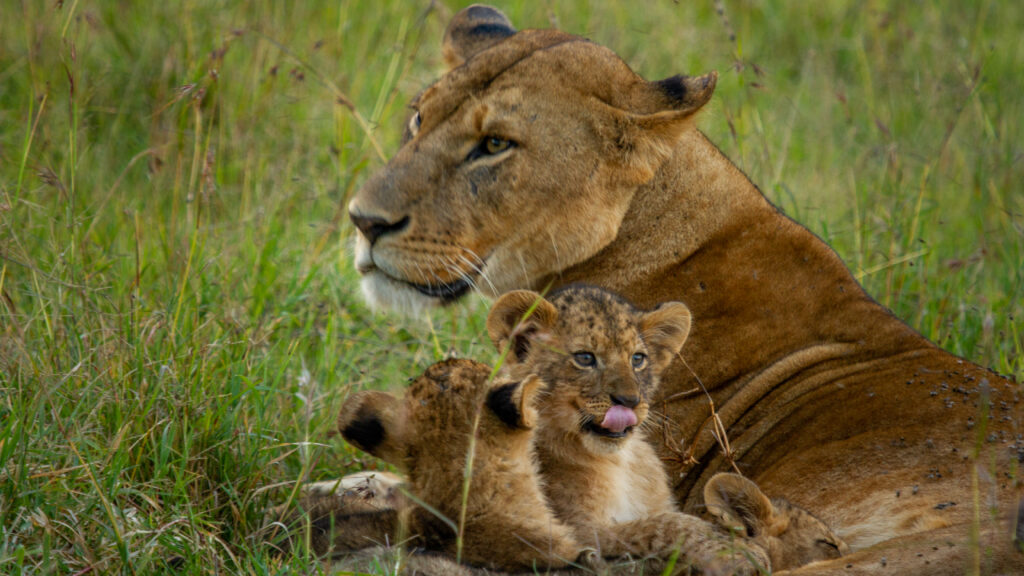
    Lioness with three cubs at Lake Nakuru, Kenya
    Mummy, that was yummy! A lioness with three cubs at Lake Nakuru, Kenya.
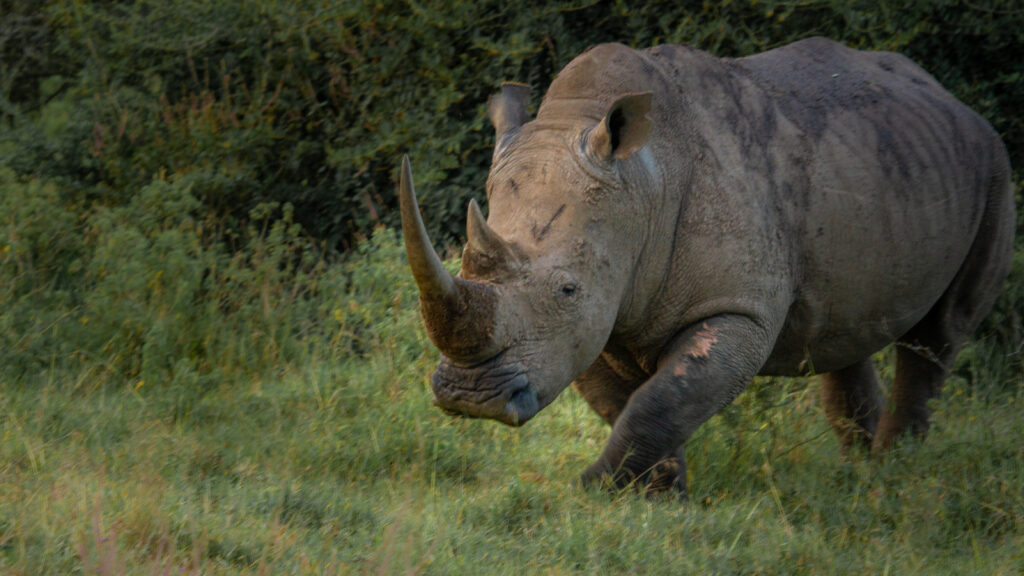
    White rhino walking towards a waterhole at Lake Nakuru, Kenya
    A white rhino leading the way towards a waterhole at Lake Nakuru, Kenya.
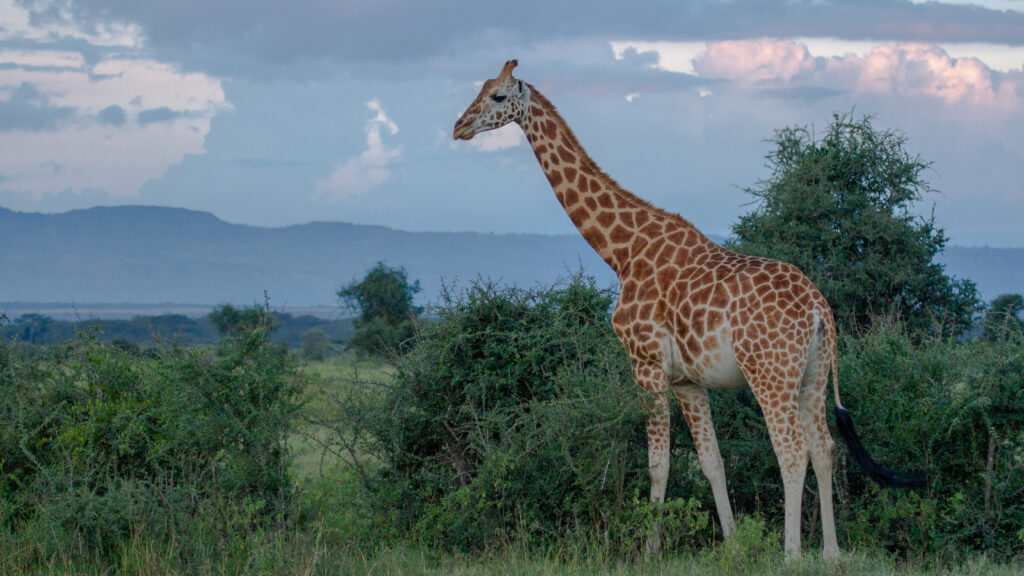
    Rothschild’s giraffe at Lake Nakuru, Kenya
    A Rothschild’s giraffe at Lake Nakuru, Kenya.

    Life on the open plains

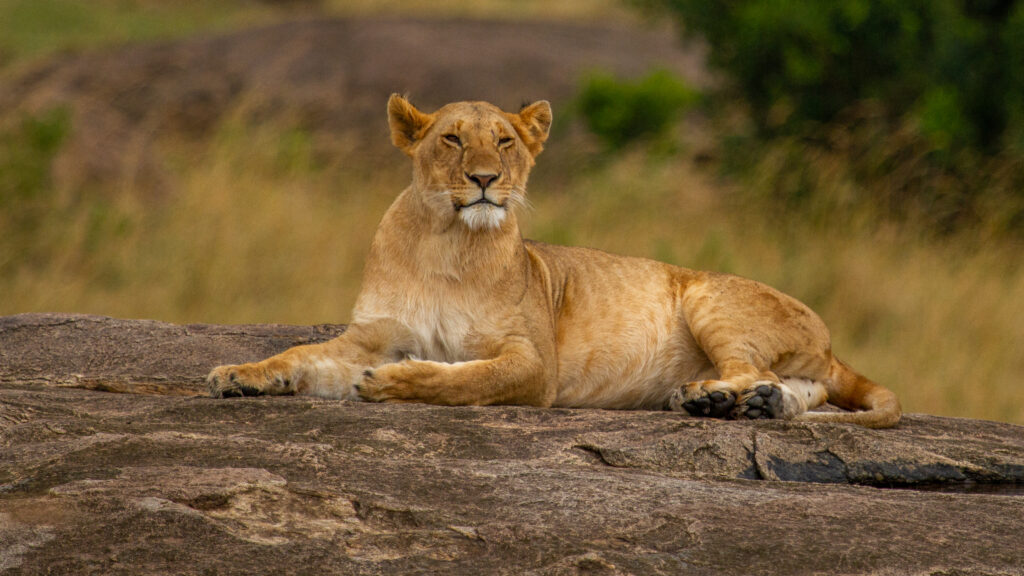
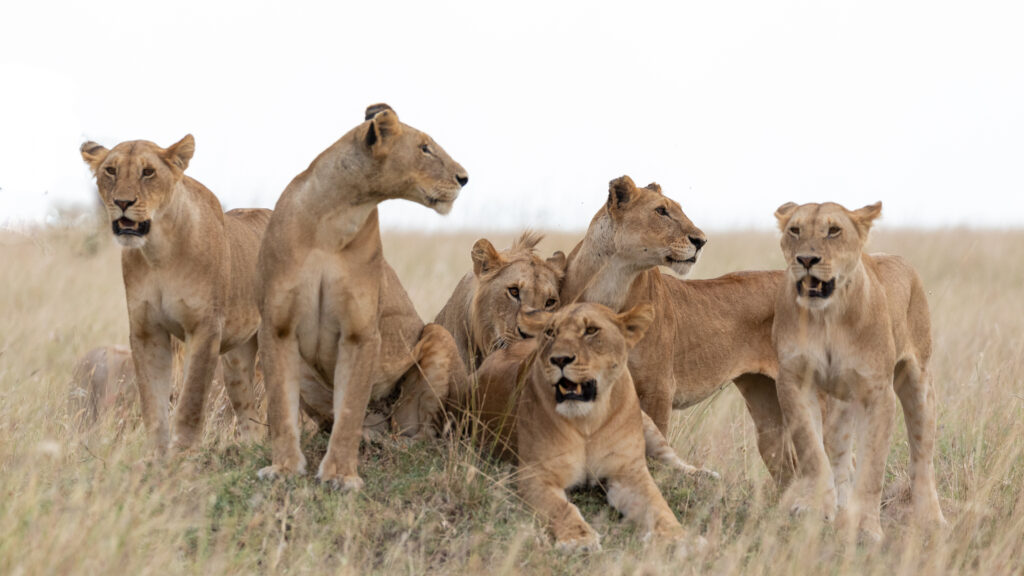
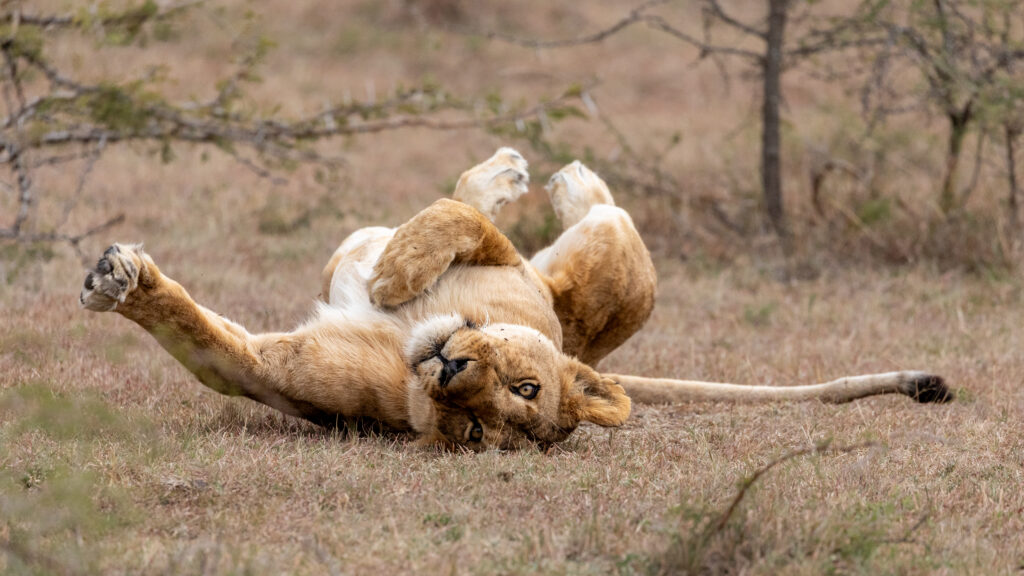
    Sitting pretty - one of the four lionesses who were lazily soaking up the warmth from the Sun and the rocks

    Sitting pretty – one of the four lionesses who were lazily soaking up the warmth from the Sun and the rocks. No story of the Mara can avoid the lions, but the landscape is never about one species alone. Elephants, cheetahs, hyenas, antelope and birds continually reshape the scene around them.

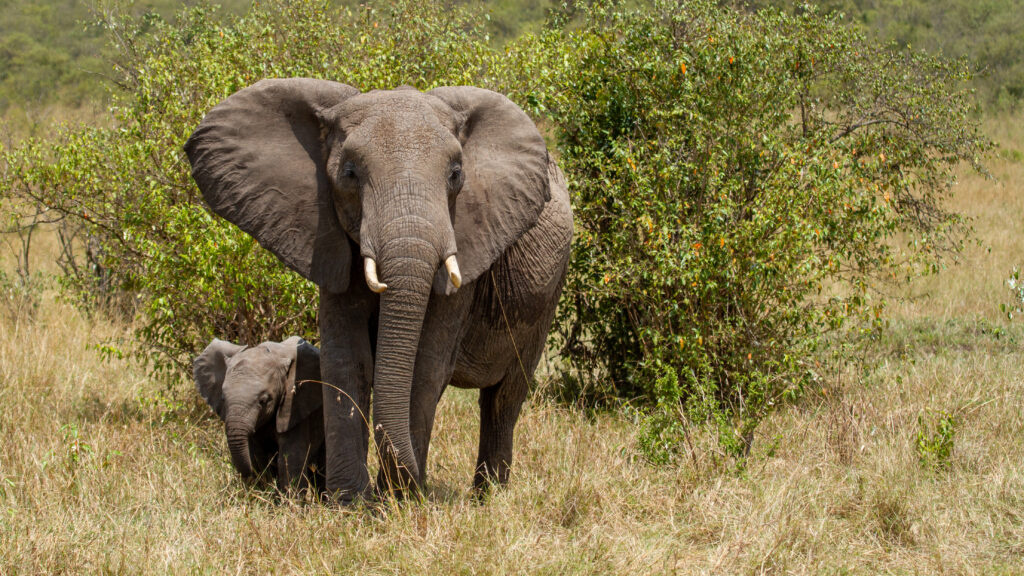
    This mama elephant and the calf were part of a herd
    This mama elephant and the calf were part of a herd.
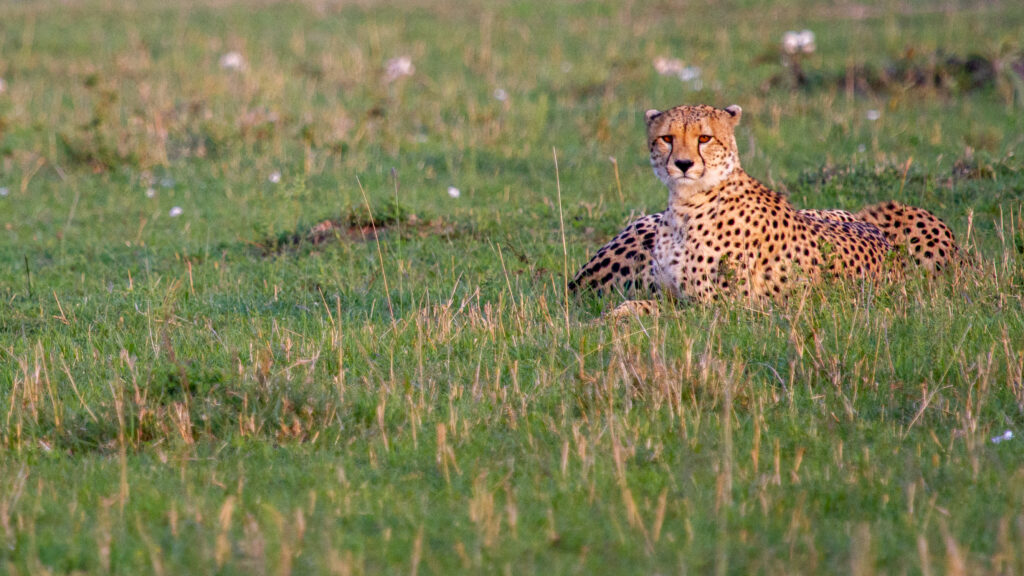
    Cheetahs were a pleasure to meet - the most elegant of all three big cats found in Savannahs
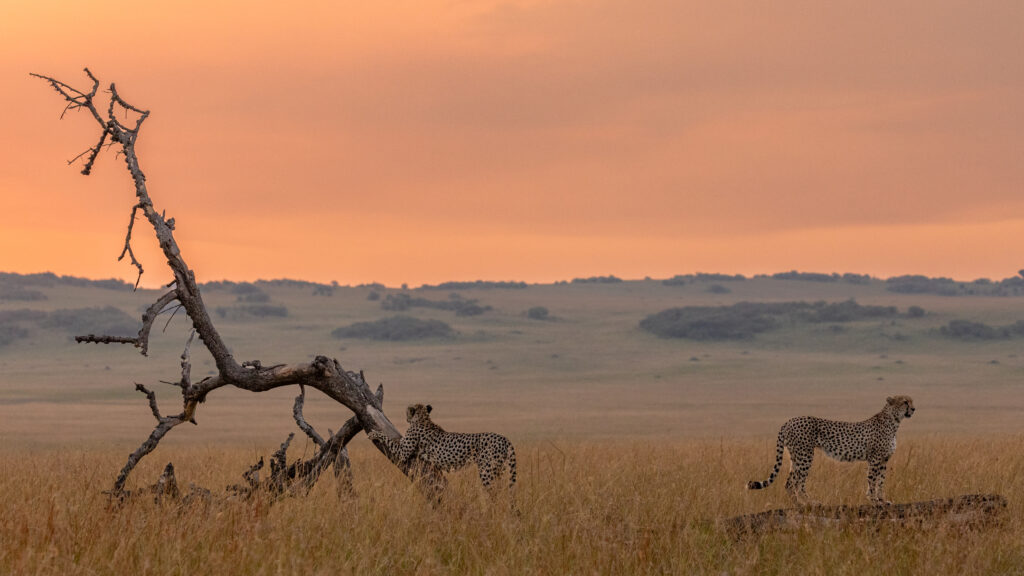
    Cheetahs were a pleasure to meet – the most elegant of all three big cats found in Savannahs.
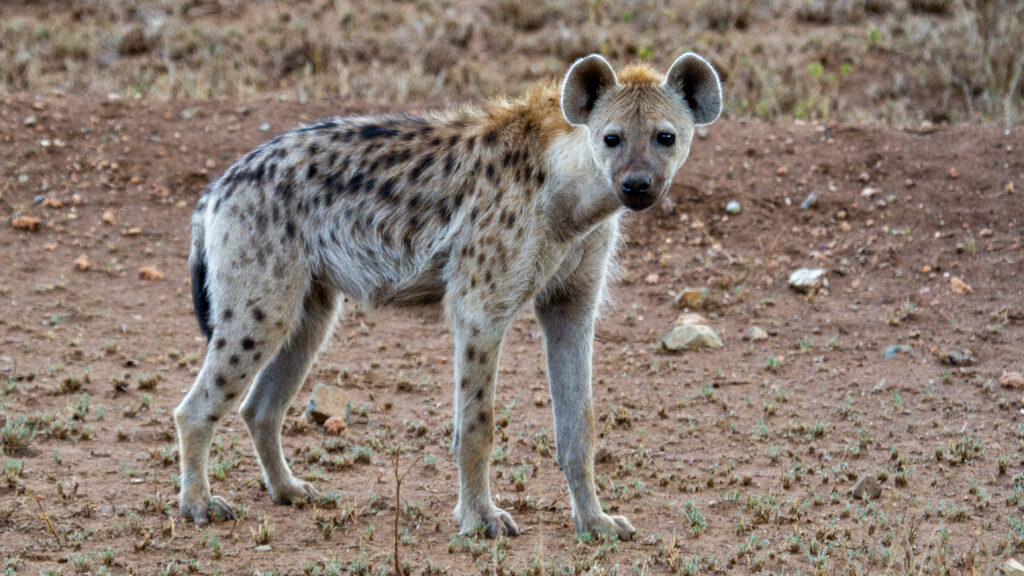
    We may naturally abhor them , but they are as important a part of the ecosystem as any other
    We may naturally abhor them, but they are as important a part of the ecosystem as any other. Normally hyenas are found in groups, sometimes they spread out. Found this one scouting the area on its own.
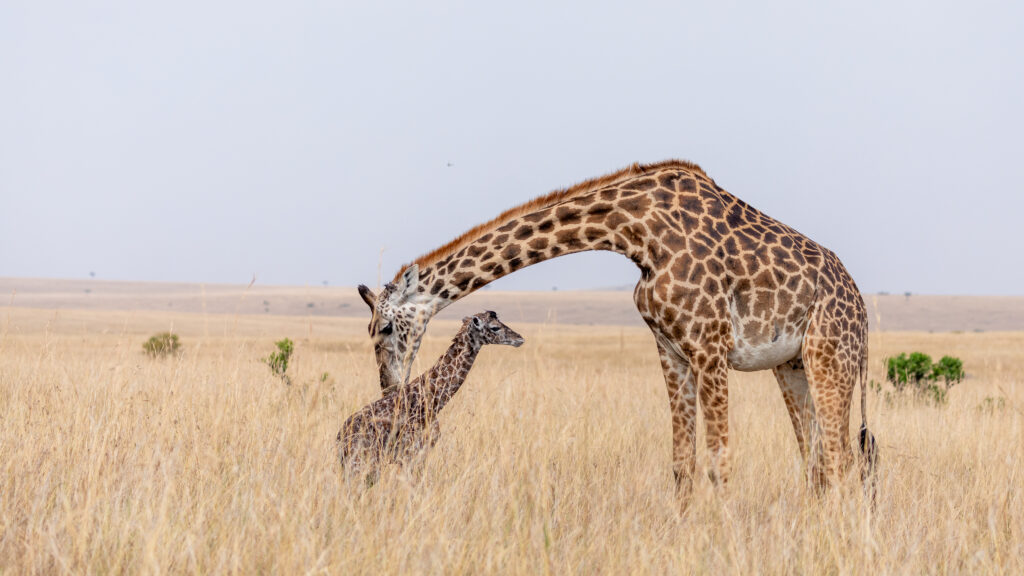
    A new-born calf (just 30 minutes old) was being given a generous scrub by the mother, who was very alert and aware of her surroundings
    A new-born calf (just 30 minutes old) was being given a generous scrub by the mother, who was very alert and aware of her surroundings !!
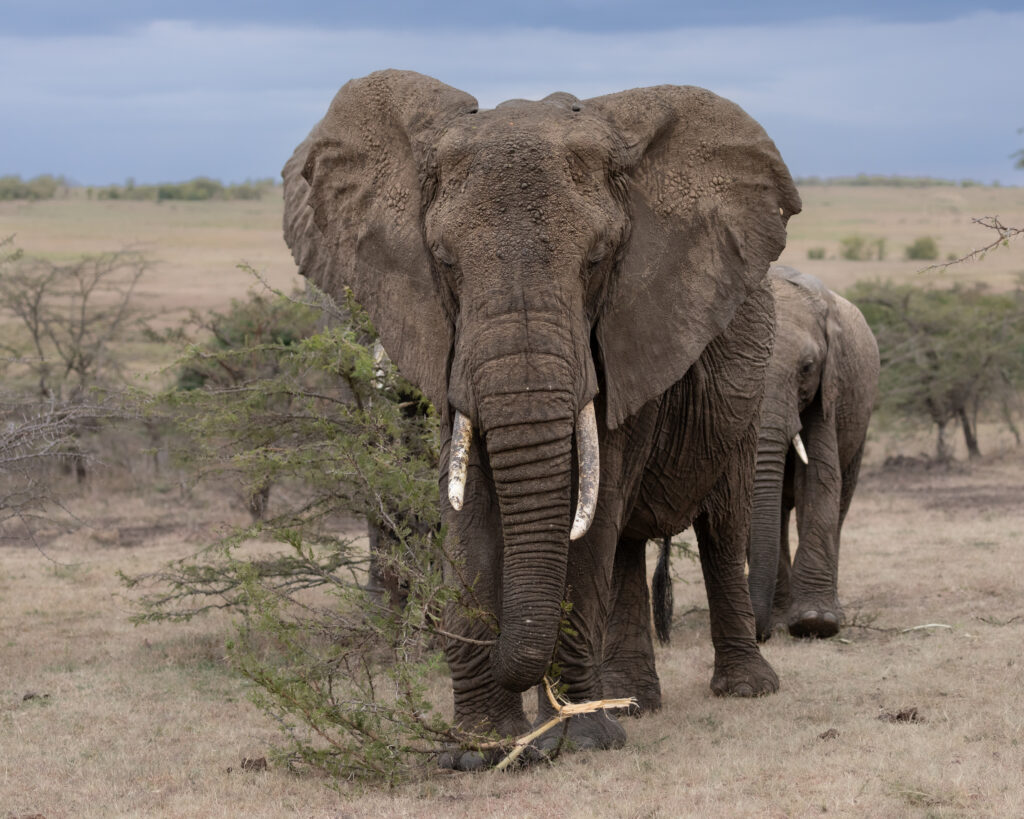
    A demonstration on how to peel an acacia
    A demonstration on how to peel an acacia !!
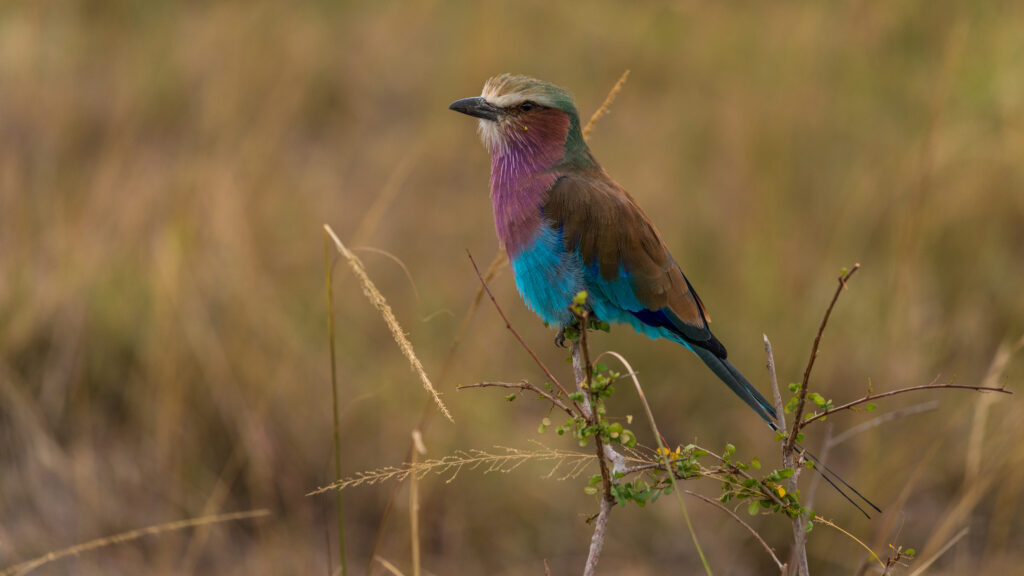
    A Lilac Breasted Roller
    A Lilac Breasted Roller

    The great movement

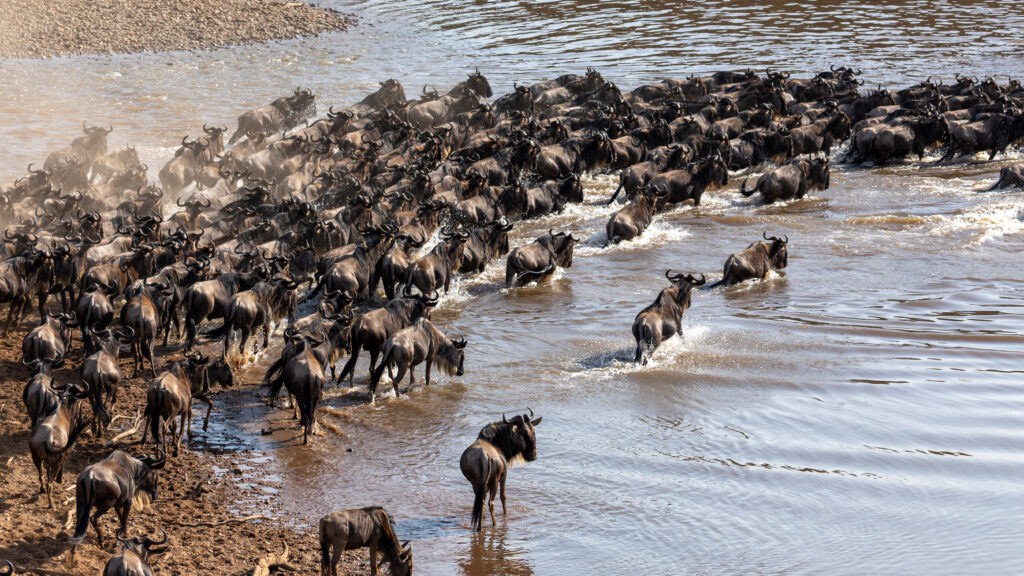
    A large herd of wildebeest and zebras crossed over - luckily, without any casualties as no predator was present

    A large herd of wildebeest and zebras crossed over – luckily, without any casualties as no predator was present. The migration is often described through dramatic river crossings, yet even a peaceful crossing carries immense scale. Thousands of animals move as one living current, watched by predators and visitors alike.

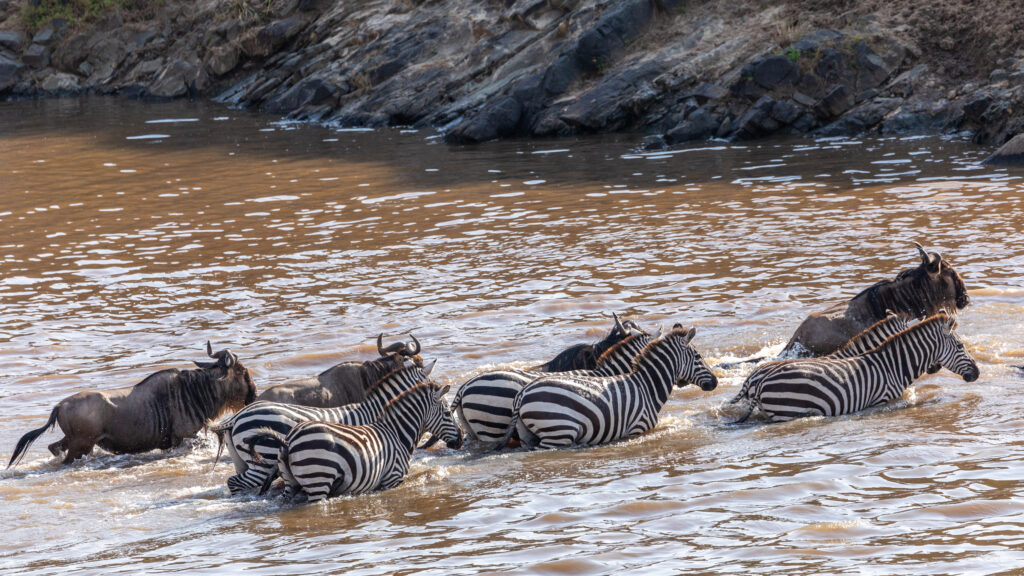
    Peaceful crossing after the bigger bulk of the herd had crossed over
    Peaceful crossing after the bigger bulk of the herd had crossed over
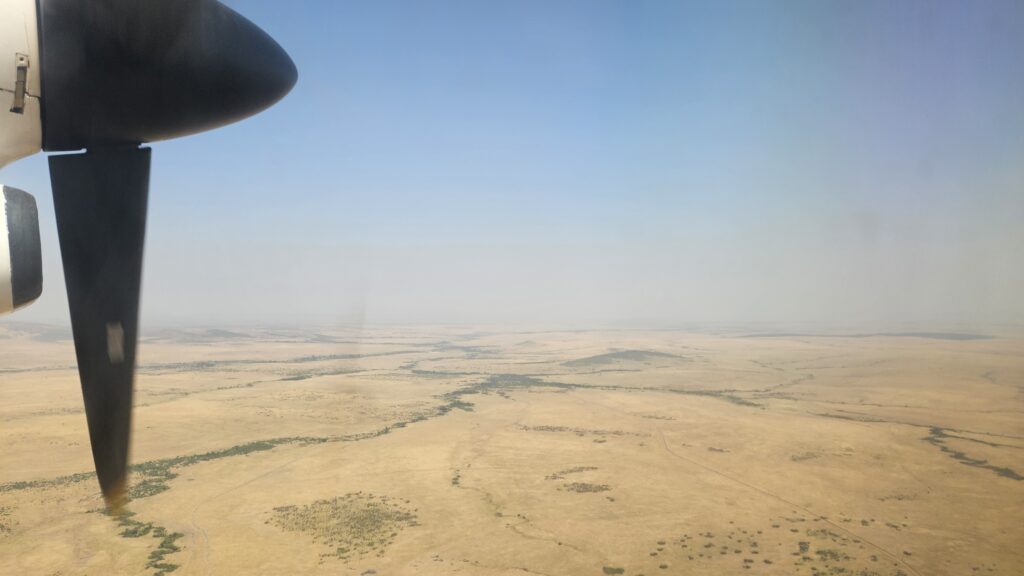
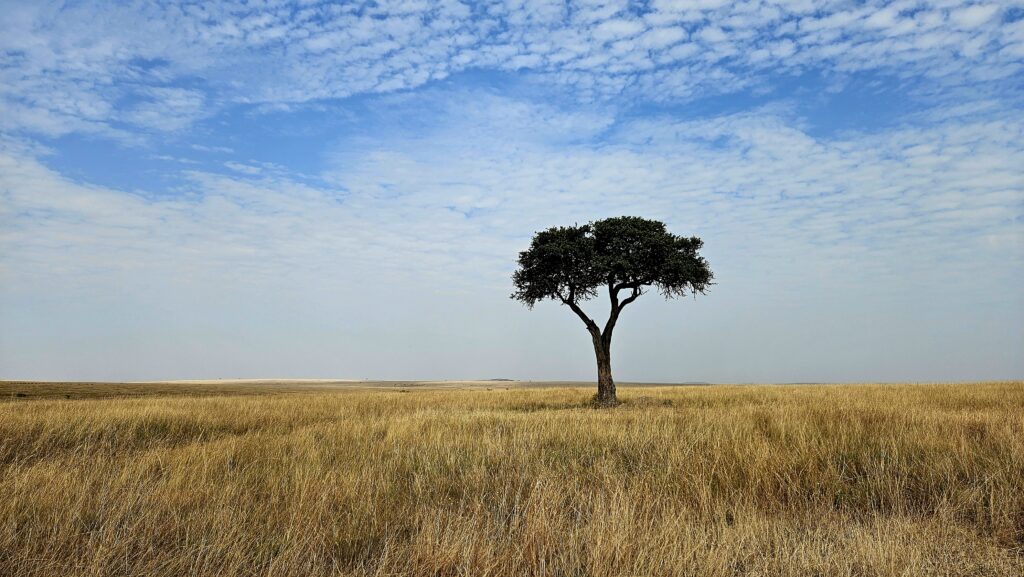
    First Impressions of Maasai Mara landscape - last week of July
    First Impressions of Maasai Mara landscape – last week of July. It is dry and green lines show where the streams are. Same landscape turns into a green carpet after few days of consistent rainfall.
    Stripes
    Stripes !!

    Returning to the Mara

    Later journeys brought different stories: elephants waking a pride, a fleeting serval in early light, famous coalitions and predators moving between shadow and gold.

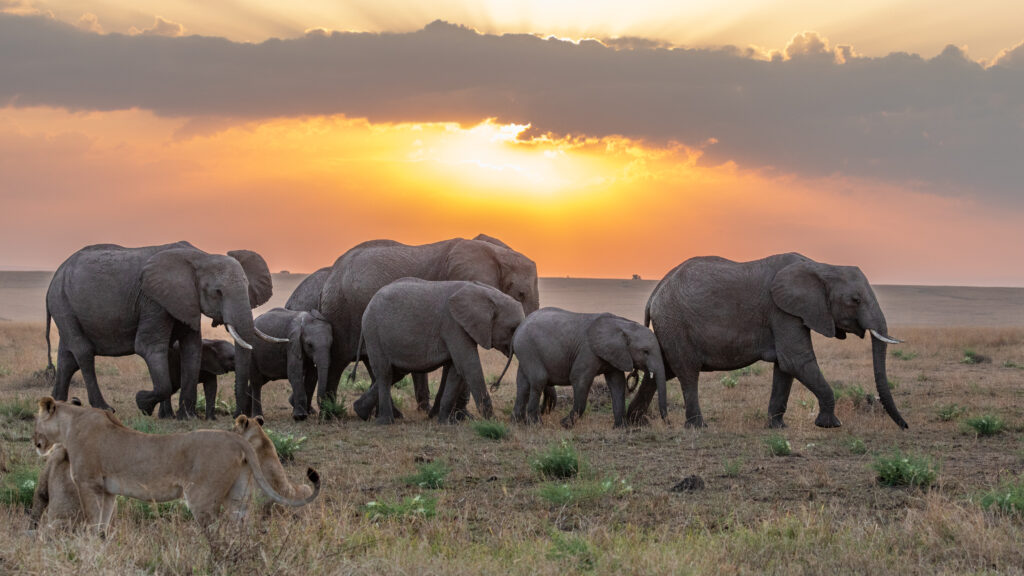
    Drama at sunrise : A herd of elephants simply walks through the Rongai Pride and shakes them out of slumber
    Drama at sunrise : A herd of elephants simply walks through the Rongai Pride and shakes them out of slumber !!
    ' David and Goliath' - a long story saved to be told in person
    ‘David and Goliath’ – a long story saved to be told in person !!
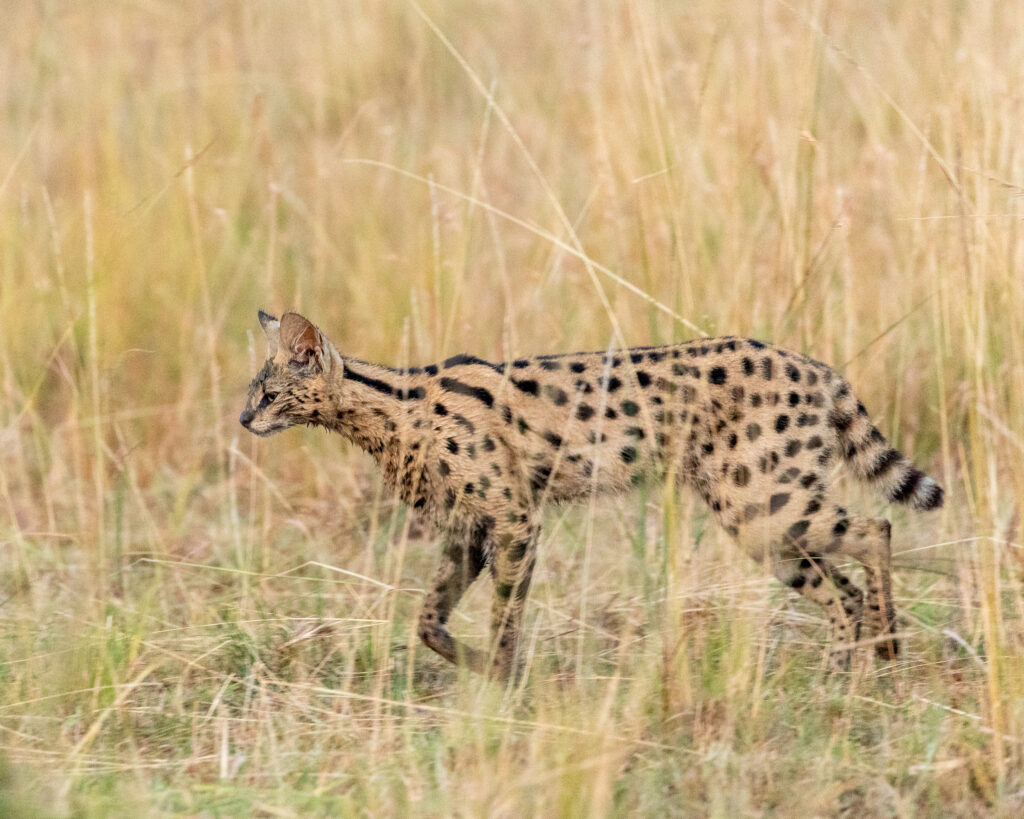
    A lucky break to catch this fleeting Serval Cat early morning, while rushing to see Topi Pride
    A lucky break to catch this fleeting Serval Cat early morning, while rushing to see Topi Pride
    Early Morning Magic of Golden Light - Topi Pride

    Early Morning Magic of Golden Light – Topi Pride ! Early light can transform an ordinary sighting. The Topi Pride emerged in gold, reminding us that in the Mara the atmosphere of an encounter can be as memorable as the animals themselves.
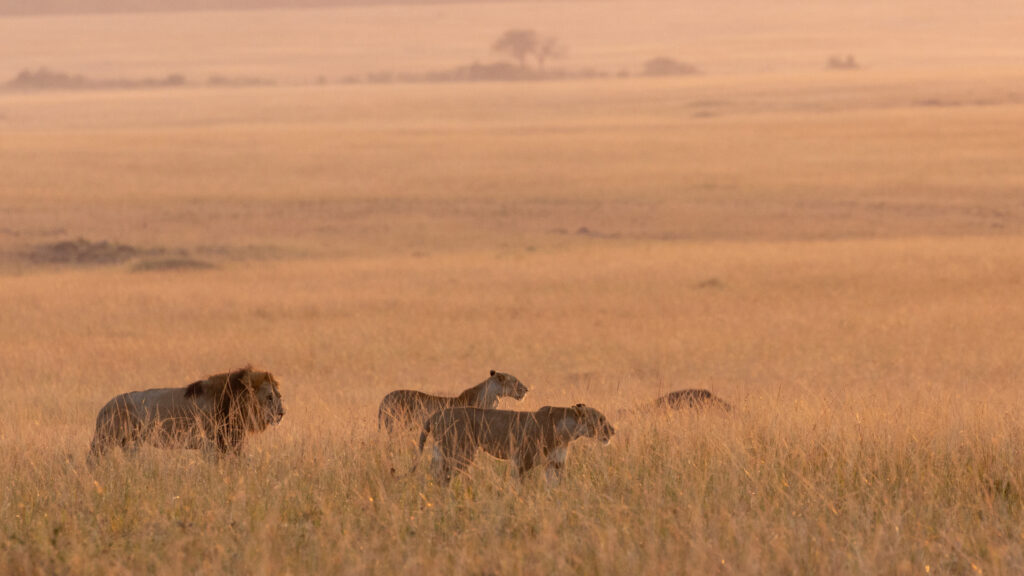
    Olonyok and Winda of the once famous 'Tano Bora' coalition
    Olonyok and Winda of the once famous ‘Tano Bora’ coalition !!
    The coolest of all (cats)
    The coolest of all (cats). A leopardess, just got down from the tree and was on the move – only she knew, where to !
    Gangs of the Grassland
    Gangs of the Grassland !! Lionesses and sub-adults of Mara Pride stalking a herd of buffaloes.
    Brothers Bonding
    Brothers Bonding !!
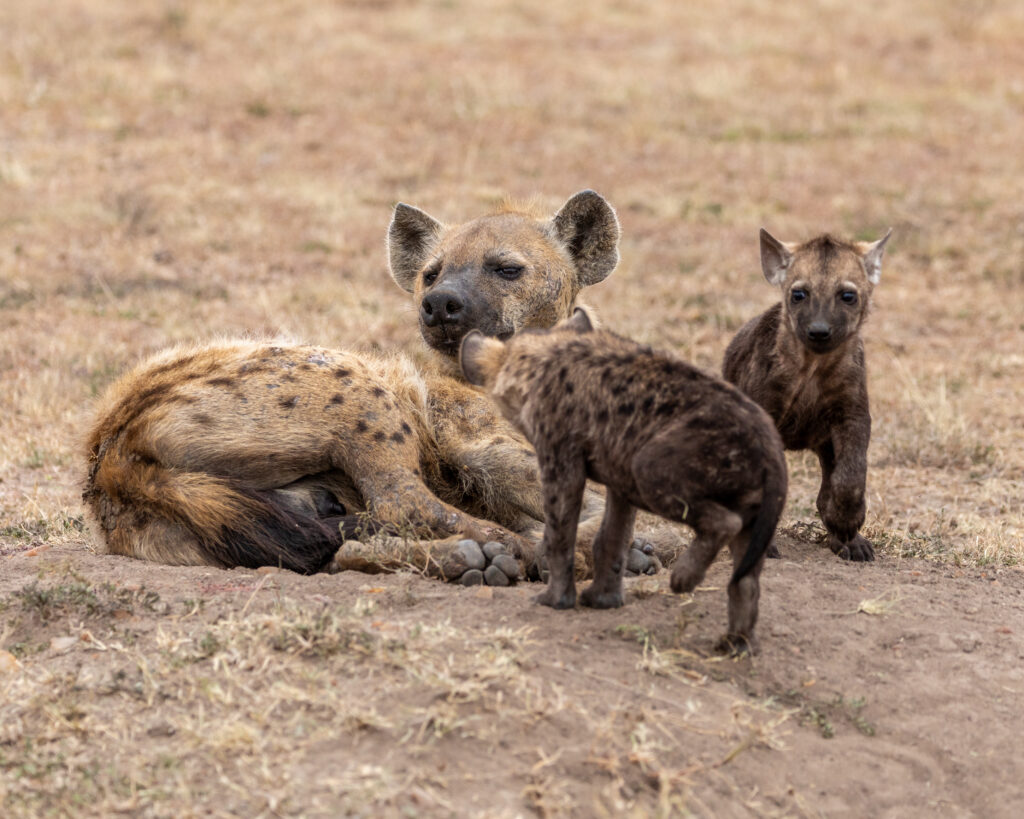
    Pups of Spotted Hyena - understanding the world outside their den , while the mother keeps an eye on them
    Pups of Spotted Hyena – understanding the world outside their den, while the mother keeps an eye on them.
    A lone female in the vicinity
    A lone female in the vicinity !

    The people and place behind the journey

    Mara's mesmerizing landscapes

    Mara’s mesmerizing landscapes. The pull of the Mara lies in more than sightings. Its immense horizons, changing weather and the knowledge of excellent guides turn separate encounters into a coherent experience of place.

    With Our Outstanding Guide and Host Benson Kirrokor
    With Our Outstanding Guide and Host Benson Kirrokor
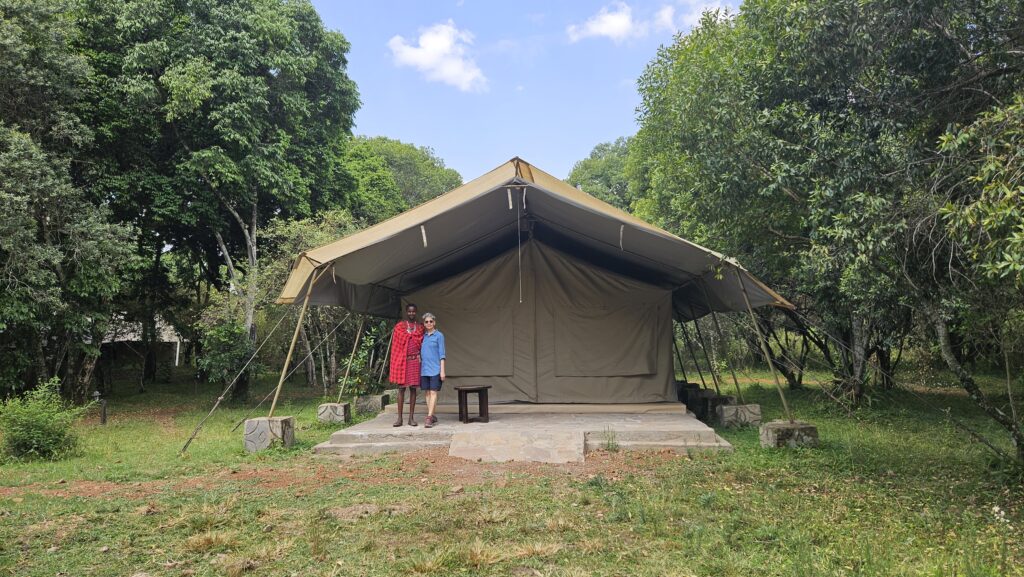
    Our Banda - for 5 nights at Lorian Safari Camp
    Our Banda – for 5 nights at Lorian Safari Camp !

    Why we return

    Every visit has its own rhythm. Some days are filled with action; others are carried by quiet light, distant movement and time spent watching. The Mara remains compelling because it never offers the same story twice.
    Keep the dream alive—and travel with respect for the land, its wildlife and the people who protect it.

  • Kabini — Nagarhole: Forest Encounters

    Tiger in Kabini forest
    A tiger in the forests of Kabini.

    An unplanned journey to Kabini became one of our most rewarding forest visits: three safaris, three tigers, two leopards and the quiet pleasure of watching the landscape reveal itself.

    Where Kabini lies

    Kabini lies in south-western Karnataka, on the backwaters of the Kabini River along the southern edge of Nagarhole National Park. It is reached most commonly from Mysuru and forms part of the wider Nilgiri Biosphere Reserve, where Nagarhole connects with Bandipur and the forests of Wayanad.

    This connected landscape is one of southern India’s most important refuges for Asian elephants and tigers. Its river, moist and dry deciduous forests, open meadows and adjoining reserves also support leopards, gaur, deer, dholes and an exceptional variety of birds.

    Into the wild

    Elephant crossing a wide forest meadow in Kabini
    The elephant is only a small presence in this broad forest landscape—the scale is part of the encounter.

    Once a private hunting landscape of the Maharaja of Mysore, Kabini is now celebrated for its wildlife and the varied habitats surrounding its reservoir. The forest is always larger than any individual sighting; even an elephant can appear momentarily small against the sweep of meadow and woodland.

    In March 2023, an unplanned trip brought us here for three safaris. The sightings were remarkable, but the atmosphere of the forest—the changing light, alarm calls and long periods of attentive waiting—gave the encounters their meaning.
    Encounters along the way

    Tigress walking towards the safari vehicle
    The tigress walked directly towards us before passing the vehicle—an encounter that deserved space of its own.
    Spotted deer in Kabini forest
    Spotted deer gather in the woodland.
    Tiger scent-marking against a tree
    An old and effective form of communication.

    While tigers and leopards may reveal themselves on the tourist tracks, the forest still holds its secrets. The celebrated black panther, Saya, usually remains deep within the large core area that is closed to visitors.

    Wildlife crossing a forest track in Kabini
    A fleeting crossing becomes a complete scene when the surrounding forest is allowed to remain in the frame.
    Male leopard in Kabini
    A bold male leopard remained in the open for more than forty minutes.
    Leopard resting in Kabini
    Another patient leopard encounter in the forest.

    Beyond the big cats

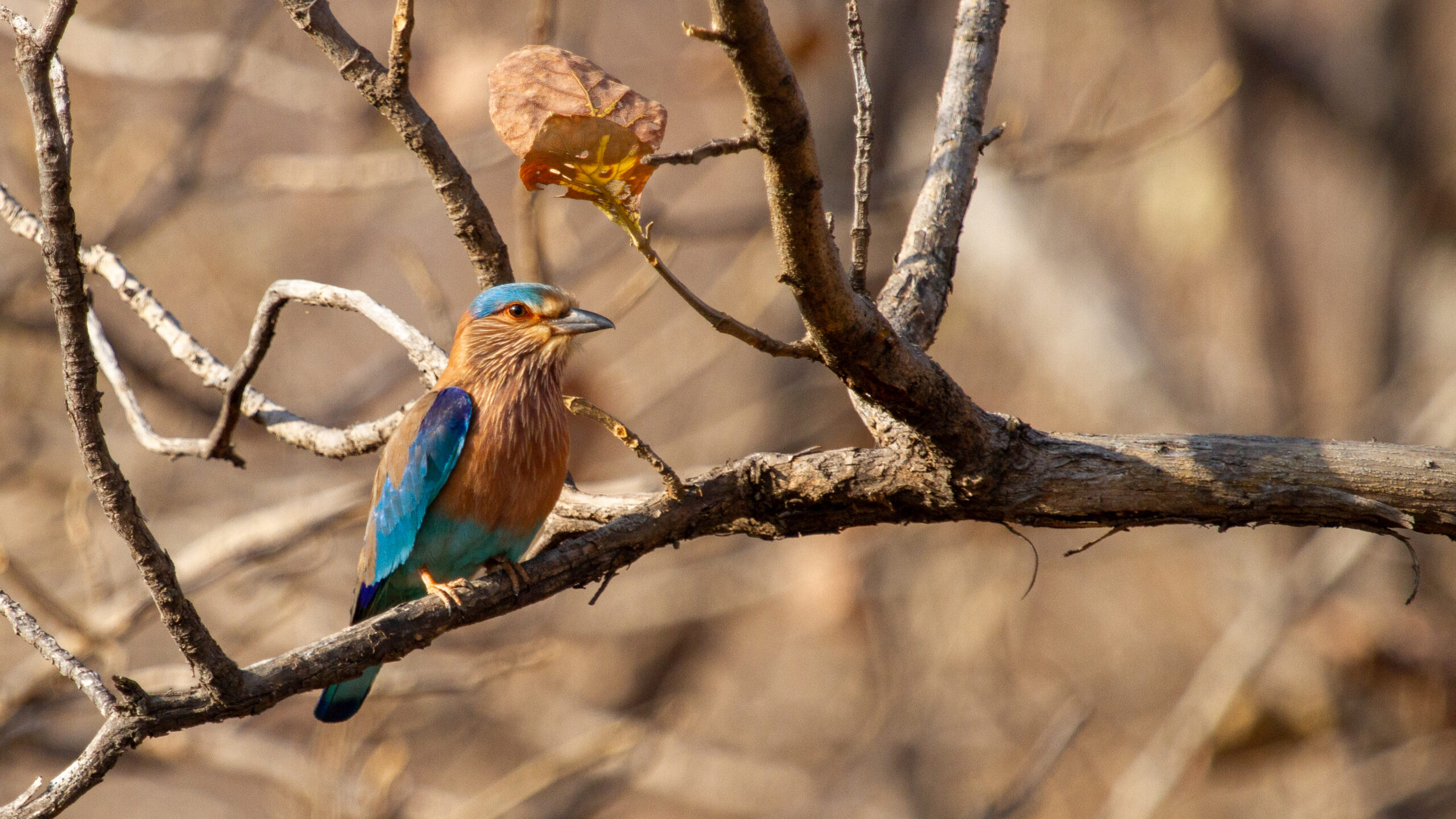
    Kabini offered much more than predators: elephants, gaur, spotted deer, langurs, giant Malabar squirrels and a lively bird community that included woodpeckers, Indian rollers and Crested Serpent-Eagles. Meeting Saad and Sangeeta Jung added another dimension; decades in the same forest had not diminished their enthusiasm for entering it again.

    What remains

    Have we seen the entire forest? Certainly not. That is precisely the reason to return: Kabini is tranquil, surprising and always larger than the sightings with which one comes home.

    “I love the forest. It is the place where you hear yourself better.” — Fahadh Faasil
  • Golden Monkeys of the Virungas: My Golden Cousins

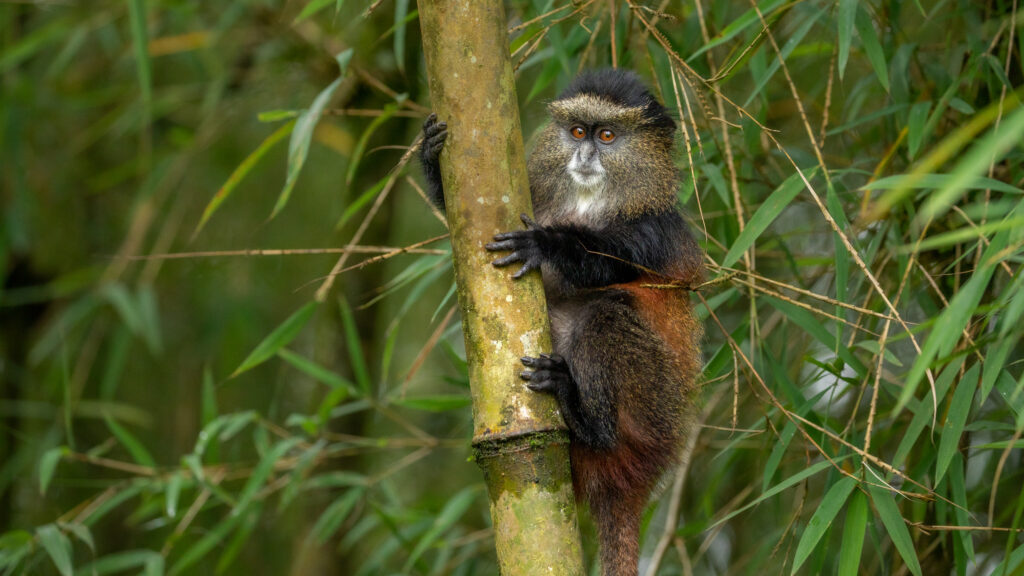
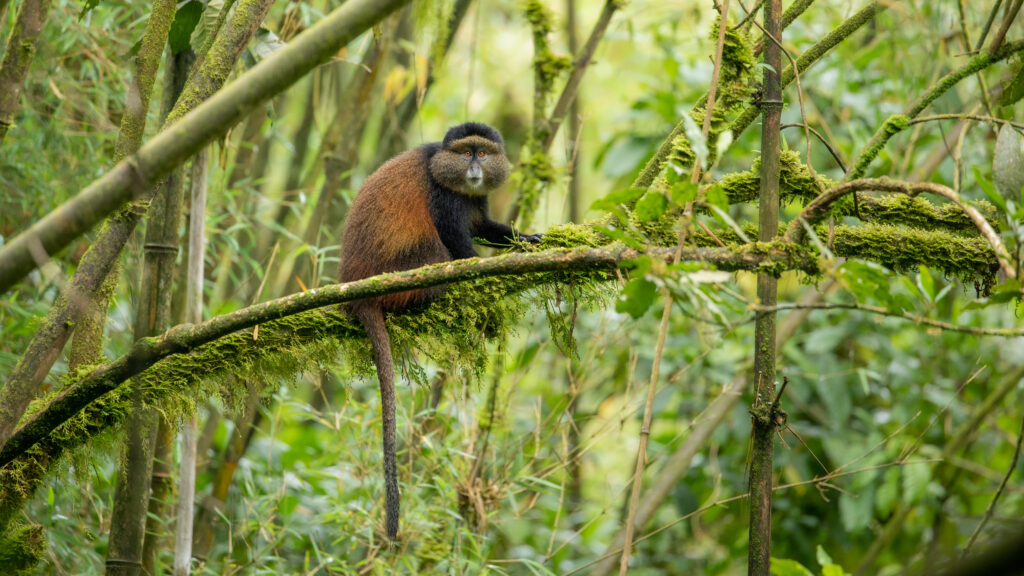
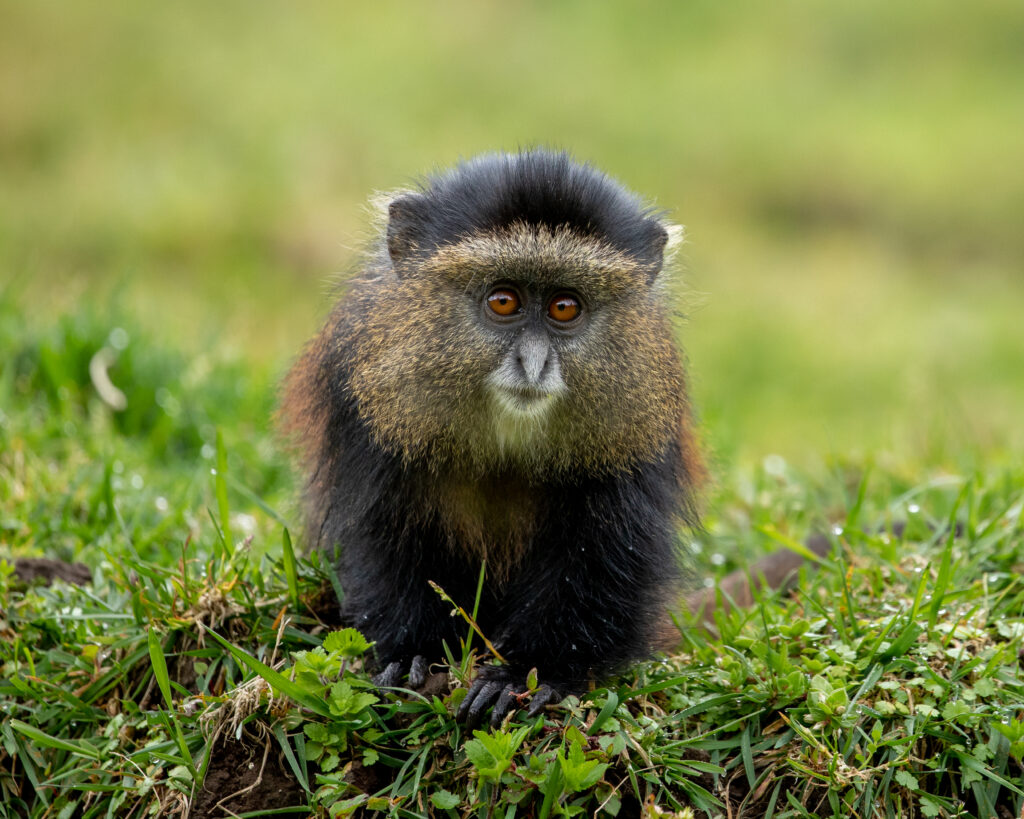
    Very young golden monkey gripping bamboo
    A young golden monkey among the Virunga bamboo.

    A fortunate journey to Rwanda’s Volcanoes National Park brought me face to face with one of the Virungas’ most distinctive residents: small, sociable and astonishingly golden against the deep green bamboo.

    “If you go to a desert, you will hear this mysterious voice: Be wise, protect your forests!” — Mehmet Murat Ildan

    A narrow mountain world

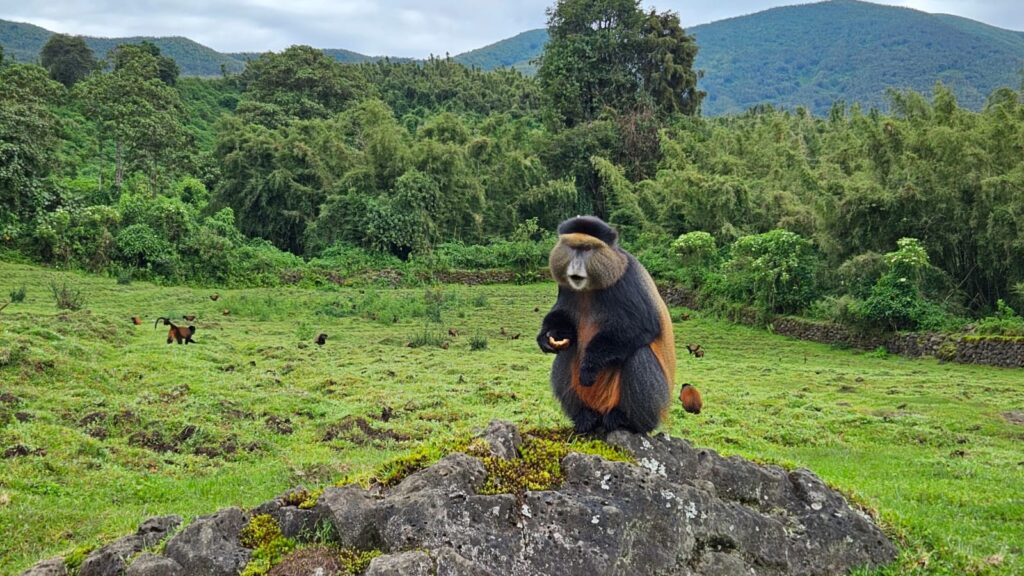
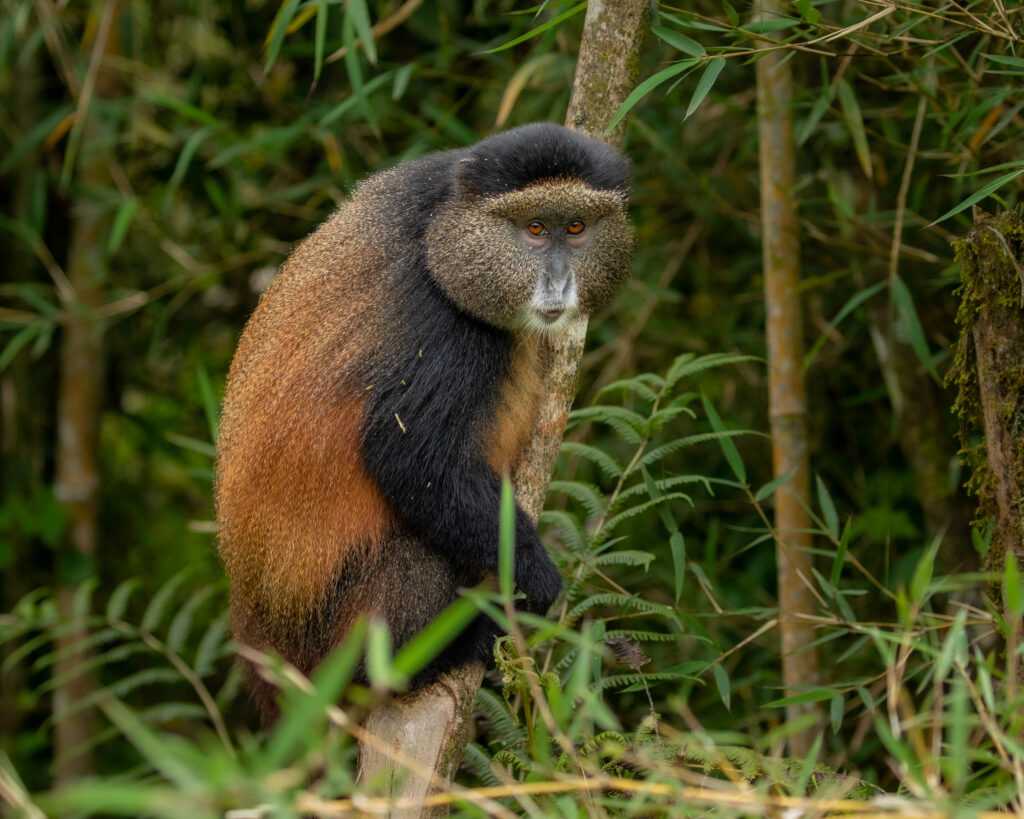
    Golden monkeys are native to the Albertine Rift and closely associated with the high-altitude forests of the Virunga Massif. In Rwanda, two habituated groups can be tracked in Volcanoes National Park—one on the slopes of Mount Karisimbi and another in the bamboo forest of Mount Sabyinyo.

    Their dependence on a restricted mountain habitat makes every surviving stretch of bamboo important. Forest protection here safeguards far more than a beautiful primate; it preserves an entire community shaped by altitude, rain and volcanic ground.

    From Kinigi into the rain

    Dense green vegetation in golden monkey habitat
    Rainfall gives the Virunga foothills their luxuriant green.

    The forest on the left is the destination, but the journey begins at Kinigi. Volcanoes National Park headquarters is organised and welcoming, with efficient staff, rangers and a memorable cup of coffee before the trek. From there we drove about four kilometres to a village and continued on foot towards the bamboo forest.

    I visited in the rainy season. The track was wet, muddy and cold enough to make a rain jacket essential. Keeping shoes clean was futile; fortunately, many lodges include an after-trek cleaning service. Camera gear, phones and documents also needed proper rain protection—there may be no shelter for an hour or more.

    Food beyond the bamboo

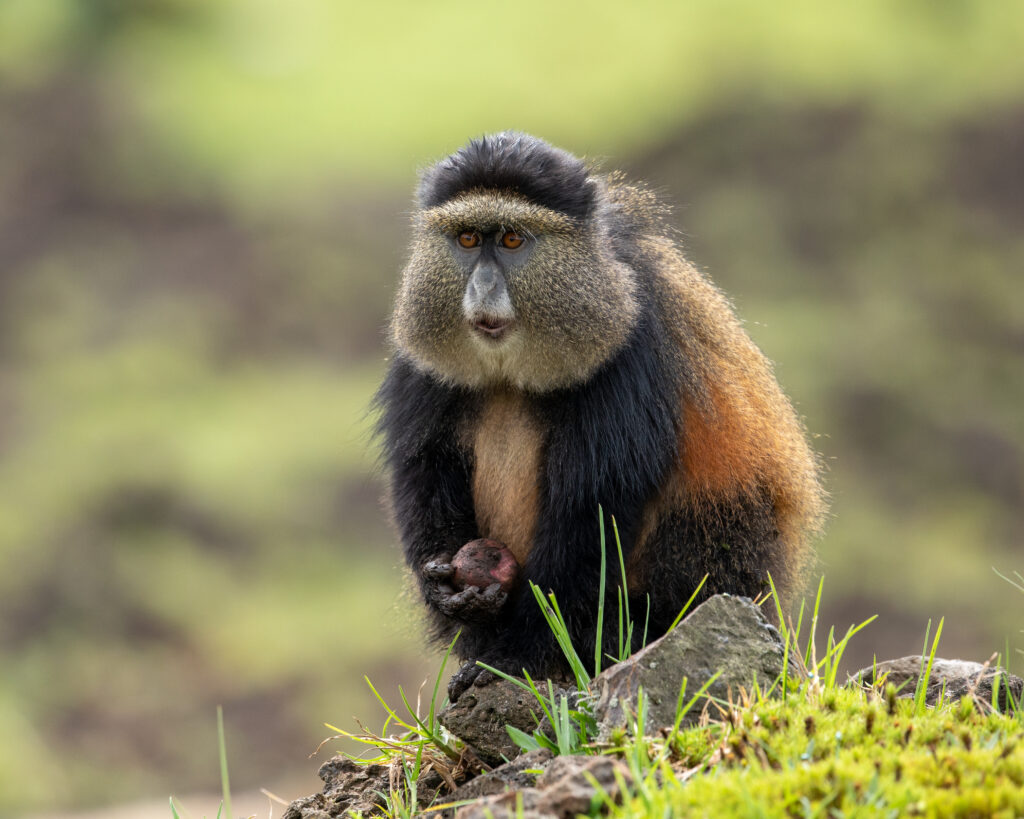
    An adult male, on the right, had found a potato left behind after harvest. Bamboo leaves and shoots remain central to the monkeys’ diet, but nearby fields offer tempting additions. He cleaned and peeled the potato before eating it, an absorbing demonstration of dexterity.

    The episode also revealed the fragile boundary between protected forest and cultivated land. An easy meal can draw a troop beyond cover, bringing opportunity and risk into the same frame.

    Adult male golden monkey holding a freshly dug potato
    An adult male prepares a potato found in a harvested field.
    Golden monkeys crossing open farmland beside Volcanoes National Park
    The troop leaves the bamboo for open agricultural land beside the village.

    Life within the troop

    Golden monkeys live in large, active groups. Females remain closely associated with a familiar area, while males range more widely. In the bamboo, individuals appeared independent yet finely attuned to the troop. A single strong call from the lead female was enough: forty or fifty monkeys abandoned the open field and dissolved into forest cover almost at once.

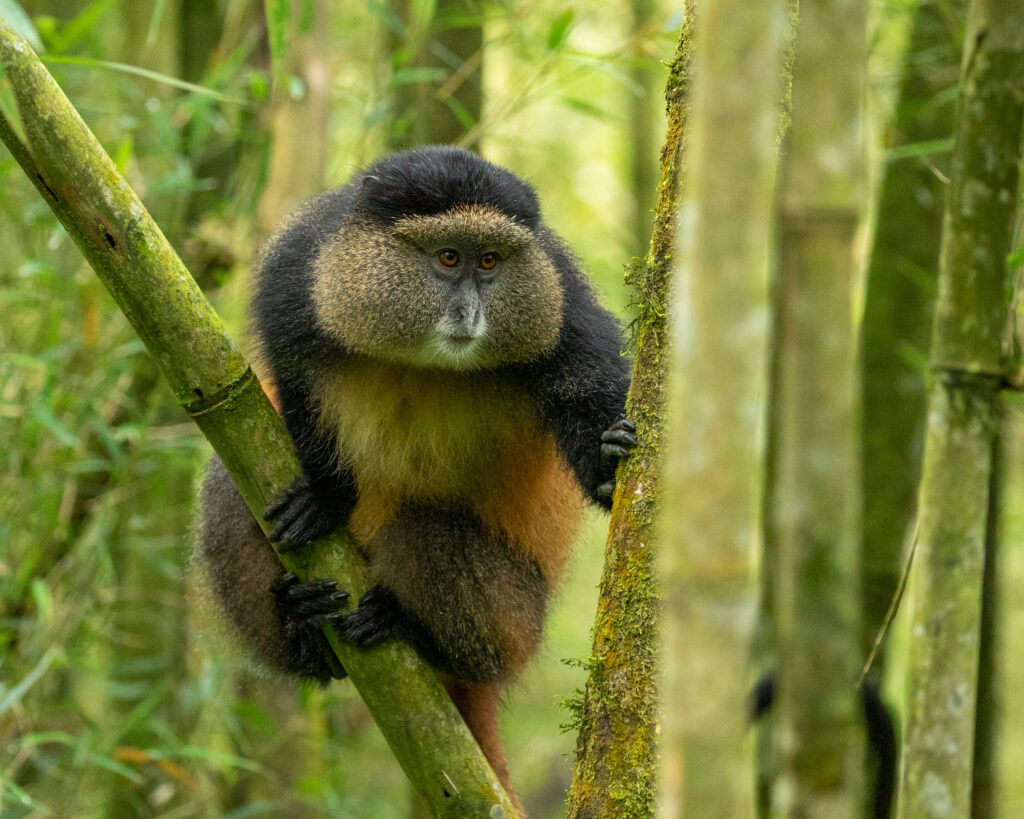
    Golden monkey watching cautiously from the bamboo forest
    Curious yet cautious—a sound strategy when dealing with humans.
    Young golden monkey beside its mother
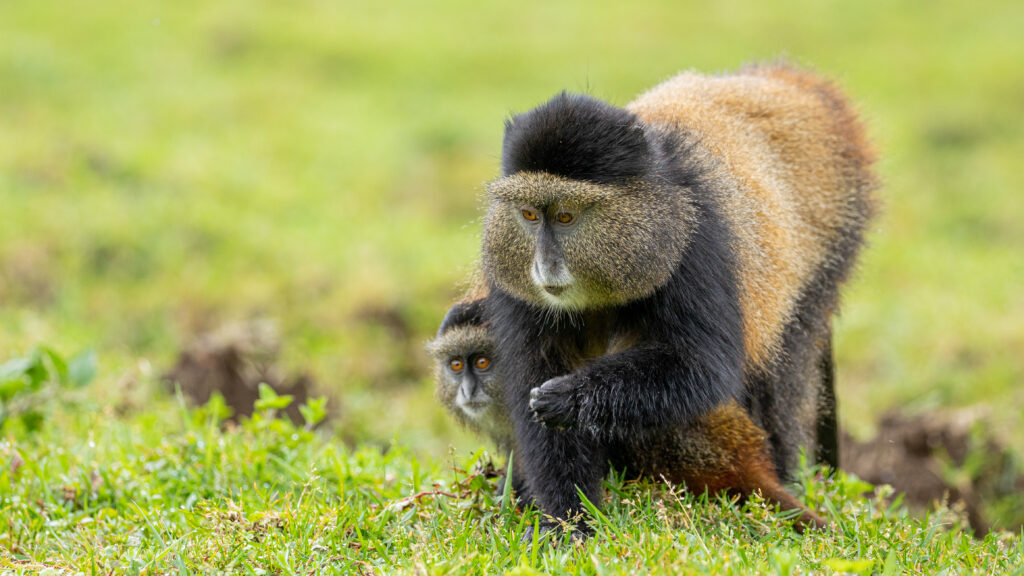
    Another curious youngster remains close to its mother.
    Baby golden monkey looking towards the camera
    A baby pauses to inspect the visitors.
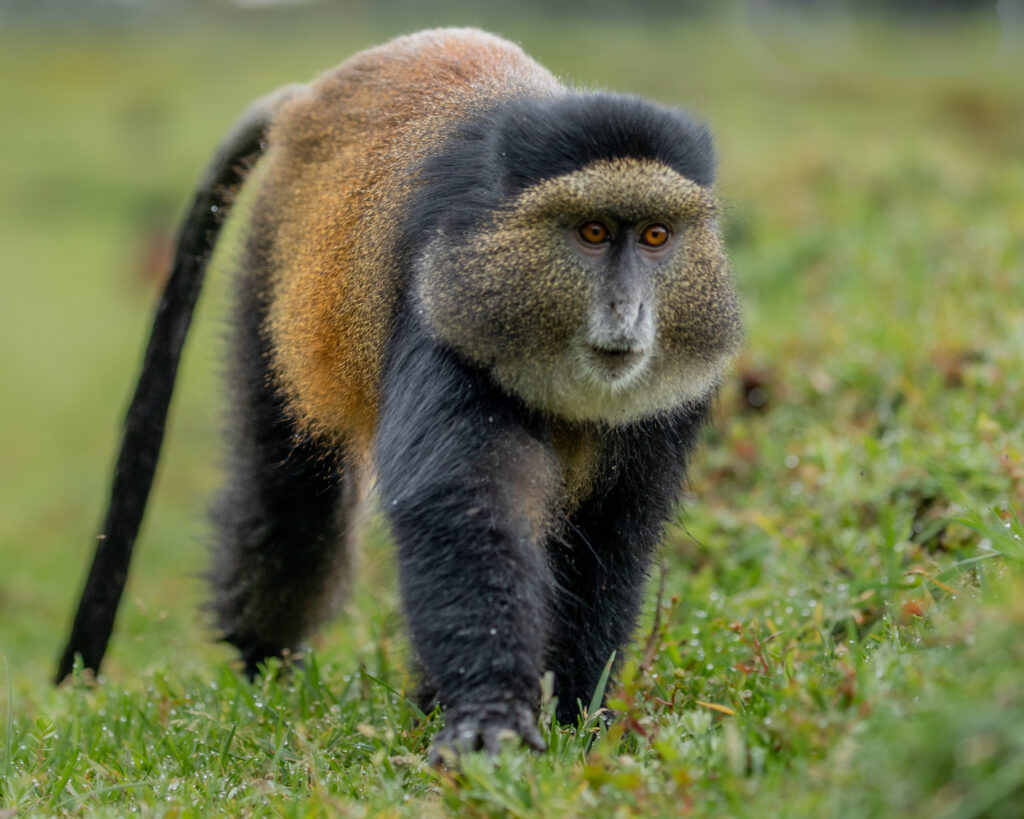
    Confident adult male golden monkey passing nearby
    A confident male passes quietly through the forest.

    Between forest and volcano

    Young male golden monkey seated among vegetation
    A young male settles comfortably into his green surroundings.

    A young male, on the left, looked perfectly at home on his forest “couch”. Golden monkeys are creatures of habit, returning to favoured parts of the bamboo for feeding and rest. That familiarity can make them easier to locate than gorillas, but never predictable enough to diminish the pleasure of finding them.

    Their copper-gold flanks ignite whenever light enters the forest. Against wet leaves and dark stems, even a brief stillness becomes a portrait.

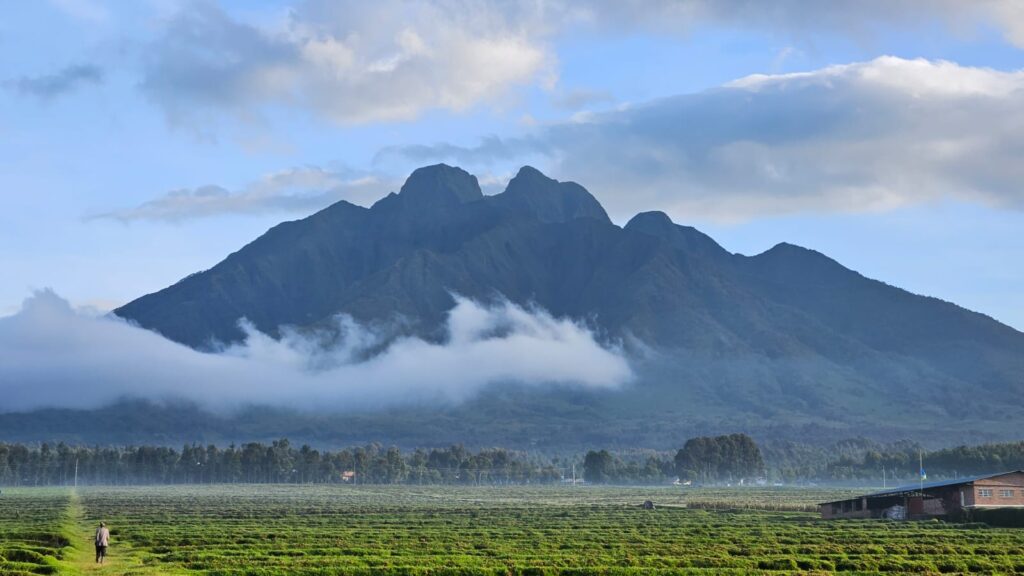
    Mount Sabyinyo rising above the Virunga landscape near Kinigi
    Mount Sabyinyo rises above Kinigi—part of the volcanic landscape that holds the monkeys’ remaining habitat.

    Why return

    Small, expressive and comfortable in their own skin, golden monkeys are among the most engaging primates I have encountered. Their world is beautiful but narrow, pressed between protected forest and human need. I would return without hesitation—not only for another glimpse of those bright coats, but for the privilege of seeing a troop remain wild and thriving in its ancestral home.

    “When you realise the value of all life, you dwell less on what is past and concentrate on the preservation of the future.” — Dian Fossey

    Practical note: Golden monkey tracking in Volcanoes National Park departs from Kinigi. Current permits, schedules, clothing guidance and visitor rules should be confirmed through Rwanda’s official tourism channels before travelling.

  • Kibale National Park: Chimpanzees, Other Primates and Birds

    Chimpanzee portrait from Kibale National Park

    Some places deserve a second visit. Kibale made its case with chimpanzees, beautiful birds and a forest that kept rather a lot to itself. Our Christmas trip brought family, muddy boots and our first encounters; the return in September brought a determined pitta search and a morning at Bigodi. Turaco Treetops was home for both. Coffee, naturally, featured throughout.
    Part One Christmas 2025 in Kibale

    Pusha, Harpal, Param and I left Entebbe after an early Café Javas coffee, crossing the Equator and stopping at Gator’s Café for a generous Rolex breakfast. Uganda’s egg-and-chapati version was considerably more useful than a wristwatch on a long drive. Ankole cattle and broad farms accompanied the route through Lyantonde and Ibanda; by mid-afternoon, Turaco Treetops welcomed us with tuna sandwiches, tea and coffee.

    Into the chimpanzees’ neighbourhood

    Chimpanzee framed by Kibale forest foliage
    A chimpanzee framed by Kibale’s foliage — one of the intimate portraits from the first visit.

    The next morning, Kanyanchu was bustling: visitors checked permits, guides organised groups, and local performers added song and dance to the anticipation. After the UWA briefing, Johnny gathered our group and led us into the forest. A porter helped with one of my two heavy camera bags. Photography is easier when you are not simultaneously auditioning as a pack animal.

    The forest wrapped around us: damp air, enormous roots and a canopy that demanded a great deal of neck exercise. Then the calls came, radios crackled, and chimpanzees appeared above us. We watched their day unfold, keeping our distance and wearing our masks. Powerful bodies, expressive faces and small, absorbing interactions made the hour disappear far too quickly.

    Back at reception, our trek certificates felt like more than souvenirs. We had been allowed a brief glimpse into a remarkable world. Lunch at the lodge followed, once we had persuaded most of Kibale’s mud to leave our shoes and trousers.

    The barefoot encore

    I returned for another chimpanzee trek while Pusha and her cousins enjoyed lodge birding and a gentler morning. Overnight rain had made the trails wonderfully slushy. Between a waterlogged section and a stream, the rangers offered piggyback crossings. I removed shoes and socks and crossed myself. The chimpanzee sightings were excellent; the footwear arrangements were less elegant.

    Chimpanzees interacting during the December visit
    Quiet interaction between chimpanzees during our December visit.

    Afternoons at Turaco Treetops

    Afternoons at Turaco Treetops rewarded a slower pace. I tried to photograph a Red-chested Sunbird on a particular flower, while Black Weavers jostled over nesting material and space. Their property disputes seemed to require no lawyers.

    Our lodge sightings included African Blue Flycatcher, Great Blue and Ross’s Turacos, Brown-throated Wattle-eye, Green-headed Sunbird, Black-and-white-casqued Hornbill and Crowned Hornbill. Red-tailed monkeys and black-and-white colobus also visited. A Pale-breasted Illadopsis called each morning but stayed invisible. Apparently, it preferred to issue invitations rather than make introductions.

    Sparkling wine and a bonfire rounded off our last evening. On the drive home, a Long-crested Eagle on an electricity pole and a Woolly-necked Stork beside a muddy roadside pond supplied two final camera stops. Kibale had not quite finished with us.

    Part Two September 2026 and the Pitta

    This time it was Pusha and me, with Amon driving carefully through heavy rain after our early Entebbe coffee. The familiar Rolex stop returned, as did the farms and Ankole cattle. A large gathering of Grey Crowned Cranes beside a swamp added a welcome roadside spectacle.

    We reached Kibale in the afternoon and went straight to Kanyanchu to arrange permits and the next morning’s birding. While I dealt with the paperwork, Pusha found Uganda mangabeys near the parking area, including one with a baby. She had clearly chosen the better queue.

    Early birders and a late appearance

    The alarm rang at 4:30 a.m. After breakfast, we met Moses and his UWA colleagues; Christopher helped carry camera gear. Our main target was the Green-breasted Pitta. For two hours, it remained entirely unimpressed by our commitment.

    Then word arrived that another guide had heard a pitta. Our tired group acquired a surprising new gear and followed Moses through the undergrowth. After more listening and searching, there it was. We saw its display jumps and managed a handful of record shots. They were not exhibition prints, but at that moment they might as well have been gold.

    Green-breasted Pitta perched in Kibale forest
    Green-breasted Pitta displaying in Kibale forest
    Female Narina Trogon in Kibale forest

    A female Narina Trogon — a welcome reward during the long forest search.

    Rainforest birding tests everything: birds call from dense foliage, the canopy is high, and dark subjects sit against bright sky. We changed areas, finding a female Narina Trogon, Blue-headed Sunbird and Rufous Flycatcher-Thrush. A shy L’hoest’s monkey appeared for seconds before melting back into the forest.

    Grooming and a reminder from the boss

    Pusha returned to the lodge with Amon while I continued with Moses to the chimpanzees. About ten were feeding high in a huge fig tree. After a wait, a male climbed down, paused on a branch, then reached the ground. A female followed, and the pair settled into grooming.

    Two chimpanzees together on the forest floor
    Together on the forest floor — a quieter moment during the September chimpanzee encounter.

    Grooming helps chimpanzees maintain relationships and ease tension. Watching the careful attention they gave one another was absorbing: a quiet social exchange in the middle of a busy forest. Others descended and lounged nearby, some grooming, some apparently committed to doing very little.

    Moses identified Ruhija as the dominant male of this group. When Buddha displayed, Ruhija answered quickly and forcefully. The management structure was clarified without a meeting invitation. Soon Moses gently reminded me that our hour was up. I could happily have watched for much longer.

    Chimpanzee scanning the canopy
    Scanning the canopy.
    Young chimpanzee riding on its mother
    A young chimpanzee rides securely on its mother’s back along the forest track.
    Young chimpanzee examining a leaf
    An expressive young chimpanzee studies a leaf during the September trek.

    Bigodi with Patricia

    At seven the following morning, Patricia met us for the Bigodi wetland walk. This community-run sanctuary conserves the Magombe wetland through KAFRED, with tourism income supporting local projects. It is a rewarding companion to a visit to Kibale: a different habitat, experienced with people whose knowledge brings it alive.

    Our sightings included African Blue Flycatcher, paradise flycatchers, a Black-headed Paradise Flycatcher and a Shining-blue Kingfisher. Seedcracker, Snowy-crowned Robin-Chat, Speckle-breasted Woodpecker feeding on reeds, and Brown-eared Woodpecker added to the morning’s variety.

    Shining-blue Kingfisher at Bigodi
    Shining-blue Kingfisher — vivid colour from the September photo collection.
    African Blue Flycatcher at Bigodi
    African Blue Flycatcher — a little blue brilliance from our September visit.

    Eastern Yellow-billed Barbet, Great Blue Turaco, African Goshawk, White-tailed Ant-Thrush and Green-backed Camaroptera completed a rich set of bird encounters. Red colobus and red-tailed monkeys shared the attention with black-and-white colobus, including a female carrying a tiny white infant. Birding has a way of becoming primate watching when the neighbours insist.

    Red colobus portrait from the September collection
    Red colobus — one of the primate portraits in our September collection.

    The lodge deserves its own birding session

    Turaco Treetops again supplied birds, butterflies and occasional monkey visitors between outings. Collared Sunbird, Olive-bellied Sunbird and Brown-throated Wattle-eye joined our September sightings. Even a quiet afternoon could fill a memory card.

    Red-chested Sunbird at Turaco Treetops
    Red-chested Sunbird at the flower — patience paid off at Turaco Treetops.
    African Paradise Flycatcher at Turaco Treetops
    African Paradise Flycatcher — another rewarding lodge encounter.
    Butterfly photographed during the September visit
    Butterfly detail from the September visit — another reason to keep the camera nearby.
    Butterfly photographed at Turaco Treetops
    A second butterfly pauses among the lodge flowers.

    Our return journey brought the two visits together: the family Christmas, the barefoot stream crossing, the pitta finally appearing, and the pleasure of watching chimpanzees simply get on with life. Kibale rewards effort, but it also rewards sitting still. We left with photographs, muddy memories and a perfectly reasonable suspicion that two visits might not be enough.

    “On Earth, there is no heaven, but there are pieces of it.” — Jules Renard

  • Mountain Gorillas of Bwindi: Meeting Bweza

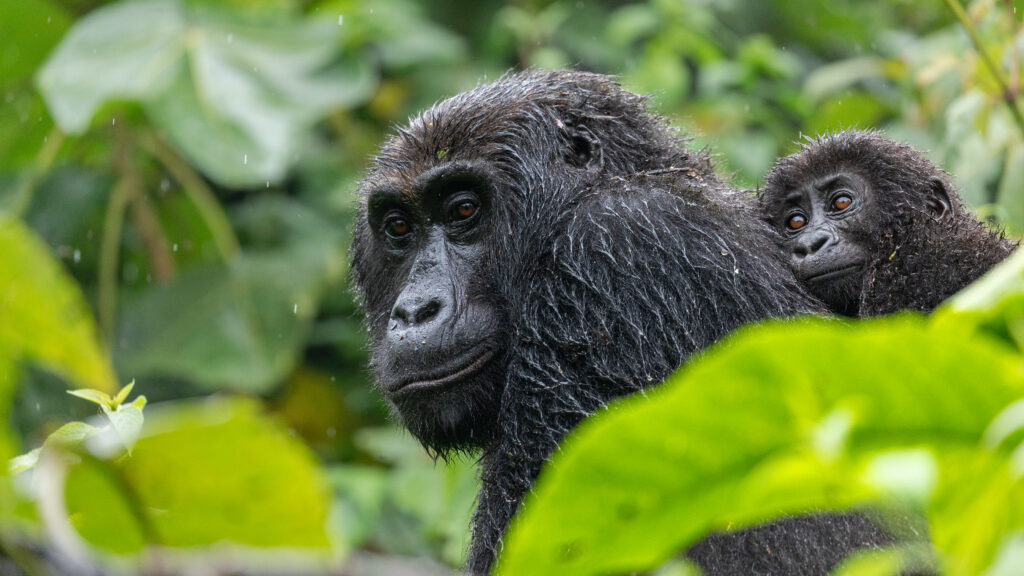
    Bweza, an adult silverback mountain gorilla, looking through the vegetation in Bwindi
    Bweza—the handsome one—meets our gaze through the vegetation of Bwindi.

    For years, mountain gorillas belonged to documentaries and distant imagination. Then a forest trail in south-western Uganda led us into the quiet presence of Bweza and his family.

    “The clearest way into the Universe is through a forest wilderness.” — John Muir

    Into Bwindi

    Bwindi Impenetrable National Park lies in south-western Uganda, where lowland and montane forests meet along the Albertine Rift. Its 32,000 hectares hold extraordinary biological richness and almost half of the world’s mountain gorillas.

    Reaching a habituated family is part of the encounter. Rangers lead visitors along steep elephant trails through mud, roots, stinging nettles and dense undergrowth. The trek may take several hours; the reward is one carefully managed hour with the gorillas in their natural home.

    The journey to the forest

    Bwindi is approximately 425 kilometres by road from Entebbe. The distance alone does not describe the journey: the drive carries you steadily towards Uganda’s south-western highlands, where cultivated slopes give way to the dark, folded edge of the Impenetrable Forest. By the time we arrived, the gorilla encounter already felt like the culmination of a much longer passage.

    The trek began with rangers leading us onto elephant trails through thick rainforest. Mud, slush, slippery stones and tangled roots made progress deliberate; mosquitoes, flies and stinging nettles were part of the bargain. Slipping once or twice was almost inevitable. The armed rangers were not there because habituated gorillas are naturally aggressive, but to protect both visitors and wildlife in a remote forest where human threats remain the greater concern.

    A gorilla visit requires an advance permit and an organised ranger-led trek. Habituated families are gradually accustomed to limited human presence, visitor groups are kept small, and the encounter itself is restricted to one hour. These controls are essential: they protect the gorillas from disturbance and reduce the risk of transmitting human disease.

    Meeting Bweza

    Bweza showing the silver saddle across his back in Bwindi
    The silver saddle that gives a mature male his familiar name.

    Bweza, on the left, was about thirteen years old when we met. His name means “the handsome one” in the local language. A mature male’s back begins to silver at around twelve years, marking the powerful presence that gives the silverback his familiar name.

    What stayed with me was not power on display, but composure. Bweza and the others were absorbed in feeding, largely indifferent to our presence. One measured glance in my direction was enough to collapse the distance between documentary and reality.

    A younger male, on the right, rests in the forest. The stillness felt thoughtful, although that is our human interpretation. Mountain gorillas share gestures and social bonds that appear immediately familiar, yet they remain wholly themselves—wild animals shaped by this cool, wet forest.

    Habituation is gradual and carefully controlled. It allows designated gorilla families to tolerate limited human presence while remaining free-ranging. Visitor numbers, observation time and behaviour are regulated to reduce disturbance and disease risk.

    Young male mountain gorilla resting quietly in Bwindi
    A young male in a quiet interval.

    Family life

    Bweza’s family numbered ten: adult females, younger males and several infants. The youngest clung close to its mother; another explored with the uncertain confidence of a child discovering the world. Their intimacy produced the most memorable photographs of the day.

    Mountain gorilla infant riding on its mother's back
    A young infant travelling securely on its mother’s back.
    Two-month-old mountain gorilla held close by its mother
    The youngest member of the family, held close in the undergrowth.
    Mother mountain gorilla holding a sleeping infant
    A mother and sleeping infant merge into one quiet bundle of black fur.

    Each animal can be recognised by its nose print, which is unique to the individual. But recognition is about more than a field mark. Posture, relationships and small gestures gradually reveal distinct personalities within the family.

    Mother mountain gorilla cradling her infant
    A mother cradles her young with unmistakable care.
    Young mountain gorilla exploring the forest floor
    A youngster begins to explore the forest independently.

    A forest home

    Young mountain gorilla foraging with its hands
    A young male forages deftly among the vegetation.

    A young male, on the left, gathers food with remarkable dexterity. Mountain gorillas feed mainly on leaves, stems, shoots and other plant material. Their thick coats suit the altitude, rain and cooler temperatures of Bwindi and the Virunga mountains.

    Every evening, the family builds fresh nests from leaves and branches. At dawn, they leave them behind and follow a new foraging route, moving through a forest that is both shelter and larder.

    Protection through presence

    Mountain gorillas survive only in Bwindi and the neighbouring Virunga landscape across Uganda, Rwanda and the Democratic Republic of the Congo. Their recovery is one of conservation’s encouraging stories, but their restricted habitat leaves them vulnerable to disease, encroachment and conflict. Responsible, tightly regulated tourism supports protection and neighbouring communities; it also carries an obligation to follow every ranger instruction and keep the animals’ welfare first.

    Bweza the silverback mountain gorilla seated in Bwindi forest
    Bweza deserves the final frame: a gentle giant entirely at home in the forest.

    What remains

    The hour passed quickly. What remained was not the idea of “King Kong”, but a family encountered on its own terms—feeding, resting, caring for infants and moving through an ancient forest. The resemblance between us may invite wonder; respecting the difference is what makes the encounter meaningful.

    Practical note: Current permit arrangements, trekking sectors and visitor rules should always be confirmed directly with the Uganda Wildlife Authority before travelling.

  • The Shoebill of Mabamba: Encounters, Wetlands and Conservation

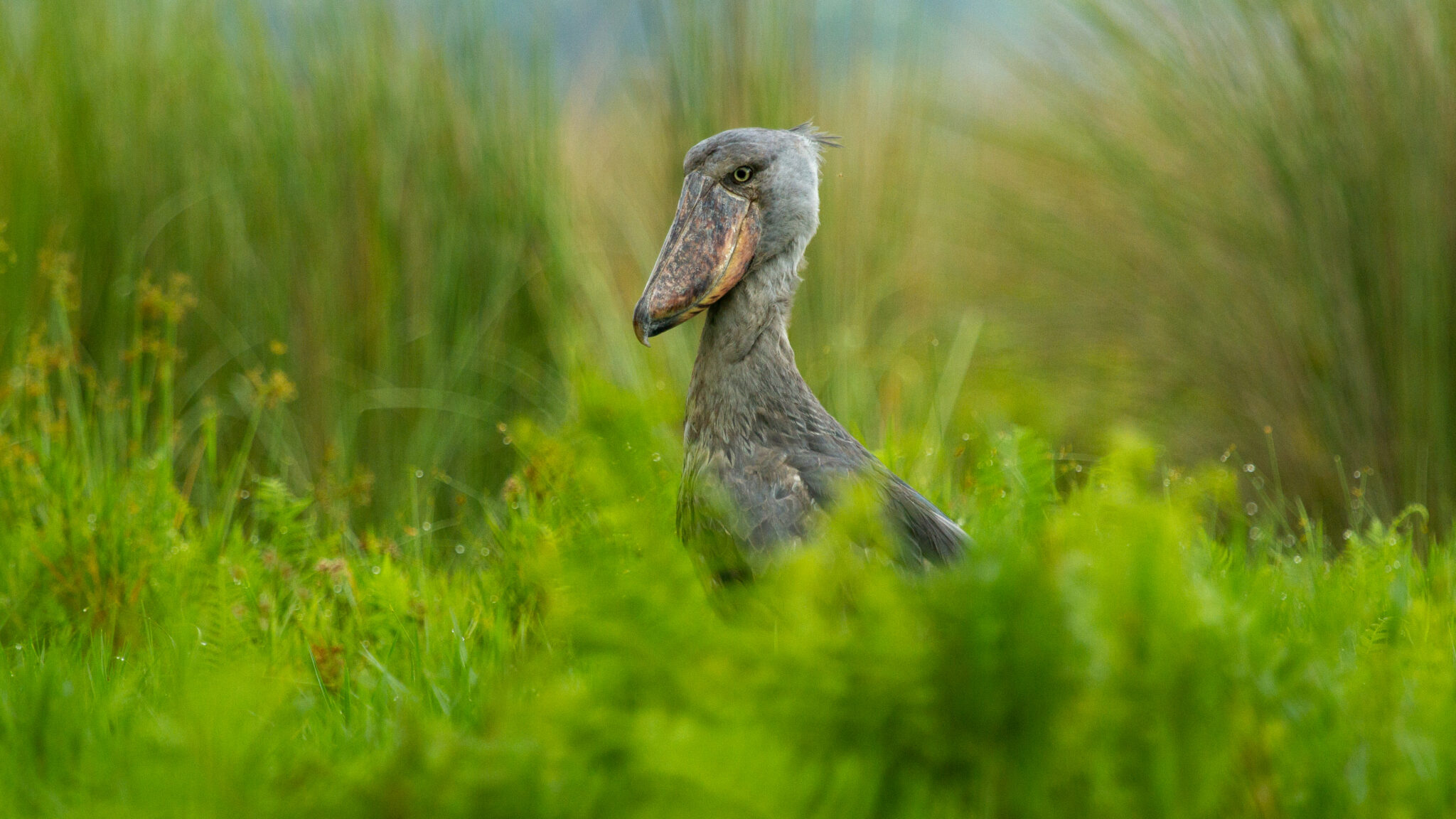
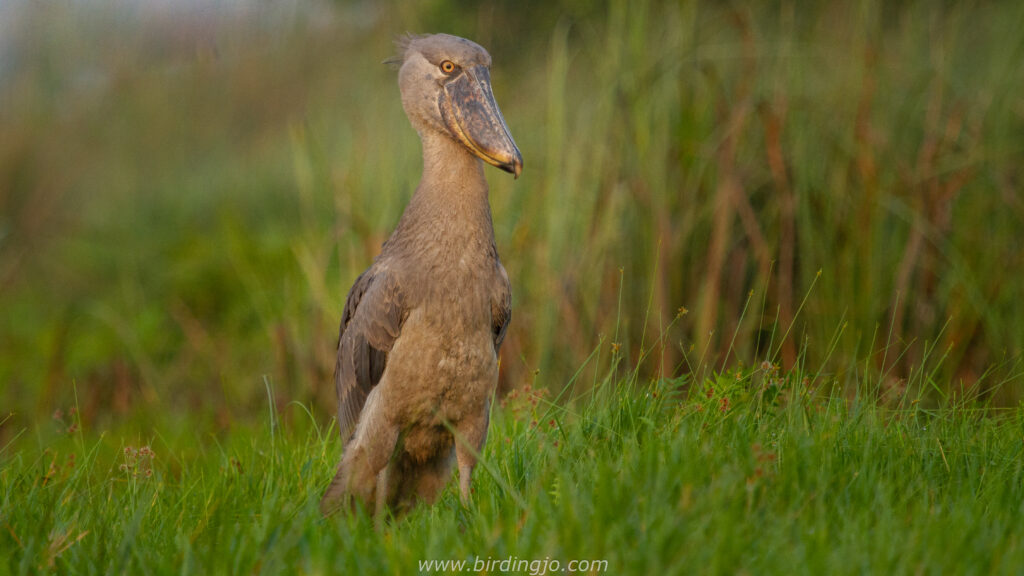
    Shoebill standing in the wetlands of Mabamba Swamp, Uganda
    A Shoebill in the wetlands of Mabamba Swamp, Uganda.

    Several visits to Mabamba revealed more than a remarkable bird. They opened a window onto a living wetland, the patience of a specialist hunter, and a community whose knowledge has become central to its protection.

    Into Mabamba

    A Shoebill among the papyrus is the sight that draws visitors into Mabamba. I had read about this prehistoric-looking bird long before work brought me to Uganda. Mabamba Bay, on the shores of Lake Victoria near Entebbe, offered the closest opportunity: a freshwater wetland of papyrus, reeds and floating vegetation where narrow channels disappear into a seemingly endless green maze.

    Shoebill standing among papyrus and wetland vegetation at Mabamba Bay
    A Shoebill waiting quietly among the papyrus at Mabamba Bay.

    Reaching the swamp is part of the experience. A larger boat crosses the open water before visitors transfer to a small canoe that can move quietly through the papyrus. Finding a Shoebill is never guaranteed. The guides read the channels, vegetation and recent sightings, checking likely feeding areas without disturbing the bird.

    The first encounters

    On my early visits, long periods of searching ended in the thrill of finally seeing a Shoebill standing almost motionless among the floating plants. Its stillness was deceptive. Every part of the bird seemed focused on the water below.

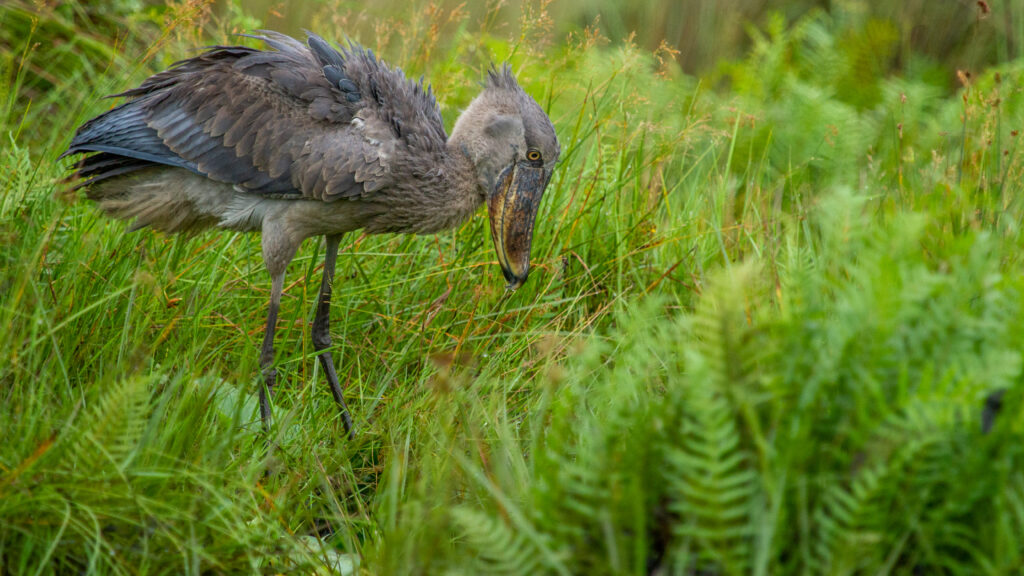
    A wait of nearly half an hour was rewarded when the bird struck and emerged with a lungfish. It carefully separated vegetation from its catch before swallowing the fish. Watching such a large bird hunt with such restraint transformed the encounter from a sighting into a study of patience.

    Young Shoebill standing in the Mabamba wetland
    A young Shoebill in its papyrus habitat.
    Shoebill hunting with focused patience
    Hunting with singular focus and patience.

    Built for the wetland

    Close view of a Shoebill's distinctive bill
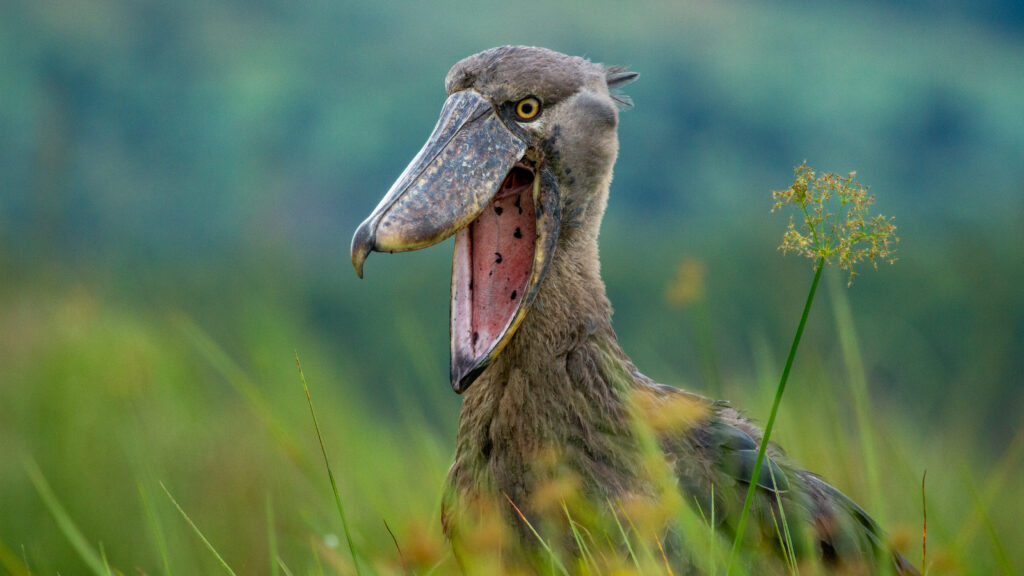
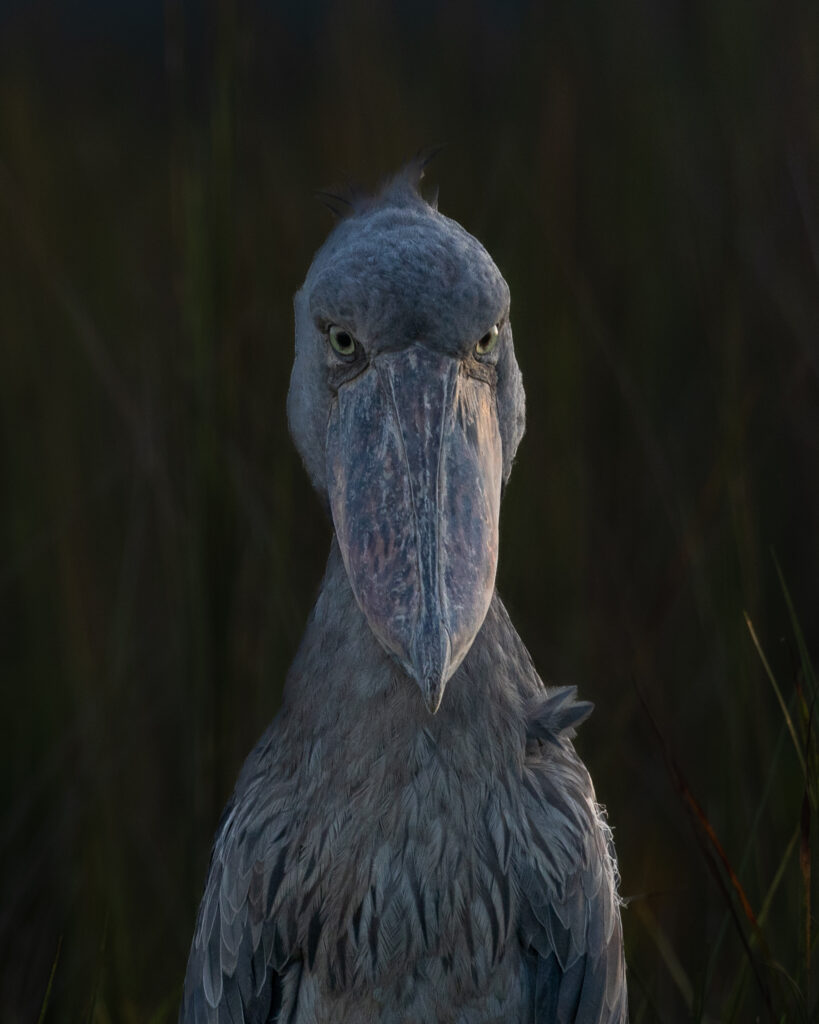
    The distinctive bill is both a defining feature and a specialised hunting tool.

    The Shoebill’s extraordinary bill explains both its name and its hunting method. Balaeniceps rex uses the hooked tip to secure slippery prey, while long toes spread its weight across floating vegetation. It can stand almost motionless for minutes before collapsing forward in a sudden strike.

    Freshwater swamps with undisturbed papyrus and reed beds provide the conditions it needs. Lungfish are a favoured prey, although the bird will also take other fish, snakes and small wetland animals. Its size and heavy bill suggest awkwardness, yet in flight it is unexpectedly graceful, soaring and gliding with ease.

    Patterns, marks and colour differences on the bill vary from bird to bird. One individual carried three dark bars on the lower bill—small details that made each encounter feel personal without forgetting that these are wild birds moving through a much larger landscape.

    Behaviour beyond stillness

    The swamp produced surprises on later visits. On one occasion a Shoebill suddenly spread its wings and opened its bill, appearing much larger. An African Fish Eagle was overhead. The display worked: the eagle changed course. Moments like this revealed a bird that was not merely statuesque, but alert, expressive and fully capable of defending its space.

    The Shoebill shares Mabamba with an entire wetland community. African Jacanas cross floating leaves on their long toes; egrets, sandpipers and fish eagles animate the channels and skies. The Shoebill may be the celebrated resident, but its survival depends on the health of this complete ecosystem.

    Shoebill spreading its wings defensively
    A defensive posture in response to an African Fish Eagle overhead.

    A community and its wetland

    Shoebill surrounded by the green vegetation of Mabamba
    The Shoebill is inseparable from the wetland that sustains it.

    Mabamba’s story belongs equally to its people. Local fishing families possess an intimate knowledge of the water, fish, seasons and birds. Some fishermen have become specialist bird guides, while others share information about sightings and changing conditions across the wetland.

    The relationship has changed over time. Where Shoebills were once sometimes regarded as competitors for fish, conservation awareness and nature-based livelihoods have encouraged their protection. Guides, boatmen and fishermen now help visitors experience the swamp while strengthening local interest in safeguarding its most distinctive resident.

    The pressures remain real: disturbance, habitat change, expanding human activity and the illegal capture of birds or chicks. Protecting Mabamba therefore means protecting both habitat and the community relationships that make conservation possible.

    Returning to the Shoebill

    When I returned in December 2023, the excitement had not diminished. The journey through the swamp, the quiet search and the first sight of that unmistakable profile still felt extraordinary. Familiarity had added context rather than reduced wonder: each visit revealed another detail of behaviour, another corner of the wetland and another reason to value the people who know it best.

    The Shoebill draws visitors to Mabamba, but the lasting impression is broader: a rare bird, an intricate wetland and a knowledgeable community connected by the same water.

    I hope many others have the opportunity to enter those papyrus channels, wait quietly and experience that relationship for themselves.

  • Birds of India: Portraits, Raptors and Owls

    Birds of India: Portraits, Raptors and Owls

    India’s birds have accompanied me through gardens, cantonments, forests, wetlands, deserts and high mountain country. Some are familiar neighbours; others have appeared only after patient searching or by sheer good fortune. This collection brings together a few of those encounters—from colourful garden visitors to formidable raptors and the elusive owls that emerge as daylight fades.

    This is not a complete guide to the birds of India. It is a personal field journal: photographs, observations and stories gathered over the years, with valued contributions from friends who share the same fascination for the natural world.

    In this article

    Birds around us

    “Wherever there are birds, there is hope.”

    Mehmet Murat Ildan

    Raptors: rulers of the open sky

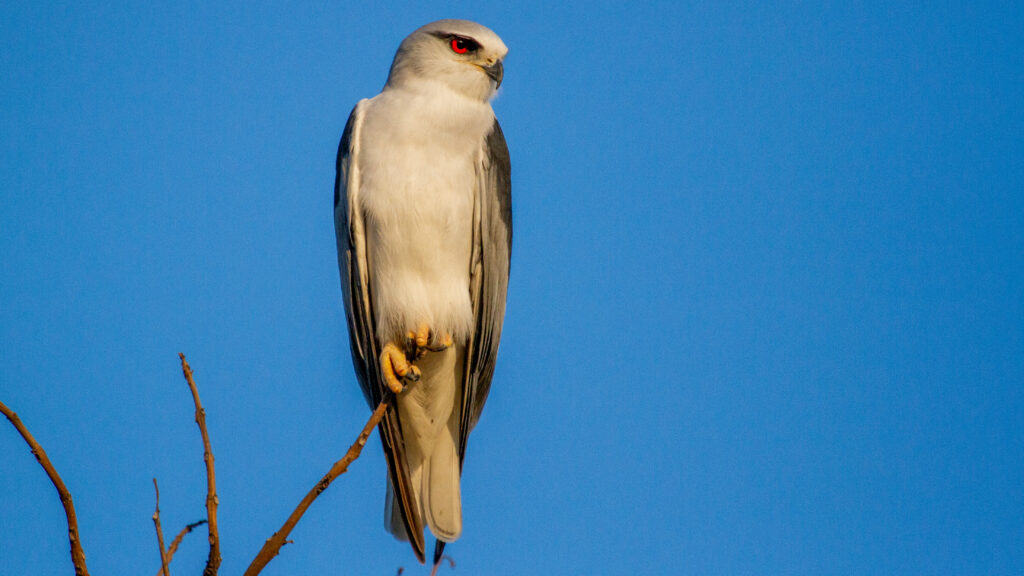
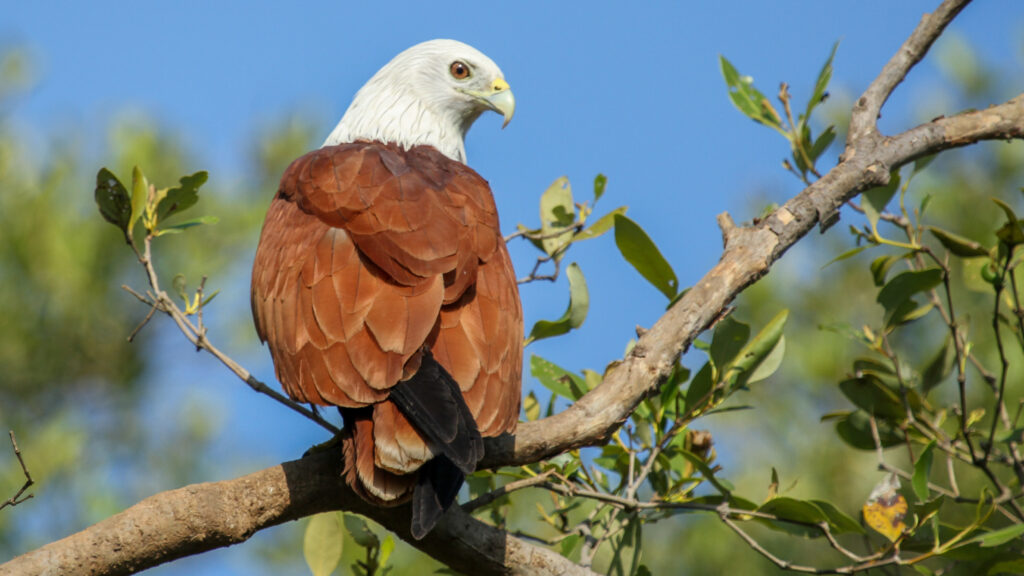
    Raptors have fascinated people across cultures for centuries. Power is part of their appeal, but so are precision, patience and variety. India supports resident birds of prey as well as long-distance migrants, and each landscape—from farmland and wetlands to coasts and high mountains—has its specialists.

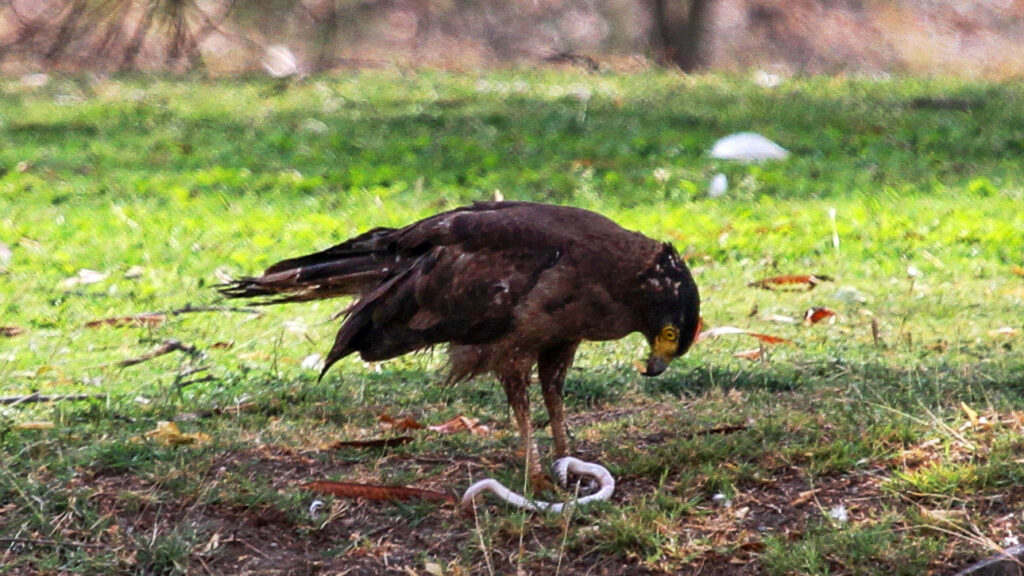
    Crested Serpent-Eagle holding a snake
    Crested Serpent-Eagle with a snake. At Saugor, I saw the eagle drop from its perch before I could ready the camera. Crawling closer revealed the reason: it had caught a snake and begun swallowing it head-first, then carried the meal into the thickets when it noticed me.

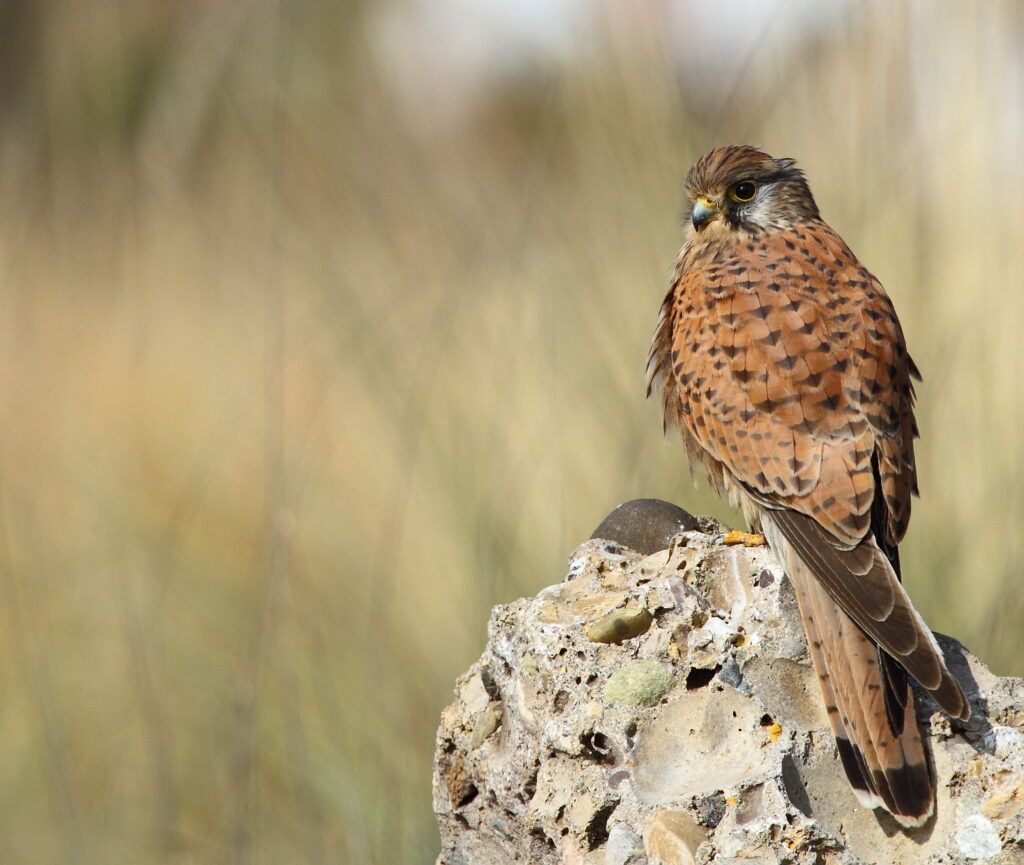
    Rohit Gupta photographed the kestrel while remaining inside his vehicle. The bird stayed relaxed because he never stepped out, allowing him to observe and photograph it without disturbance.

    Bearded Vulture circling above the high-altitude landscape of Ladakh
    Bearded Vulture over Ladakh. After a tiring walk above 15,000 feet, Akash Chinche lay down to catch his breath. Within minutes, a Bearded Vulture and a Eurasian Griffon appeared overhead and began circling—an unexpected lesson in how a resting birder can resemble a meal. Photograph: Akash Chinche.

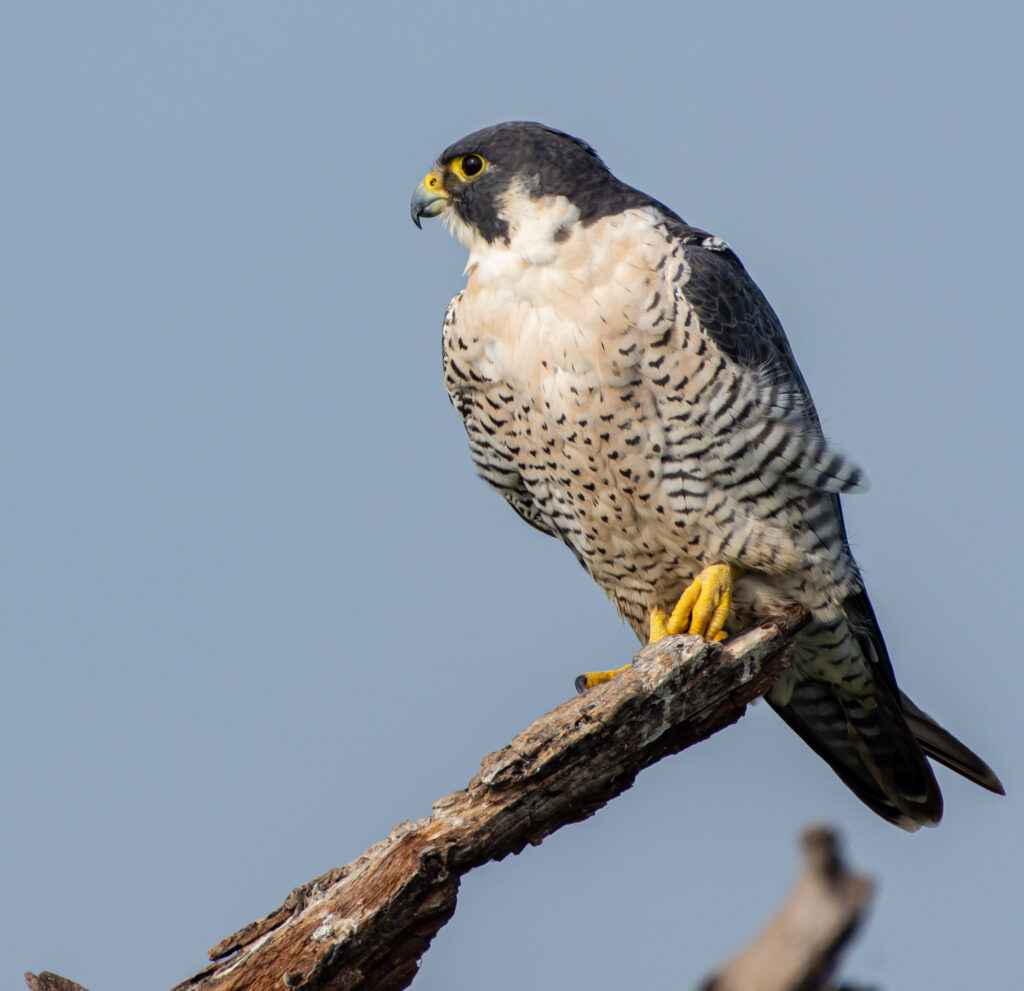
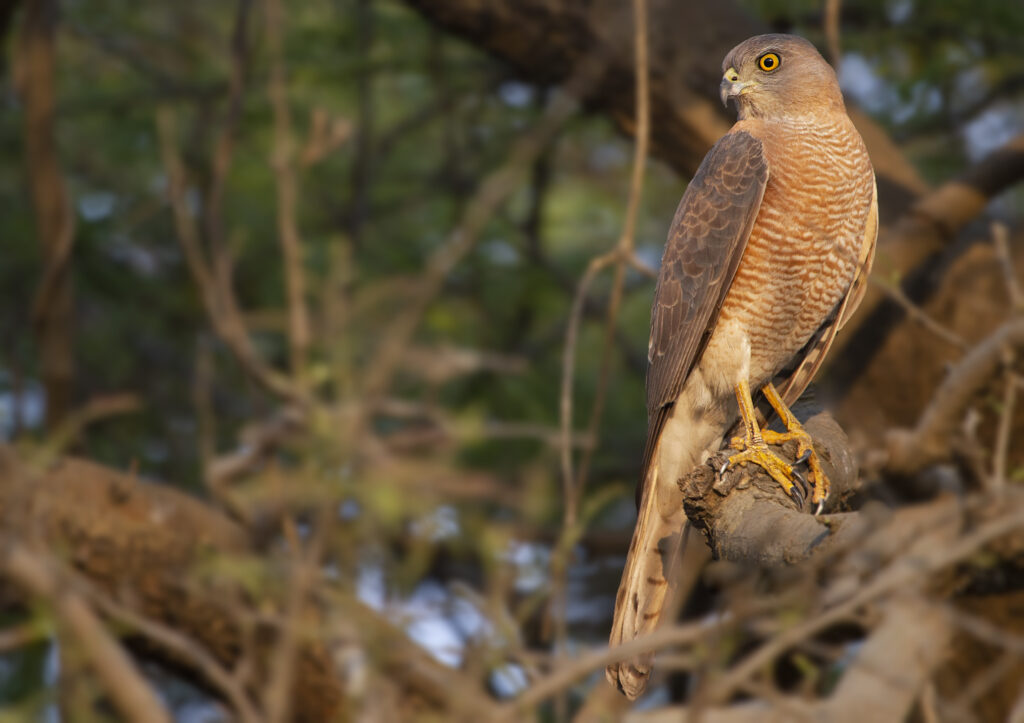
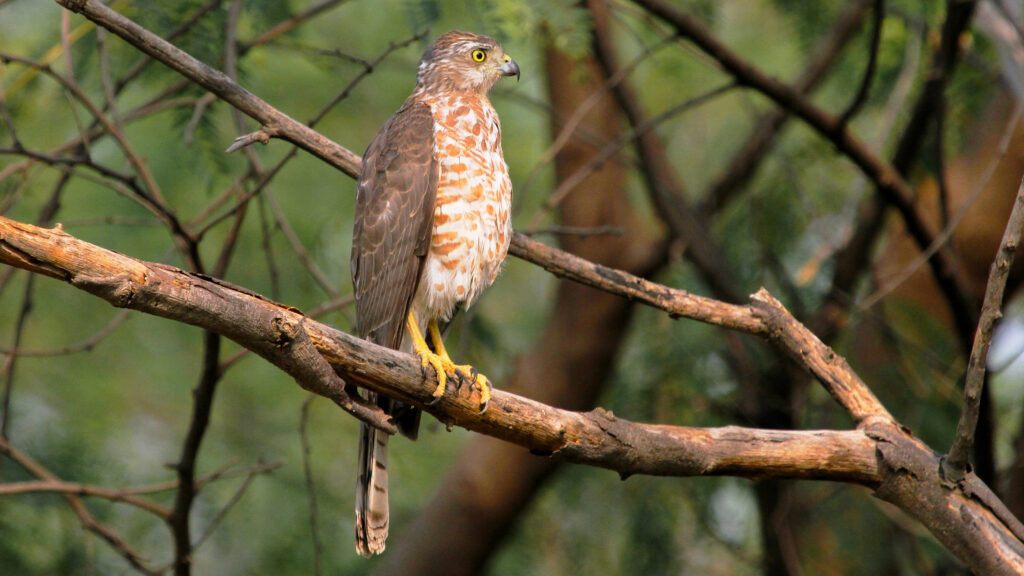
    This selection is only a glimpse of India’s raptors, but it shows their extraordinary range: hovering kites, low-flying harriers, woodland hawks, coastal eagles, falcons built for speed and vultures that patrol the highest skies.

    Owls: encounters after dark

    “Then nightly sings the staring owl, Tu-whit, Tu-who, a merry note.”

    William Shakespeare

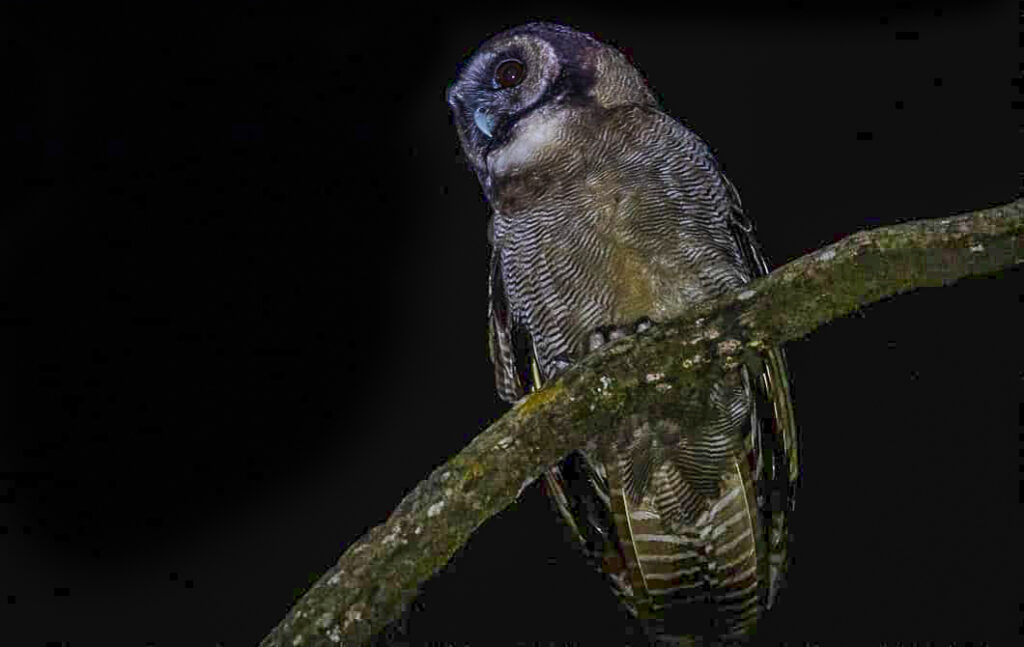
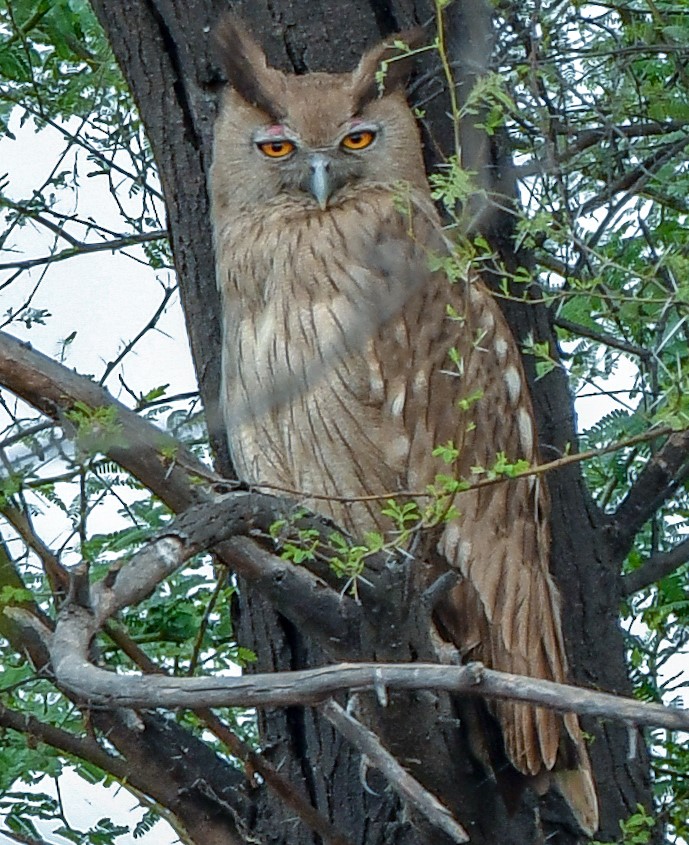
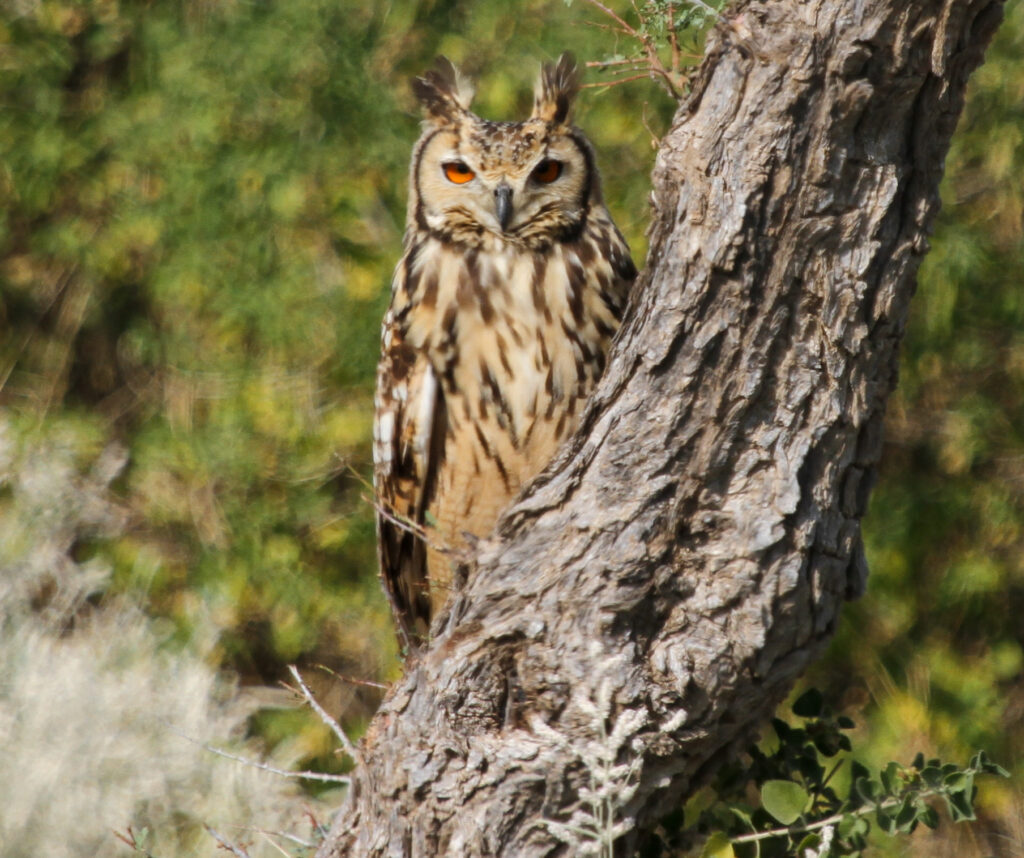
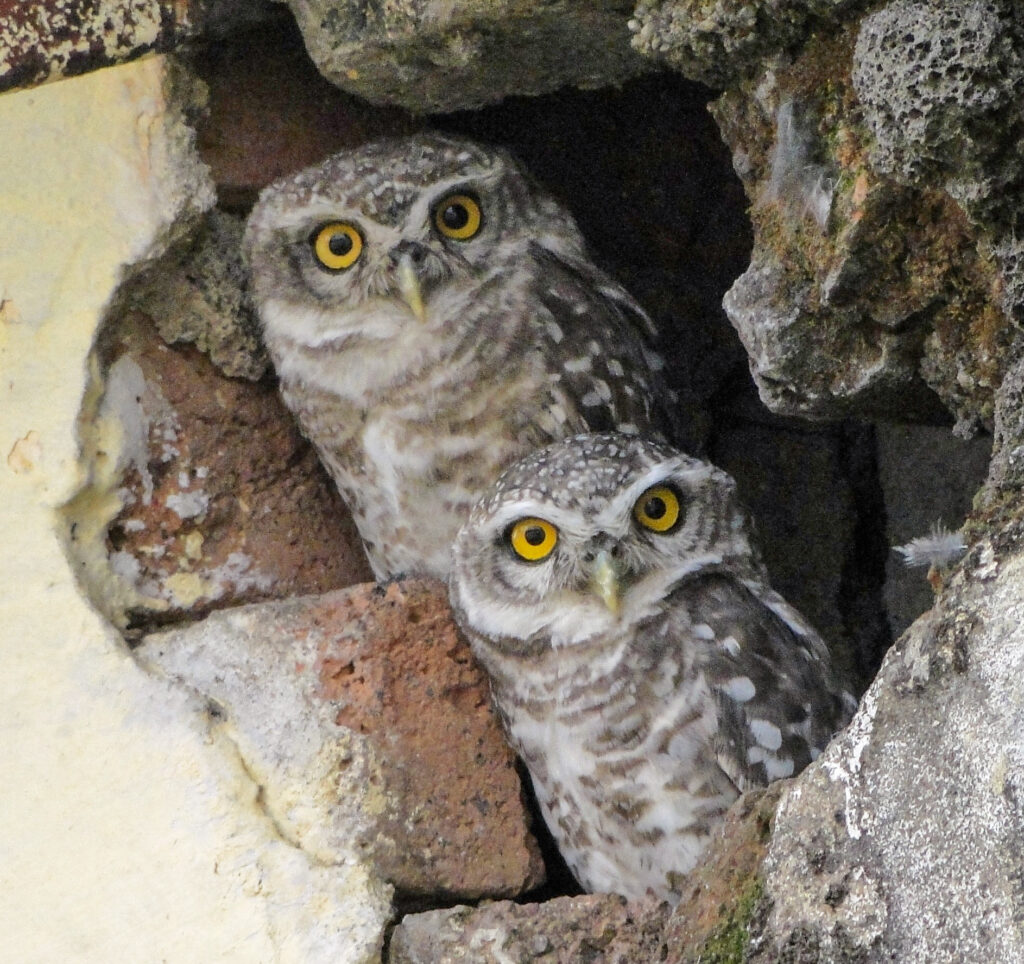
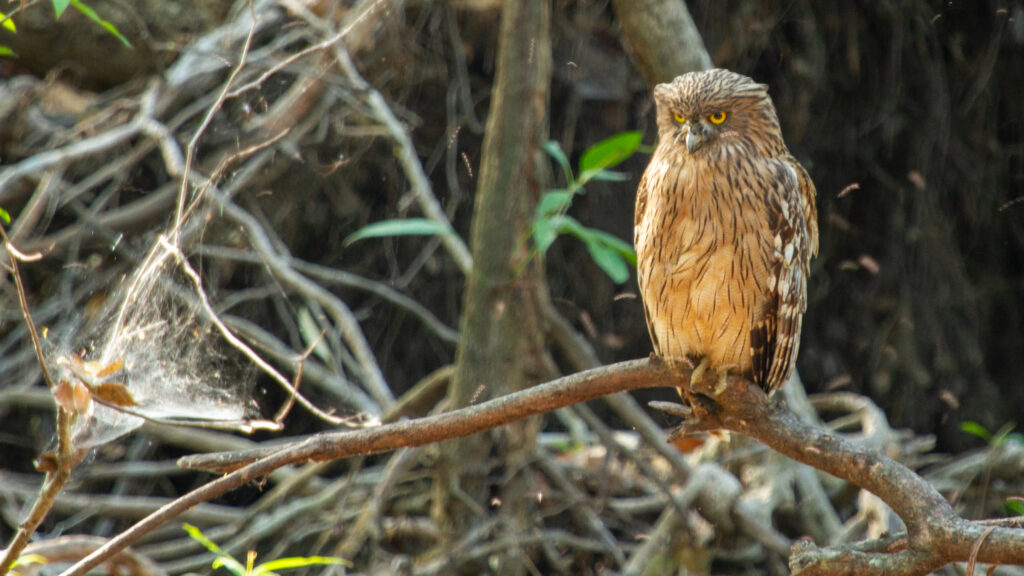
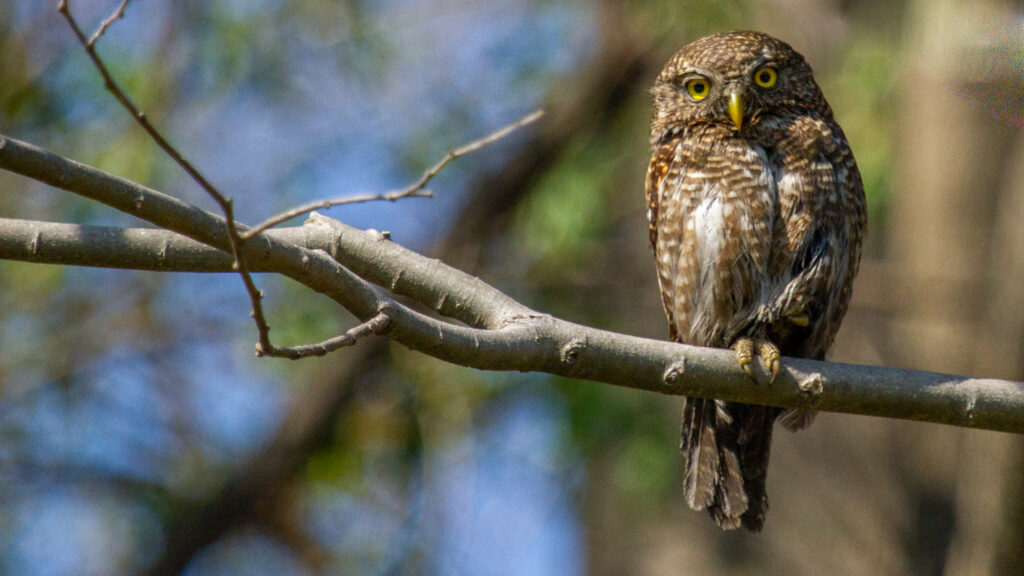
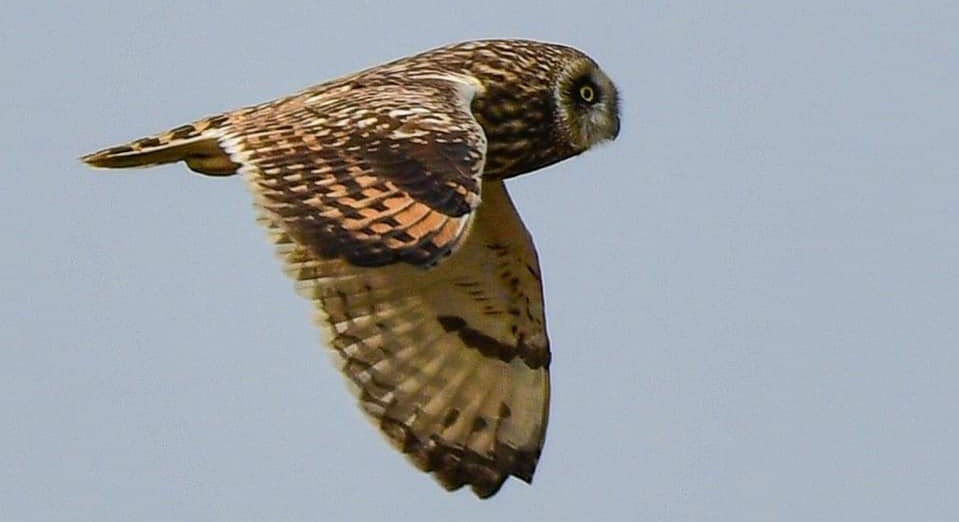
    Owls are surrounded by myth, yet their real lives are more interesting than superstition. Their hearing, silent flight and low-light vision make many species formidable nocturnal hunters, while others are also active around dawn, dusk or even in daylight. Finding one is always satisfying—especially after hearing an unknown call for months without locating its owner.

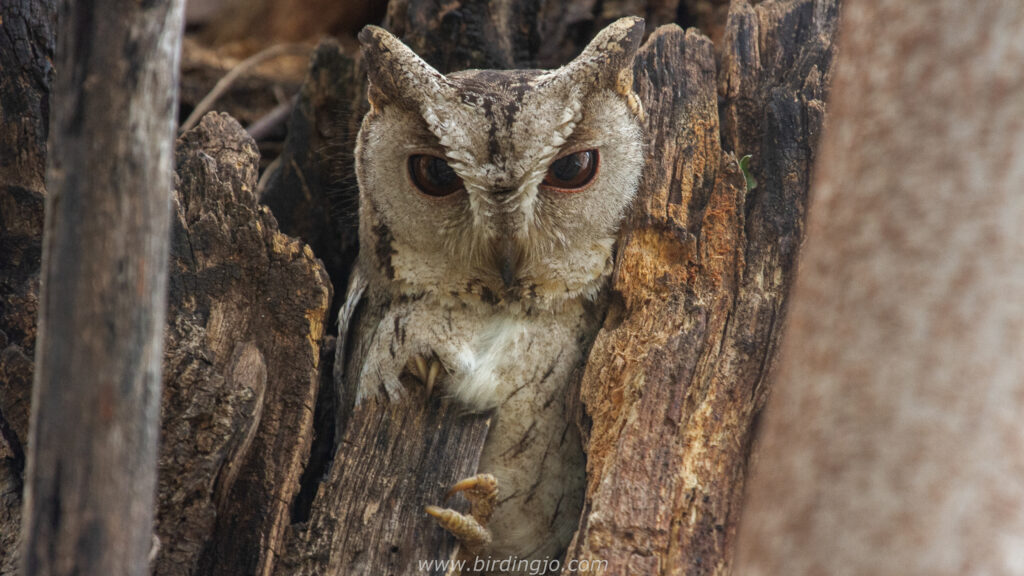
    Indian Scops Owl resting in a tree hollow
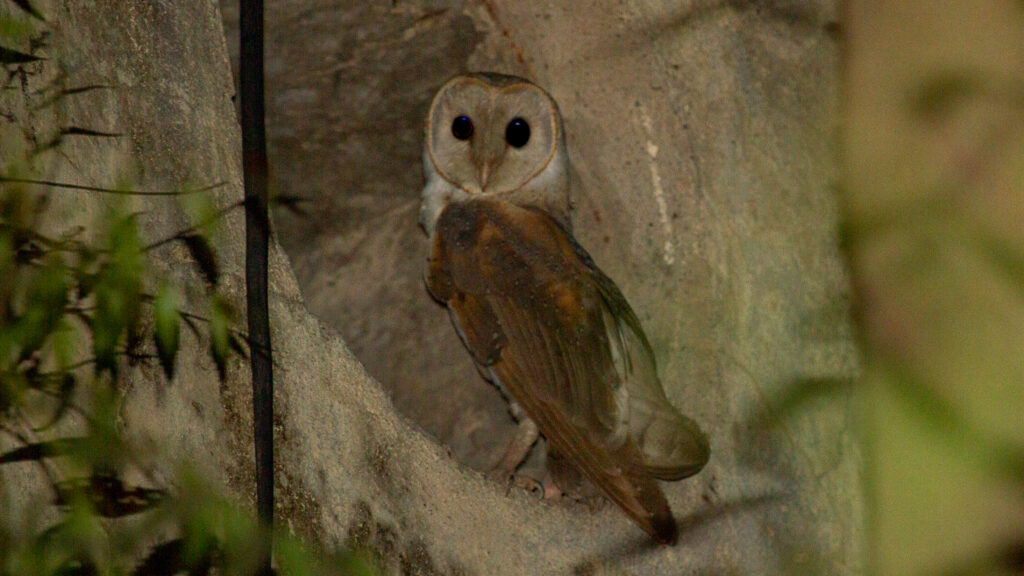
    Indian Scops Owl. My wife and I heard its soft “whuk” around our home for more than a year before we finally located it. The reward was greater still when we later watched the pair raise three chicks at Saugor in 2014.

    A living natural heritage

    These photographs span very different places and years, yet together they tell one story: India’s birds remain part of everyday life as well as its wildest landscapes. Their future depends on healthy habitats, responsible photography and the willingness to replace fear or indifference with curiosity.

    If this collection encourages you to notice the call outside your window, pause beside a wetland or look more carefully into a dark tree hollow, it has done its job. Observe patiently, keep a respectful distance, and let the birds behave naturally.

    Happy birding—and happy hunting, only with eyes or cameras.

  • Travelogue Europe

    Travelogue Europe

    Oct – Nov 2024

    “Travelling -it leaves you speechless, then turns you into a storyteller “ – Ibn Batuta


    Once upon an October (2024) I experienced unfiltered joy from my journey through a part of Europe. Europe has incredibly rich and diverse cultural heritage spanning thousands of years. A place of countless landmarks from ancient ruins to world famous museums. I admired the various architectural marvels while walking through cobblestone streets and medieval alleys; a journey through time.

    Image gallery image

    My travels began from Netherlands. It’s a country of reclaimed land, the result of a process of careful water management dating back to medieval times. A country famous for its canals, windmills,cheese, art and history.

    Fuelling the excitement was the prospect of commencing the journey in a place where I have family.

    Their support, love, laughter and significant guidance made me comfortably adopt the PACE in a foreign land. Their warmth, humility and generosity enveloped my days in NL and we spent evenings chatting and interacting candidly making up for the time apart in past years.

    Exploring the world of celebrity wax

    Rijksmuseum: 800years of Dutch art and history from the Middle Ages to Mondrian

    Van Gogh museum: houses the largest collection of the artist in the world


    Zaanse Schans: Dutch countryside with quaint village, homes and windmills

    Marken: Clogs factory

    Volendam – Fishing village, seafood, cheese and stroopwaffle factory

    Rotterdam: Largest port in Europe, rich maritime history (Gateway to Europe)

    On my trip from Amsterdam to Paris (city of love) and later Rome (the eternal city) with my husband – we both had “The Great Affair On The Move”

    Vatican City Museum – 5 miles of corridors, this vast complex chronicles the history and accomplishments of mankind over the last 2000 years

    Colosseum: Renowned symbol of Imperial Rome

    Rome wasn’t built in a day, but I saw plenty
    St. Peter’s Basilica- UNESCO World Heritage since 1984

    Onwards to Norway

    My trip progressed to a city that combines fjord and forest landscapes with high end architecture and landmarks that bear witness to Norway’s history-the city of Oslo which has it all. Nicknamed as the Tiger City( Tigerstaden). It offers a taste of Scandinavian traditions and modern life.

    Once there, there’s NORWAY to leave !
    The Munch – A Prestigious Project

    The Munch Museum – Over 26,000 works of art produced by Edvard Munch, as well as his effects, private library and tools. Located in the Bjorvika, the museum by Oslo’s waterfront ( scenic view) has 13 floors of experiences.
    Changing exhibitions of works by other artists are housed here too.

    Three versions of The Scream are vaulted and exposed intermittently for preservation:
    ~ Tempera Oil on Cardboard
    ~ Crayon on Cardboard
    ~ Lithograph hand coloured by him)

    Located in the heart of western Norway is the city of Bergen- a gateway to some of the most famous fjords in the world. I traveled between Oslo and Bergen (both ways) by the Bergensbanen (train), a scenic seven hours journey. It offers views of the fjords, rivers and alpine villages.


    Other names – Bryggen/ Tyskebryggen (the German Dock) it has a series of Hanseatic Heritage commercial buildings and is on the UNESCO list for Cultural Heritage Sites since 1979.

    Life is better by the fjords
    A Glimpse of the Fjords

    From Oslo I embarked on a high speed train to take me to Stockholm through the picturesque Scandinavian scenery, alongside excellent onboard features


    Sweden is a highly developed country ranked fifth in the Human Development Index. Famous for breathtaking views and severe winters( November it was) beside innovative design and rich history.


    I took a full day’s Viking and medieval Swedish history tour from Stockholm. Saw ancient runic stones, long ago Viking parliament and old burial mounds. Also visited ancient religious sites of Old Uppsala discovering Sweden’s pretty countryside and the Charming Sigtuna (old Swedish capital; hugging the shores of Lake Malaren)


    St. Mary’s Church (Sigtuna)

    Pagan Church of the Vikings

    Stora Gatan (Main Street)

    The Runestones

    Sweden hosts world’s largest collection of Viking Age runestones, with nearly 2,000 still in the landscape and approximately 2,881 known in total, concentrated heavily in the province of Uppland. 

    These memorial stones, erected from the late 900s to early 1100s AD, commemorate deceased individuals, display power, show Christian piety, or mark significant achievements, often featuring intricate red-painted designs with snakes and crosses. Notable examples include the Rök runestone, the longest runic inscription known, and numerous “Varangian Runestones” which document voyages to the East. 

    Uppsala Cathedral: Dates to the late thirteenth century and at a height of 118.7 meters (389 feet), it is the tallest church in the Nordic counties. Designed in the French Gothic style, it is the final resting place for many Swedish monarch and other notable people.

    The following day I took a city tour (guided and group) to acquaint with the city.
    A visit to the Stockholm City Hall (an example of National Romantic Style / Art Nouveau / Nordic architectural style—- seen earlier in Bergen Stasjon 1913) was the highlight . It is the seat of the municipality, housing offices, conference rooms as well as Ceremonial Halls.

    City Hall Tower – standing on the eastern tip of Kungsholmen Island

    Golden room with Malardrottning
    The City Hall Tour

    The city Hall is It is the venue of the Nobel Prize Banquet; a major tourist attraction ! What a Nobel Goal


    Riddarholmen Church – built in late 13th century. Eclectic Gothic and Baroque architecture.

    Gladje (pure, unbridled joy) after a coffee break …

    With mesmerizing cityscapes all around – I had a Swedish-ational Time.

    From Stockholm I travelled back to Amsterdam before returning home. A journey into myself,  cultural immersion at its finest and the gorgeous feeling of teetering in the unknown – worth everything.

    The best stories are definitely found between the pages of a passport.