
Encounters with eastern lowland gorillas in Kahuzi-Biega National Park, brought together as one story of forest, family life and conservation.
The first encounter
“Nature is not a place to visit. It is home.” – Gary Snyder
Categorised as critically endangered, the Eastern Low-Land Gorillas —also known as Grauer’s gorilla—are the largest of the four gorilla subspecies. It differs from other gorillas by its stocky body, large hands and short muzzle. Like other gorilla subspecies, eastern lowland gorillas mainly consume fruit and other herbaceous materials. It is pertinent to emphasis that the Low-Land Gorillas are the largest of all apes, be it other gorillas, chimpanzees, bonobos, orangutans or humans.
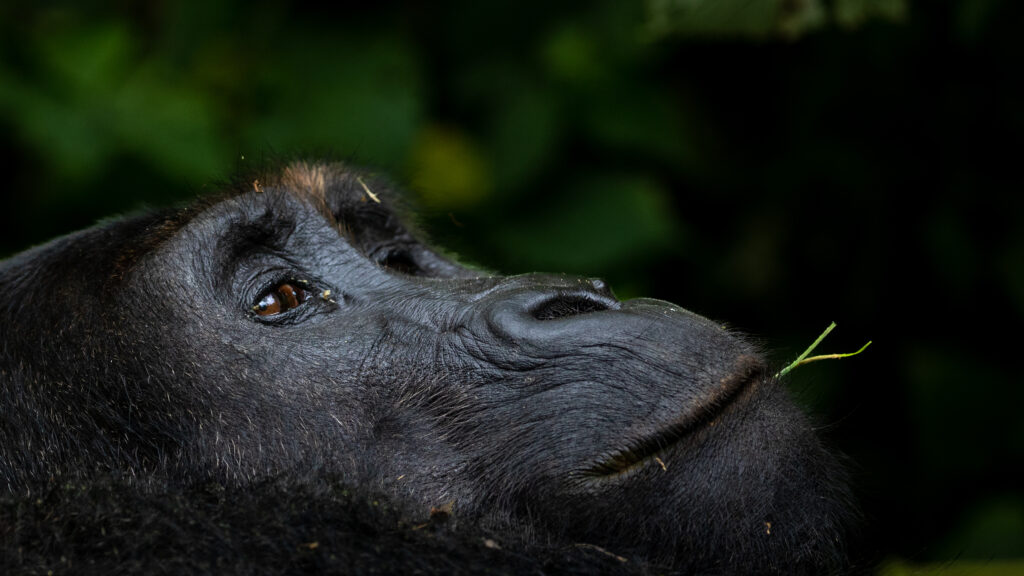
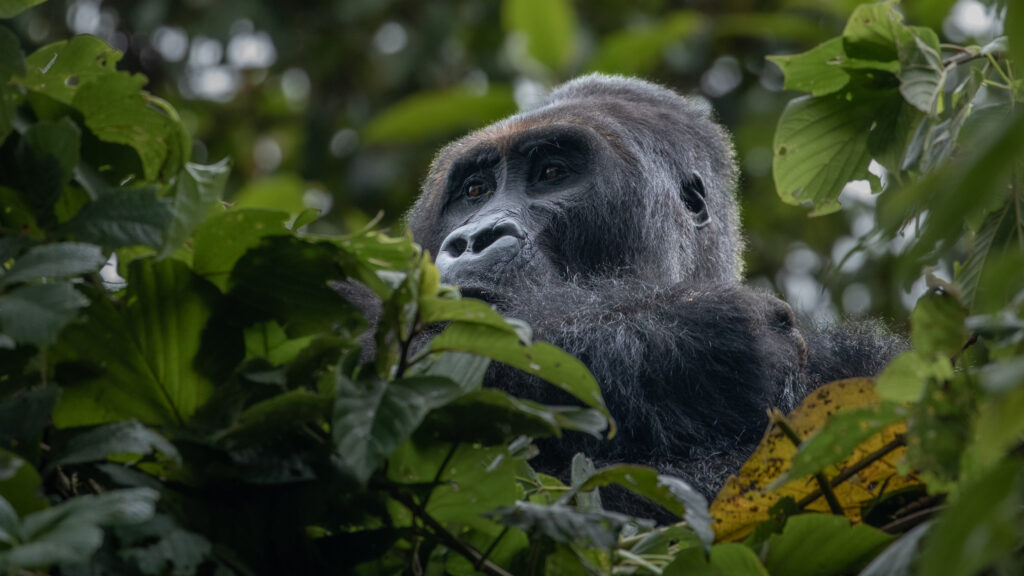
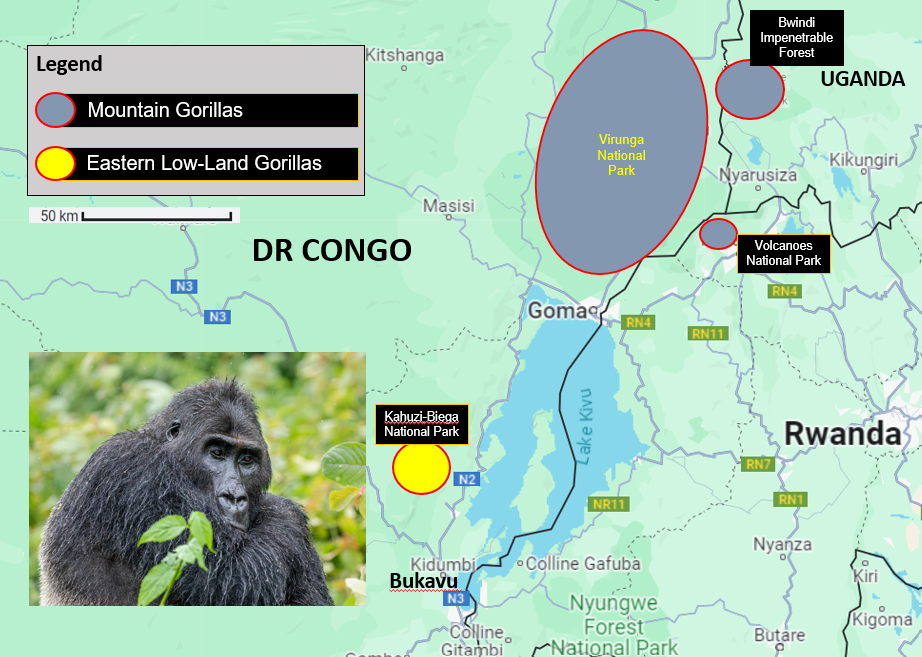
Scientific name Gorilla beringei graueri, the eastern low-land gorillas differ from the mountain gorillas in many subtle ways – shorter muzzle, hair and teeth, and longer arms. The main difference is the length, density and colour of body hair, which is higher in Mountain gorillas. I saw the mountain gorillas in Bwindi, Uganda in the Impenetrable National Park last year, but it is not easy to recollect and compare the differences, hence, banking on the pictures below to compare and highlight the differences.
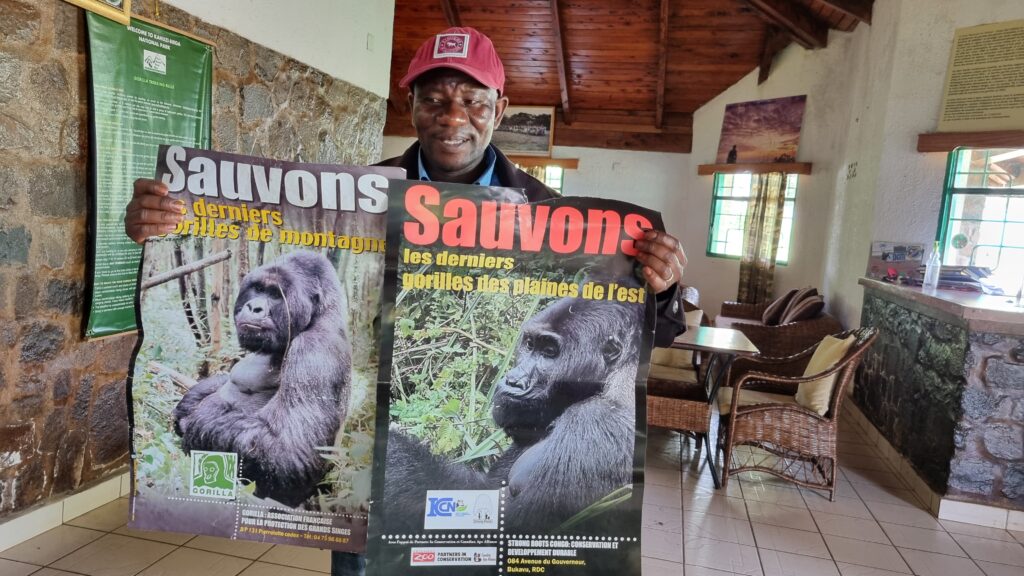
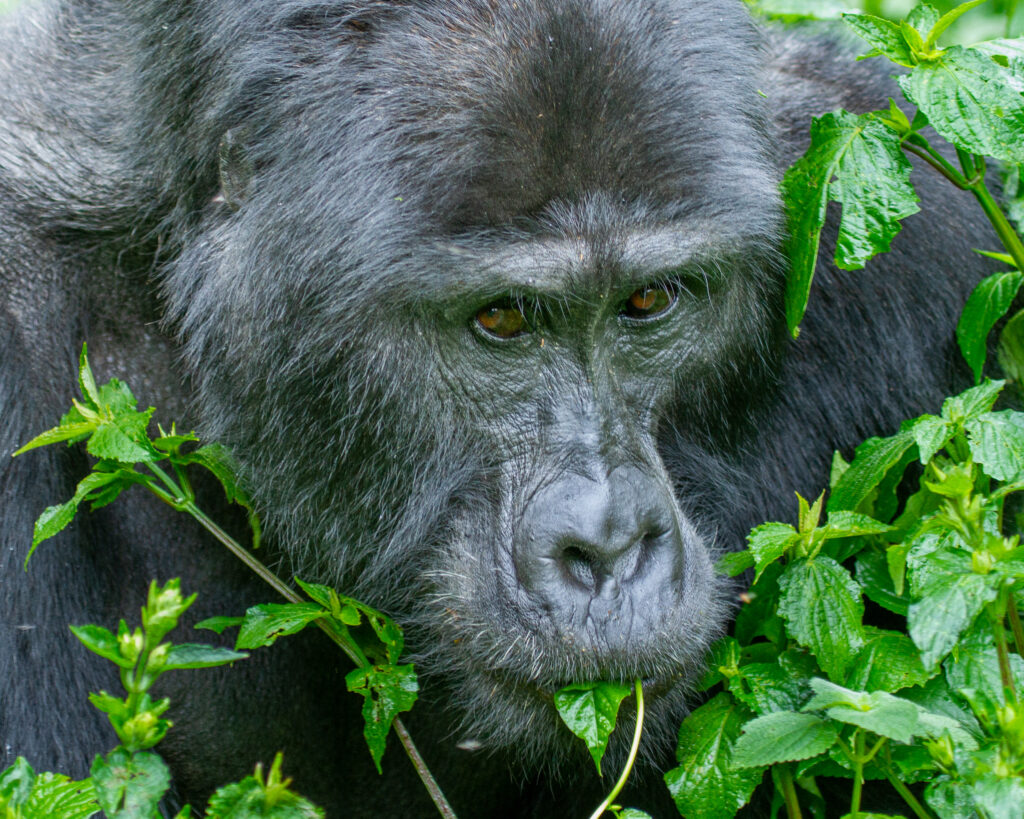
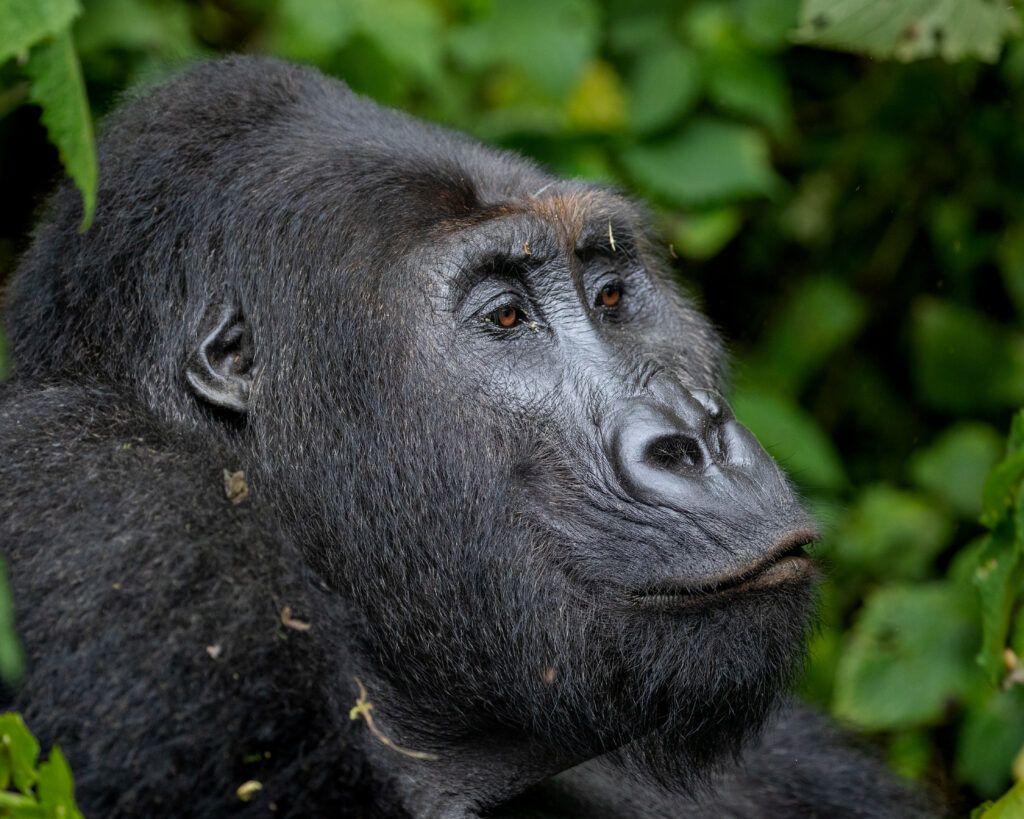
The eastern lowland gorilla occurs in the lowland and Albertine Rift montane forests of eastern Democratic Republic of the Congo (DRC). Until the mid-1990s, the population was thought to number around 17,000 individuals. But the latest survey suggest that numbers had crashed to less than 4,000.
Some studies suggests that eastern lowland gorillas occupy only 13% of their former geographic range.
Main reasons of the decline in populations and range – Poaching for bushmeat, body parts and as pets (Just for reference for the brave-hearts as you may feel upset on seeing / reading some accounts here). War and diseases (Ebola) have played their roles as catalysts. Ultimately, it is the uncontrolled greed and shortsightedness of us humans which is pushing these gentle giants towards extinction.
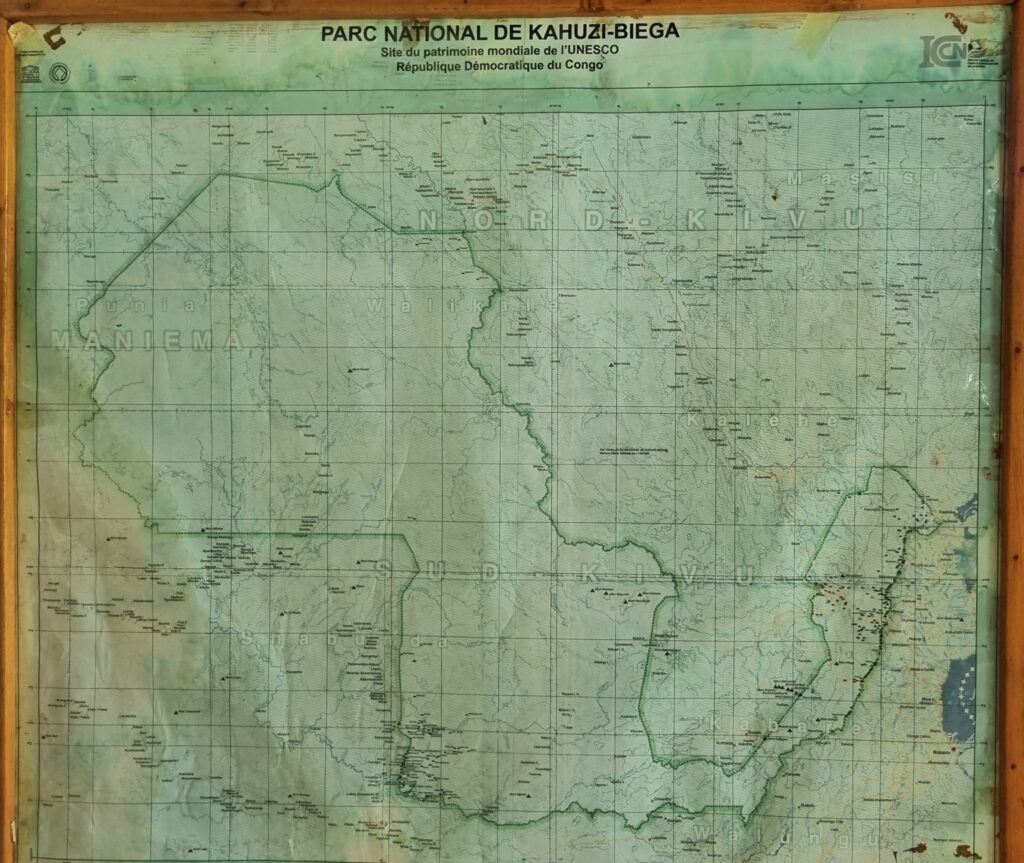
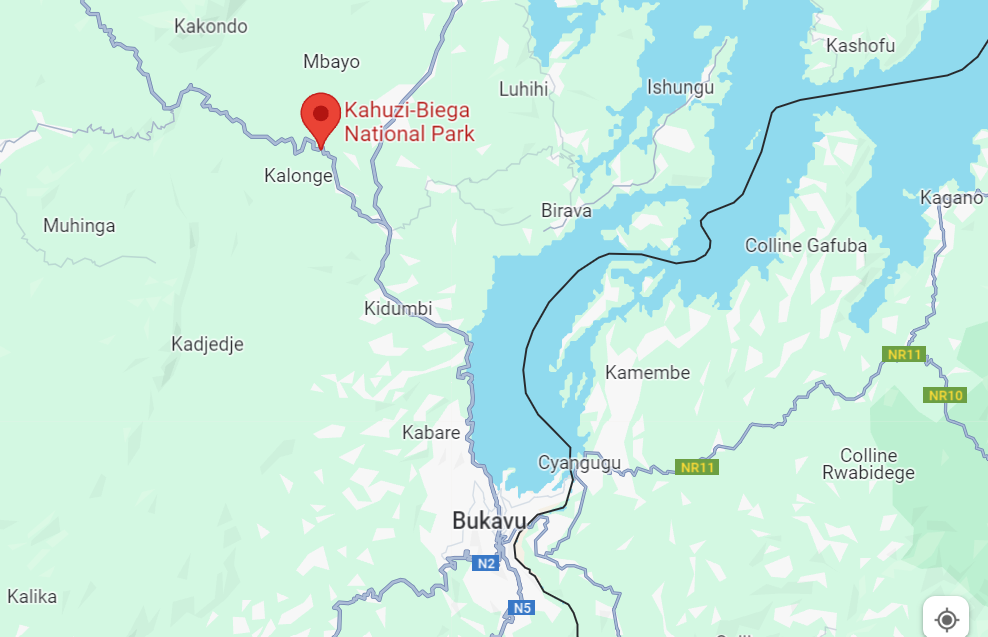
Their main habitat is Kahuzi Biega National Park near Bukavu in DR Congo. However, due to the intermittent conflicts in the region combined with mining (for coltan and other precious minerals) and poaching exerts continued pressure on the gorilla families living in this area – which is the only (last) natural habitat of the eastern low-land gorillas in the entire world.
To go to Bukavu, I took a speed boat (Ihusi express) from Goma. The trip over lake Kivu took 3 hours. Next day, left Bukavu at 0615 h to reach the Office of Kahuzi Biega National Park (30 kms) by 0745 h.
A nice place with good infrastructure and very hospitable manager and staff. However, lack of tourism is quite evident compared to Bwindi (in Uganda).
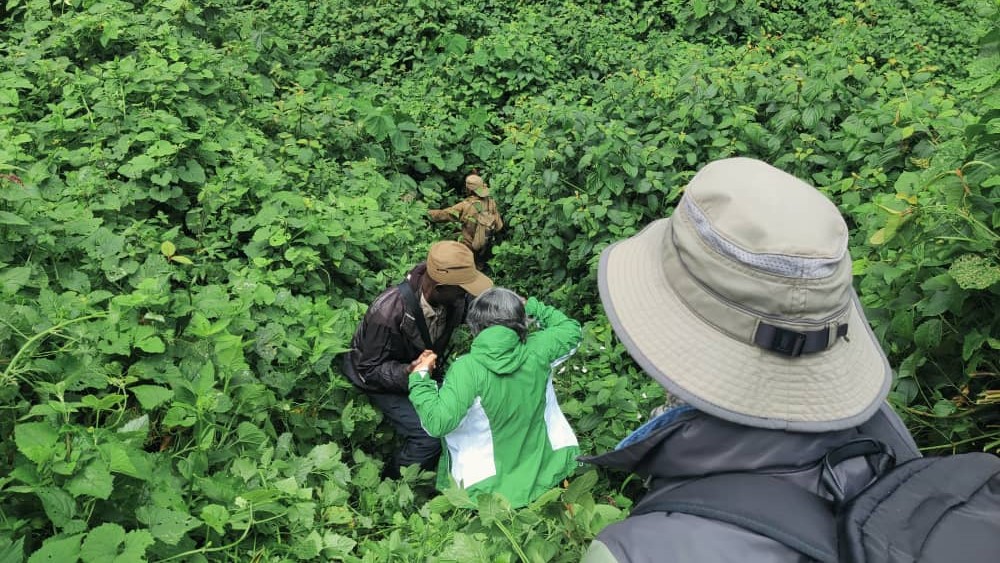
Our tracking commenced at about 0915 h when the main guide Lembert and two rangers accompanied us to a drop off point about 15 minutes drive from the HQ. It was the beginning of a one hour trek into the rain forest, with thickest of the undergrowth beyond my imagination.
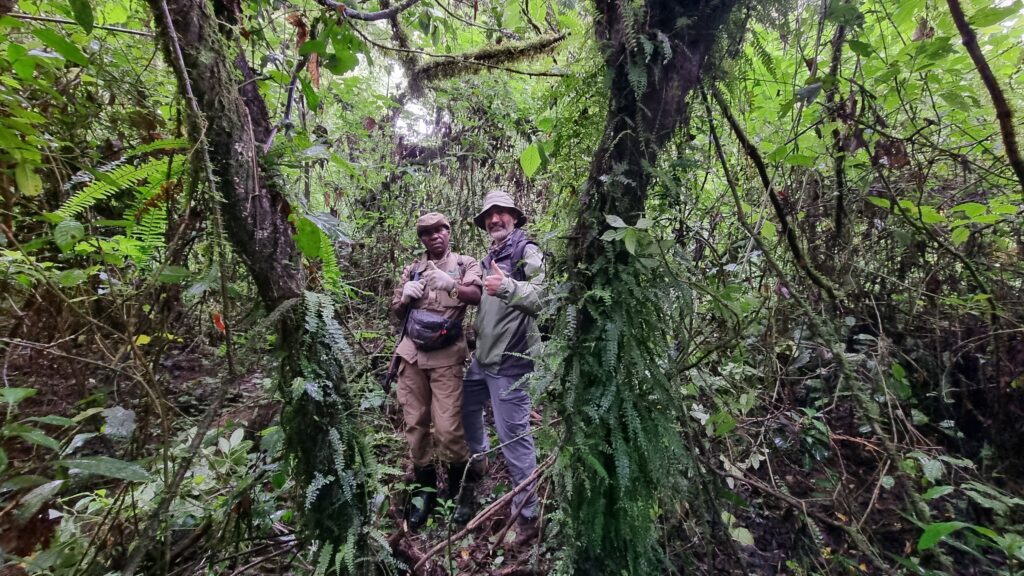
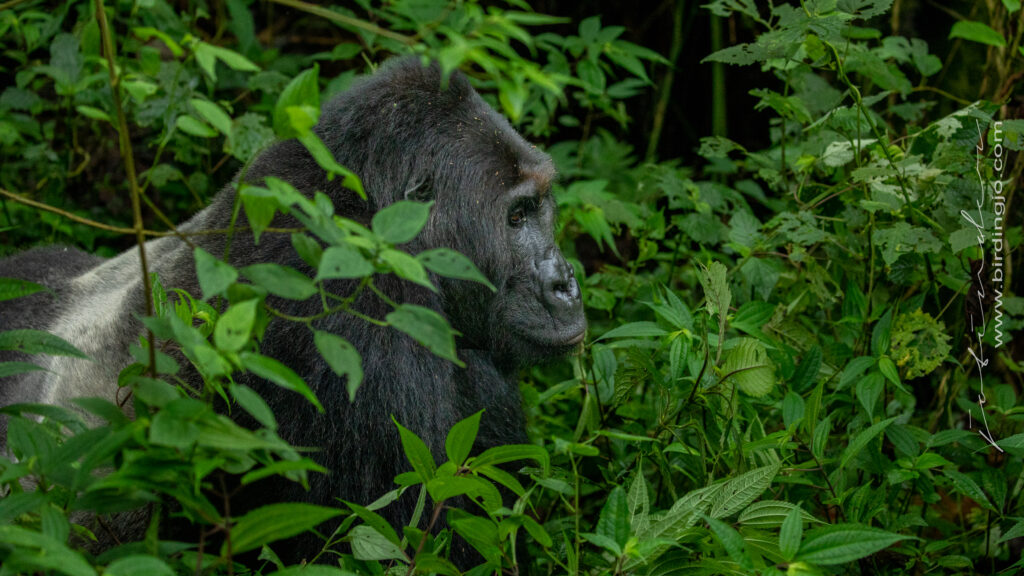
After about one hour of jungle bashing, few skids, slips, bruises and mosquito bites, we finally caught up with Monene and his family. Monene is the alpha male (a silverback) of one of the two families habituated to human presence.
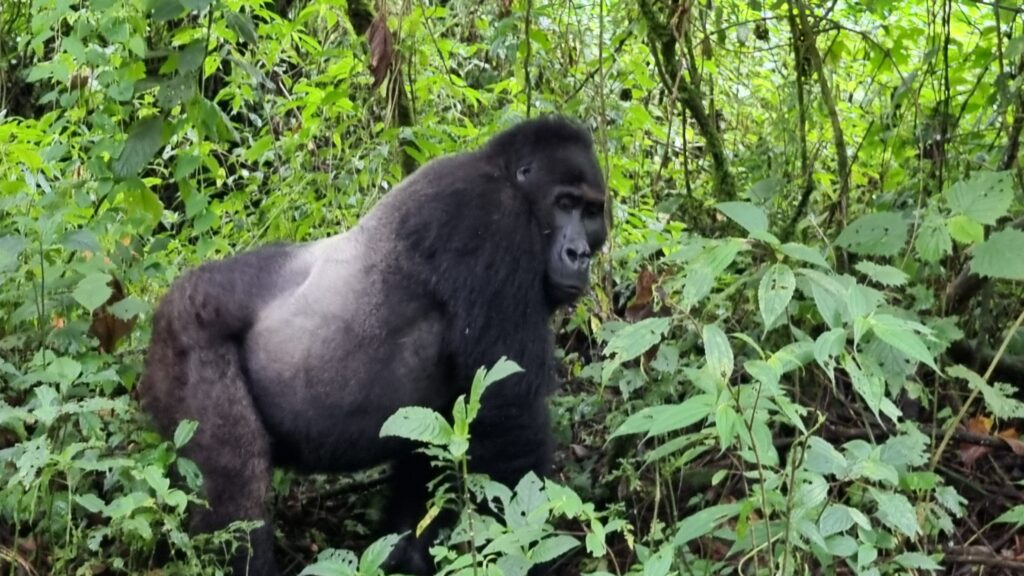
We simply forgot the challenging trek and became totally immersed in the presence of these gentle creatures around us.
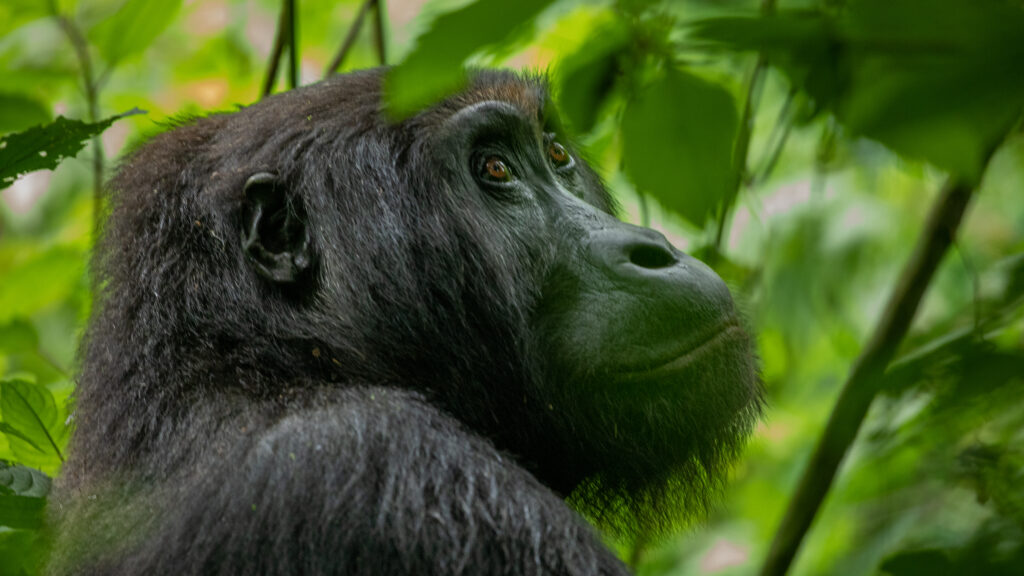
“Certain gorillas are more evolved than certain human beings I know” – Andy Serkis
There were about three adult females and juvenile gorillas, youngest family member being three weeks old female baby, clinging to her mother (image below).
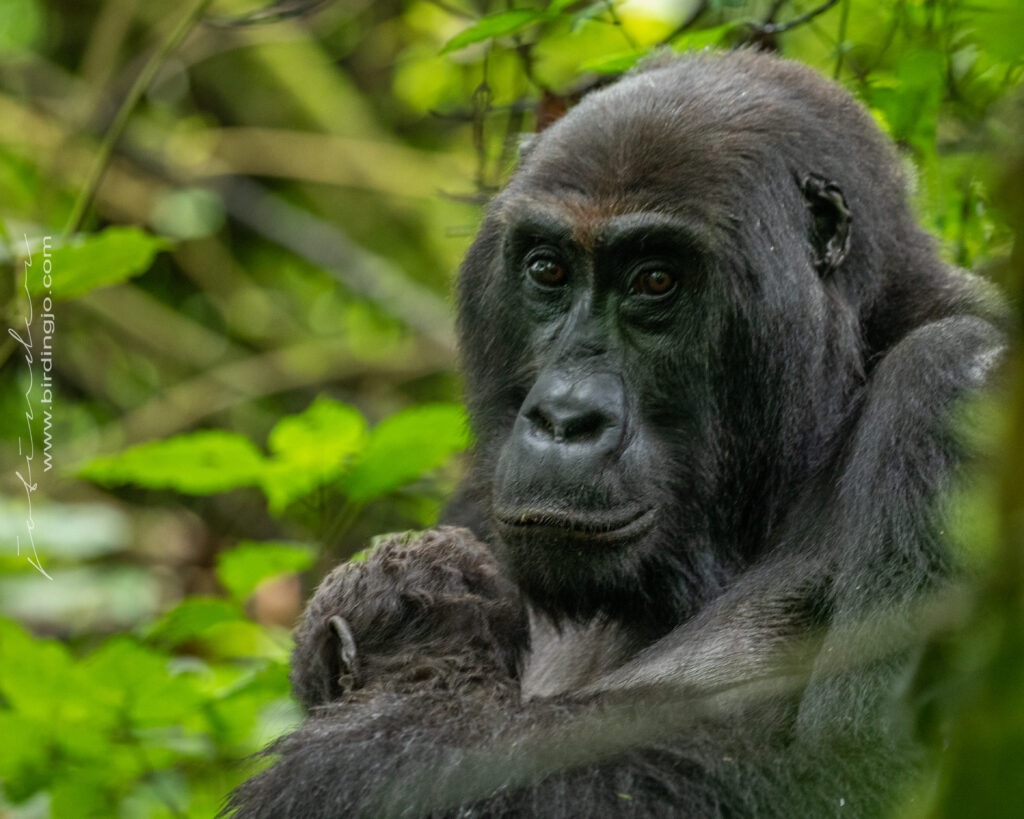
One of the adult females had lost her left hand to a snare set up by poachers, but luckily survived and is doing well with the help of her family members and on her own account,
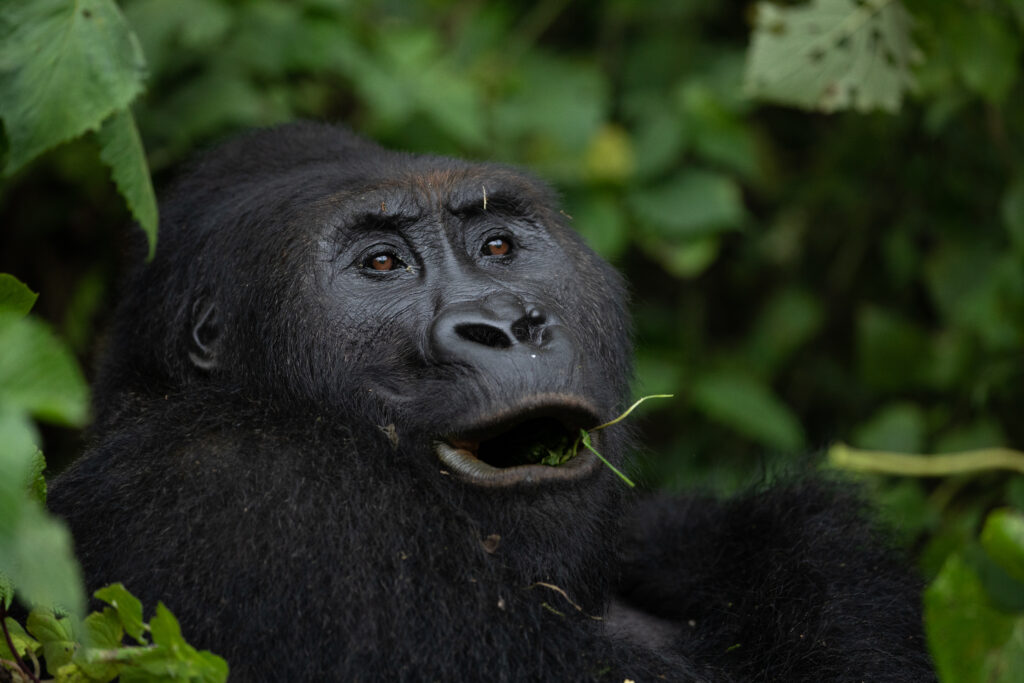
A grown up gorilla roughly eats about 15 to 18 kgs of food per day – hence, eating is one of the prime activity of the day.
The thundering and low level clouds reminded us that one hour had flown by and we must get out of the forest and leave Monene and his family to themselves.
It was indeed a soul stirring experience and I consider myself singularly privileged to have met Monene and his family.
“For in the true nature of things, if we rightly consider, every green tree is far more glorious than if it were made of gold and silver.” – Martin Luther King Jr
Returning to Kahuzi-Biega
“The clearest way into the Universe is through a forest wilderness.” — John Muir
01 July 2024 (updated 01 May 2025)
The Setting
One year after I had first visited the Eastern Low-Land Gorillas (Grauer’s gorillas) in Kahuzi-Biega National Park near Bukavu in DR Congo, I decided to re-visit. It had been raining since we left from Bukavu around 0630 h and the cloud cover looked more dense as we climbed upto the Park HQ.
It was interesting to reach the Park HQ and find the Park Manager Mr. Juvenal, Mr. Lambert and few other rangers to recognize and remember me from the last trip. Just for reference, here is the write-up on my first visit https://www.birdingjo.com/2023/03/the-unique-eastern-low-land-gorillas/ including the differences between lowland and mountain gorillas.
For better orientation and perspective about the areas / reserve forests for Mountain Gorillas and Eastern Low-Land Gorillas in DR Congo / Uganda / Rwanda, see the map below. The shaded areas are NOT a true representative of the size of these areas.
The Rain Forest
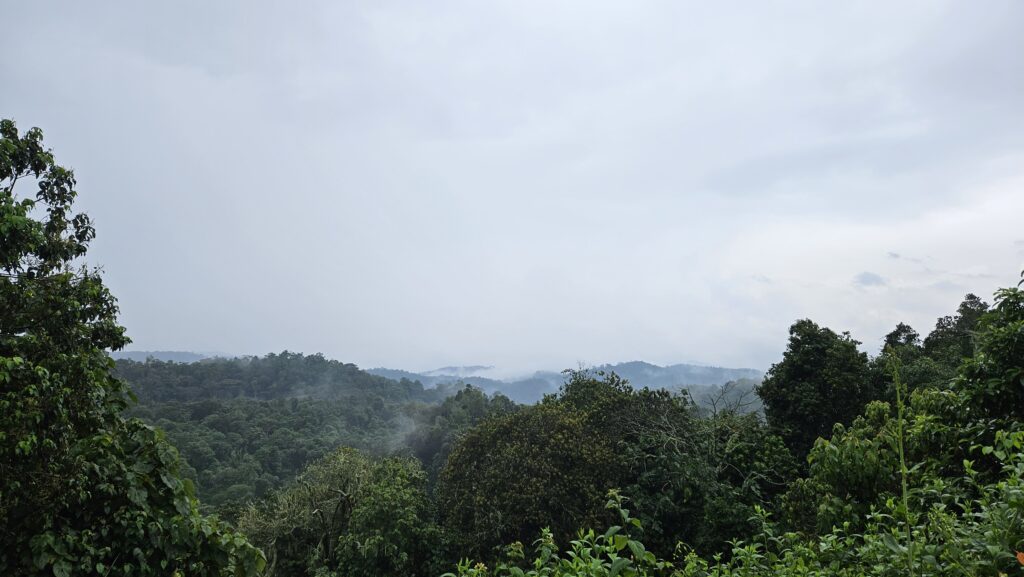
The rain-forest and the clouds amongst the trees are a sight to behold. It was still drizzling when we set foot on the trail to enter the jungle. Once inside, you do not know if it is raining or just the droplets still dripping from the canopy.
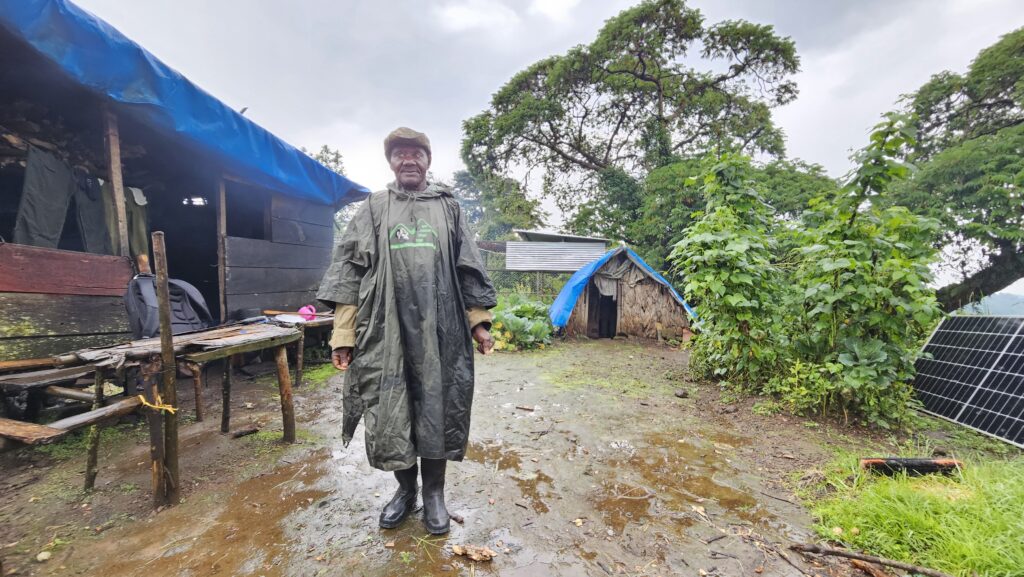
It was interesting and educative to see one of the outposts of the park rangers enroute to our start-point. To me, these rangers are heroes – for the stability they have maintained in an otherwise hostile and extremely challenging environment. Lack of tourism / poor business due to other factors adds to their challenges – yet, they are at it (some of them for over 20 years). I sincerely hope that things return to normalcy and their hard work pays off.
The Rendezvous
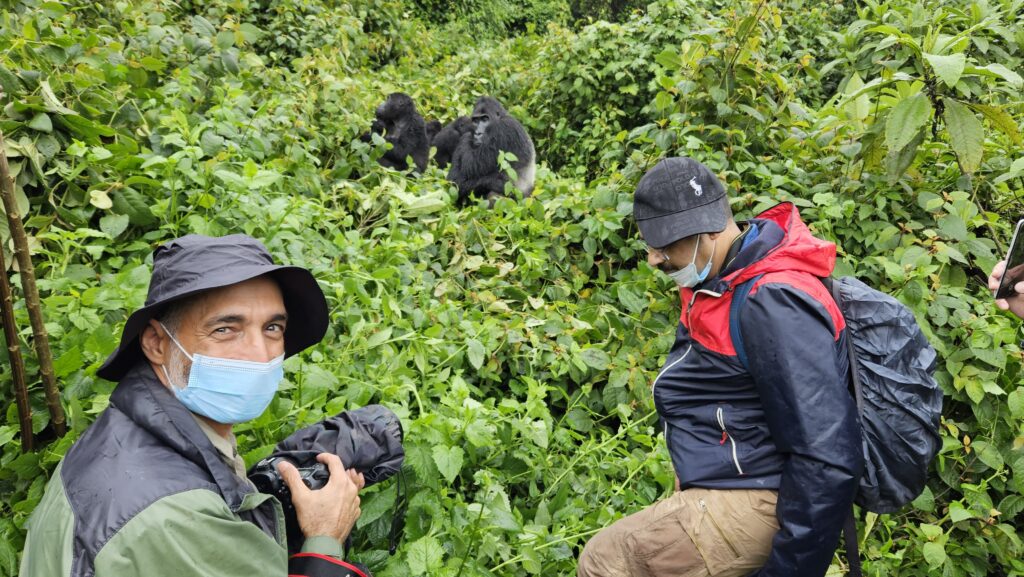
For about first 40 to 45 minutes, it kept raining with varying intensity. However, our guides and we were equally committed to meet Bonna Annee and his family. Initially the Silverback was alone and sitting atop a tree. once the rain stopped, it decided to come down and it was interesting to see how the other family members emerged from the undergrowth all around.
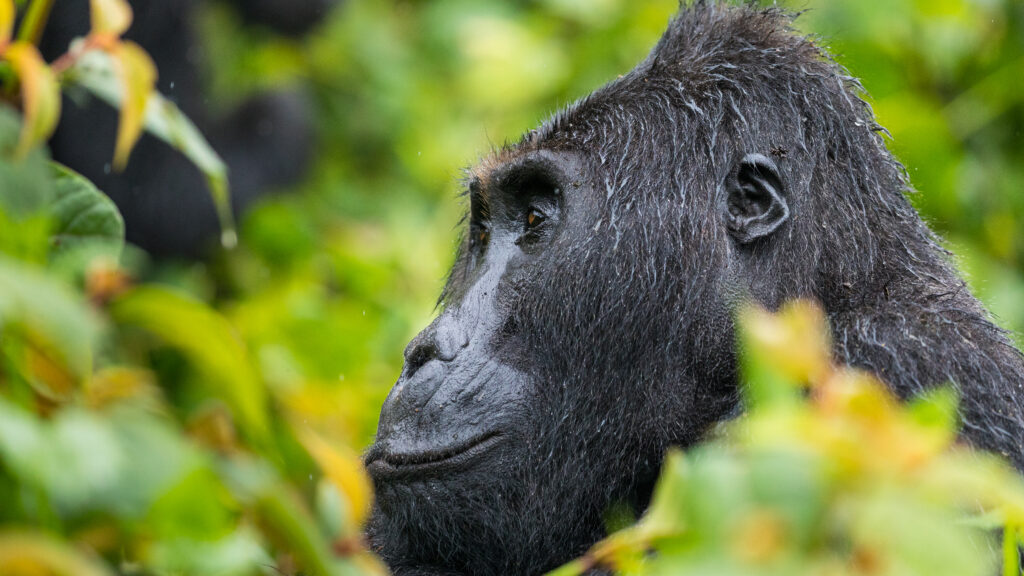
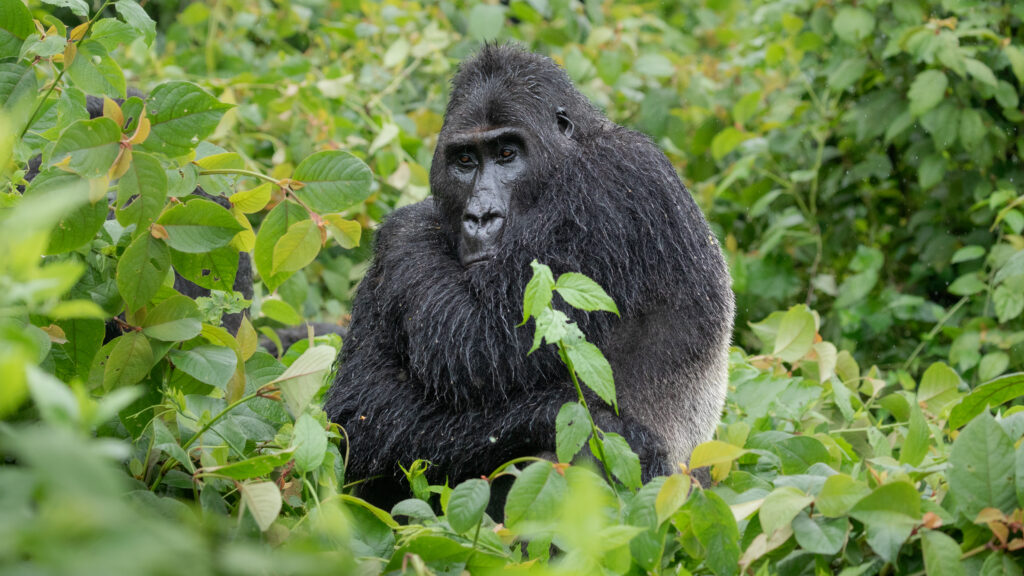
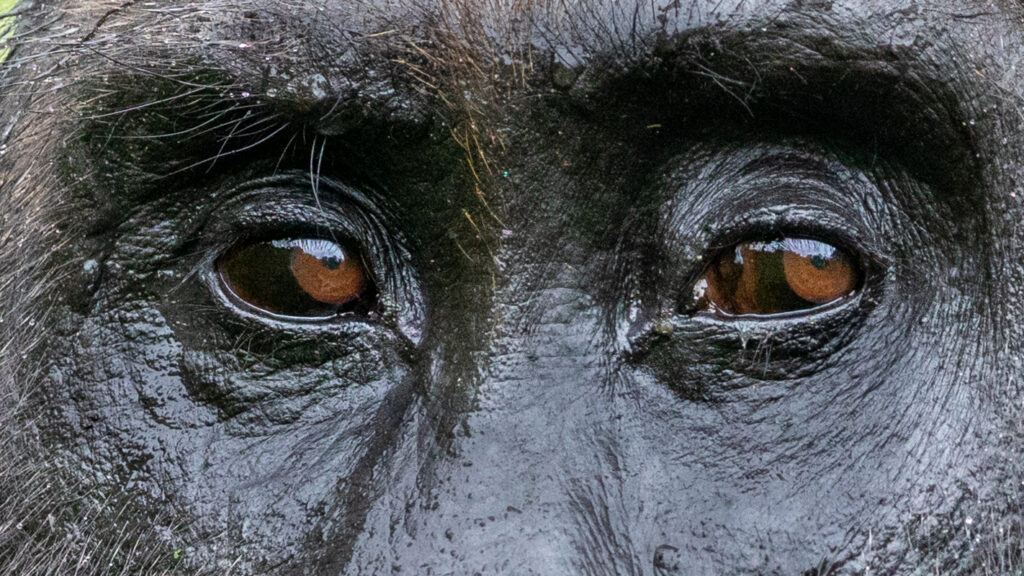
Here is the most interesting part of the visit this time. You can see Siri and her young baby in the picture below. The baby is about 11 months old. I was super thrilled to see them both. You can see that Siri is physically challenged as her right eye is damaged. What you cannot see is that she also does not have the right hand (it was badly damaged in a snare some years ago – and amputated),
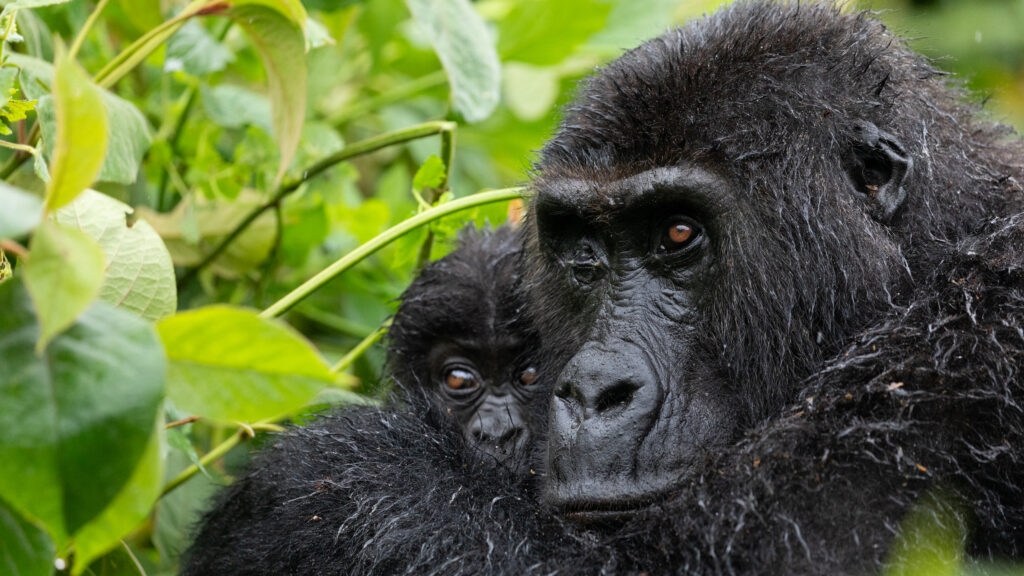
I immediately recognised her from last year and was super thrilled to see her with a young of her own. This shows a great acceptance, not only by the silverback alpha male but also by the entire family. The picture below shows them together.
A Visitor From the Past
Sometimes, some dots connect in the strangest of ways. Recently, I connected with a fellow wildlife enthusiast Alex McLean (@alex_mclean_wildlife on Insta) to discuss our common interests and a potential trip to Botswana as we had been following each others posts on Instagram over last three years.
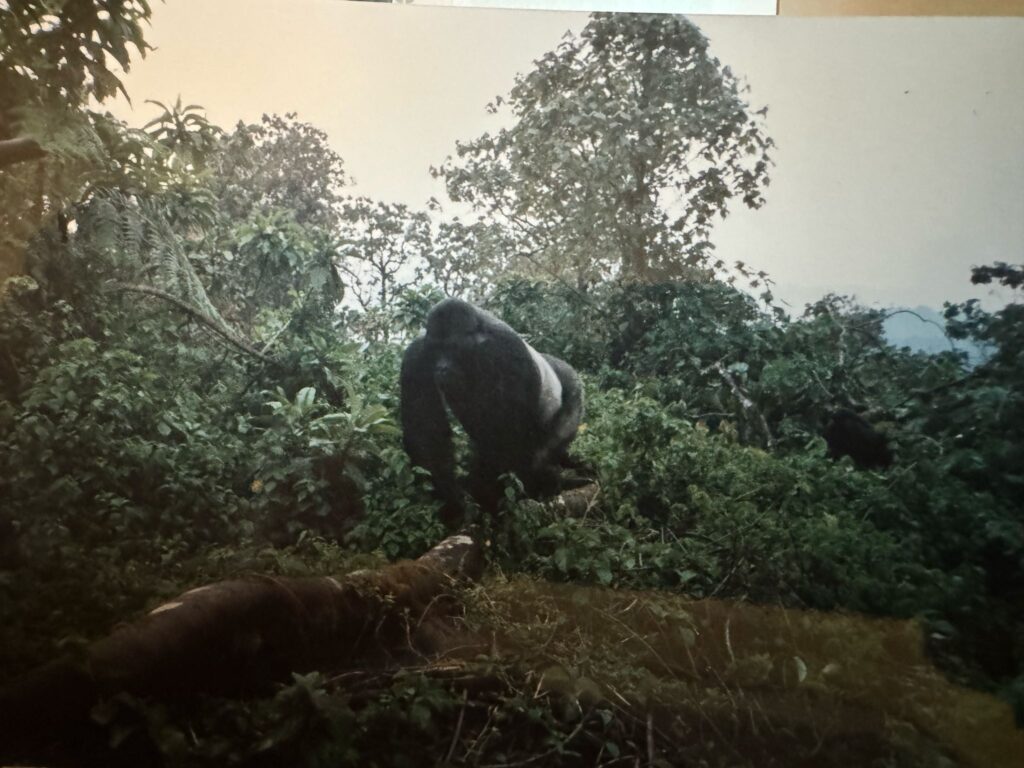
It was nothing short of bewilderment for me to learn that Alex had visited Kahuzie Biega National Park around 30 years ago. He immediately asked about the silverback Mushamuka, which I could not tell much about now. However, Alex kindly agreed to firstly, look for any old pictures (film based) and share. See below, the two images of Mushamuka from 1994 (Kudos to Alex’s passion to travel, explore and keep record).
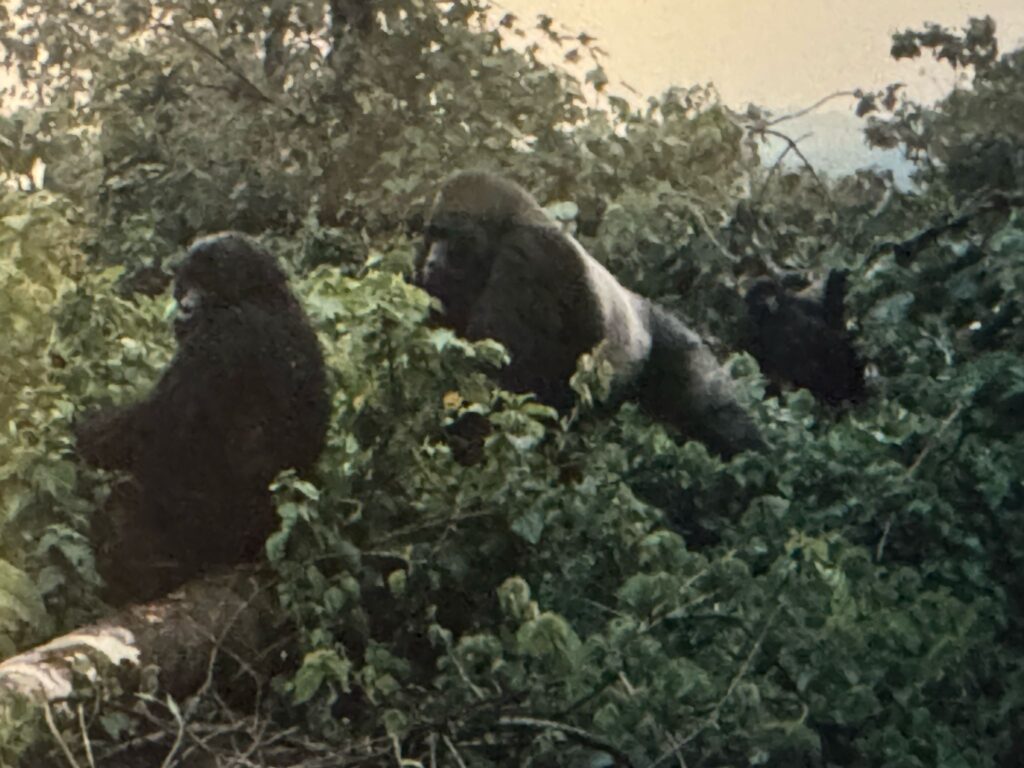
I look forward to hearing about Alex’s adventures in those early years where he dared to explore these remote corners of the world, which remain obscure and in-accessible even today. As on date (01 May 2025), the area of Bukavu and Kahuzi Biega are under the control of M23 rebel group, which over-ran the region in Jan / Feb this year.
Peek a Further
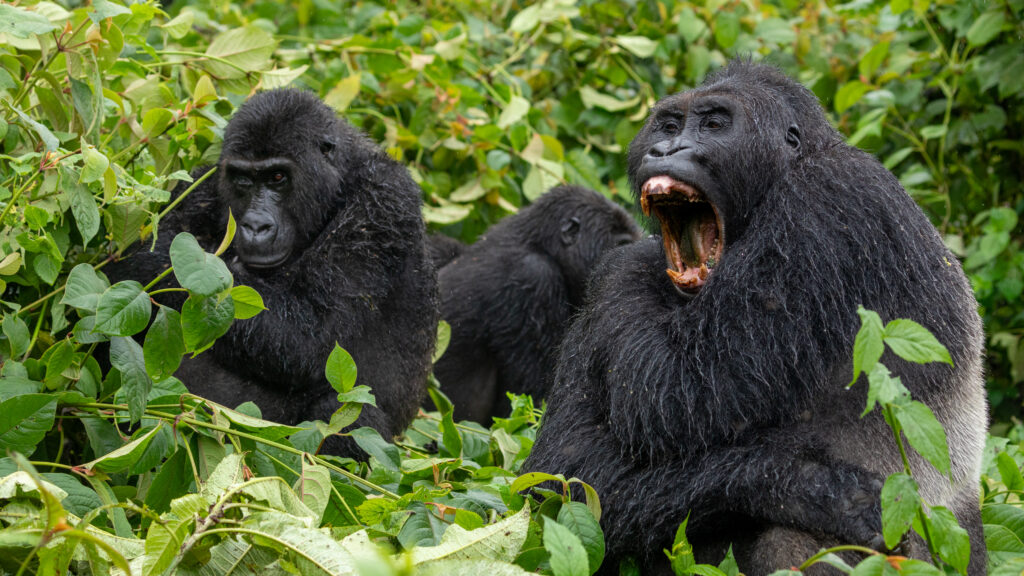
Reverting to my trip, just adding few more pictures without text to give a better peek into the family dynamics of a gorilla family.
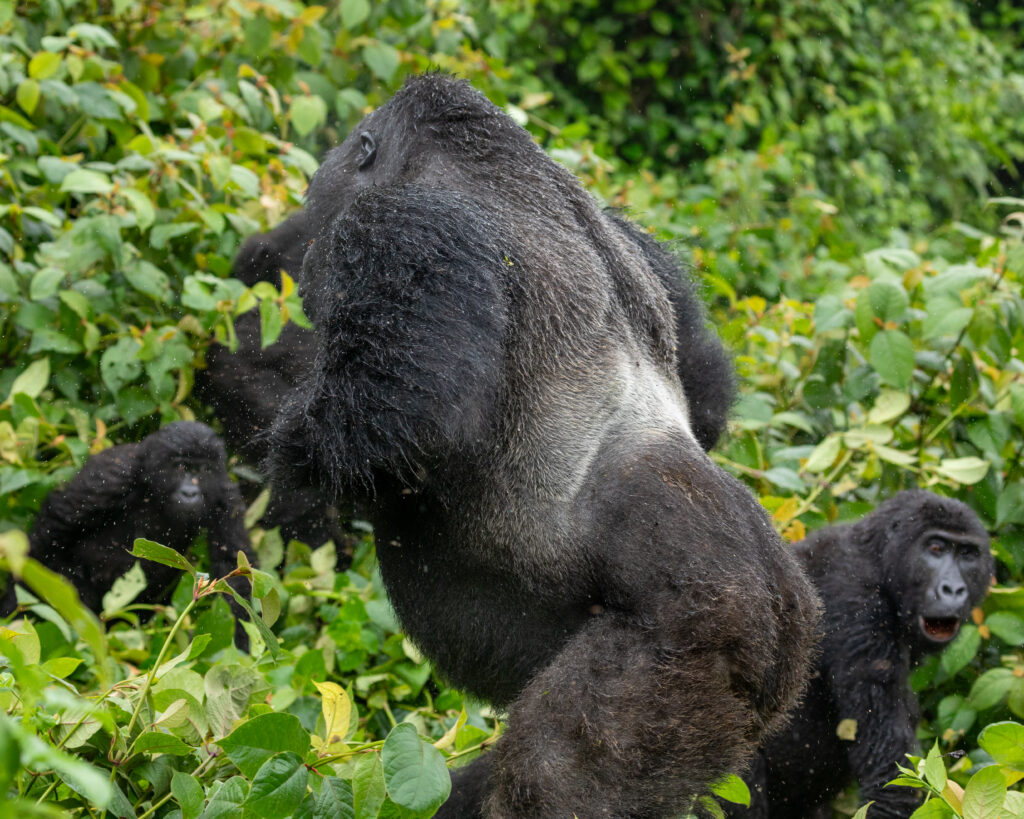
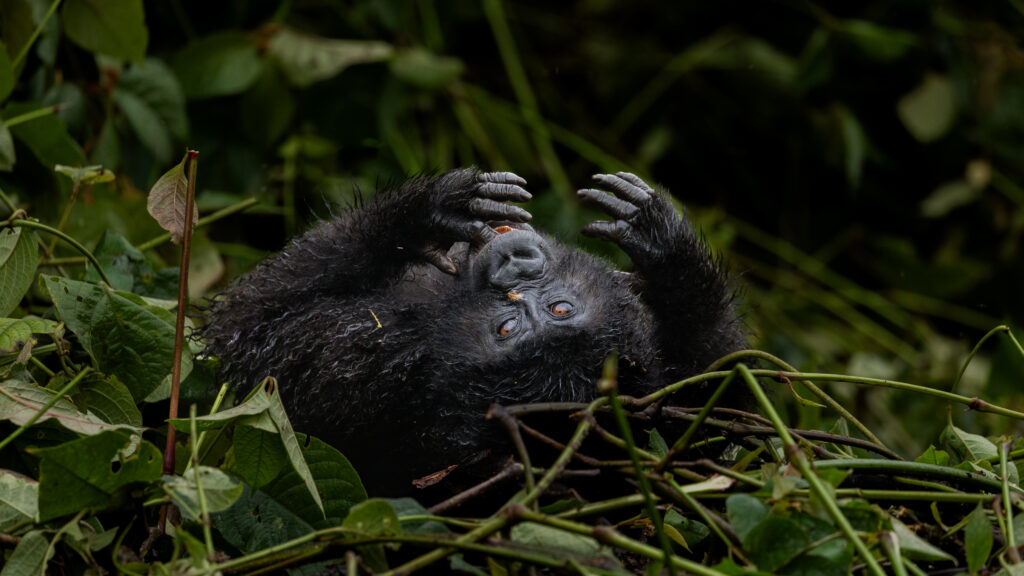
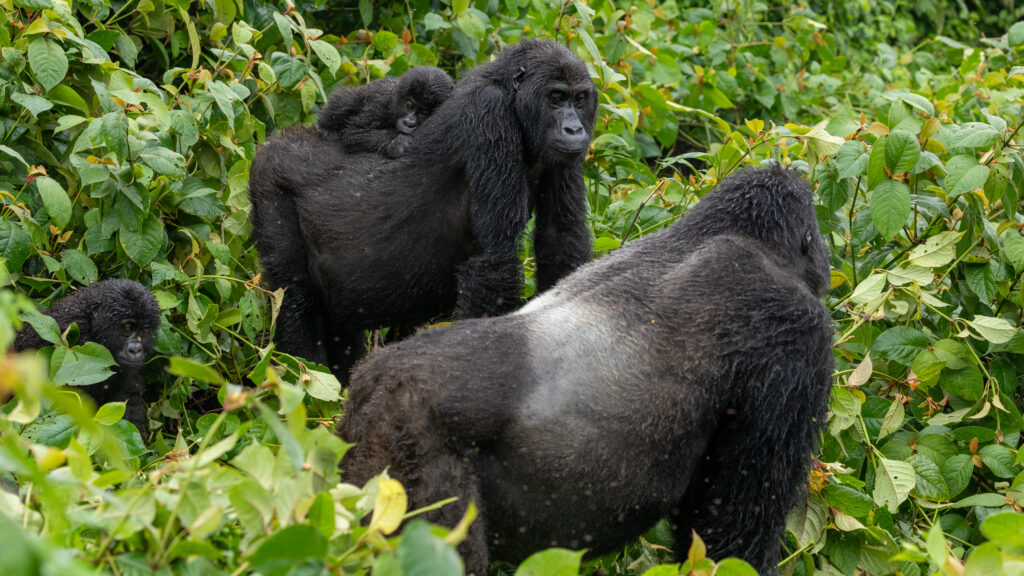
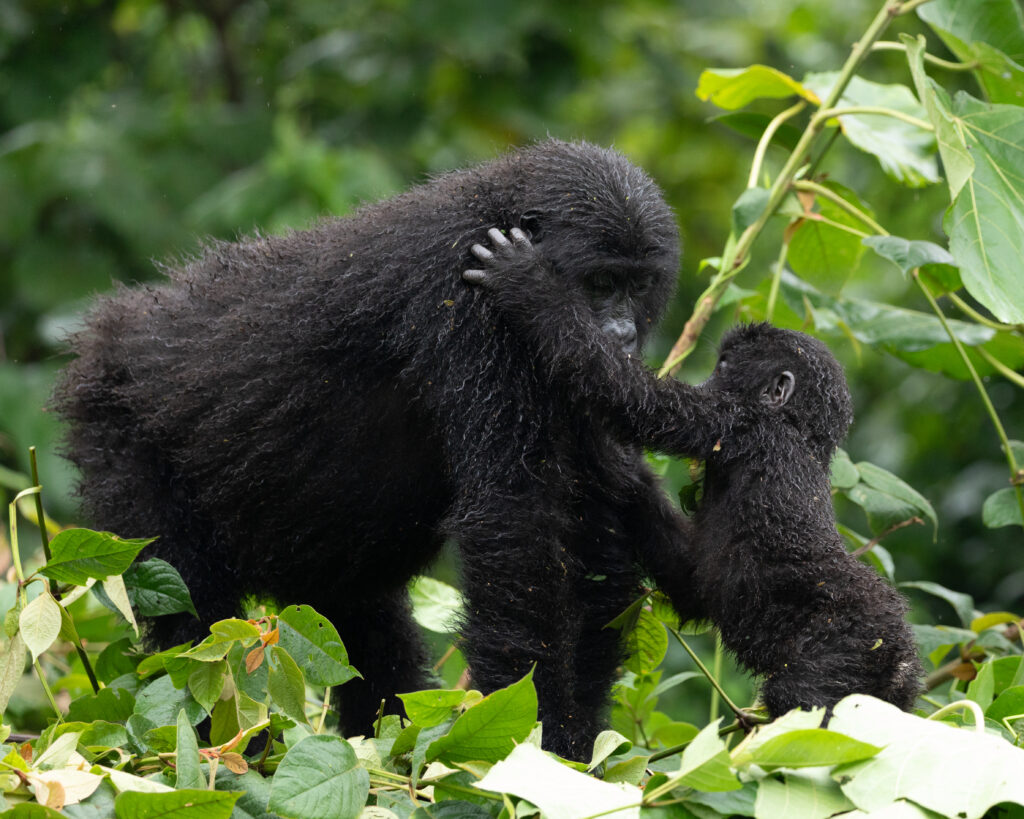
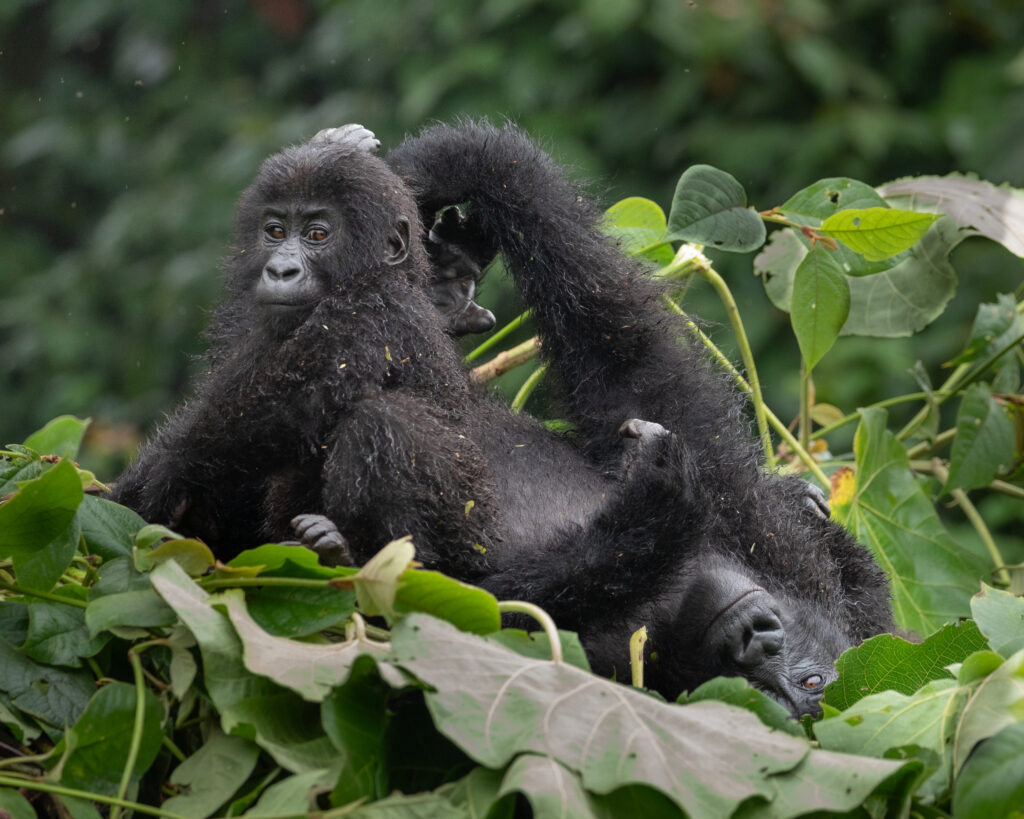
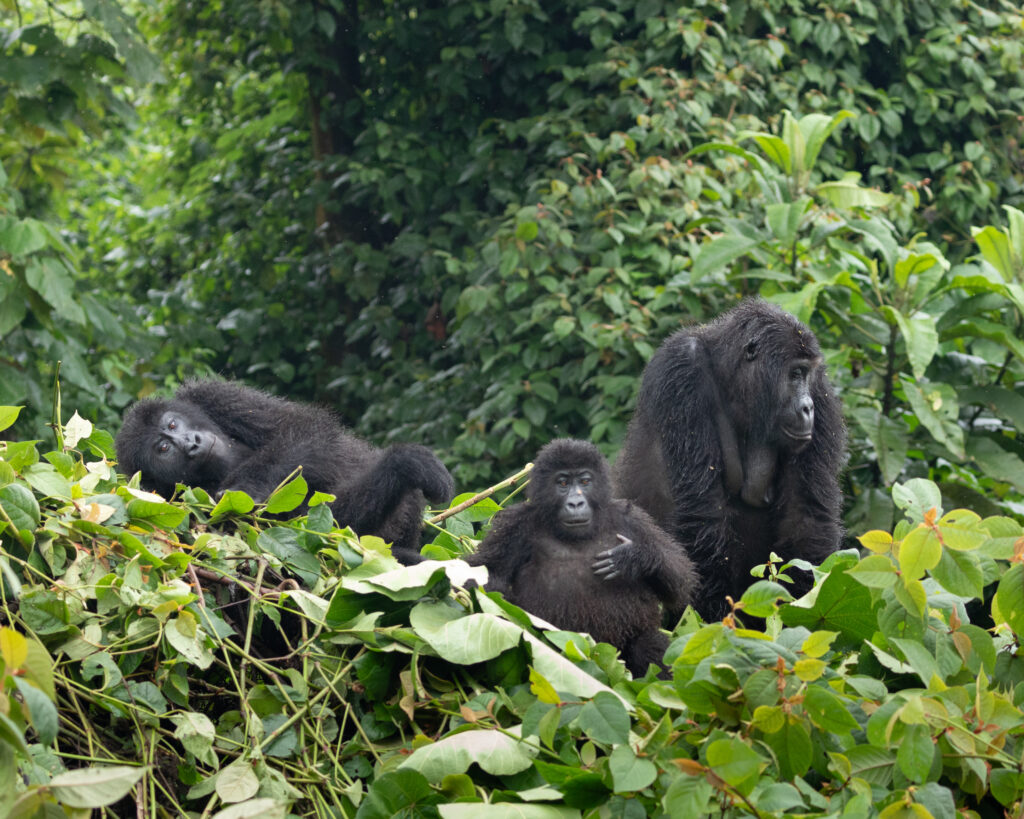
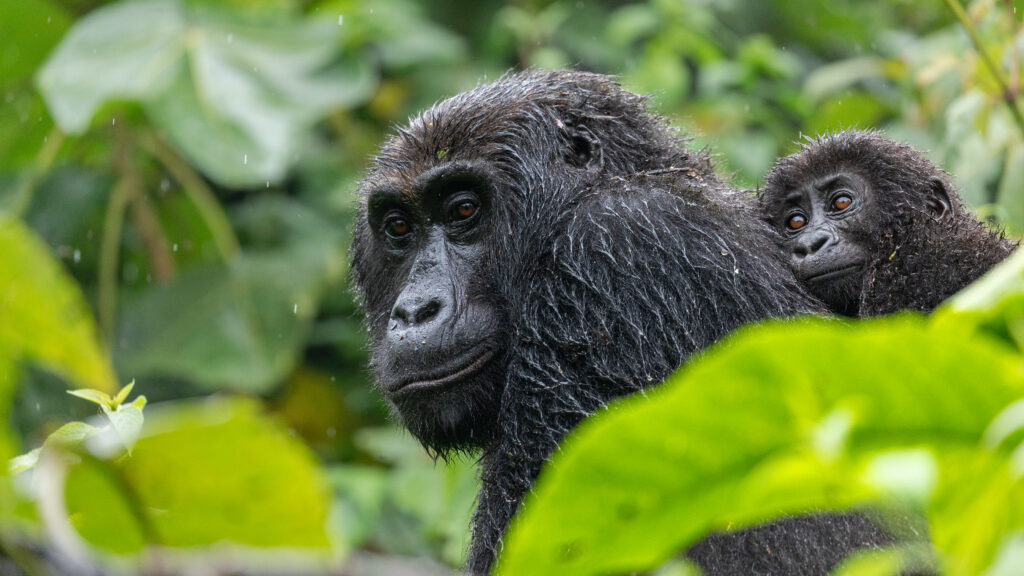
I simply consider myself to be lucky to have this opportunity to be able to visit these Eastern low-land gorillas in probably the only intact natural habitat in the world !!
In case you are ever drawn to see these gorillas – you know where to find a reference.
“The most beautiful gift of nature is that it gives one pleasure to look around and try to comprehend what we see” – Albert Einstein
Leave a Reply
You must be logged in to post a comment.