Tag: wildlife

  • Eastern Ladakh

    Eastern Ladakh

    “Travelling to remote places is a great de-tox ! ” – birdingjo

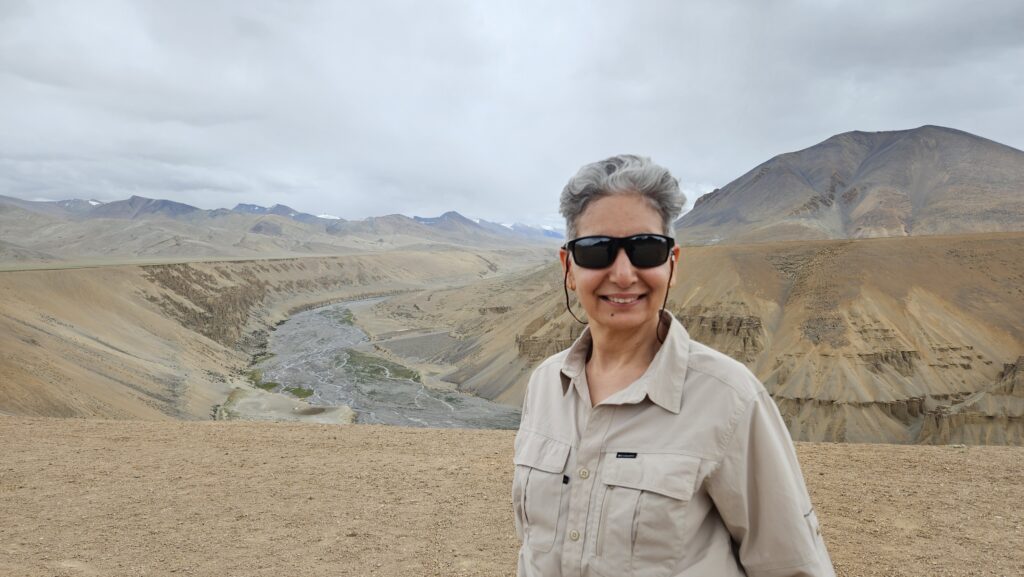
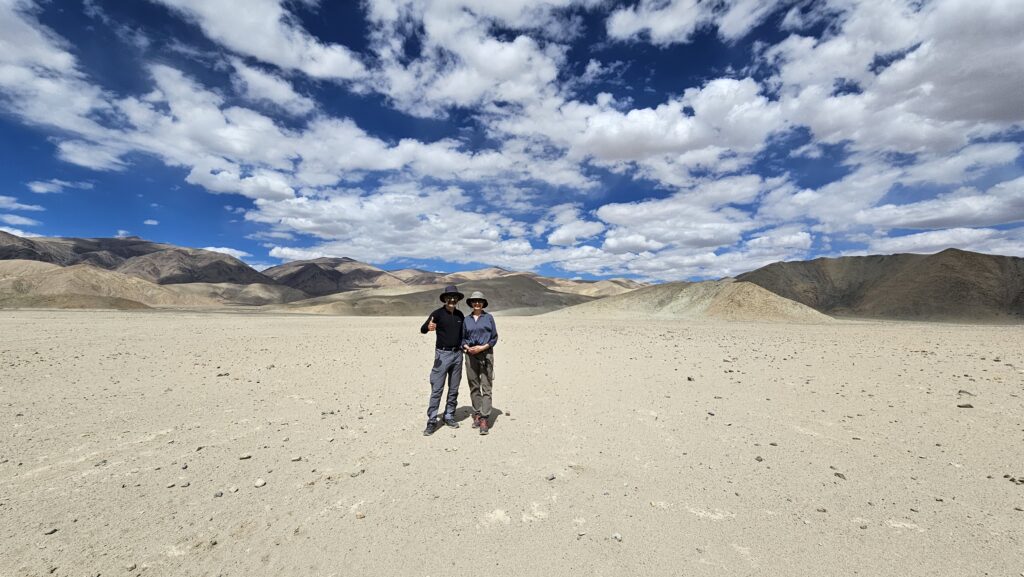
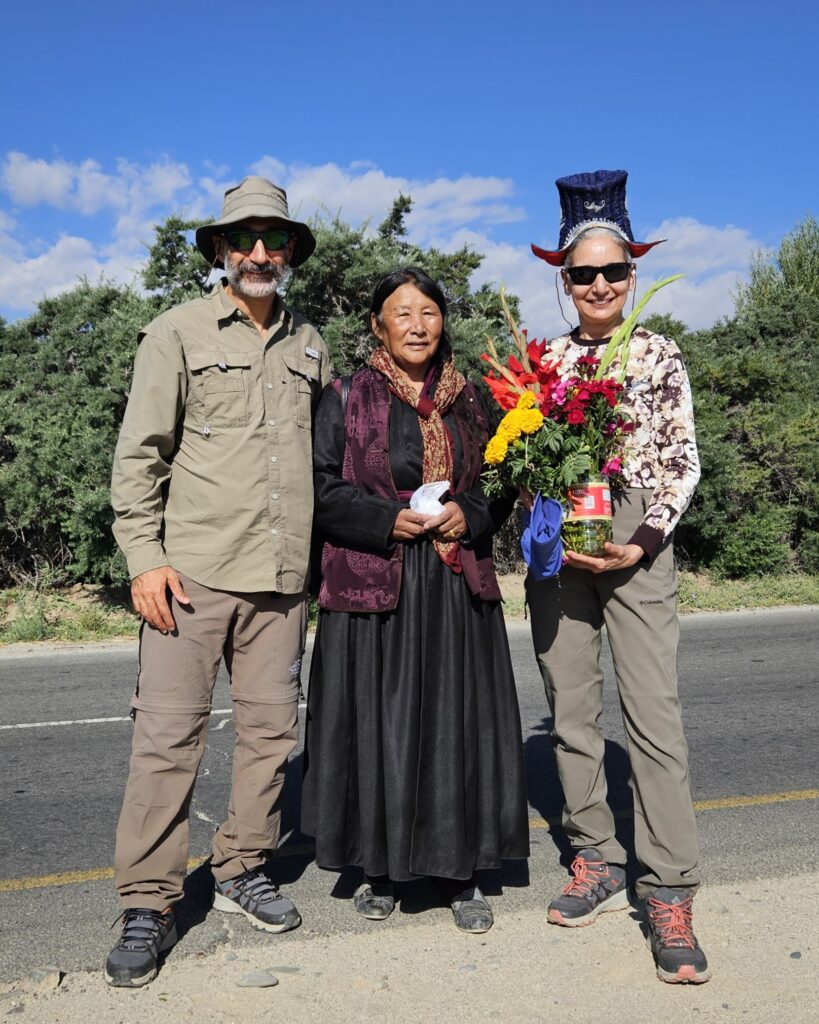
    I consider myself fortunate for multiple opportunities to have travelled and lived in this unique area called Ladakh and I always wanted to show it to my better half, Pushpinder aka Pusha.

    Incidentally, Ladakh, for un-initiated is now a Union Territory of India and has the distinction of sharing its borders with Pakistan and China. Not hard to guess that it is situated in the Northern tip of India on the Western India. Prior to 31 Oct 2019 (exactly five years from the time of writing this blog), Ladakh was part of the state of Jammu and Kashmir.
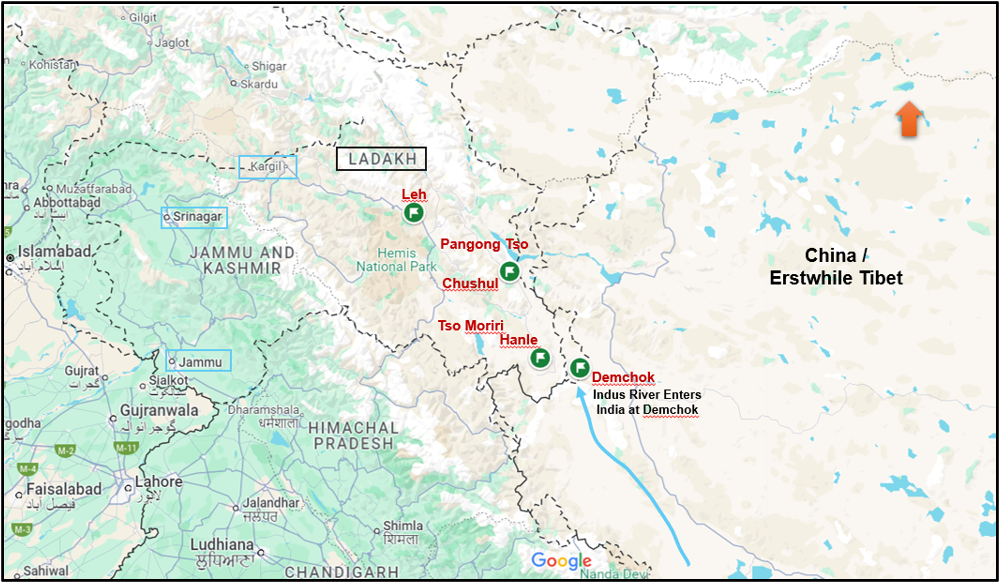
    General Area of Ladakh for a Broad Orientation

    La-dakh in local language translates to ‘land of thousand passes’. The remoteness and harsh weather conditions aptly are best described by an old ladakhi saying “The land is so inhospitable that only best of friends and worst of enemies visit us”.
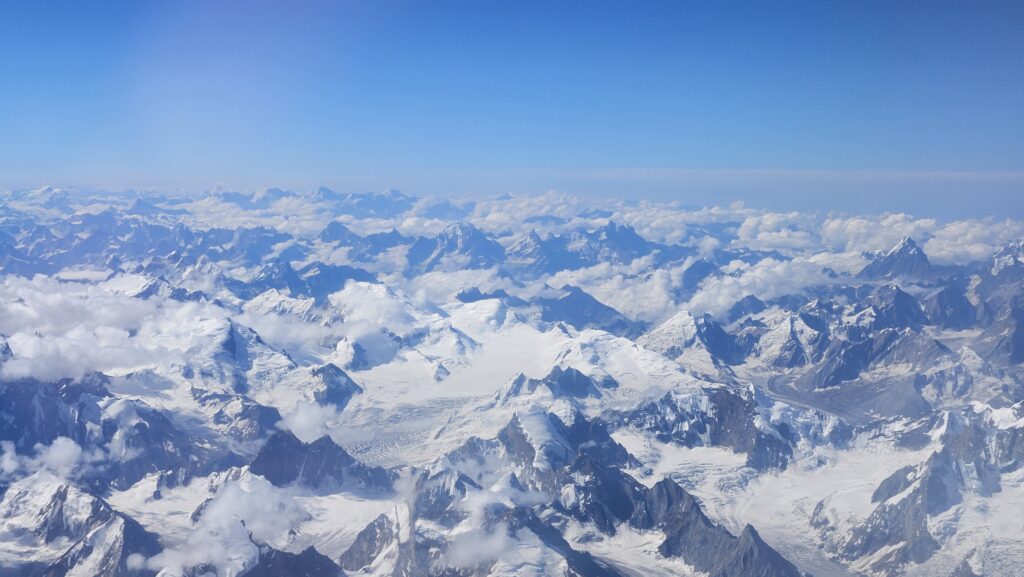
    Day 1

    Started from Chandigarh – Kullu – Manali – Atal Tunnel (to bypass Rohtang Pass) – Keylong – Jispa. Kullu and Manali were surprisingly quite quiet. When we asked, where are the tourists and crazy traffic, we learnt that there was a ‘Yellow’ Alert by the government of Himachal about the possble landslides / flashfloods keeping in view what had happened in July 2023. Luckily, we made through to Jispa without any trouble.


    It was heartening to see the set of tunnels including the state of the art 9 km long Atal Tunnel by-passing the Rohtang pass and making it possible to reach Jispa in one day from Chandigarh.
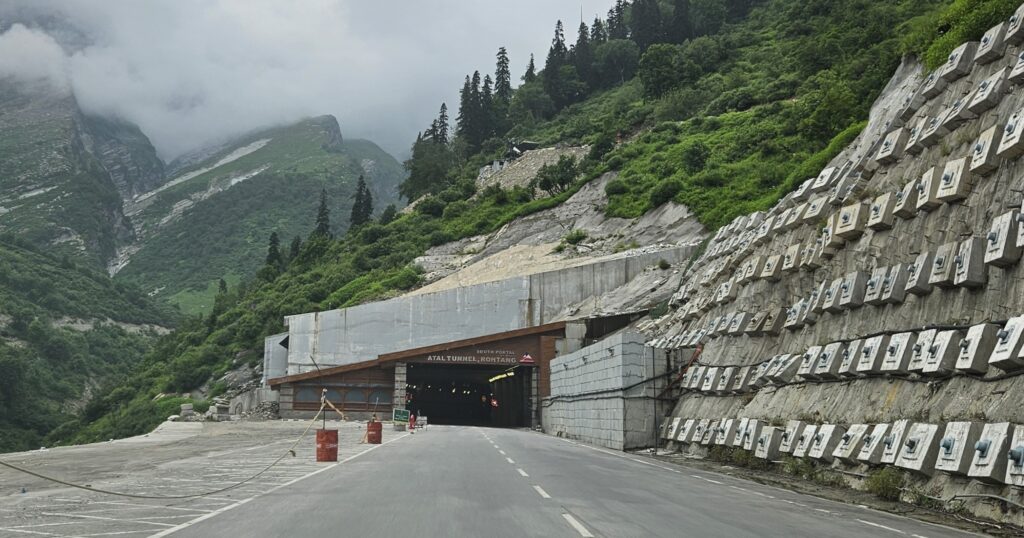
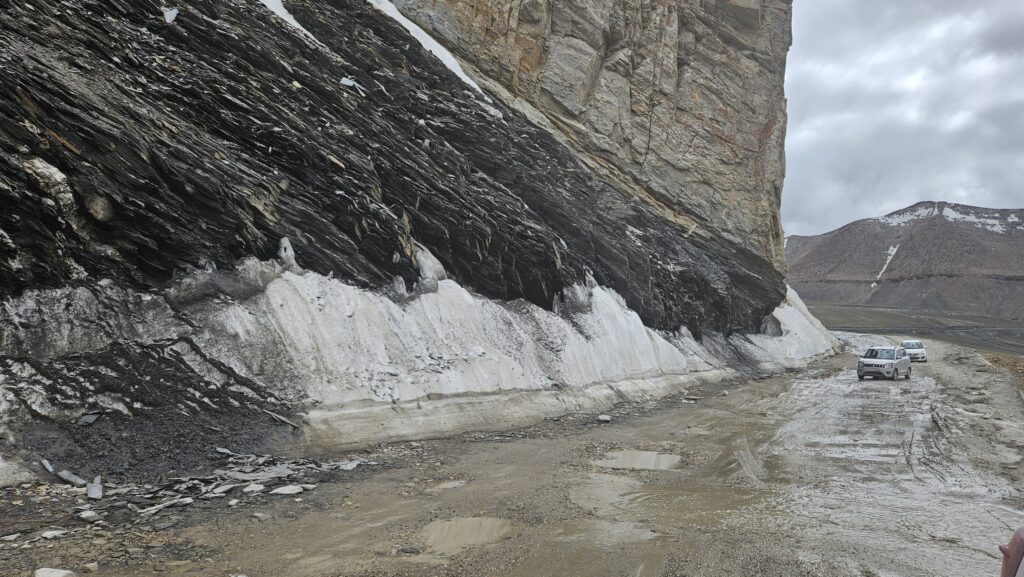
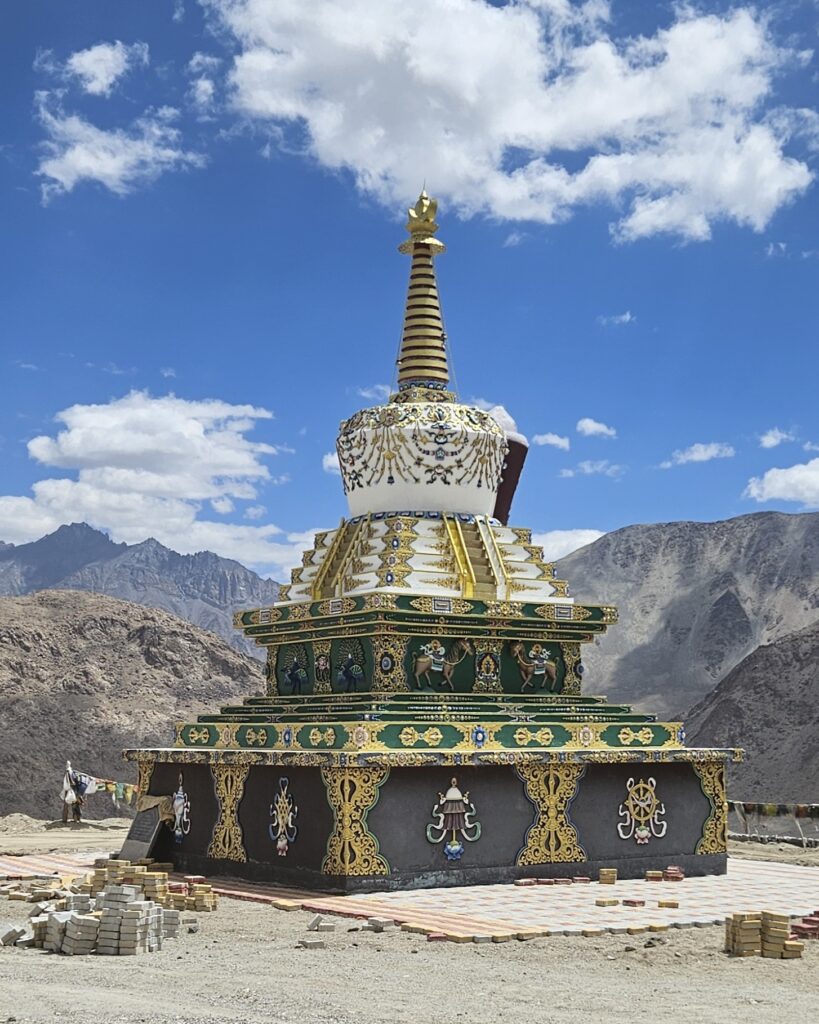
    Enterance of the Atal Tunnel and few pictures of the everchaning landscape enroute to Leh

    Day 2 & 3 – Stay at Ghemoor Khar, Jispa, District Lahol & Spiti, Himachal Pradesh.
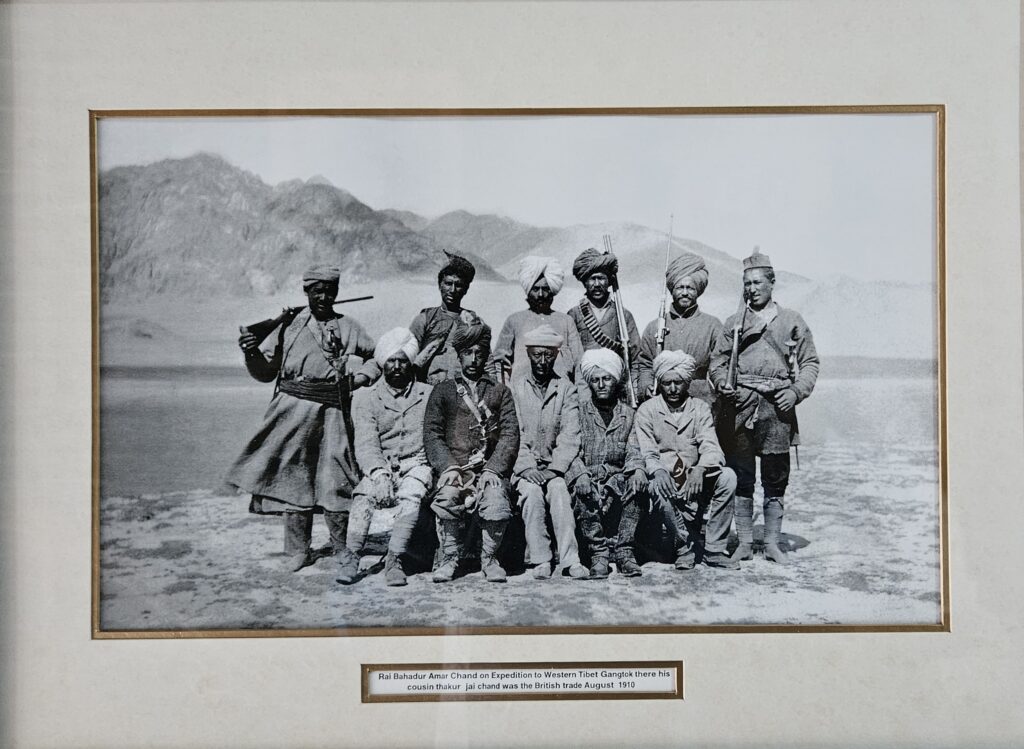
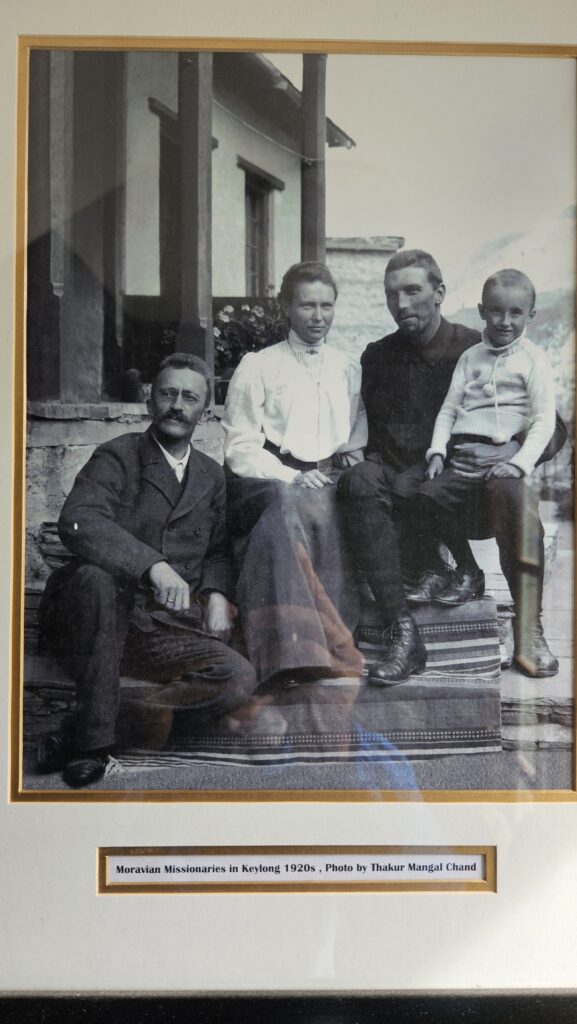
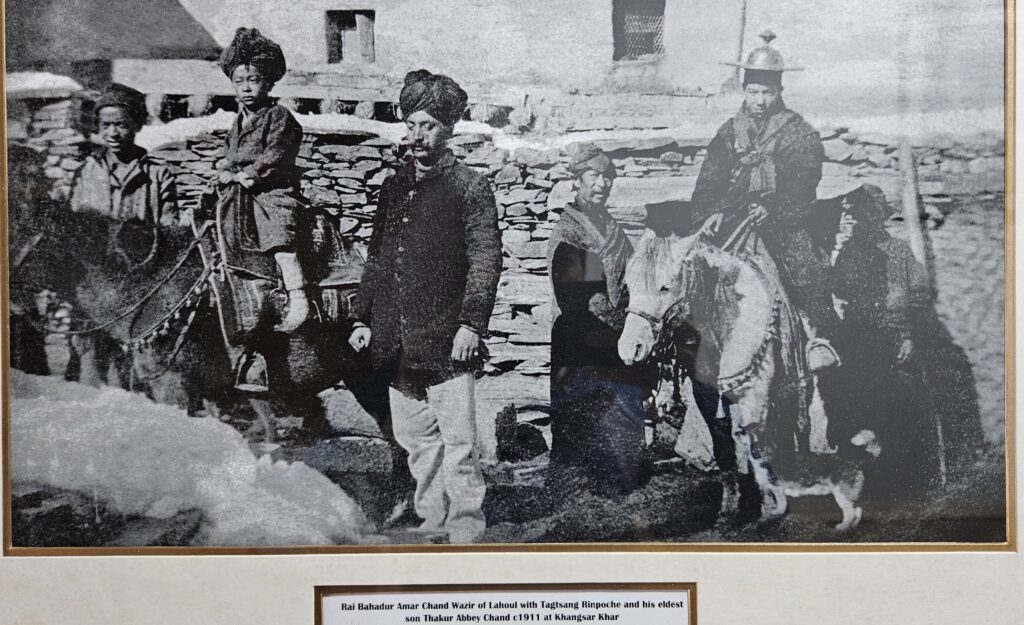
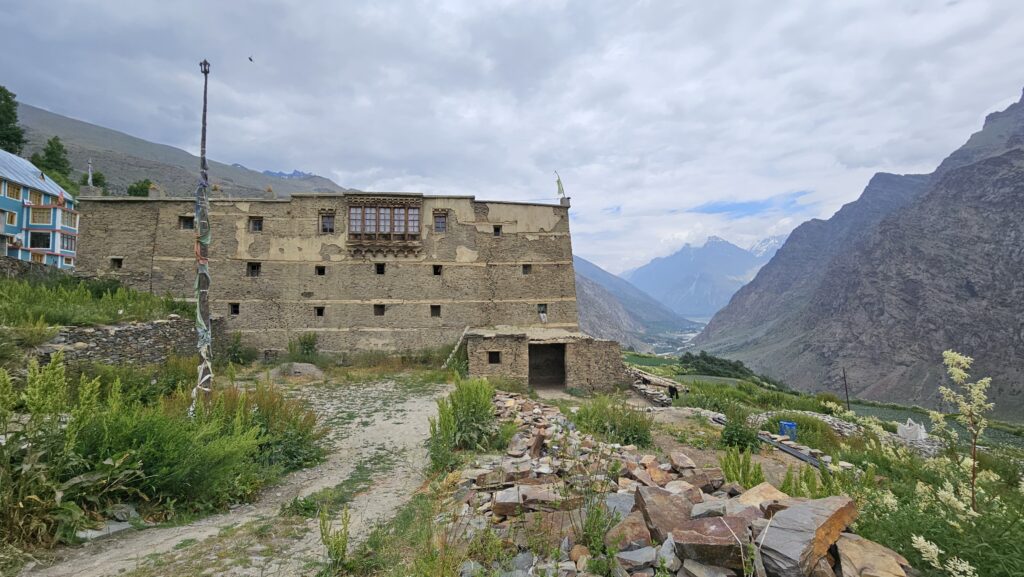
    We were fortunate to have booked Ghemoor Khar, which happen to belong to a prominent local family with a rich history. Posting some pictures of the past which Ghemur Khar has witnessed about 100 years ago.
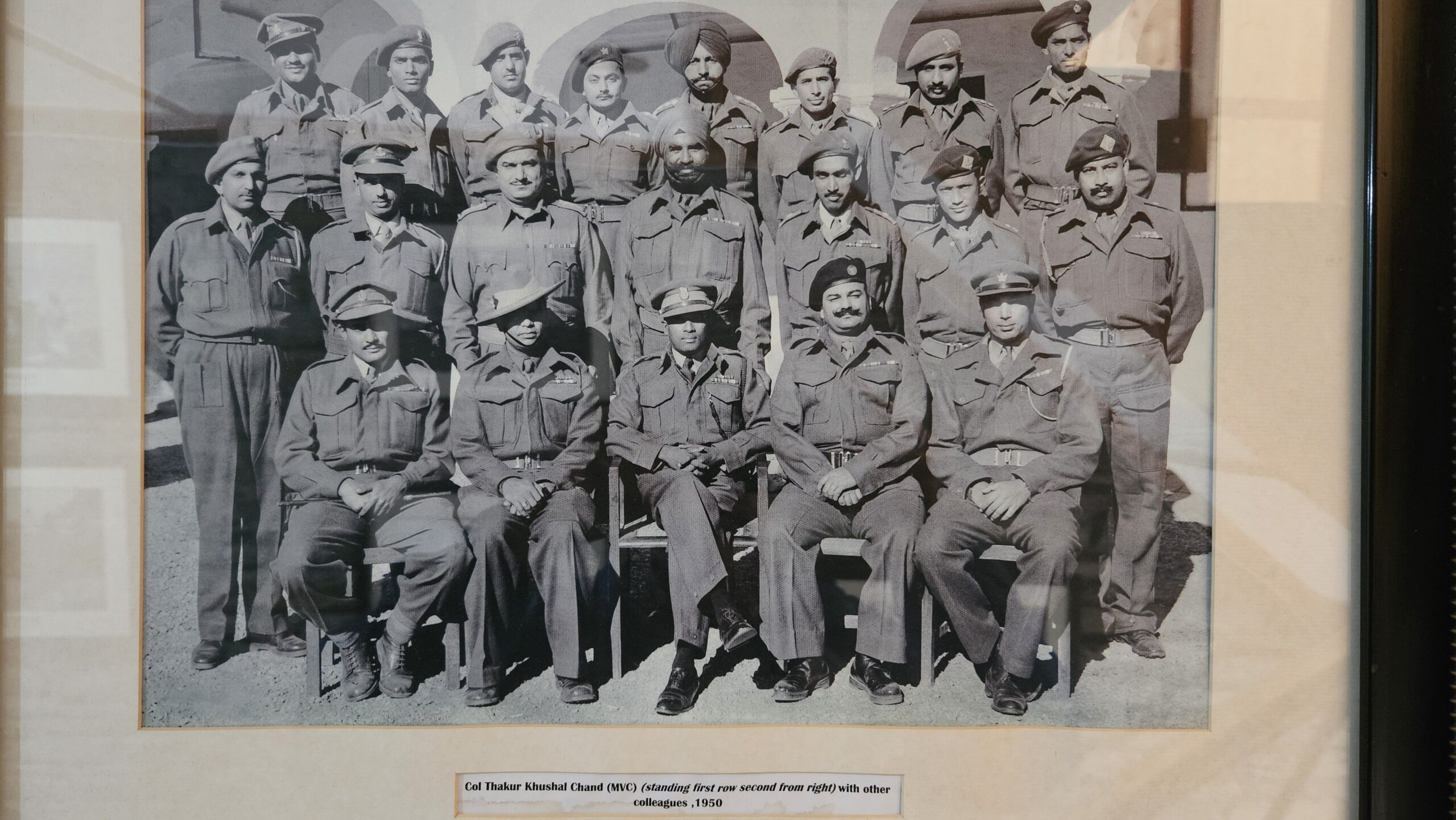
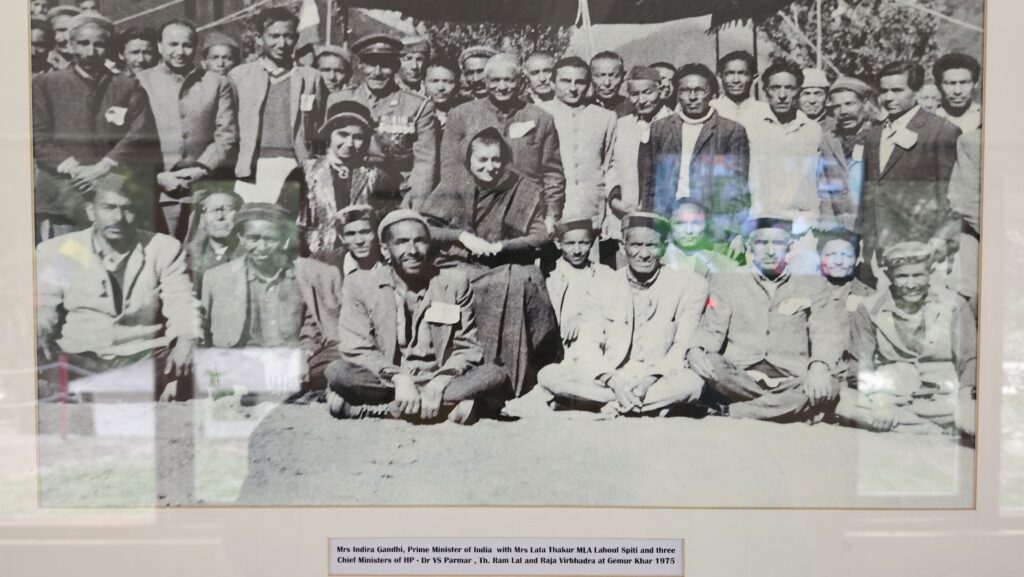
    Two Centuries old Palace (now in disuse) of Royal Family of the Lahol-Spiti.

    Day 4: Jispa – Pang – More Plains – Tanglang La – Leh

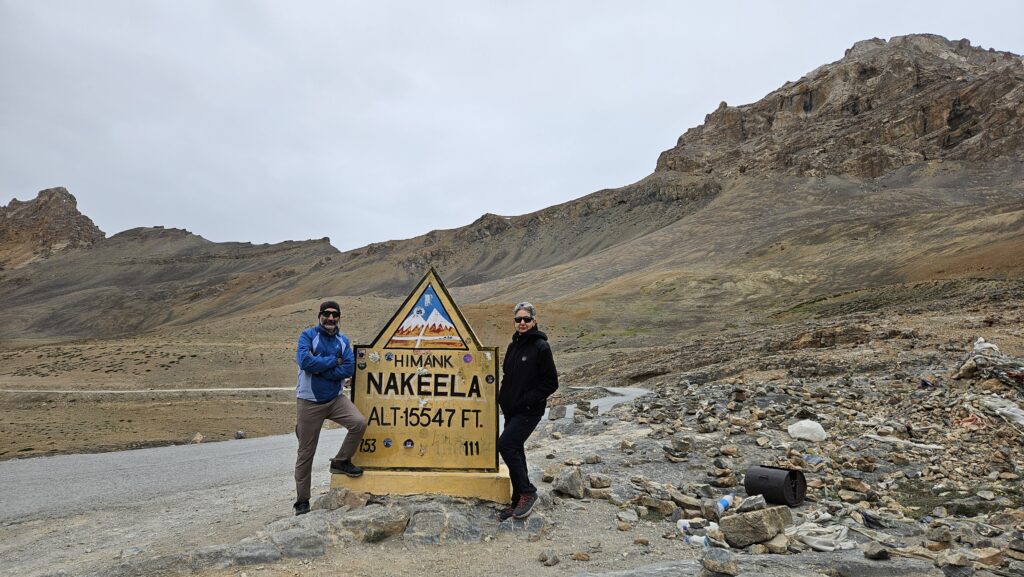
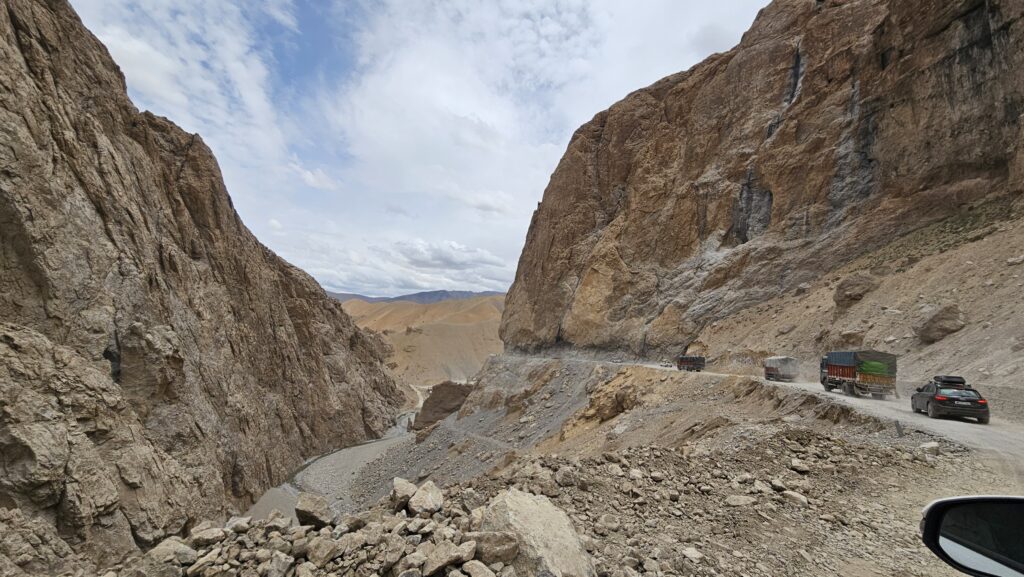
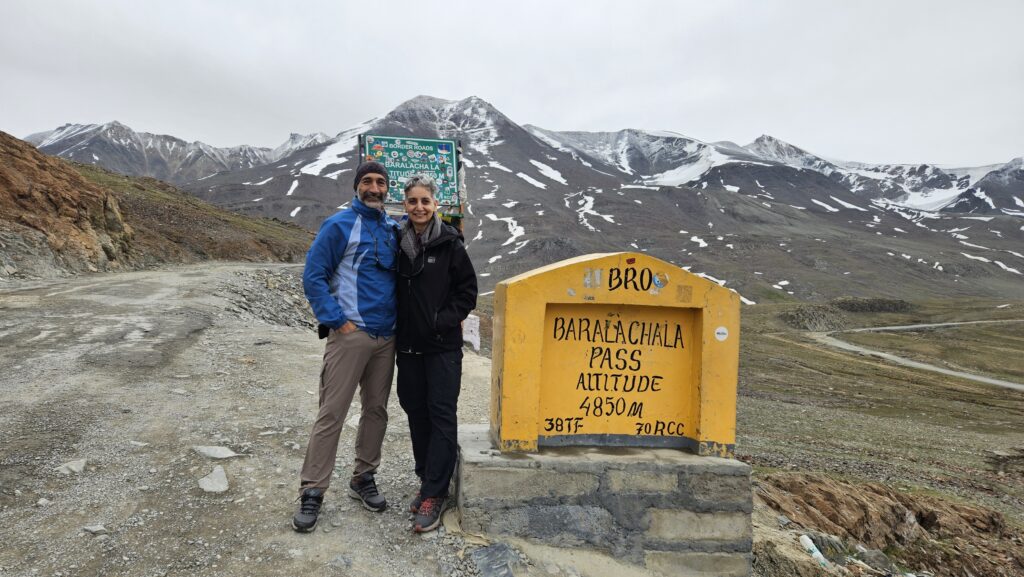
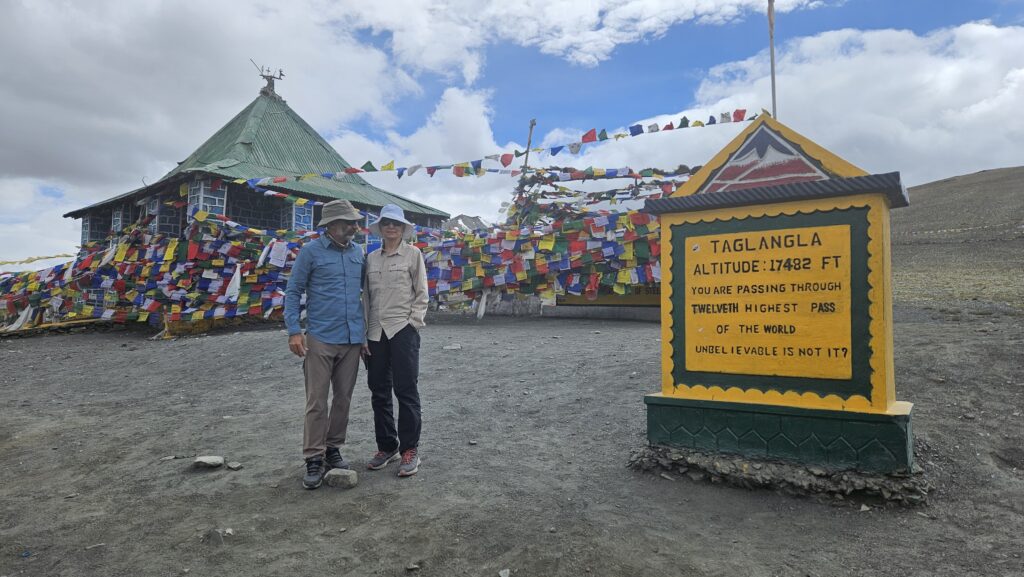
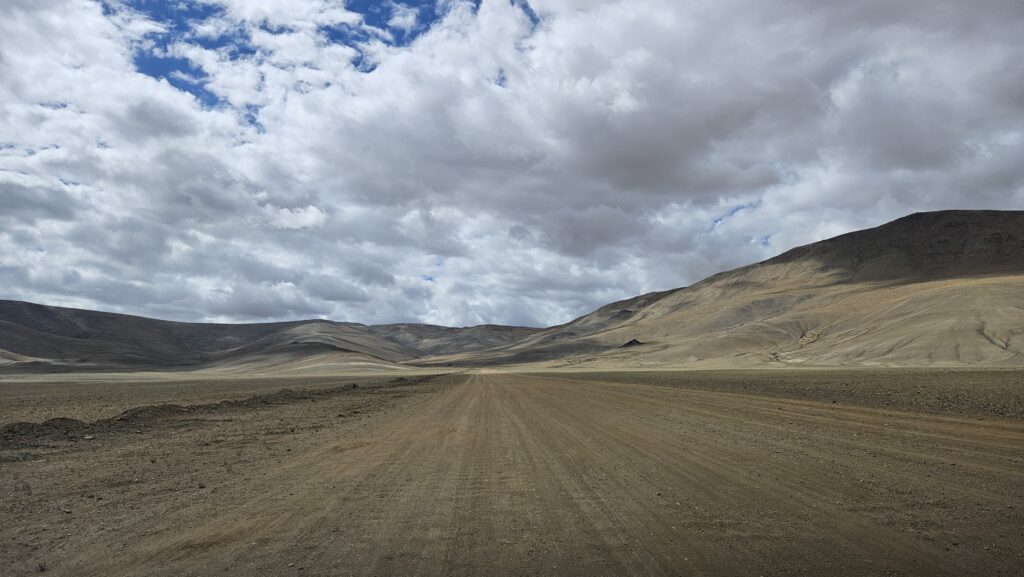
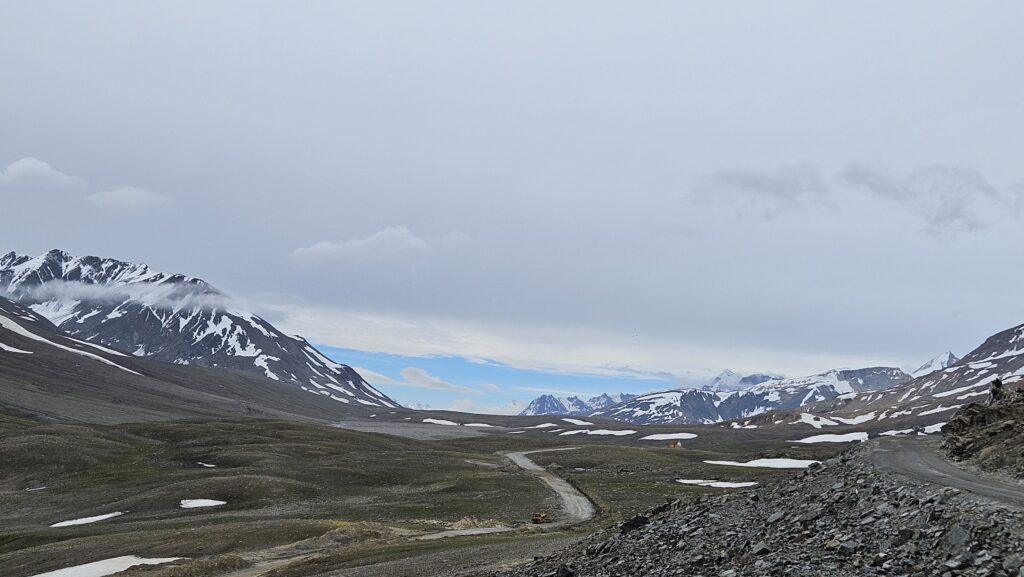
    Day 3 was a long drive of about 10 – 11 hours to cover a distance of approximately 380 kms. Some may wonder, why so much time for this distance, well, this route is at many places still a dirt or gravel track, precarious and challenging hill side cuttings and goes up through at least 5 passes which are above 15000 feet. Tanglang La being the highest enroute is at 17,482 feet.

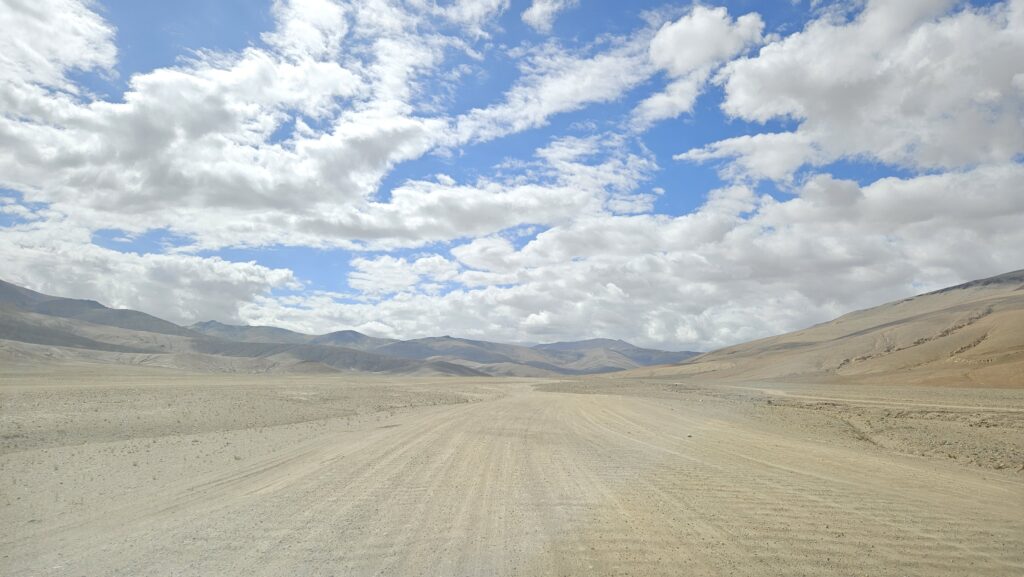
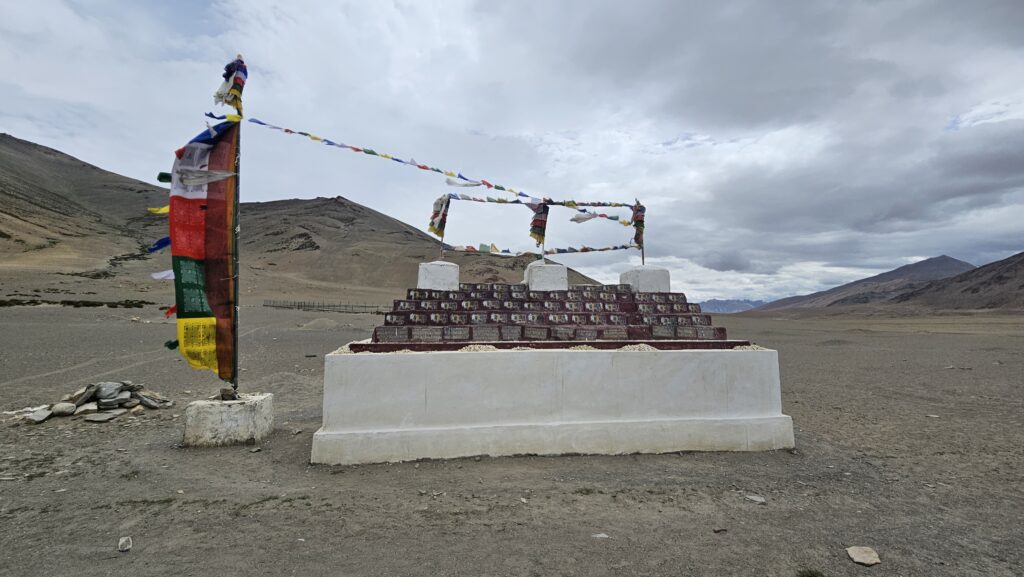
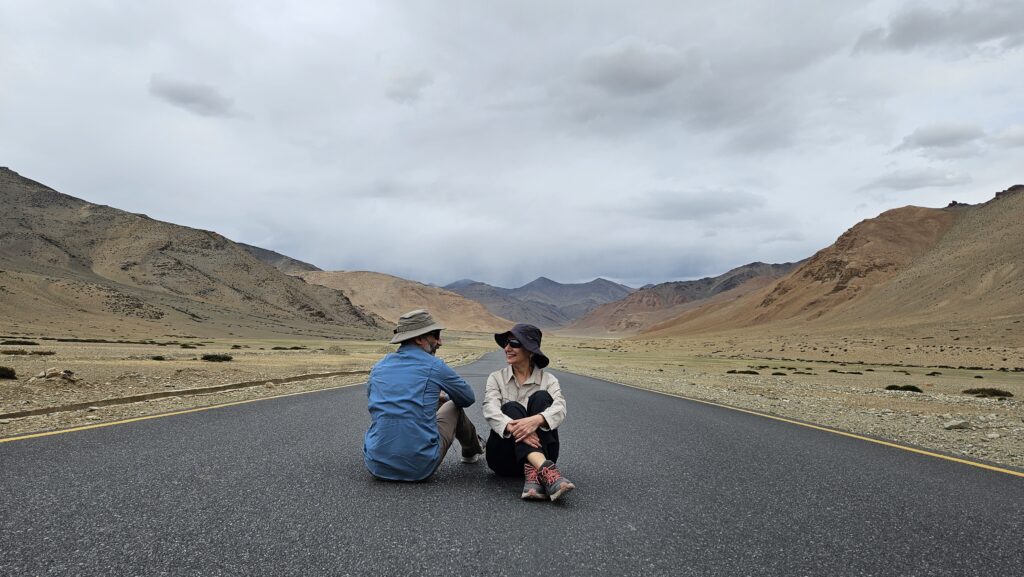
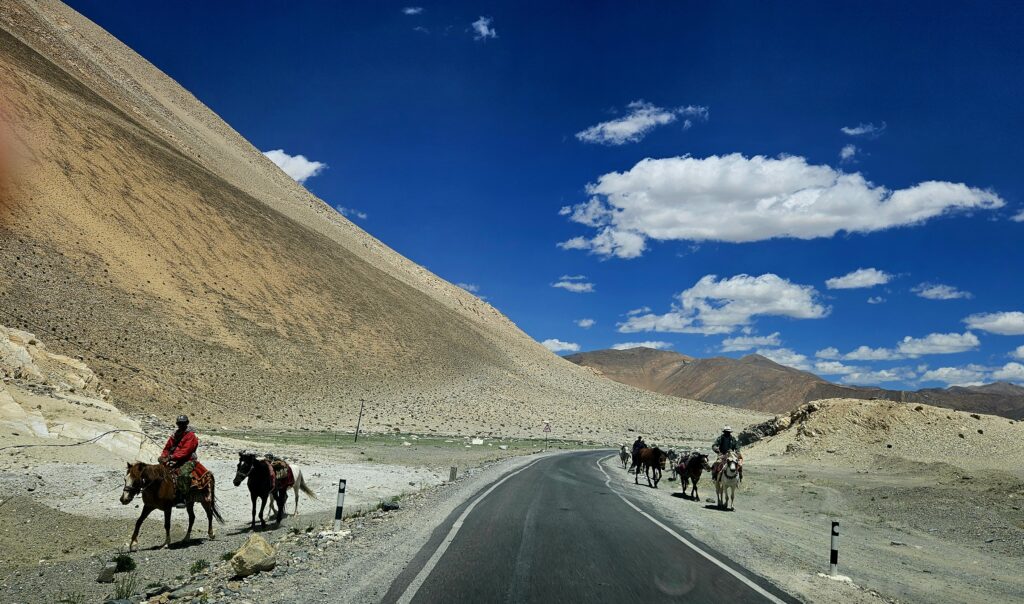
    In addition, one is bound to have multiple stops to admire and capture the beautiful and everchanging landscapes. Here are a few glimpses of the route.
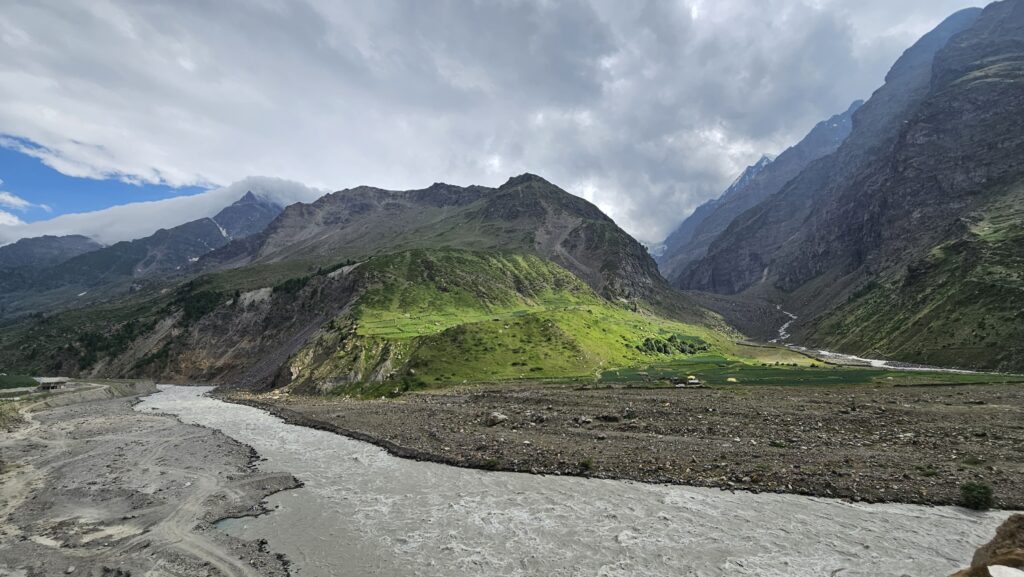
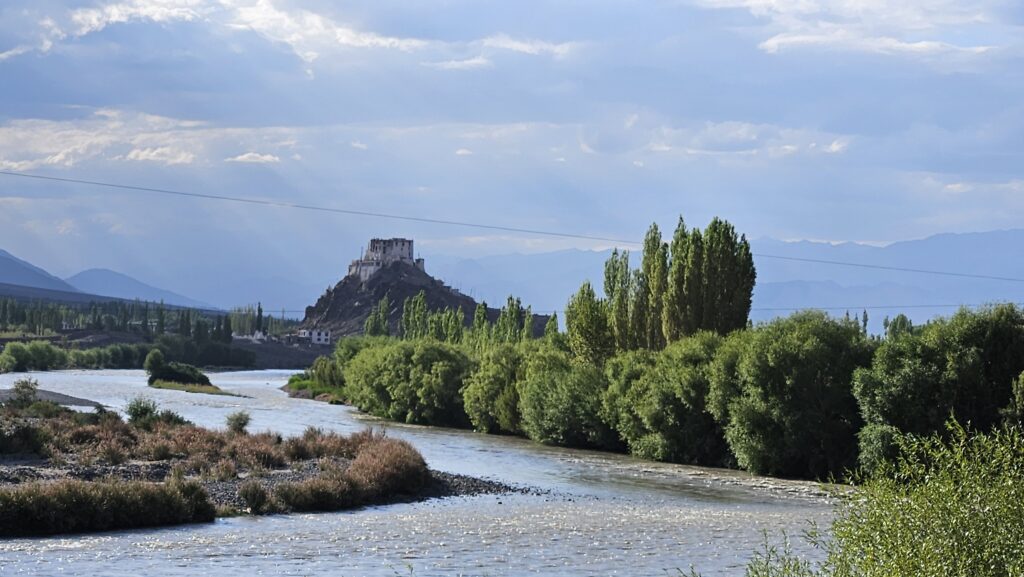
    Mighty Indus River Enroute to Leh near Stakhna Monastery.

    Day 5 & 6 : Stay at Leh

    Well, after going through multiple ups (17000 feet) and downs (10000 feet) on the road to Leh, it makes perfect sense to spend a day or two to acclimatise the body in this high altitude areas. Hence, we enjoyed our stay at lovely Ladakh Residency hotel, personally looked after by the gracious owner Mr. Wangchuk.

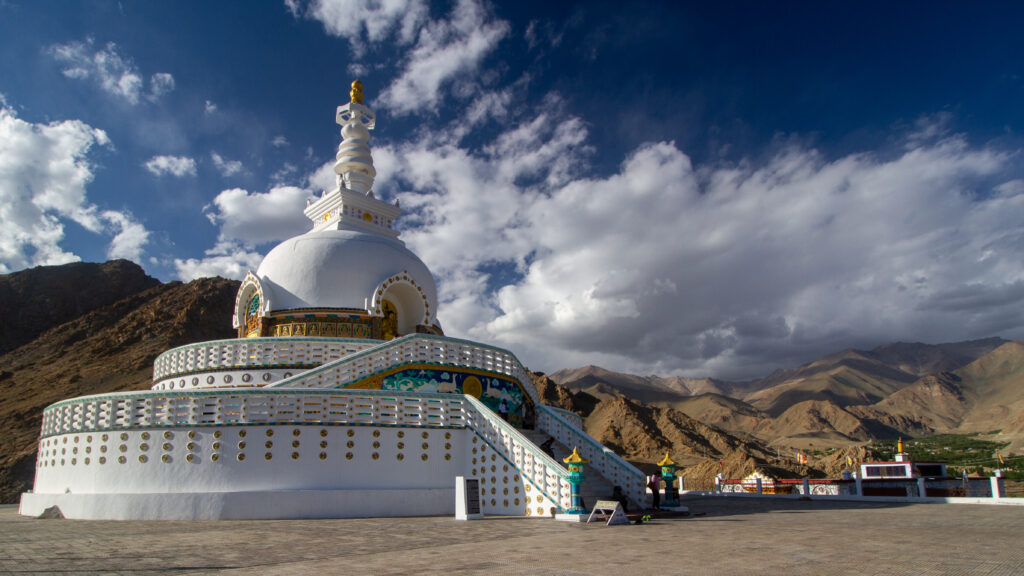
    We took strolls to the Leh market and the magnificent Shanti Stupa overlooking the entire Leh Valley.
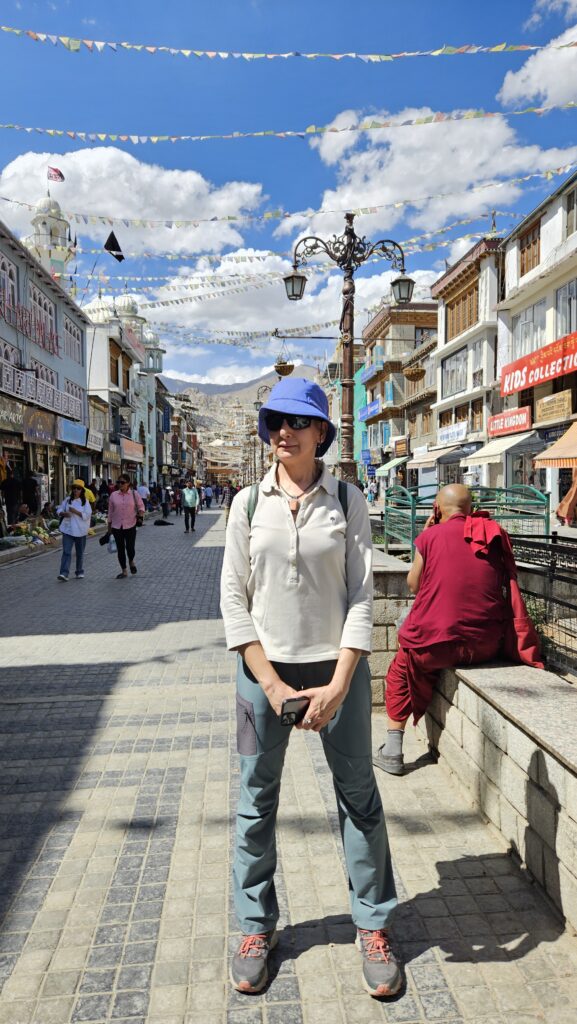
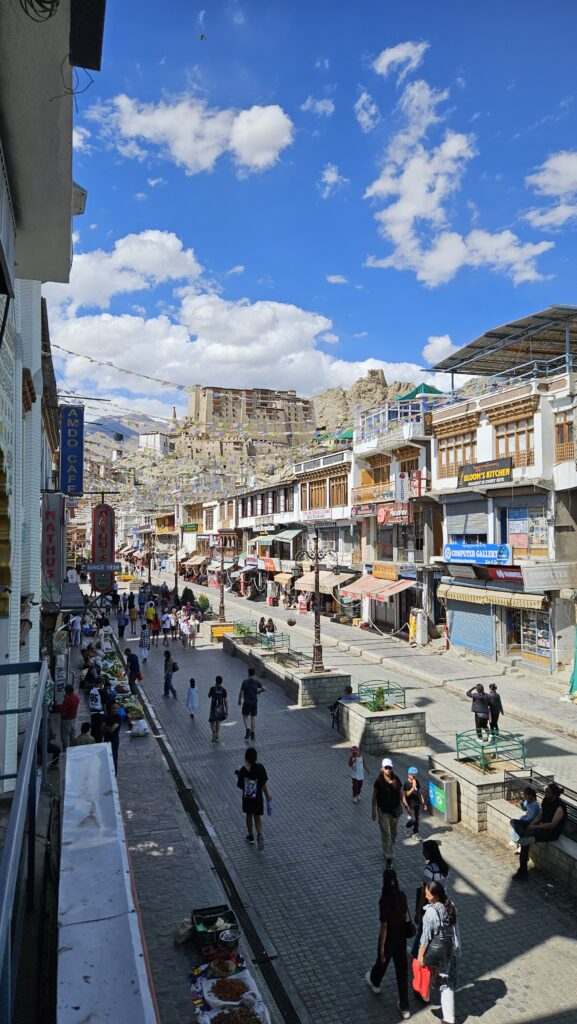
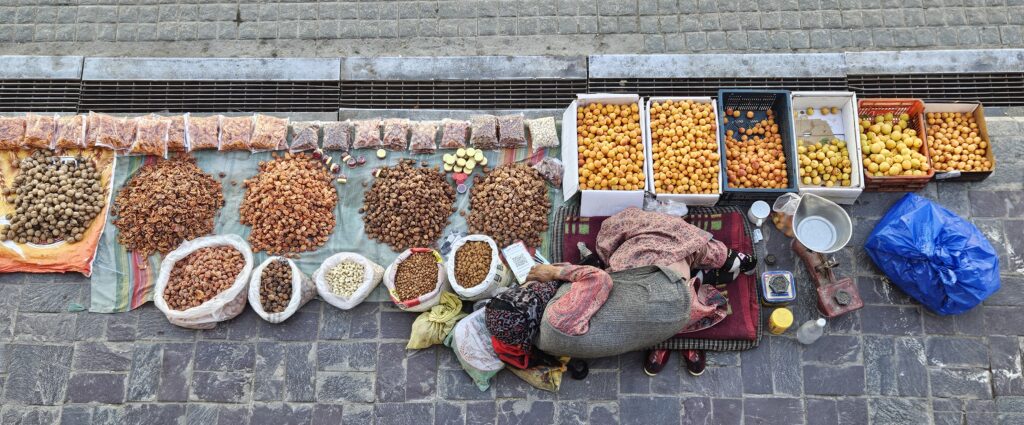
    Catching 40 winks in between the 400 bucks !! We, enjoyed the fresh and organic apricots !

    Day 7: Leh – Chang La – Pangong Tso

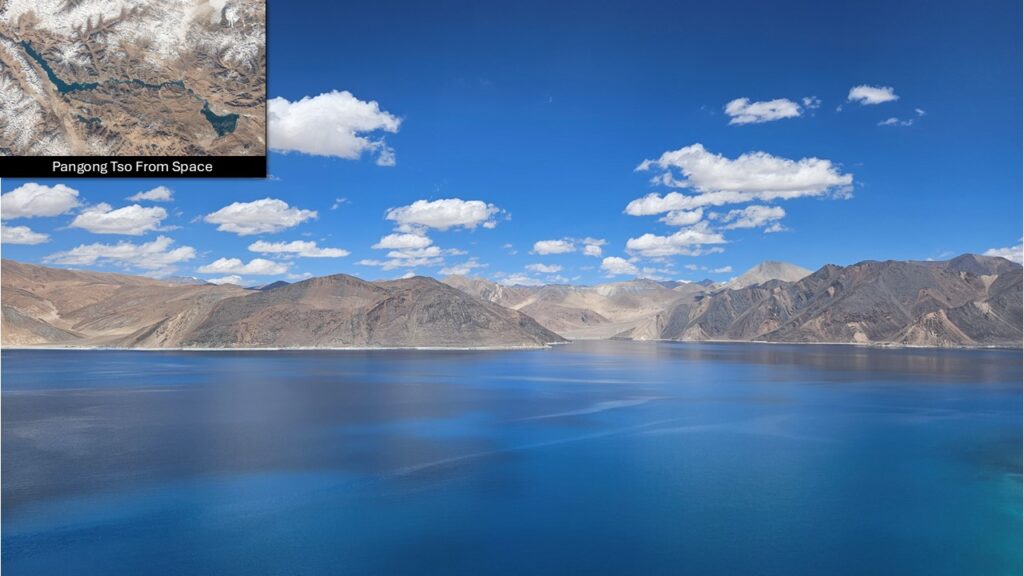
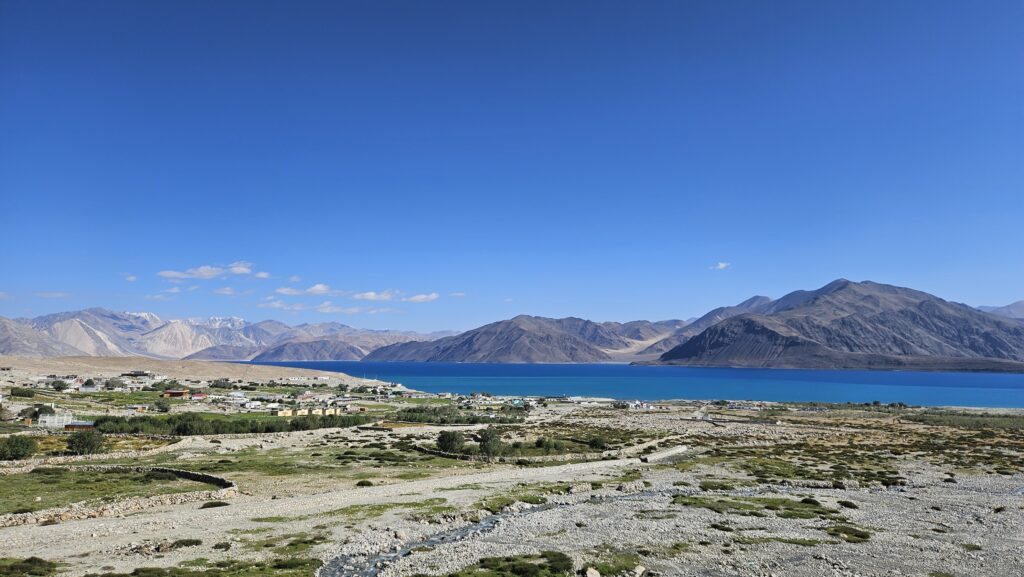
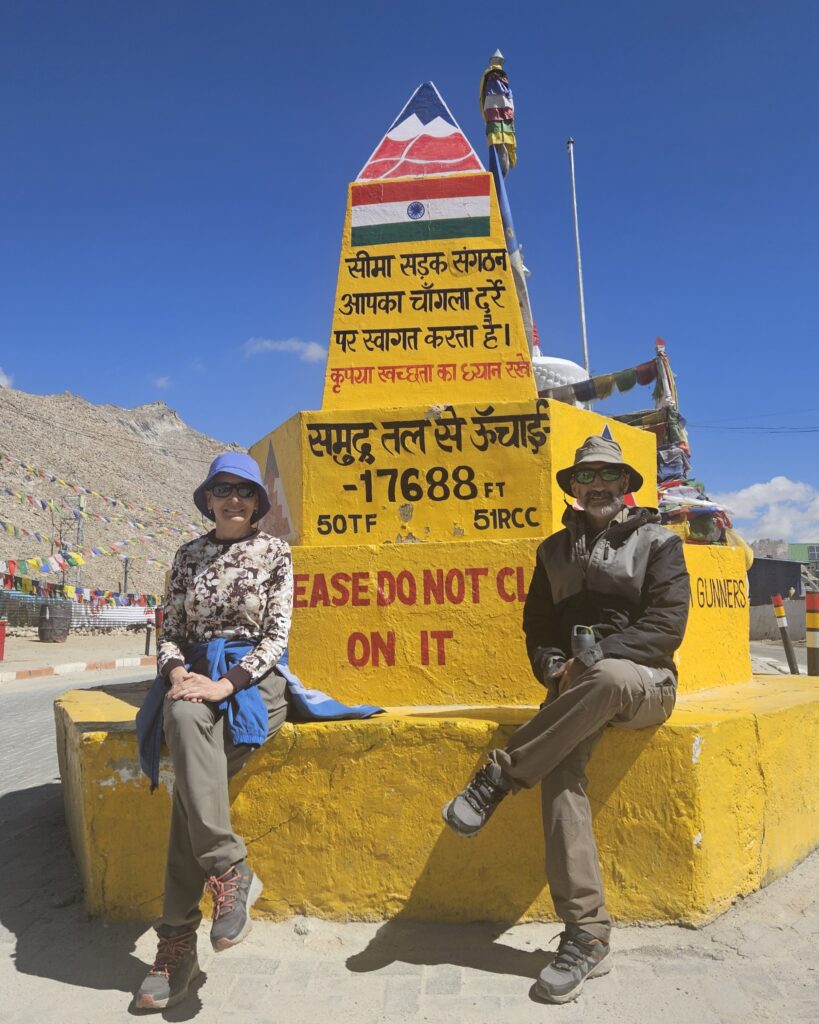
    We headed out to the most iconic lakes in the are i.e., Pangong Tso and we were to go through Chang La, which is the third highest motorable pass at 17,688 feet.
    Pangong Tso at an elevation of 4,225 m. It is 134 km (83 mi) long. Approximately 50% of the length of the overall lake lies within Tibet administered by China, 40% in Indian-administered Ladakh, and the remaining 10% is disputed and is a de-facto buffer zone between India and China. (Source – Wikipedia)

    Day 7: Pangong Tso to Hanle

    The route goes along mostly dirt track on the banks of Pansong Tso and then via Chushul village – a site of historical importance from the 1962 war between India and China.

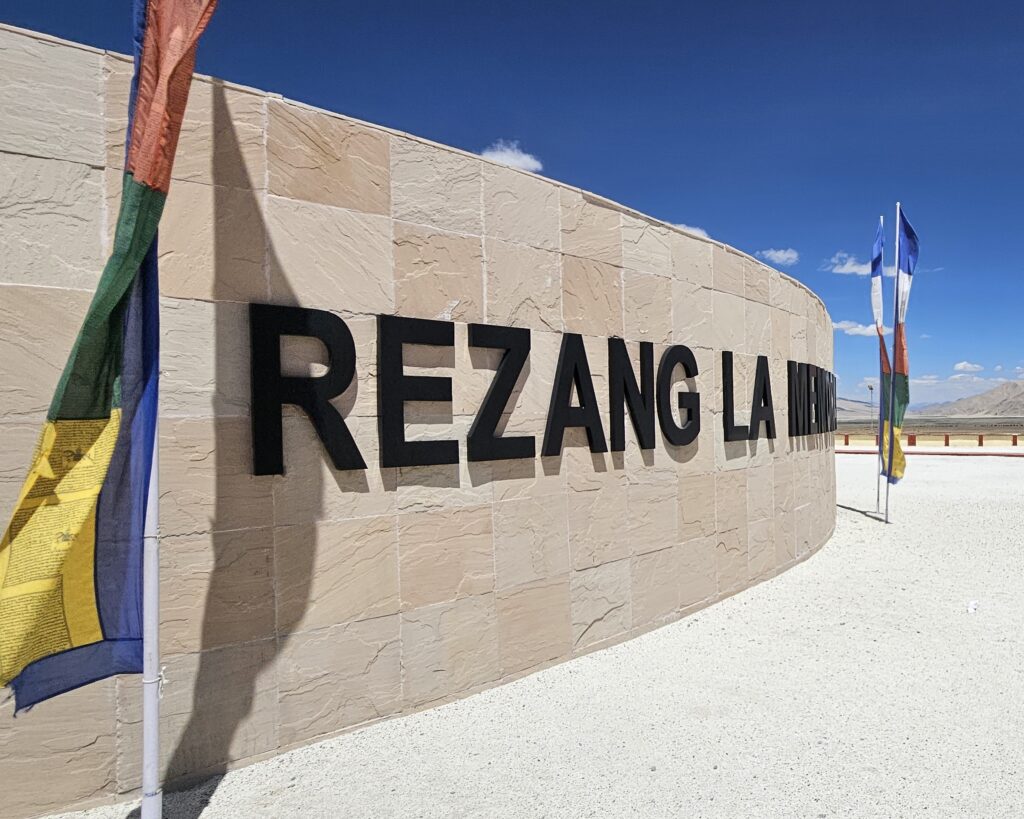
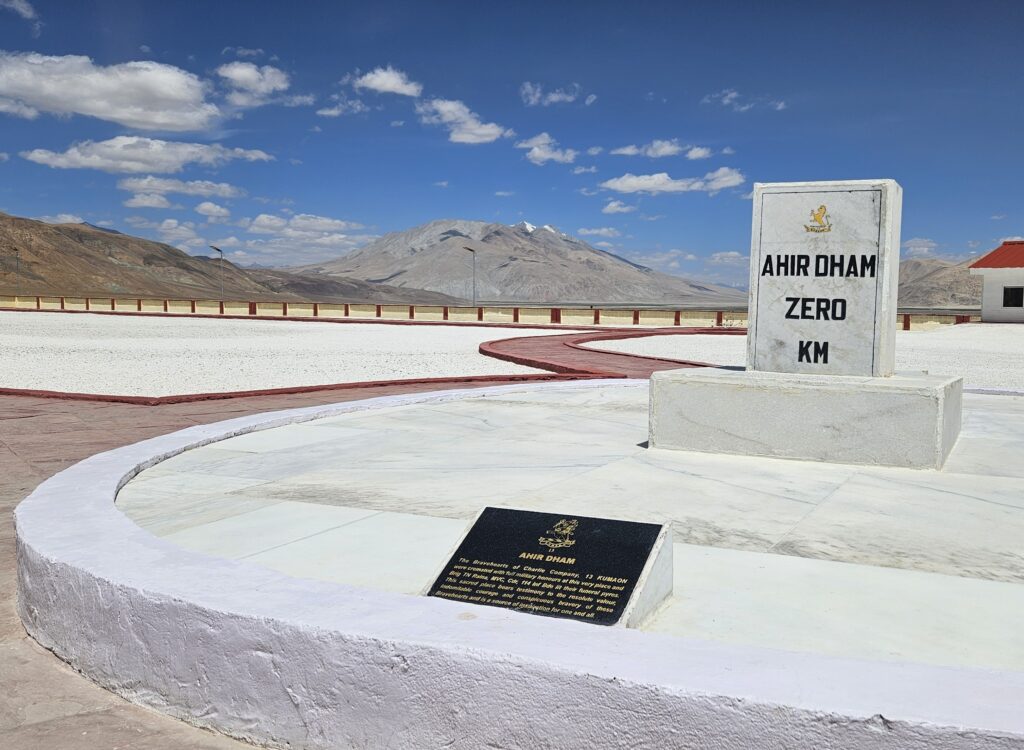
    It was a privilege to be able to visit the War Memorial for Rezang La in the Chushul Valley. The Memorial honours the 114 Indian soldiers of the ‘C’ Company (a.k.a. Ahir Company) of 13th Kumaon who died defending their position while inflicting 1300 casualties on the Chinese.
    After crossing Chushul, one reached Dungti area, where the Indus river takes a westerly turn and heads along the valley to Leh. It is here that the road diverges along the Hanle river valley towards the Hanle village.

    Days 8, 9 & 10: In and Around Hanle

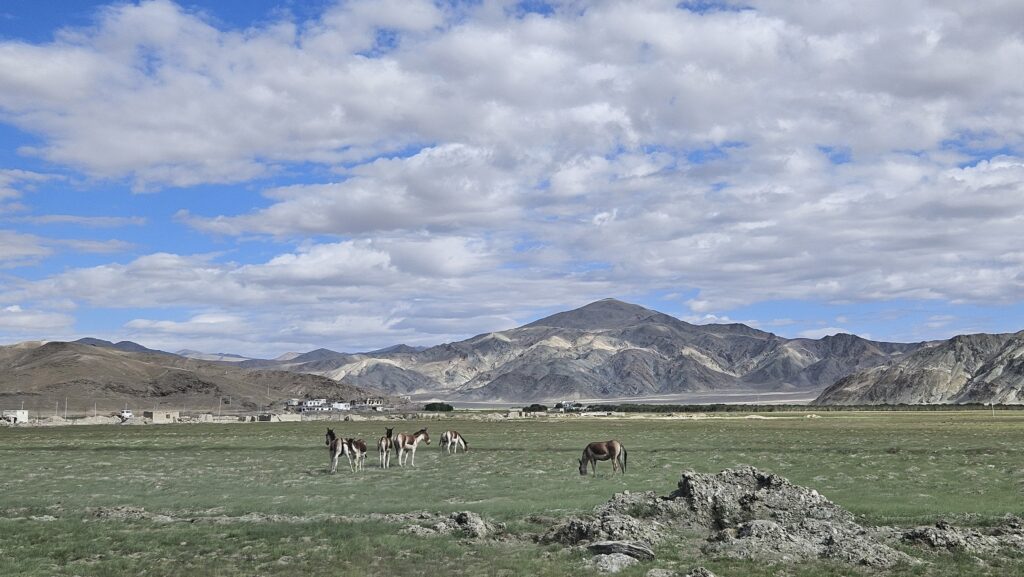
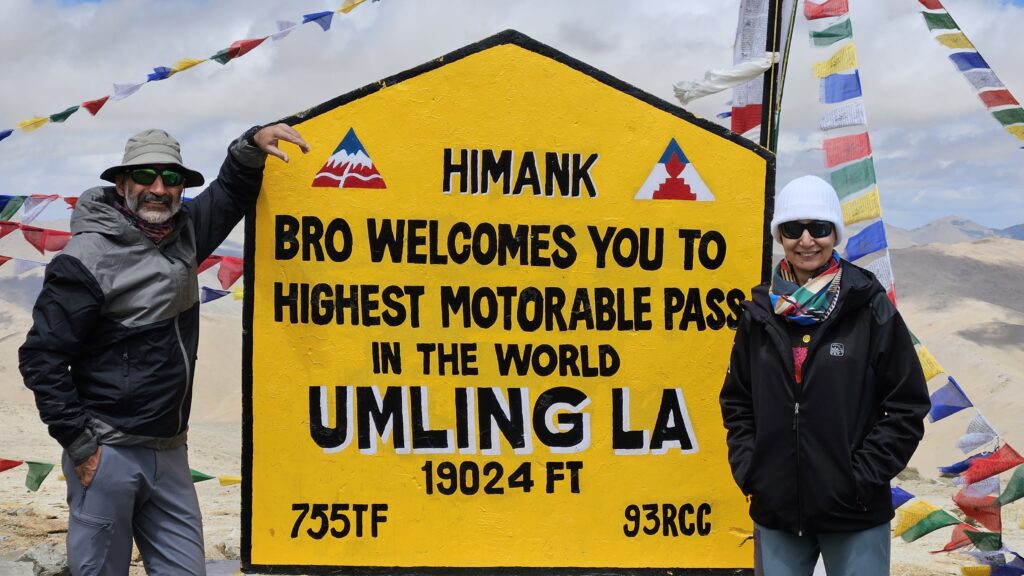
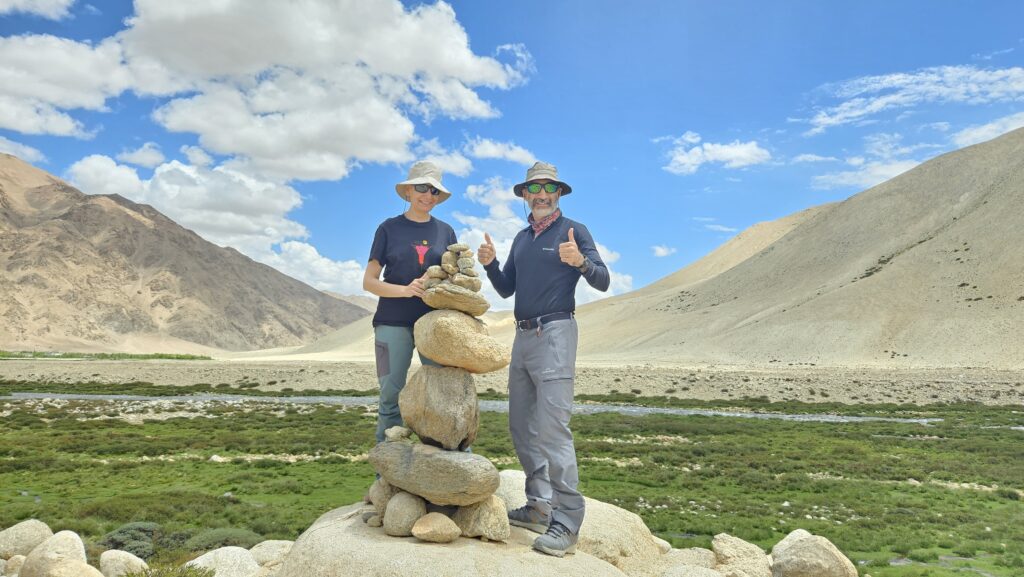
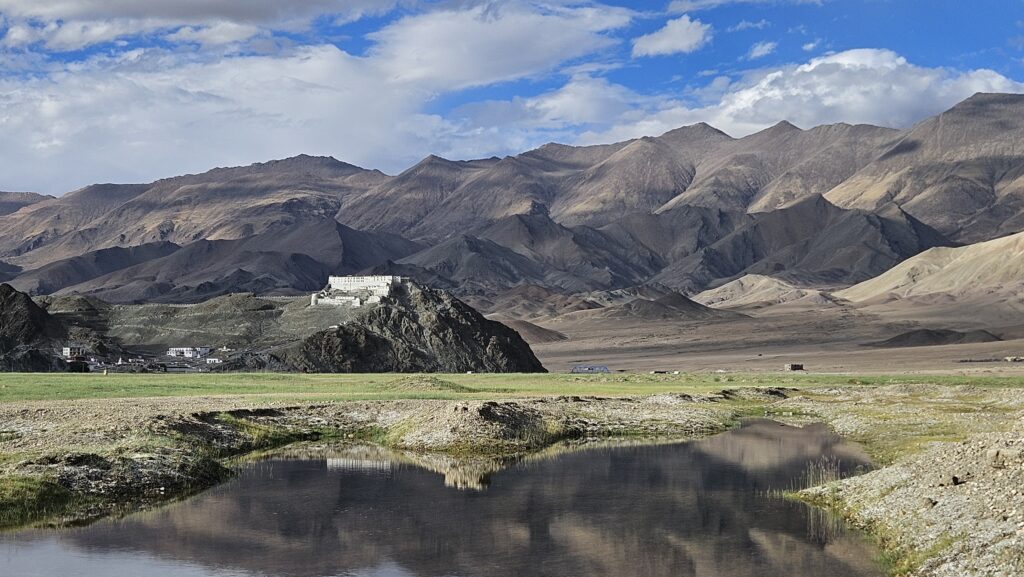
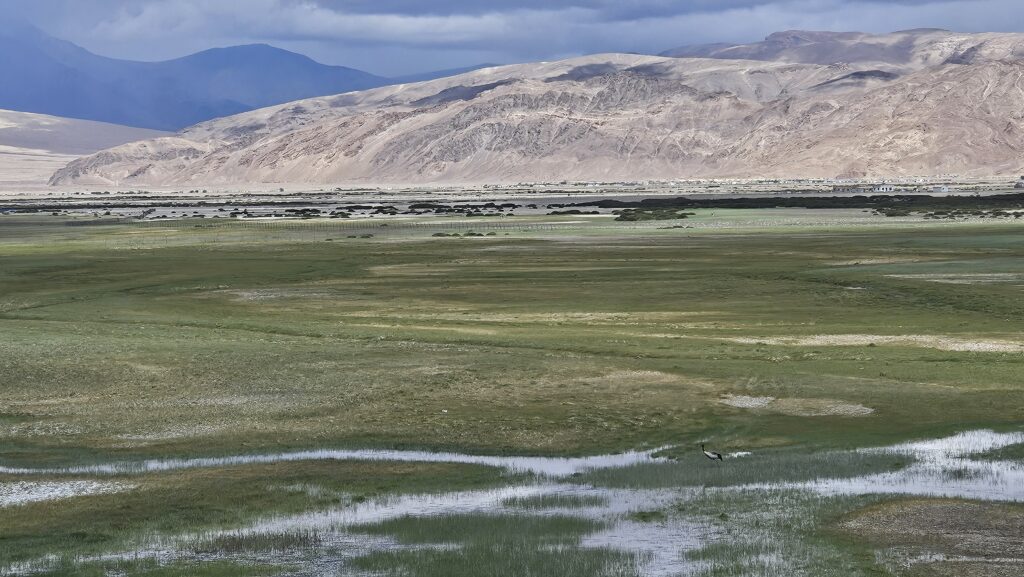
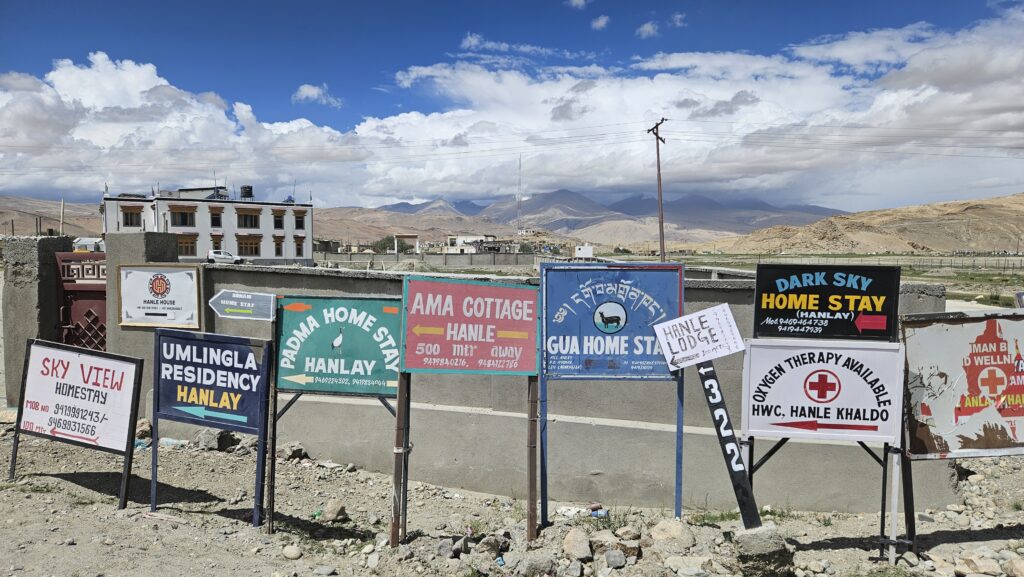
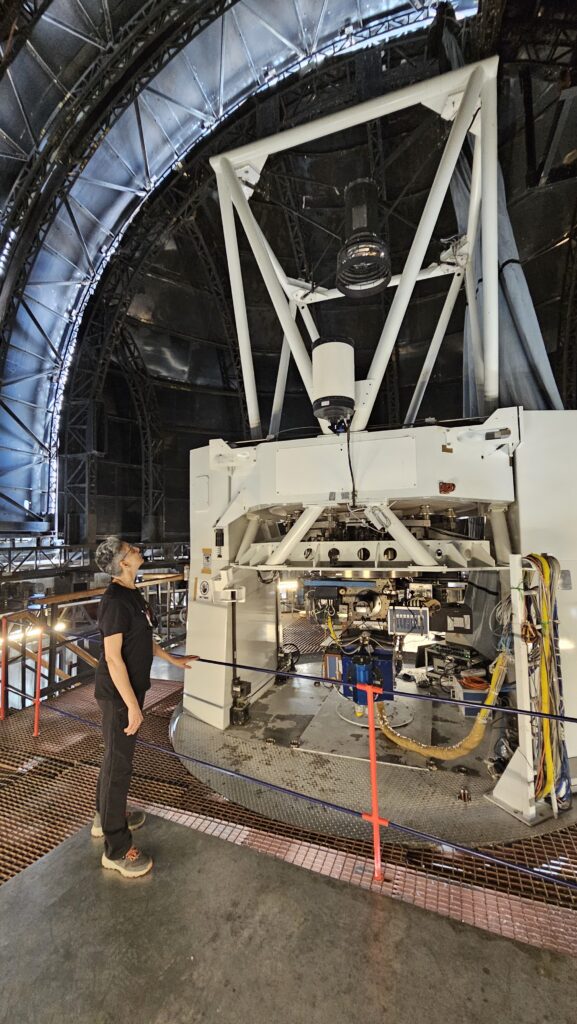
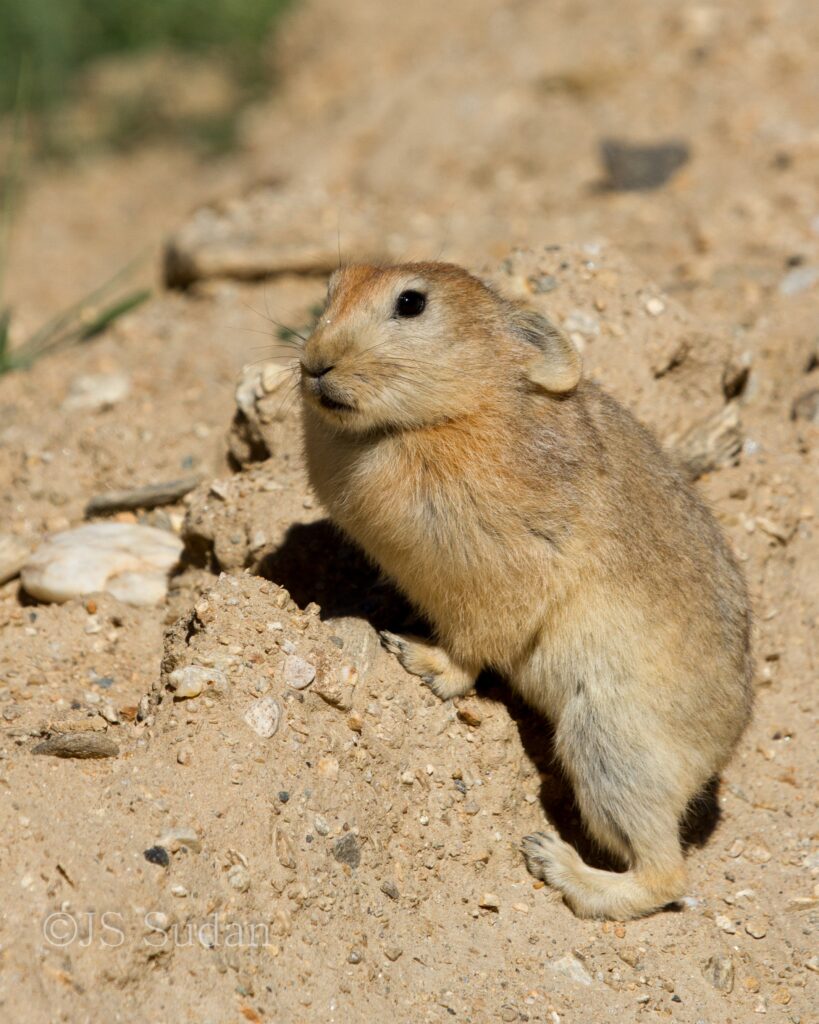
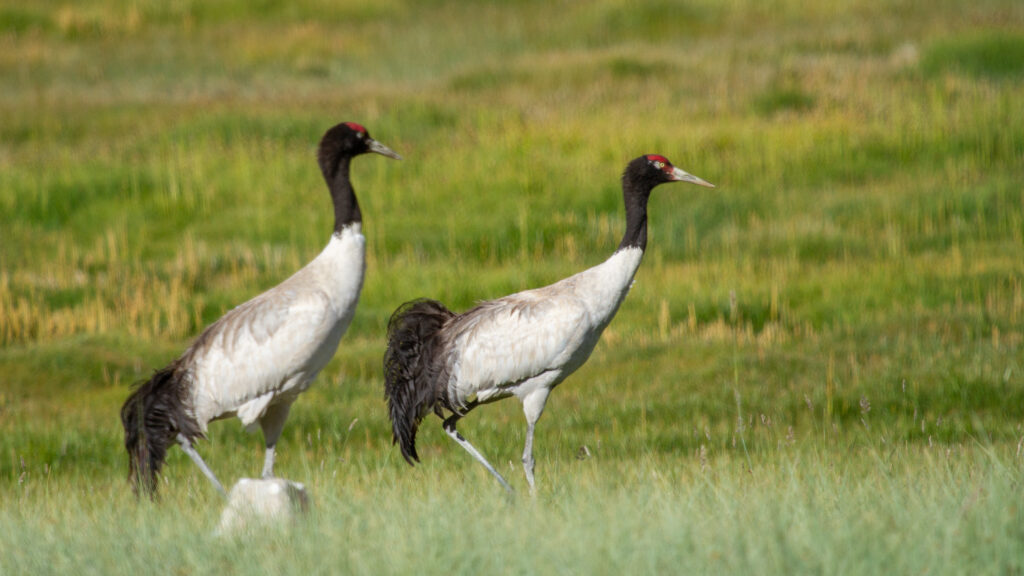
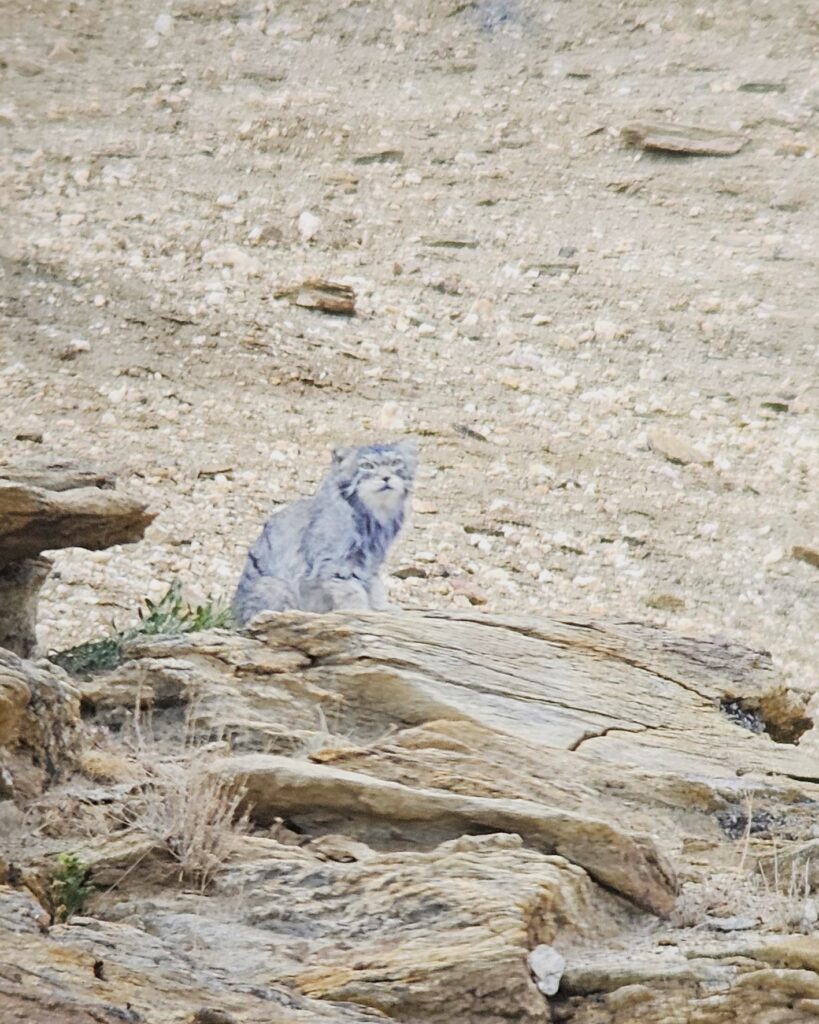
    Hanle, which was once known only for the Indian Astronomical Observatory (IAO), is now fast gaining popularity amongst tourists for diverse reasons like sighting of specific wildlife like Pallas’s cats, black necked cranes (BNCs), wild Kiangs and as a base for travelling to Umling La – the highest motorable pass at staggering 19,024 feet with a possibility to further visit Demchok, which is the last village right at the border between India and China where, Indus river enters Indian territory.

    With so much to do, we had planned to stay at Hanle for three nights and we managed to see all that is mentioned above. Here are a few glimpses.
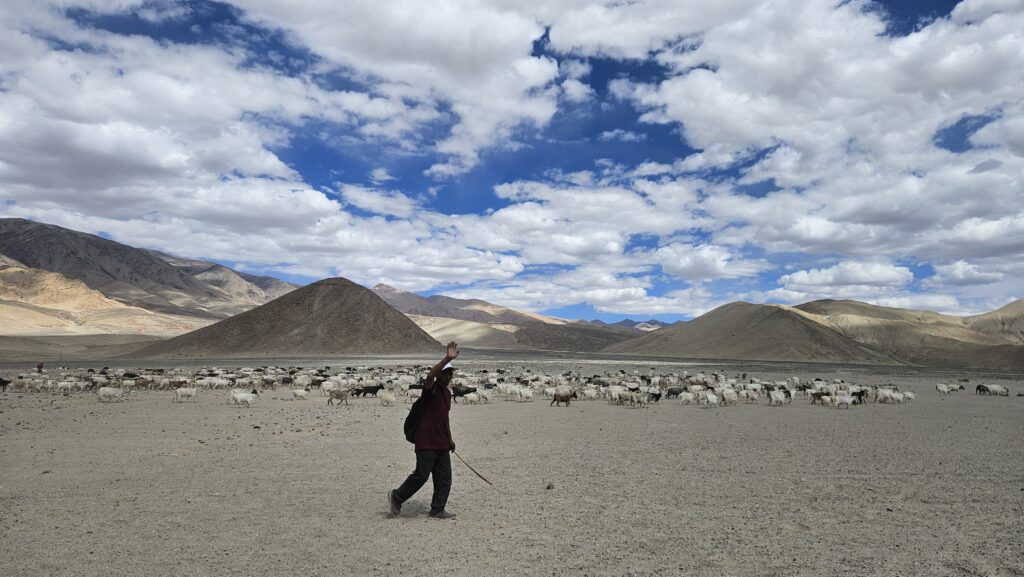
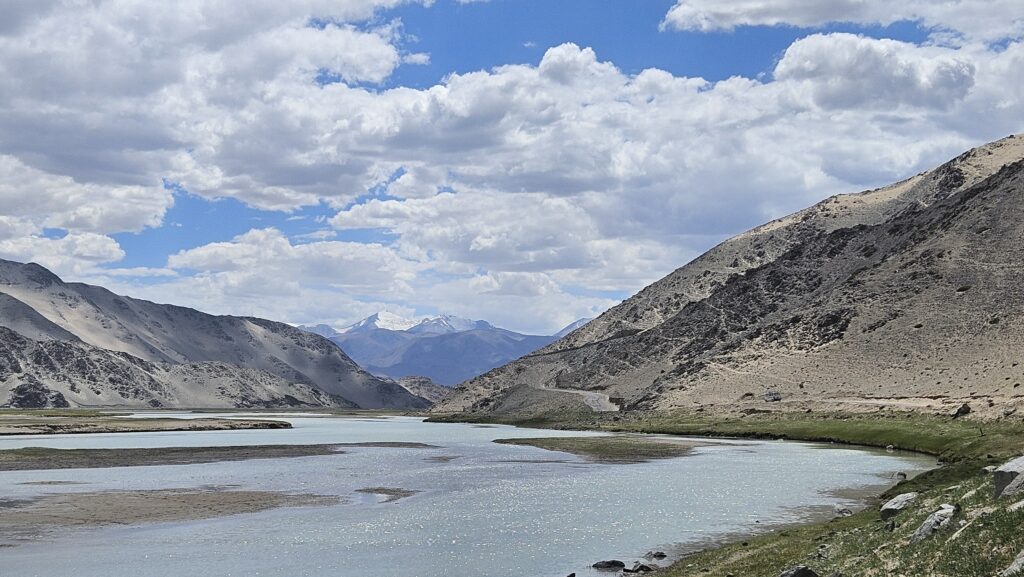
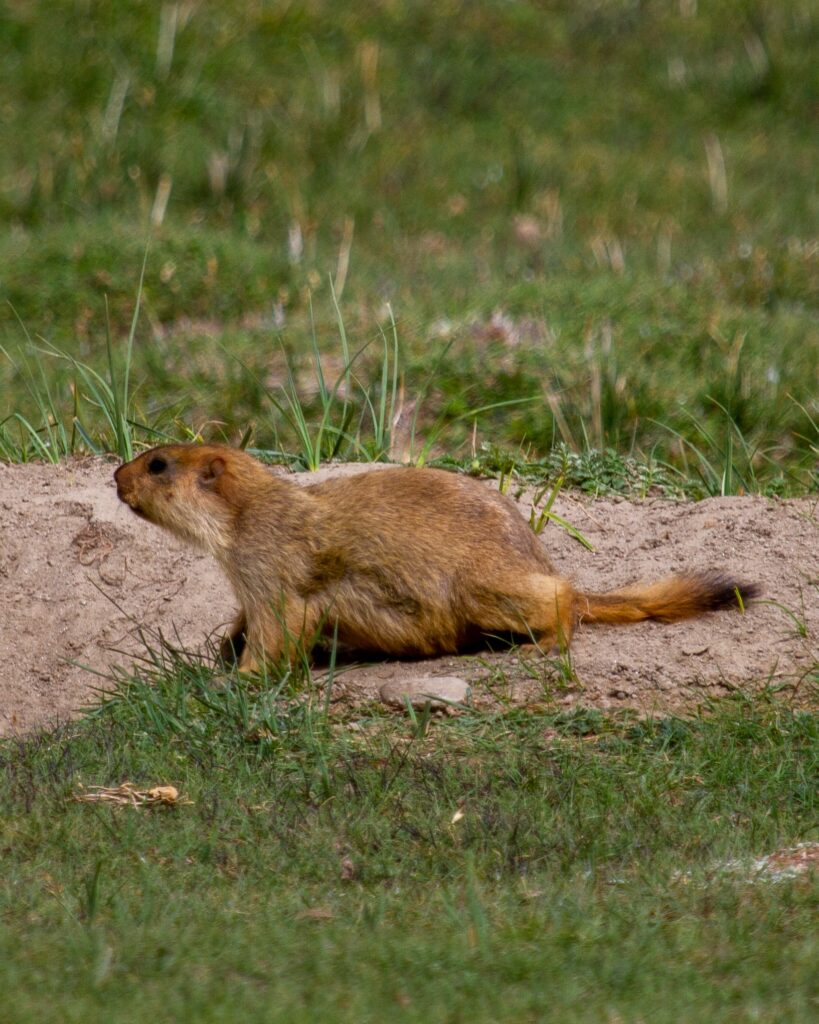
    Now a little bit of special residents of Hanley valley.
    A pair of Black Necked Cranes

    Day 11 & 12: Hanle – Tso Moriri

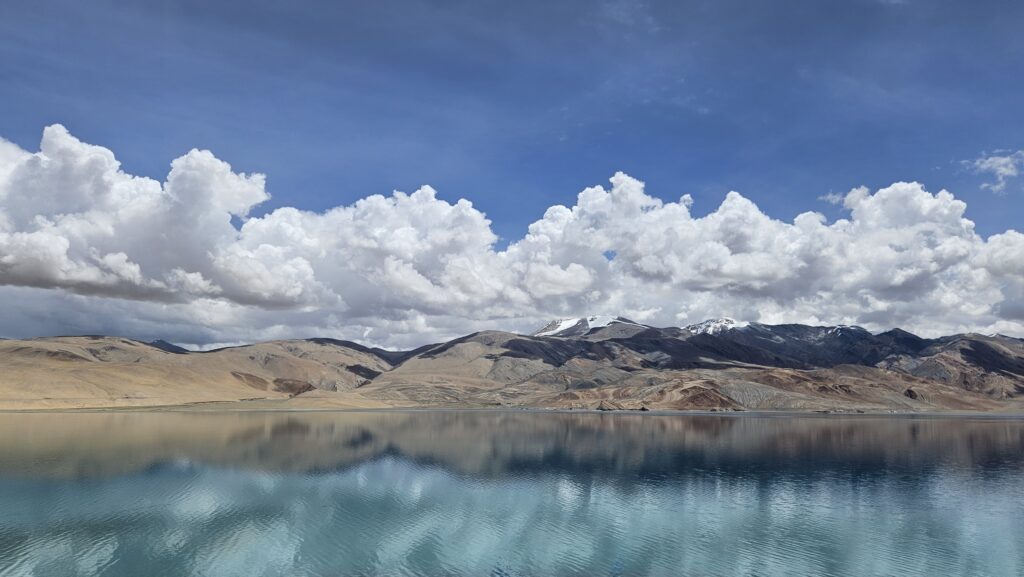
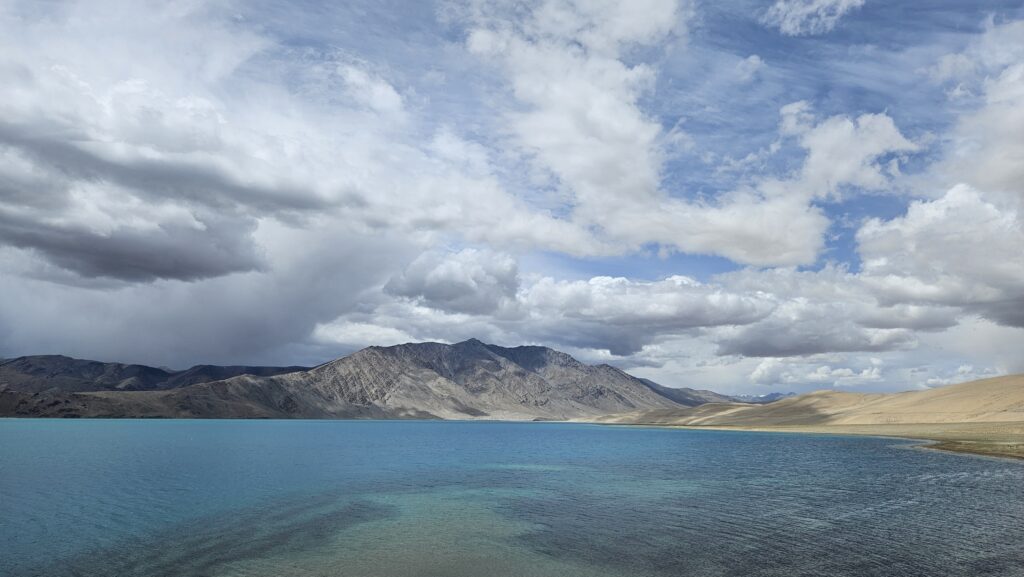
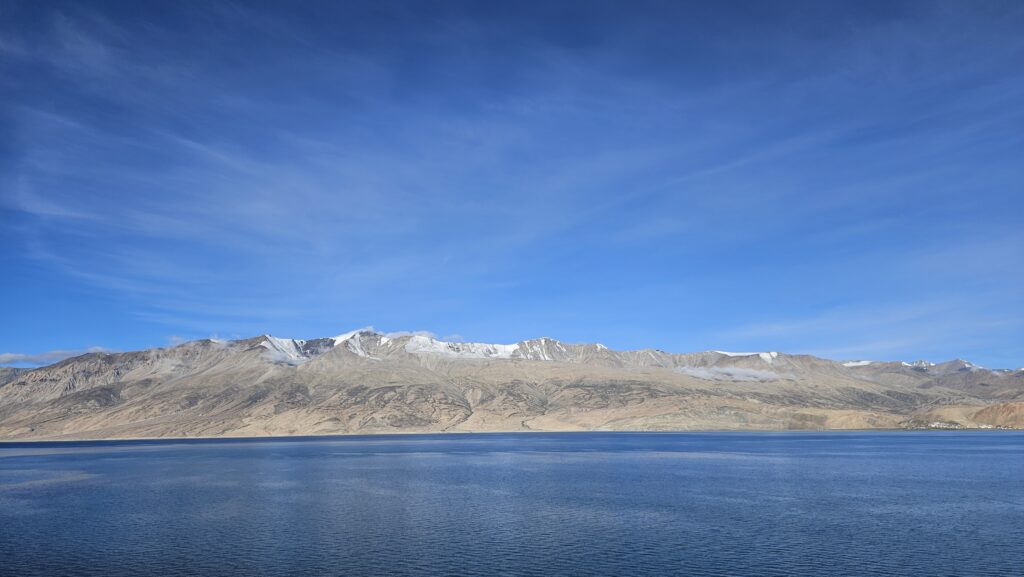
    Tso Moriri is the second largest lake in the region and some claim it to be more beautiful than Pangong Tso. To my mind, both are exquisite and unmatched in their ever changing hues aided by the clouds. It was a great coincident to discover that one of our closest friends were also travelling on the same road to Tso Moriri. What an opportunity to meet after more than 8 years and exchange notes while skipping stones in the lakes enroute.
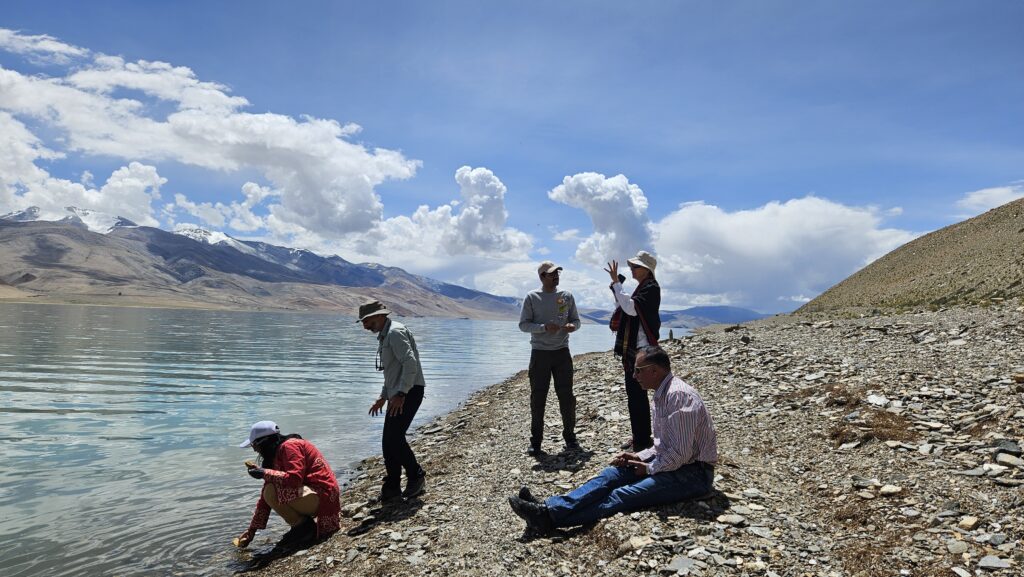
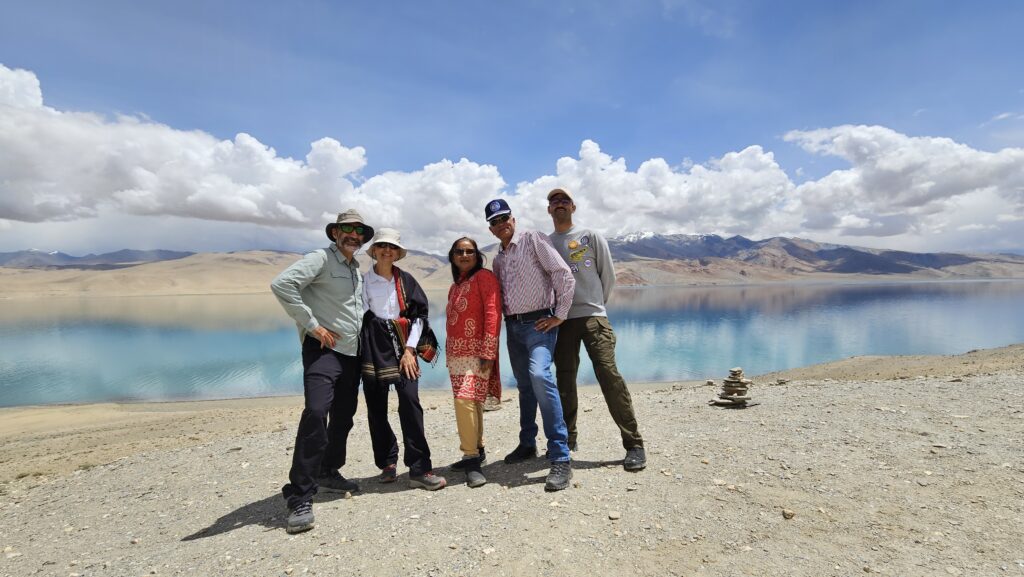
    Lake Tso Moriri is a brackish water lake in the Changtha.ng Plateau (literally: northern plains) at an altitude of 4,522 m (14,836 ft). It is about 26 km in length and 3 to 5 km wide. Accessibility to the lake is largely limited to summer season.
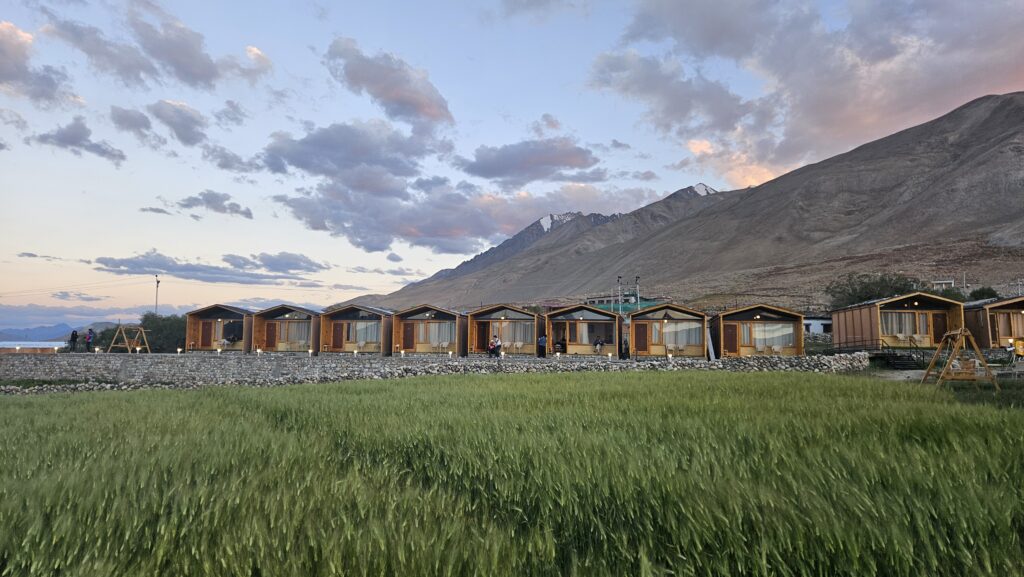
    Though, village Karzok on the northwest shore has many options (Guesthouses) to stay.

    Day 13 : Tso Moriri to Leh

    After two quiet days in Tso Moriri, we set out to return to Leh via Tso Kar. Tso Kar was once famous for the sighting of Black Necked Cranes which used to breed in good numbers around this unique lake with large salt pans and wetland patches. The number of pairs have declined in last two decades to just about one or two pairs. We did not see any while crossing this time and even the locals did not have much to say.

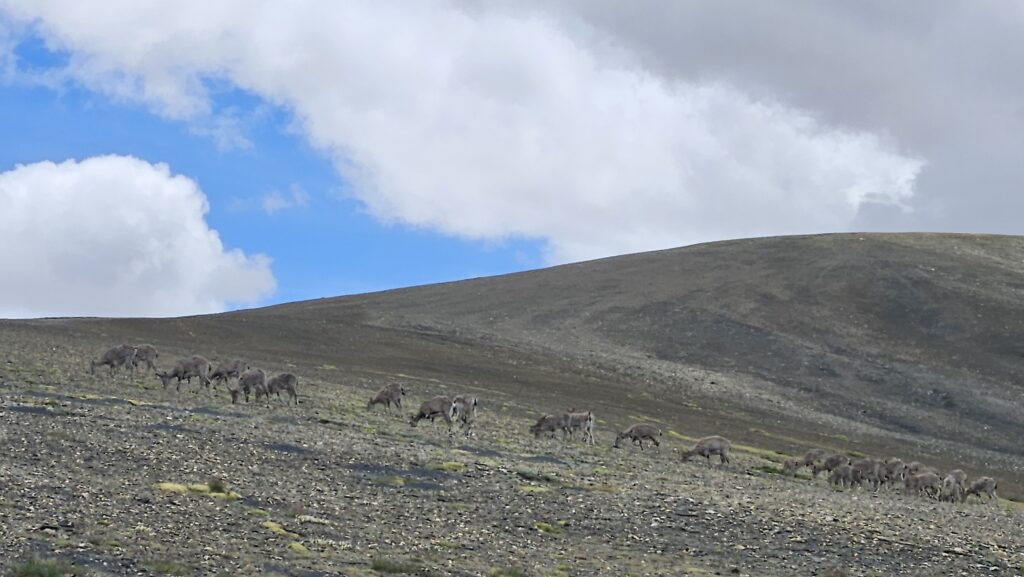
    We crossed many valleys and passes again and were super-stoked to see a huge heard of Blue Sheep grazing next to the road near Tanglang La.
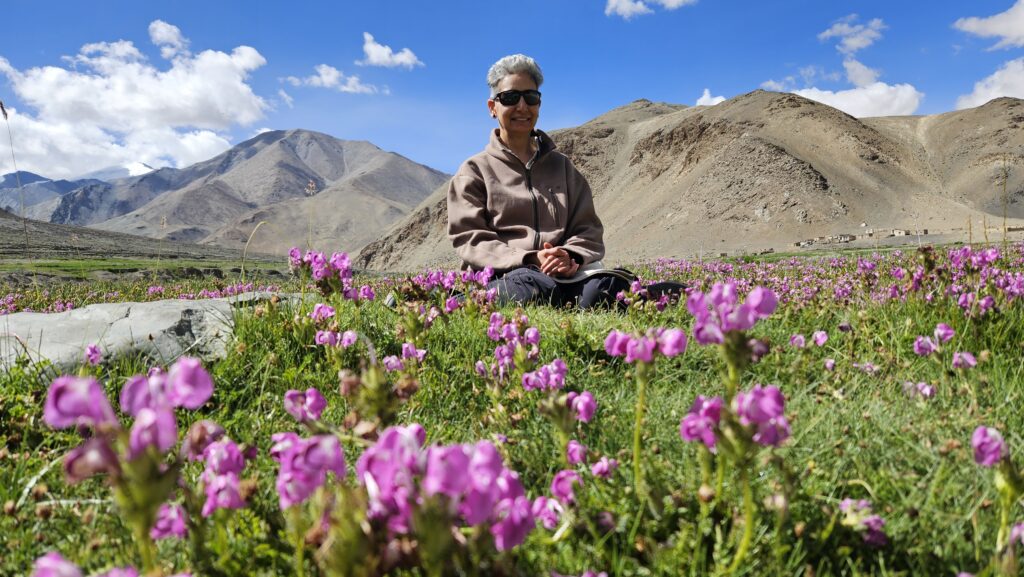
    At Leh, we had the privilege of meeting with a lovely couple Dr. Raghu S Chundawat and Joanna Van Gruisen over lunch organised by Mr. Wangchuk.

    Dr. Chundawat is a conservation biologist whose main areas of research have been snow leopards and tigers. His pioneering ten-year research on tigers took place in the Panna Tiger Reserve and has been documented in the BBC Natural World documentary, Tigers of the Emerald Forest. His book on the tigers of Panna – The Rise and Fall of the Emerald Tigers is seminal work in tiger conservation. As on date they manage a unique lodge ‘The Sarai at Torai‘ near Panna Tiger Reserve, Madhya Pradesh.

    Listening to the interesting and inspiring anecdotes, challenges and success stories from all three stalwarts of wildlife excursions and research over snow leopards and tigers, I think was the best way to culminate of a beautiful 12 days trip in this mesmerizing land.
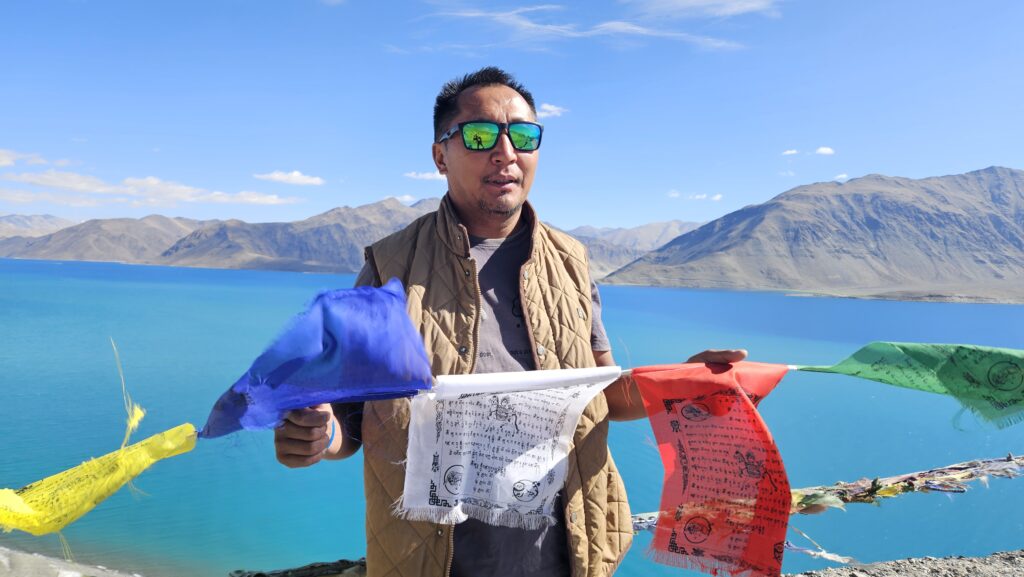
    Day 14 : Leh to Jammu

    31 July, saw us pack our bags full of great memories and bid farewell to the lovely staff and Mr. Wangchuk at Hotel Ladakh Residency and head to the airport with our local chauffeur, friend and guide for last 12 days, Mr. Nurbu. We are grateful to his commitment and ever cheerful disposition which made the trip even more enjoyable and comfortable.

    I am sure that these mountains and lovely people will beckon us for another visit, the only question is ‘when?’.

    “We travel not to escape life, but for life not to escape us.” – Anonymous

  • My Golden Cousins

    My Golden Cousins

    “If you go to a desert, you will hear this mysterious voice: Be wise, protect your forests!”
    ― Mehmet Murat ildan

    The Golden monkeys are special as they are found in a restricted range of area; within the Virunga mountains spread across DR Congo (Eastern part), Uganda and Rwanda. Within these mountain ranges and the rainforests found therein, the golden monkeys are choosey of their habitat of bamboo forests, making their footprint narrower. Selected pockets of original bamboo forests remain their last refuge and the pressure of human presence and encroachment is ever increasing.

    Curious yet Cautious – A good strategy to deal with humans

    As per a ranger guide from the Volcanoes National Park in Rwanda, about (only,) 3000 golden monkeys live in the wild, where wild means four national parks i.e., the Virunga National Park in DR Congo (closed as on date, due to ongoing conflicts in Eastern DRC), the Volcanoes National Park in Rwanda, Bwindi and the Mgahinga National Parks in Uganda.

    A stroke of good luck brought me closer to the Volcanoes National Park and I could see the golden monkeys in their natural habitat.

    An adult male golden monkey with a freshly dug potato. It will clean it and peel it before chewing on it. Though their primary diet remains to be fresh bamboo leaves and shoots, they do indulge in searching for food in nearby crop fields. Like in this case, a troop of golden monkeys visited a nearby field of potatoes which had been harvested and found some leftovers.

    The Volcanoes National Park (VNP) Headquarters are located in a small town called Kinigi, near Musenza (former Ruhengeri). The place is very well organised and appointed with extremely efficient staff and rangers. Facilities including the coffee is outstanding.

    They offer three main activities: the Gorilla trek, Golden Monkey trek and a trek to mount Bisoke (mount Bisoke has a crater lake at the top). Golden monkeys trip costs USD 100/- per person (and a RT-PCR Covid test to be taken before hand). For golden monkeys, it was easy to get the permit directly at the VNP HQ, however, for gorillas, one should book beforehand as the number of permits is limited which sell off pretty quickly.

    For a better orientation, see the map of the region with insets providing a glimpse of the important points

    Golden monkey trek commences through a village about 4 km from the VNP HQ and then enters into a bamboo forest. Since, I visited during the rainy season, the forest floor was wet and full of mud slush. Protecting one’s shoes is a futile exercise and a waste of time. Many lodges in the area offer an after trek clean up of shoes (a service included in your stay). Weather wise, it gets pretty cold and chilly even during the day, especially when it rains. For the trek, a rain jacket is a must along with adequate rain covers for your camera gear / phones / passports etc, because one could end up walking for an hour in the rain without any shelter. Remember, we are in the ‘rain-forest’.

    The vegetation seen here is indicative of the rich rainfall the region receives. Of course, this is the natural habitat of the beautiful Golden Monkey.

    Golden monkeys live in large troops, primarily managed by females, who remain in a general area of their choosing, owing to the availability of food. Males on the other hand roam about in a wider range and join the troop twice a year during mating season. The gestation period for a baby to be born is five months. These golden cousins of ours live upto 20 to 25 years.

    A young golden monkey – see the relative size of bamboo (2 inches diameter) and its tiny hands. This was the smallest of all babies I saw.

    These unique primates are creatures of habit, where they normally adhere to the same area and spots in the bamboo clumps for sleeping. This makes the golden monkeys territorial animals, especially the females. Hence, easy to find and in a more comfortable trek compared to trek for gorillas.

    Another Curious Young One with its Mom
    The monkeys left their usual habitat behind and came into the open agricultural land of the adjacent village. It is an easy meal to find some potatoes in already harvested field.

    An interesting fact, which highlights the significance of Golden Monkeys – you can also find them on the reverse side of Rwanda 1000 Francs bill.

    An interesting fact, which highlights the significance of Golden Monkeys –
    you can also find them on the Rwanda 1000 Francs bill.
    Mount Sabyinyo (3645 m high) – one of the five volcanic nounts found in the Virunga Massif. The views in Kinigi are breathtaking and everchanging
    A young male sitting pretty on his couch !!

    Small, characteristic and beautiful, the golden monkeys are surely, one of the most adorable primates that I have come across. Each individual seem to be comfortable in its skin and yet they also adhere to group dynamics. On one occasion, I heard a big call from the lead female and the entire group of about 40-50 monkeys, just left the open field and melted into the bamboo forest – maybe the leader had sensed some danger and warned the entire group to move back to the forest cover.

    Will I go again to see these lesser cousins (compared to the Gorillas) – yes, of-course, any day. A dwindling habitat and ever increasing human pressures have already debilitated the population of these wonderful primates. I hope that we do a better job of conserving these old world creatures in keeping them safe and thriving in the wild.

    “When you realise the value of all life, you dwell less on what is past and concentrate on the preservation of the future.” – Diane Fossey.

  • Lions

    Lions

    There is no Wi-Fi in the forest, but you will find a better connection. – Anon

    Lions need no introduction. We all admire them, atleast most of us do. Observing them in their natural habitat can transcend into timelessness. You snap back into reality only when, either your camera battery or memory card runs out.

    Compiled below are some shots which capture different times, moods and actions of these magnificent big cats.

    What is more impressive – the stare or the Hair ?
    I got more flies than you !
    The mom who survived !
    In synch !
    Caught in the act !
    Oh ! It is better to leave this guy alone !
    Danger lurks behind every blade of grass in the Savanna !
    As if she heard my whisper – ‘Please Turn’ !
    The morning chill – frozen breath !
    Alert at 7.00 AM !
    Casual at 7.00 AM !
    Majestic
    What goes there … !
    ‘I want that’ look.
    360 Degrees Surveillance
    Whose that ?
    The two lionesses looking in the direction of a male lion who was trying to locate them.
    … here comes the robber of the meal !
    Hunger Games !
    The male claimed the kill and pushed out two sisters, who went on to groom each other.
    He wanted to go too, but the safari agent was not sure, if he could pilot the balloon alone !
    A mom overseeing the cubs play in the sand bed down below.
    I definitely do NOT want to be on the other side of that stare !!
    In action – poised !
    The early morning train !
    Mom, aunts and cousins !!
    The future !
    The Rebellion
    The Crime partners
    A force to reckon with
    Skin in the Game

    Let me finish with brief yet befitting poem on these wonder beasts penned by William Morris:

    “The Beasts that be
    In wood and waste,
    Now sit and see,
    Nor ride nor haste.
    “

  • Best of 2021

    Best of 2021

    • “God creates the beauty. My camera and I are a witness.”
      – Mark Denman

    This is a compilation of some of the best sightings from 2021. These may not be the best pictures, but serve as a record of moments spent somewhere in harmony with the nature.

    “On Earth, there is no heaven, but there are pieces of it.” – Jules Renard

  • Kidepo Valley National Park, Uganda

    Kidepo Valley National Park, Uganda

    “The Wilderness holds answers to the questions we have not yet learnt to ask”

    – Anonymous

    Were we saving the best national park of Uganda for the last or was it the sheer remoteness which kept dissuading us from planning a trip to Kidepo earlier ? Whatever might be the answer, I am glad we finally decided to head to the this remote gem of a place tucked in the North Eastern corner of Uganda.

    The valley surrounded by low lying peaks and vast undulating savannah plains make a picturesque setting for a quiet yet intriguing holiday. Kidepo, by virtue of being remote is less commercial and not yet spoilt in the name of development and exploration of oils or minerals. It boasts of all important species of mammals except the rhinos.

    Kidepo story would be incomplete without the landscape and the Apoka Lodge. Here are some snaps clicked with a mobile phone.

    Worth mentioning that Kidepo is the only national park / reserve in Uganda which boasts of having all the big four (no rhinos) and many other mammal species and some endemic birds. It is definitely most scenic of all parks / reserves in Uganda. The remoteness adds to the charm. I hope we retain some such places – forever. The poem ‘Wilderness’ by Ian McCallum says it all…

    Have we forgotten
    that wilderness is not a place,
    but a pattern of soul
    where every tree, every bird and beast
    is a soul maker?

    Have we forgotten
    that wilderness is not a place
    but a moving feast of stars,
    footprints, scales and beginnings?

    Since when
    did we become afraid of the night
    and that only the bright stars count?
    or that our moon is not a moon
    unless it is full?

    By whose command
    were the animals
    through groping fingers,
    one for each hand,
    reduced to the big and little five?

    Have we forgotten
    that every creature is within us
    carried by tides
    of earthly blood
    and that we named them?

    Have we forgotten
    that wilderness is not a place,
    but a season
    and that we are in its
    final hour?

    I have no doubts that the wild matters ! What say you ?

  • Murchison Falls National Park, Uganda

    Murchison Falls National Park, Uganda

    “The Earth does not belong to us, we belong to the Earth” – Chief Seattle

    Murchison Falls National Park lies at the northern end of the Albertine Rift Valley, where the sweeping Bunyoro escarpment tumbles into vast, palm-dotted savanna. First gazetted as a game reserve in 1926, it is Uganda’s largest and oldest conservation area, hosting 76 species of mammals and 451 birds.

    The northern section of the park contains savanna and borassus palms, acacia trees and riverine woodland. The south is dominated by woodland and forest patches.

    The mighty cascade drains the last of the river’s energy, transforming it into a broad, placid stream that flows quietly across the rift valley floor into Lake Albert. This stretch of river provides one of Uganda’s most remarkable wildlife spectacles. Regular visitors to the riverbanks include elephants, giraffes and buffaloes; while hippos, Nile crocodiles and aquatic birds are permanent residents.

    The savanna-dwelling patas monkey is only found here and in Kidepo Valley National Park.

    Murchison Falls national reserve was definitely a great place to visit with herds of wild animals still moving about freely. However, one can see the roads and tracks being built and cutting across the paths of these gentle creatures, who know nothing of human compulsions. I only hope the traffic remains within limits and there is enough for the man and the animals to survive together.

    Lets persevere and preserve whatever little is left of our planet !!

  • Mountain Gorillas : Meeting the King Kong

    Mountain Gorillas : Meeting the King Kong

    “The clearest way to the Universe is through the forest wilderness.“
    – John Muir (also known as “John of the Mountains” and “Father of the National Parks”)

    Till about a few years ago, I could only dream of seeing a Mountain Gorilla in the wild. I was contend watching documentaries on the Nat Geo or Animal Planet and be inspired by the likes of Sir David Attenborough. However, I have been lucky to have landed in the lands of mountain gorillas – East Africa and Uganda to be precise.

    Uganda boasts of hosting (protecting) about 50% of the worlds surviving mountain gorillas. There are multiple areas where tourists can visit these primates in their natural habitat. One of the first questions which comes to mind – is it not dangerous? Well, there is an elaborate system of ensuring the safety of these animals in the wild as well as that of the tourists. Without going into too many details, these gorillas, while still in the wild, have been habituated to human presence. Since they inhabit dense rainforests, it is an exhilarating experience overall.

    The mountain gorilla (Gorilla beringei beringei) is one of the two subspecies of the eastern gorilla (Gorilla beringei). The total population is estimated to be about 1000. A major portion of the population lives in Uganda’s Bwindi Impenetrable National Park, and the balance live in the Virunga Forests which spread in three adjacent national parks (across three countries) i.e., Uganda’s Mgahinga Gorilla National Park, Rwanda’s Volcanoes National Park, and Virunga National Park in the Democratic Republic of Congo.

    I decided to visit the Bwindi Impenetrable Forest, in the SW Uganda, which is about 425 km (by road) from Entebbe. Below are some snapshot of my meeting with the Gorillas.

    In Uganda, there are about 18 family groups of Gorillas which have been habituated – a two years process, in which Gorillas are gradually exposed to human presence in their environment. As such, gorillas are gentle by nature. Once the families are habituated, no more than 8 tourists are allowed to visit them for more than an hour.

    A word about the taxonomy of mountain gorillas. It was not until 1967 that the taxonomist Colin Groves proposed that all gorillas be regarded as one species (Gorilla gorilla) with three subspecies Gorilla gorilla gorilla (western lowland gorilla), Gorilla gorilla graueri (lowland gorillas found west of the Virungas) and Gorilla gorilla beringei (mountain gorillas, including Gorilla beringei, found in the Virungas and Bwindi). In 2003, after a review, they were divided into two species (Gorilla gorilla and Gorilla beringei) by The World Conservation Union (IUCN). Hence, the mountain gorillas are gorilla beringei. They have thicker hair cover to protect them from cold and incessant rains in their habitat.

    Now you know ‘where’ and ‘how’ to visit the mountain gorillas. The only question that remains to be answered / planned for is ‘When ?’. When are you visiting the King Kong and his family ?

    Happy thinking !!

    PS – Some important links to read up more on gorillas:-

    https://en.wikipedia.org/wiki/Mountain_gorilla

    https://www.nationalgeographic.com/adventure/article/reasons-trek-see-mountain-gorillas-uganda

    https://www.ugandawildlife.org/wildlife-a-conservation/conservation/wildlife-directory/mountain-gorilla

    https://en.unesco.org/courier/news-views-online/uganda-mountain-gorillas-shielded-threats

  • Queen Elizabeth National Park, Uganda

    Queen Elizabeth National Park, Uganda

    “I encourage everybody to hop onto Google and type in ‘national park’ in whatever state they live in and see the beauty that lies in their own backyard. It’s that simple.” – Jordan Fisher

    QENP was the first national park to kick start my explorations in Uganda. The Southern part of the Park includes Ishasha area, famous for the tree climbing lions. Unfortunately, I was not able to spot any, but then, wildlife trips are never goal oriented, at least not for me – you just enjoy the journey. However, on our second trip to the Park in Feb 2021, we not only saw a lioness with two cubs, but three different male lions. Its wild !!

    Compiled below are some pictures from the area. Hope you enjoy the trip too !!
    PS – Like always, click on the image, if you wish to see the full size picture.

    A few glimpses of the journey itself…

    Thank you for stopping by.
    Happy journeys !!